If you need to get from Fukuoka to Hiroshima, the practical answer is to pick the mode that matches your priorities: speed and convenience (Shinkansen/high-speed train), lowest hassle and overnight rest (coach or night bus), scenic coastal travel (ferry plus local connections), or flexible driving for rural detours. This article helps first-time visitors compare those options side-by-side, showing how to weigh travel time, comfort, luggage, transfers, and cost sensitivity without relying on fixed schedules or prices. Below you’ll find decision criteria, realistic tradeoffs, and concrete steps to verify provider pages before booking. Use the quick comparison to choose a plan, then follow the checklist to prepare tickets, seats, luggage, and connections so your travel day runs smoothly.
Train options: speed, frequency, and booking choices
Rail travel between Fukuoka and Hiroshima is dominated by high-speed and conventional trains. For travelers prioritizing time, express services cut travel time dramatically and usually depart from central city stations, reducing the need for additional transfers. When comparing trains, consider departure and arrival station locations in each city, whether a service is a direct run or requires a transfer, and whether seat reservations are automatic or optional. Reserved seats increase certainty on busy services; unreserved cars offer flexibility but can mean standing during peak periods.
Before booking, check the provider’s official timetable and seat-reservation rules; do not rely on third-party summaries for final availability. If you hold any rail passes, verify which trains are included and whether reservations are required even when the pass covers the base fare. For travelers with large or awkward luggage, check luggage rules and storage options—some services limit big items or require advance tagging. If time matters, plan connections conservatively to allow for small delays when changing platforms or transferring between stations.
Coaches and night buses: economy and overnight options
Highway coaches are a common budget choice for intercity travel in Japan, typically offering lower fares than faster trains at the expense of longer journey times. Coaches often leave from central bus terminals and can be convenient if you want overnight travel to save daytime. Many operators provide reclining seats, toilets, and some onboard amenities; however, comfort standards and seat layouts vary by company and route. For first-time visitors, choosing an operator with easily accessible city-center stops can reduce the need for extra transfers and local transport costs.
When comparing coach options, confirm the exact pickup and drop-off locations, luggage allowances, and whether a specific seat is assigned. Night buses may involve sleeping in a semi-reclined position, and rest stop patterns differ between providers, so check whether the schedule includes frequent stops. Always verify booking terms directly with the operator or through a reputable booking platform — Trip.com can be used to view current availability, but confirm details on the operator’s page before purchase. Consider whether comfort, cost savings, or overnight timing is your priority.
| Approach | Best for | Tradeoff to check |
|---|---|---|
| High-speed and limited express trains | Travelers prioritizing speed, punctuality, and simple city-centre transfers | Higher fares than coach and some ferries, and luggage limits or reservation requirements may apply |
| Long-distance coaches and night buses | Budget travelers who accept longer trips or overnight travel to save on accommodation | Longer travel time and variable comfort; schedules and pickup points differ by operator |
| Ferry plus local transport | Those seeking scenic coastal travel or access to island stops en route | Generally slower and dependent on port connections and weather; may require extra local transfers |
| Rental car or mixed driving/public transport | Travelers wanting flexible stopovers, rural access, and a private schedule | Requires planning for tolls, parking, driving rules, rental policies, and potentially higher overall cost |
Ferry and sea routes: scenic alternatives and connection planning
Taking a ferry for part of the journey can transform a transfer into a scenic experience, especially if you want coastal views or plan side trips to islands along the Seto Inland Sea. Ferries vary from short commuter crossings to longer day or overnight services; some connect well with local train and bus networks at ports. If you value relaxed travel or have flexible timing, combining a ferry with local transport may add memorable scenery that rail or road can’t replicate. Keep in mind that sea travel can be slower and subject to weather-related changes.
If you’re considering ferries, verify port locations relative to Fukuoka and Hiroshima city centers and check onward connections and transfer times. Some ports require an additional local bus or train to reach the main stations, so build buffer time into your plan. Confirm boarding procedures, vehicle transport rules if you plan to bring a rental car, and luggage handling. As with other modes, consult provider booking pages for exact departure times, ticket types, and seat or cabin options before finalizing your itinerary.
Before you book
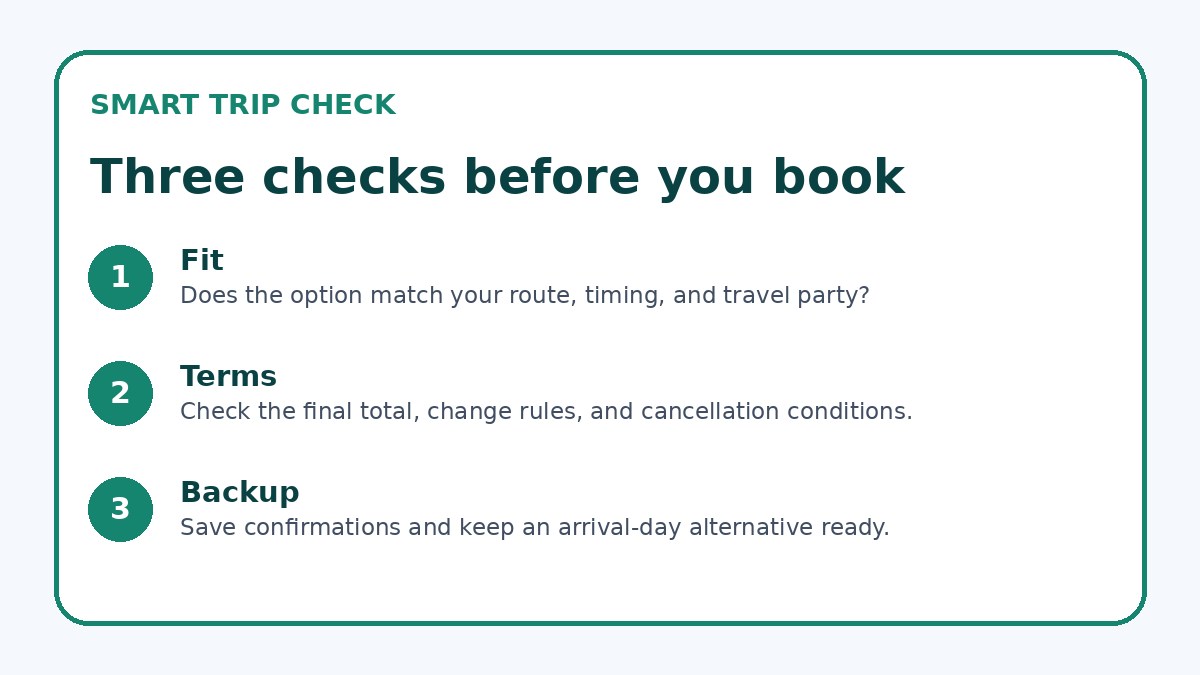
- Decide your priority (speed, cost, scenery, flexibility) and pick the transport mode that matches it before comparing prices.
- Verify departure and arrival stations or ports, exact pickup/drop-off addresses, and onward local-transfer options on provider pages.
- Confirm seat-reservation rules, luggage allowances, and whether passengers with large bags need advance booking.
- If using rail passes or rental cars, check inclusion details, reservation steps, cross-prefecture rules, and insurance requirements.
- Compare total door-to-door travel time, not just moving time—include transfer walks, waiting, and recommended connection buffers.
- Book tickets or vehicle reservations only after checking the operator’s final terms, cancellation policy, and latest timetable updates.
Driving and mixed modes: flexibility versus complexity
Renting a car gives you the greatest freedom to explore rural areas, scenic detours, and smaller towns between Fukuoka and Hiroshima, but driving adds responsibility. You’ll need to plan routes, tolls, parking, and enough time for longer distances on national and local roads. Driving can be especially attractive if you’re traveling with family or a small group and want to stop at temples, viewpoints, or coastal towns that trains or coaches don’t serve well. Remember that urban parking and one-way traffic in cities may add friction and expense.
If you mix driving with public transport — for example, parking near a ferry terminal or using a rental car for day trips while relying on trains between cities — double-check transfer points and vehicle drop-off policies. Verify rental company rules about cross-prefecture travel, ferry vehicle reservations, insurance coverage, and driver requirements such as an international driving permit if applicable. Always compare door-to-door time, total cost including fuel and tolls, and how comfortable you are driving in a foreign traffic environment before choosing this option.
Frequently asked questions
Is it faster to take the train or the coach from Fukuoka to Hiroshima?
Trains — particularly high-speed or limited express services — are typically faster than highway coaches for intercity trips between Fukuoka and Hiroshima. Trains often depart from and arrive at central stations, minimizing transfer time in cities. Coaches can be significantly slower but may offer overnight departures and lower fares. Exact travel times depend on whether the train route is direct or requires transfers and the coach operator’s route; always check current timetables on the operator’s official pages before booking.
Can I bring large luggage on trains, coaches, or ferries between Fukuoka and Hiroshima?
Luggage rules vary by transport provider. Many trains allow standard suitcases and have overhead or designated storage areas, but very large items may require advance tagging or reservation. Coaches often include underfloor storage but set size limits and may charge or restrict extra items. Ferries typically permit vehicle cargo and larger luggage but may have different cabin or deck luggage policies. Check the specific provider’s luggage rules and any required pre-notifications on their booking page before you travel.
Should I use a rail pass, single tickets, or a mix of transport modes for this route?
Whether to use a rail pass, single tickets, or mixed modes depends on your broader itinerary and travel style. If you plan multiple long-distance train journeys, a rail pass may offer convenience and flexibility, but some premium or reserved seat services may still require reservations. Mixing modes—such as a ferry for a scenic day and trains for the main leg—can match your interests but needs careful timing. Always check which services a pass covers, reservation rules, and whether a pass saves time or money for your exact route before committing.
Final planning note
Choosing how to travel from Fukuoka to Hiroshima comes down to a few practical tradeoffs: speed versus cost, convenience versus scenery, and public transport simplicity versus driving flexibility. For the fastest, most straightforward transit, prioritize express trains and confirm seat reservations and luggage rules. If budget or overnight timing matters, compare coach providers and exact pickup/drop locations. For a scenic detour, check ferry connections and port transfers. If you rent a car, confirm rental company cross-prefecture policies and parking plans. Always verify schedules, seat rules, luggage limits, and booking terms on the provider’s official pages (or via a comparison site such as Trip.com) before you finalize any tickets.
Continue planning
Check current options and final conditions
Use the provider page to confirm live availability, the final total, cancellation terms, and every condition that matters to your trip.
This evergreen planning guide was created with AI-assisted drafting and a structured quality review. It does not display live prices, schedules, availability, visa guidance, or provider rankings. Verify current details before booking. Some links are affiliate links; we may earn a commission at no additional cost to you.