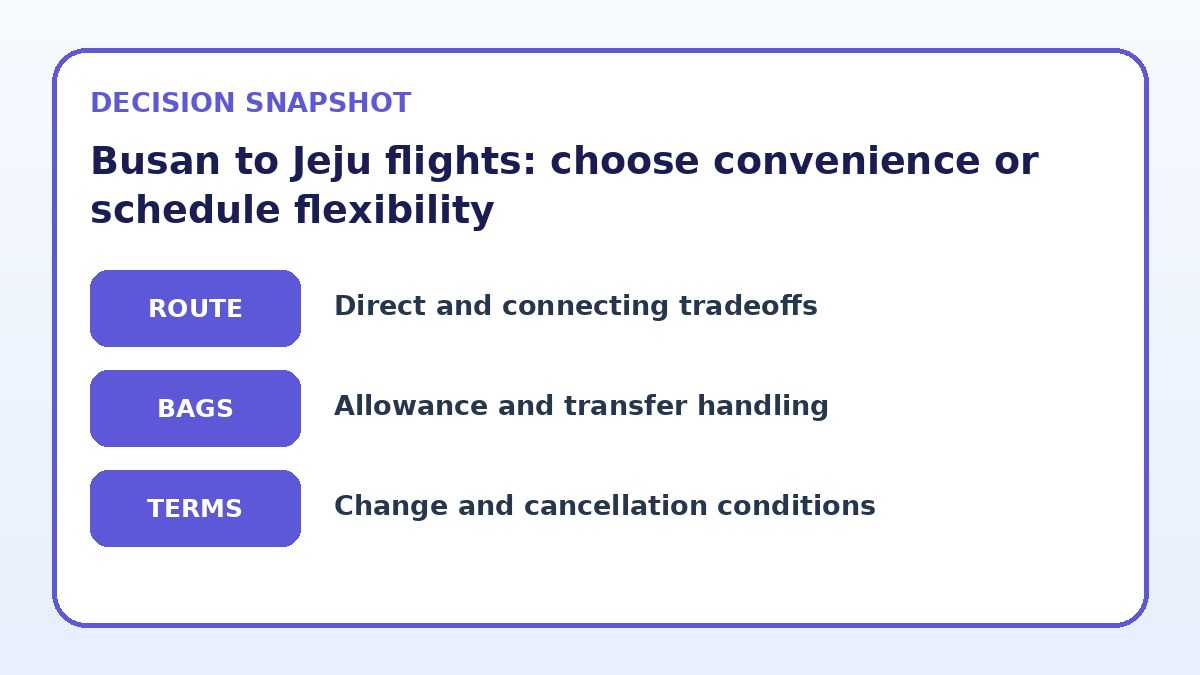
If you’re planning Busan to Jeju flights with kids, make the practical choice first: prioritize either convenience (direct, simple transfers and minimal time on the move) or schedule flexibility (more departure options and easier changes). Families who value shorter door-to-door time often accept a higher fare or less flexible ticket type to reduce stress; those with toddlers, multiple connections or need to shift plans later may prefer tickets that allow changes even if they require an extra connection or different airport times. Start by listing must-haves — morning departure, stroller gate check, or guaranteed seat together — then compare flight types and departure windows against those needs. This article explains how to weigh convenience versus flexibility, what to verify on the airline’s booking page, and the practical steps families can use to make a confident choice when traveling between Busan and Jeju.
Start with your family’s nonnegotiables
Before you search for Busan to Jeju flights, write down the constraints you won’t compromise on. Think beyond price: note the youngest traveler’s nap schedule, whether you need a wheelchair or stroller pre-boarding, how many carry-ons you’ll have, and whether you require a single itinerary that keeps seats together. If one parent is traveling with infants or small children, consider how long you can reasonably spend in transit without a break. These concrete needs act as a filter that turns a long list of flight times into a manageable set of suitable options.
Also identify flexible preferences versus firm requirements. For example, a preferred departure time is often negotiable, but guaranteed adjacent seats or an early check-in window are not. Once you separate these, you can assign more weight to convenience (direct routing, short layovers, airport proximity) or to flexibility (lower change penalties, more schedule options, refundable fares). This upfront work makes comparing ticket rules and itineraries quicker and prevents emotional last-minute choices that heighten travel stress.
How to compare direct and connecting options
Direct flights are usually the simplest for families: fewer steps, less chance of missed connections, and reduced handling of strollers or checked bags during a transfer. But direct options may be limited by departure times or fare conditions that don’t allow changes without fees. When considering a connecting itinerary, look beyond the scheduled flight time alone — estimate total door-to-door time including transfer and potential wait for the connection, and think about how the layover environment supports families (easy terminal transfers, family restrooms, play areas).
For connections, plan a realistic minimum connection buffer that suits your family’s pace rather than the tightest possible window an online search suggests. Also compare the risk of a missed connection: is there a later flight that same day or would you need to stay overnight? Lastly, verify whether the same carrier handles both legs or if you’ll need to recheck bags and re-clear security; that difference can turn a nominally short connection into a time-consuming chore for parents with children.
| Approach | Best for | Tradeoff to check |
|---|---|---|
| Direct, convenience-first bookings | Families prioritizing minimal transfers and shorter door-to-door time | Fewer departure choices and potentially stricter change rules or higher fares |
| Flexible fares with change options | Families who may need to alter plans or value refundable/adjustable tickets | Higher upfront cost and possibly longer or indirect itineraries |
| Connecting itineraries to access more times | Families needing specific departure windows or lower base fares | Extra transfer complexity and increased risk of missed connections |
| Mixed approach: direct outbound, flexible return | Families who want a comfortable start and the option to change plans on return | Higher planning complexity and potentially mixed fare rules to manage |
Ticket rules and what to verify before booking
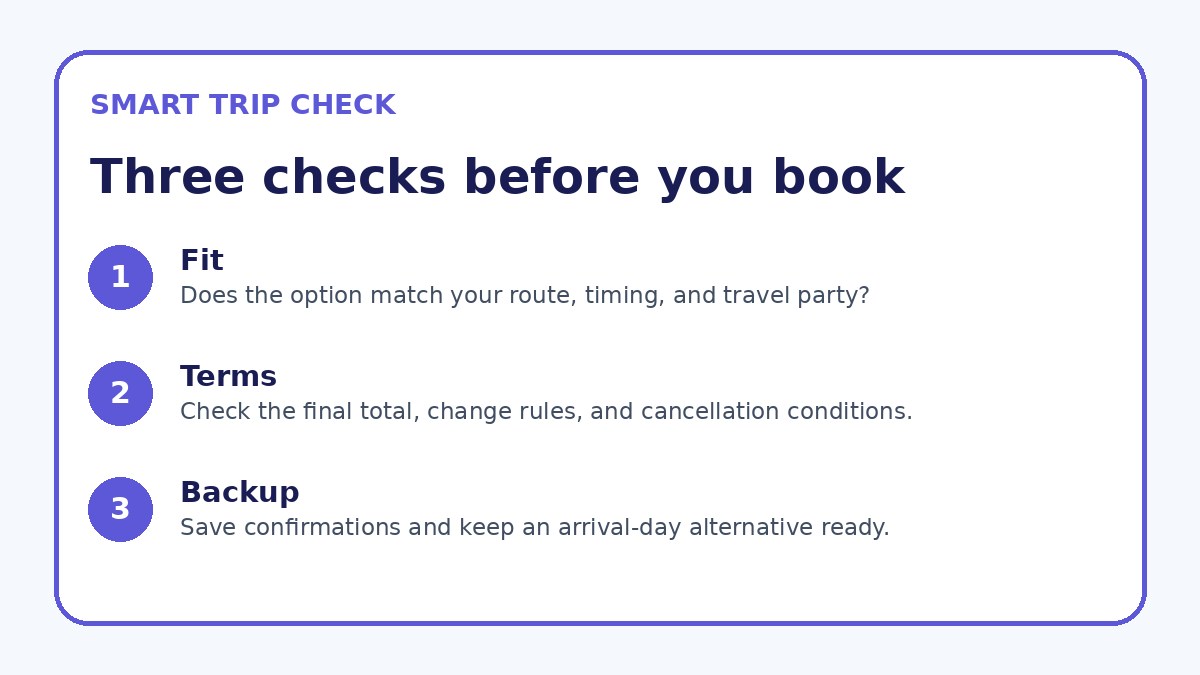
Airlines’ fare classes and ticket rules determine how easy it is to change plans, assign seats, and bring baggage — all crucial for families. Always check the booking page for change and cancellation penalties, whether the fare includes checked baggage, and if seat selection for the family is included or requires a fee. If you rely on the ability to change flights without heavy penalties, look for fares specifically labeled as flexible or refundable and confirm the exact change fee, any fare difference, and how refunds are processed (airline credit, voucher, or original payment method).
Don’t assume family benefits like preboarding, free infant seats, or stroller gate-checking are standard; read the airline’s family travel policies on the final booking page. If you’re comparing through a third-party site, open the airline’s official ticket page before purchase to confirm seat maps, specific baggage allowances, boarding procedures, and real-time change policies. You can optionally compare live availability on Trip.com, but always finalize details on the carrier’s site so you have accurate, up-to-date terms.
Before you book
- List your family’s nonnegotiables (bedtime, stroller needs, medical supplies) before searching flights to filter options quickly.
- Check the airline’s final booking page for exact baggage allowances, seat assignment fees, and infant-stowage rules before purchase.
- Compare change and cancellation terms across the few top itineraries, noting both fees and how refunds are issued.
- Estimate total door-to-door time for each itinerary, including transfer walking times, re-checking bags, and likely traffic to/from airports.
- Confirm whether the same carrier operates both legs if an itinerary includes a connection and whether you must recheck luggage.
- Pack a single, organized family carry-on with medicines, snacks, chargers, and a change of clothes to avoid scrambling at the gate.
Practical travel-day strategies to reduce stress
On the day of travel, small habits make a big difference. Pack one carry-on with essentials (snacks, chargers, a change of clothes, medicines, and entertainment) that is easily accessible. Dress children in layers and shoes that are easy to remove at security, and use a compact stroller or baby carrier that the airline allows gate-check to keep small children comfortable while walking through terminals. Arrive earlier than the minimum recommended time if you need extra time for family check-in, stroller handling, or unaccompanied minor paperwork.
Prepare kids for the day but also plan contingencies: download offline entertainment and bring small surprises or new toys for novelty, plus familiar comfort items to ease naps. If you’re traveling during peaks of family travel, consider upgrading to options that simplify boarding or seat assignment even if it costs more — sometimes the reduced anxiety and smoother flow through the airport is worth the additional expense. Communicate your family’s needs politely to gate agents; they often can help with seat swaps or preboarding assistance if seats are available.
Frequently asked questions
Should families always pick direct Busan to Jeju flights when available?
Direct flights reduce the number of steps and stress, which is valuable with young children, but they aren’t always the best choice. If direct options don’t match your preferred departure or return times, or if the fare rules are very restrictive, a connecting itinerary with better change options may suit you better. Weigh total travel time and terminal complexity against ticket flexibility and cost. Also consider whether the direct flight’s seating and baggage policies meet your needs; if not, a slightly longer route with clearer family-friendly terms could be preferable.
How much connection time should I allow when traveling with kids?
Allow more cushion than an adult-only transfer. A family connection needs time to move between gates, manage strollers or baggage, and comfort or feed children. Instead of the minimum connection airlines sometimes list, plan a buffer that accommodates slower walking, restroom stops, and unexpected delays. Check airport layouts and whether your connection requires changing terminals or reclaiming and re-checking baggage, and add extra time for those steps. If a short connection risks missing the next flight, choose a longer layover for peace of mind.
What should I verify on the airline’s booking page versus a third-party site?
On the airline’s booking page, confirm fare rules (change and cancellation fees, refund procedures), exact baggage allowances, seat assignment policies, and family boarding options. Third-party sites are useful for comparing times and prices quickly, but they may not display the latest rules or seat maps. Before paying, check the carrier’s official terms so you know whether your ticket permits same-day changes, what happens if a flight is delayed, and whether the infant or child policies (like lap child allowances) match your expectations.
Final planning note
For families traveling Busan to Jeju, the core decision is usually convenience versus schedule flexibility. If minimizing transfers and travel time matters most, choose direct flights and focus on seat assignments, baggage rules, and airport proximity. If your plans could change or you need more departure choices, favor fares with lenient change policies even if that means a longer itinerary. Use the checklist items to verify critical ticket details on the airline’s booking page before you buy. With clear priorities and a quick verification routine, you’ll book a family-friendly itinerary that reduces stress and keeps options open when needed.
Continue planning
Check current options and final conditions
Use the provider page to confirm live availability, the final total, cancellation terms, and every condition that matters to your trip.
This evergreen planning guide was created with AI-assisted drafting and a structured quality review. It does not display live prices, schedules, availability, visa guidance, or provider rankings. Verify current details before booking. Some links are affiliate links; we may earn a commission at no additional cost to you.