Practical answer first: pick the connection that balances total travel time against predictable comfort — fewer stops and longer layovers for stress-free transfers, or a faster single-connection itinerary if you prioritize speed and have tight time windows. Before you search, collect exact travel dates, full traveler names as on passport, desired cabin (economy, premium economy, business), and any loyalty numbers or special needs so results match real availability. On the booking page verify baggage allowance, included seat type, change/cancellation terms, and whether the carrier protects connections for missed flights. If comparing options, include potential overnight layovers, aircraft type for each segment, and whether baggage transfers through. Use the rest of this guide to weigh routing, baggage/connection risk, schedule fit, and fare conditions so you can choose a comfortable Dubai–Auckland plan.
See live routes for your exact travel day
Compare direct and connecting choices with the same baggage and traveler details.
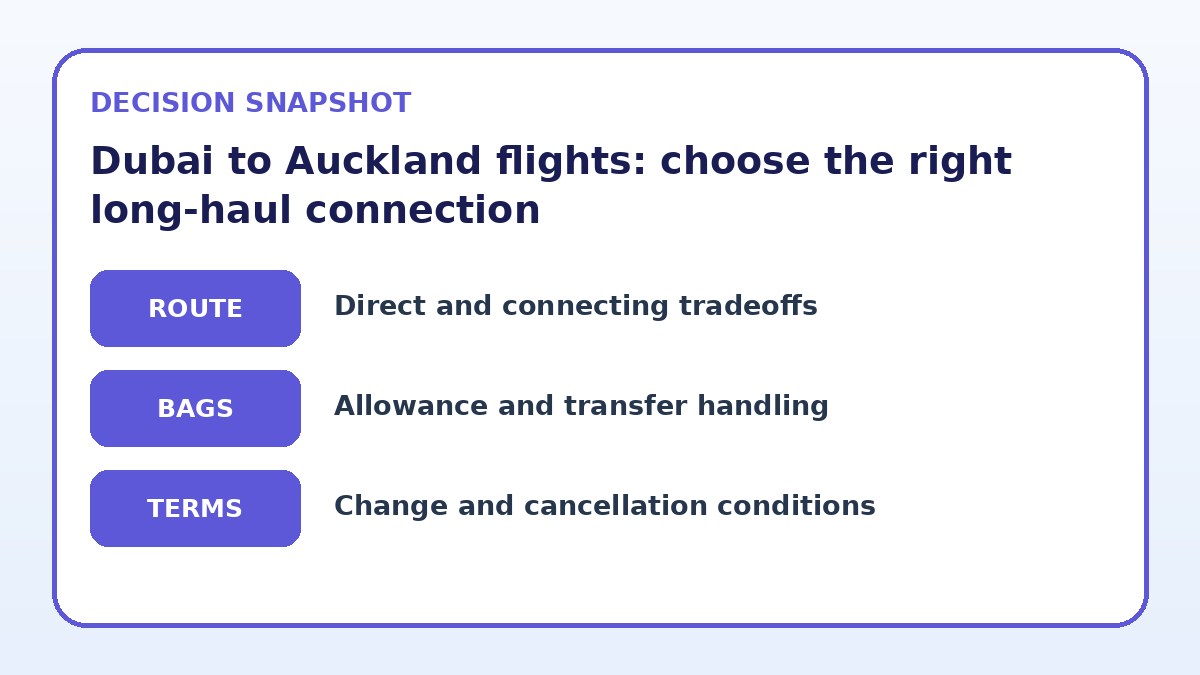
Routing: how to compare one‑stop versus multi‑stop itineraries
On the Dubai to Auckland corridor there are typically two broad approaches: a single-connection itinerary via a major hub, or a multi-stop routing that splits the trip into shorter segments. When comparing these, look beyond total elapsed time. Consider the quality of the connection airport (terminal layout, transfer times, lounge access), the aircraft type used on the longest segment, and whether the layover provides enough buffer for unexpected delays without forcing an overnight stay.
For first-time long‑haul travelers, a single-stop routing often reduces complexity because baggage is more commonly checked through and you only navigate one airport transfer. If the single-connection option requires a very short layover you’ll trade convenience for tight timing risk. Multi-stop itineraries may offer lower fares or more schedule options, but every additional transfer increases the points of failure: missed bags, delayed flights, and extra immigration or security steps if you must exit and re-enter the terminal.
Baggage and connection risk: what to verify before booking
Baggage rules are a common source of unwelcome surprises. Always verify whether your ticket is sold as a single itinerary or as separate tickets; single-ticket itineraries usually include through-checked baggage, while separate tickets commonly require you to collect and re-check bags. Check the carrier’s baggage allowances for each fare class and each segment: allowance can vary by sector and by airline. Confirm whether special items (sports equipment, instruments) are accepted on all legs.
Also confirm the transfer protection policy: some carriers will protect you on missed connections caused by their own delays, offering rebooking and hotel when required, while other arrangements leave you responsible. For routes involving different airlines, check whether they have interline or codeshare agreements that include baggage transfer. On the booking page, verify exactly how many pieces, weight, and dimensions are allowed, and whether carry-on allowances differ between carriers.
Compare flight-selection strategies
| Flight strategy | Best for | Risk to check |
|---|---|---|
| Single-connection nonstop style (one reliable hub) | Travelers who want fewer transfers and simpler baggage handling | May cost more or have less flexible schedule options |
| Multi-stop cheapest-fare approach | Budget-minded travelers willing to accept higher connection risk | More transfers increase chances of delays and baggage issues |
| Longer layovers for low-stress transfers | Those prioritizing comfort and recovery over speed | Longer total travel time and potential need for transit accommodation |
| Premium cabin or premium economy upgrade | Travelers prioritizing onboard comfort and sleep quality | Higher fare but reduces fatigue and improves arrival readiness |
Recheck the complete itinerary
Confirm airports, connection handling, baggage, and change conditions before deciding.
Schedule fit and comfort: planning for sleep, meals and jet lag
Think about when you want to be awake in Auckland. If you prefer to arrive in daylight and acclimatize quickly, target an itinerary that lands in the morning or early afternoon local time. For better sleep on board, choose flights that align cabin service with your intended sleep window and check the aircraft seat layout so you know whether a window or aisle seat is realistic. Consider premium economy or business if your budget allows — even a slightly wider seat and more recline can make a substantial difference on a 16+ hour travel day.
Layovers can be an opportunity to rest if the airport has a comfortable lounge or easy transit hotels; conversely, short overnight layovers can be exhausting. If you must connect during night hours, confirm transit security hours and whether terminals remain open. Pack a small overnight kit in your carry-on — a toiletry kit, a change of clothes, and any sleep aids like an eye mask and earplugs — in case a missed connection forces an unplanned night away from checked luggage.
Flight details to verify
- Gather exact travel dates, full passport names, and traveler birthdates before searching fares so results match real availability.
- Decide preferred cabin class and whether you need extra seat space, then filter search results accordingly.
- On the carrier’s booking page, confirm if baggage is through-checked for the full itinerary and note piece/weight limits.
- Verify fare change and cancellation rules, and screenshot or save the booking-page terms at payment.
- Check minimum connection times, terminal transfer logistics, and whether you need transit visas for any stop.
- Pack an overnight carry-on kit (toiletries, change of clothes, chargers, medications) in case of missed connections.
Fare conditions and booking checklist: flexibility versus lowest fare
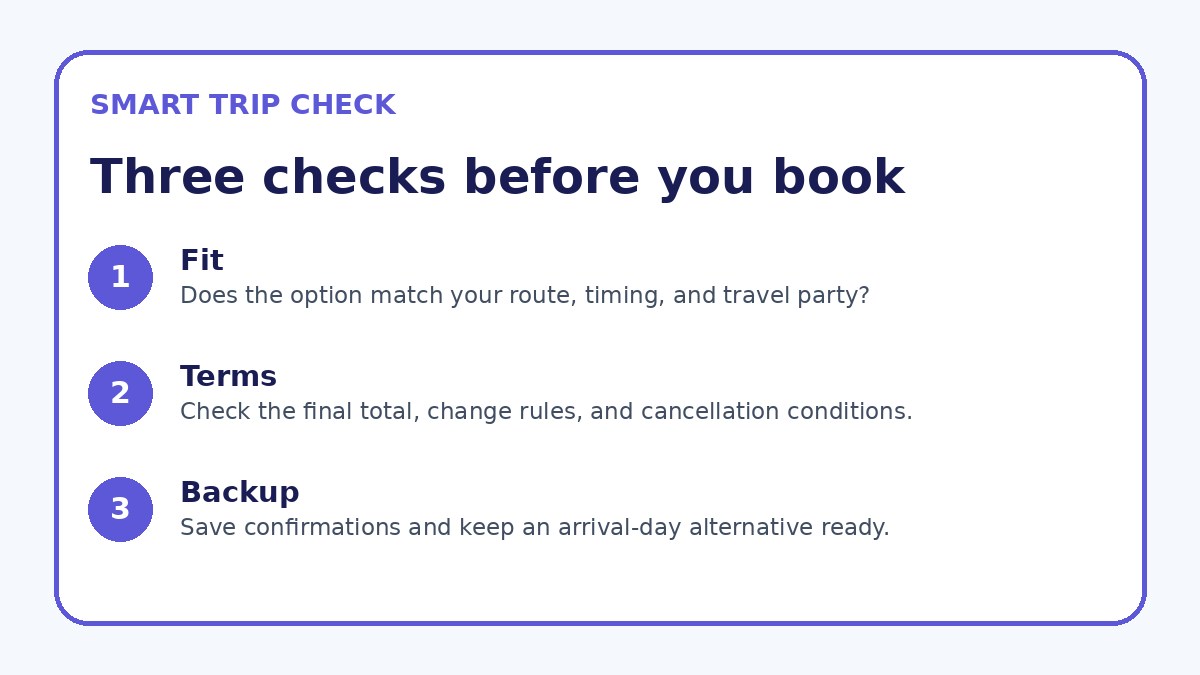
Fares for long-haul travel include many conditional differences: change and cancellation fees, refundability, same-day standby rules, and when seat selection is allowed. Lower fares often lock you in or charge high fees for changes while flexible fares cost more but give peace of mind to first-time long-haul travelers who may need to adjust their plans. Before booking, expand the fare rules on the airline’s final booking page and save screenshots or PDFs of the conditions shown at payment.
Also check whether ancillary services (extra baggage, preferred seats, lounge access) are included or must be bought separately. If using a travel search site, confirm the total paid price on the airline’s website before finalizing. Trip.com can be used as an additional place to compare available itineraries and service conditions, but always verify baggage rules, rebooking and refund terms directly with the carrier that issues the ticket.
Flight Guide questions travelers ask
Should I book a single ticket across all segments or separate tickets for each leg?
For first‑time long‑haul travelers, a single ticket that covers all segments is generally safer. Single-ticket itineraries more commonly include through-checked baggage and connection protection, meaning the operating carrier will usually assist with rebooking if an earlier delay causes a missed connection. Separate tickets can be cheaper but shift responsibility to you: you may need to collect and re-check bags, and you’ll handle missed connections yourself. Before booking, confirm on the provider’s final checkout page whether baggage transfers and missed-connection protections are included.
How much layover time should I allow in a hub airport when traveling from Dubai to Auckland?
Allow a comfortable buffer rather than the absolute minimum. If your itinerary stays within one terminal and baggage is checked through, shorter layovers can work, but for international transfers involving terminal changes, immigration, or security re-screening, add extra time. Consider time of day, airport size, and whether you need to move between terminals by shuttle. If you prefer certainty, choose a longer layover that allows time to rest, eat, and handle delays; verify exact terminal transfer distances on the airline or airport website before booking.
What should I pack in my carry-on to handle connection hiccups on a long trip?
Include essentials to be self-sufficient for an unexpected overnight or day: a toiletry kit and quick-change clothing, any necessary medications and prescriptions, electronic chargers and a power bank, travel documents and printed confirmations, noise-cancelling earbuds or earplugs, and an eye mask. Also pack snacks and a refillable water bottle (fill after security where allowed). Keep valuables and a spare set of basic items in your carry-on because checked baggage may be delayed or need to be re-checked during separate-ticket transfers.
Final decision note
Choosing the right Dubai to Auckland flights for your first long-haul trip comes down to tradeoffs between speed, comfort, and risk. Decide early what matters most: minimizing transfers and baggage handling, reducing total travel time, or maximizing onboard comfort with a premium cabin. Prepare exact traveler details and a clear list of non-negotiables before searching, then verify baggage rules, connection protection, and fare conditions on the airline’s final booking page. If you need help comparing multiple itineraries, use a search site such as Trip.com to surface options, but always confirm the final terms and allowances with the carrier that issues your ticket. With preparation you can book an itinerary that reduces stress and helps you arrive in Auckland ready to enjoy your trip.
Continue planning
Check current options and final conditions
Use the provider page to confirm live availability, the final total, cancellation terms, and every condition that matters to your trip.
This evergreen planning guide was created with AI-assisted drafting and a structured quality review. It does not display live prices, schedules, availability, visa guidance, or provider rankings. Verify current details before booking. Some links are affiliate links; we may earn a commission at no additional cost to you.