If your trip between Seoul and Gyeongju is work-focused, choosing the right ticket flexibility matters as much as the travel time. For most business travelers the practical choice boils down to: buy a more flexible rail or coach ticket, or book a private transfer and accept higher cost but simpler door-to-door handling. Flexible rail fares usually offer the best balance of train frequency, luggage allowance, and straightforward city-centre terminals; coach options can be cheaper but have stricter change rules and weaker disruption protections. Private transfers reduce transfer friction and timeline risk but require checking the provider’s cancellation and wait-time terms carefully. As you decide, prioritize what you value most—ability to change plans at short notice, minimal hand-carry handling, or the lowest transfer complexity from office to hotel—and verify the operator’s refund and change conditions on the final booking page before confirming.
How to choose between rail, coach, private transfer and mixed options
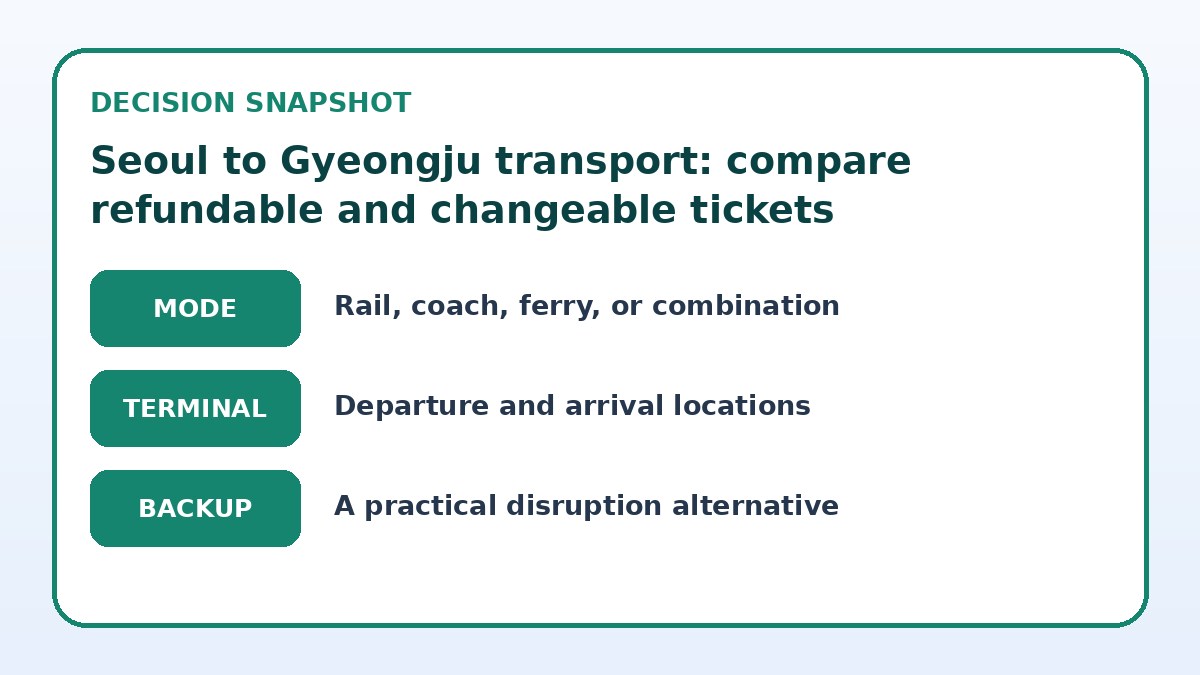
Start by mapping your origin and destination door-to-door. Rail services usually depart from major Seoul stations and arrive near Gyeongju’s central area; coaches use intercity terminals that may require extra local transfers. Private transfers collect and drop exactly where you need, minimizing last-mile friction but typically require advance booking. Mixed plans combine modes—rail one way, coach or transfer the other—to balance cost and flexibility. For business trips, identify whether you value schedule freedom, minimal transfer time, or predictable arrival location, then shortlist options that meet that primary need.
Next, layer in schedule rhythm and frequency. Trains often run frequently and allow you to catch later departures when meetings overrun, subject to the ticket’s change rules. Coaches might have fewer departures and stricter exchange policies. Private transfers aren’t constrained by public timetables but depend on the provider’s punctuality commitments and traffic risk. When compiling options, note the terminal and transfer time for each mode and how easy it would be to switch to another mode in case of disruption.
Choose the end-to-end journey plan
| Journey approach | Best for | Friction to check |
|---|---|---|
| Flexible full-fare rail tickets | Travelers who need ability to change departure times with minimal interior transfer friction | Higher base fare and fewer savings if your plans are fixed |
| Discounted or advance rail/coaches | Planners with fixed schedules who can commit to specific departure times | Low flexibility; significant penalties or no rebooking if plans shift |
| Private or chauffeur transfers | Those prioritizing door-to-door timing, luggage security, and minimal transfers | Higher cost and reliance on a single provider’s cancellation and wait policies |
| Mixed strategy (flex outbound, cheaper return) | Business trips with asymmetric schedule risk between outbound and return journeys | More complex bookings and need to track different operator rules and terminals |
Check live intercity options
Look beyond the ride itself and compare terminals, transfers, luggage, and arrival fit.
Terminal fit, luggage handling and transfer friction
Terminal fit affects how disruptive the journey will be for a busy professional. If your meeting point or hotel sits near a major train station, rail becomes attractive because it reduces a taxi or subway leg. Coaches can arrive at bus terminals that are less central, so factor the extra taxi time and potential waiting. Private transfer removes the terminal question altogether—pickup and drop-off at addresses you select—but you should confirm where drivers will meet you, whether curbside access is guaranteed, and how luggage is managed.
Luggage policy differences influence both convenience and risk. Trains typically have generous storage but may require lifting bags onto racks; coaches often have underfloor bays where handling is performed by staff, which can be quicker but may pressure strict size rules. Private transfers give you control over bag placement and timing, which is helpful if you carry samples, prototypes, or fragile equipment. Always check the provider’s stated luggage limits and any fees for oversized items on the final booking page before you commit.
Timing flexibility: change, refund, and rebooking considerations
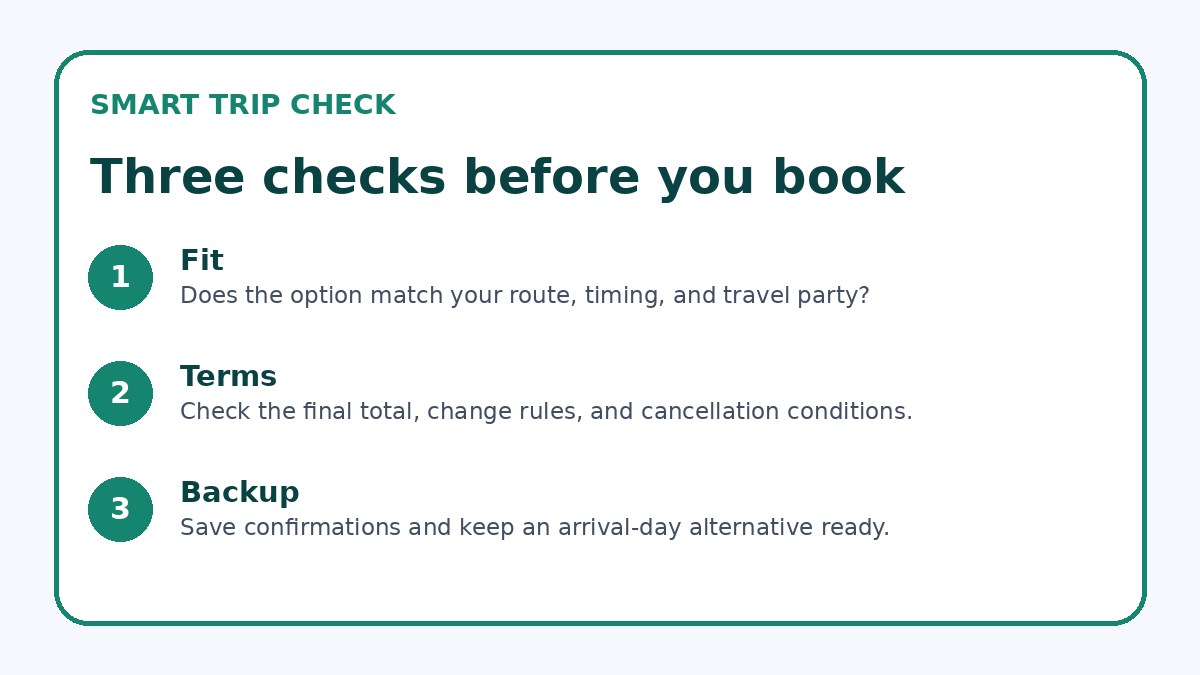
Read ticket terms for changes and refunds before you book; that single page determines most of the flexibility outcomes. Flexible rail fares often allow free or low-cost date and time changes up to a given window before departure, while discounted tickets can be non-changeable or carry high penalties. Coach tickets are frequently issued as fixed-time seats—changing them may mean buying a new ticket. For private transfers, flexibility depends on the company’s cancellation window and whether they offer standby or wait-time options for delayed meetings.
Also plan for day-of schedule shifts. If your meeting ends late, can you take the next train or coach without penalty? If you choose a non-flexible ticket, know the cost of rebooking versus the cost of an alternative—such as a taxi for a portion of the trip. A practical approach is to have one refundable or open-leg in your itinerary for the segment most likely to change, then book cheaper, stricter tickets for legs that are unlikely to move.
Compare the practical alternatives
Use the final page to confirm what is actually offered on your dates and save a workable fallback.
Intercity travel checklist
- Confirm the exact pickup and drop-off addresses and whether curbside access is guaranteed for private transfers.
- Open the final booking page to read change and cancellation rules, noting deadlines and any fees for reissue.
- Identify two alternative departures (train or coach) you can use if your primary option is missed or delayed.
- Allow a time buffer of at least one meeting slot between your meeting end and the booked departure for critical appointments.
- Check luggage allowances and any requirements for oversized or professional equipment on the operator’s booking page.
- Save contact details and booking references offline and assign one team member to manage rebooking during disruptions.
Disruption backup plans and on-trip decision rules
No matter the mode, prepare a clear backup plan that reflects how much flexibility you paid for. For trains and coaches, list two alternate departures and a taxi transfer option from the nearest station or terminal. For private transfers, confirm the operator’s policy for driver delays, wait-time credit, and last-minute route changes. Keep contact numbers and a screenshot of your booking confirmation offline—connectivity can drop when disruptions occur and you’ll need quick access to booking codes and policy summaries.
Decide in advance how you will prioritize the options: will you pay more to keep a meeting schedule intact, or accept a later arrival to preserve cost efficiency? For important meetings, choose a buffer—arrive with time to spare or book an earlier travel window. If multiple travelers are involved, designate who will handle rebookings and who will continue with the schedule to reduce confusion. Finally, verify provider refund and change policies on the booking page (and consider checking listings on Trip.com or the operator’s site) before confirming.
Rail & Intercity Transport questions travelers ask
Can I switch from a coach to a train mid-trip if my meeting runs late?
Switching from coach to train mid-trip is possible but depends on ticket rules and availability. If your coach ticket is fixed to a specific departure, you may need to buy a new train ticket; discounted coach fares often lack open-change privileges. If you anticipate a high chance of delay, buy a flexible train fare for the leg most likely to change or choose a mixed plan that keeps that leg refundable. Always check the final booking page for exchange rules, and have alternate departures identified before you travel so you can decide quickly.
How do I evaluate a private transfer’s flexibility and reliability?
When assessing a private transfer, inspect the provider’s cancellation window, wait-time allowances, and driver-contact procedures on the booking page. Verify whether they offer credits for delays or missed pickups and if they provide real-time driver tracking or a local phone contact. Also ask about contingency plans for heavy traffic or route changes. For groups or valuable cargo, request written confirmation of baggage handling and a clear refund policy in case of no-show by the driver.
Should I always buy the most flexible ticket for business travel between Seoul and Gyeongju?
Not always. Flexible tickets reduce stress and the risk of penalties when meetings change, but they cost more. If your schedule is firm and travel time is the only priority, a stricter discounted option can be a reasonable choice. Instead of defaulting to maximum flexibility for every leg, prioritize flexibility for the segments with the highest likelihood of change and buy lower-flex options for predictable parts of the trip. Verify the operator’s terms on the booking page before deciding to confirm.
Final decision note
Business travel between Seoul and Gyeongju rewards a pragmatic approach: match the ticket’s flexibility to the part of your itinerary most likely to change. Rail returns a compelling mix of frequent departures and manageable city-centre access, but only when you confirm the fare’s reissue and refund rules. Coaches can save money but usually demand firmer timing commitments; private transfers buy door-to-door predictability at a premium and require careful scrutiny of the provider’s cancellation and wait-time terms. A mixed plan—flexible outbound, stricter inbound—is often the best compromise for meeting-driven trips. Before you book, open the final booking page for each option (and optionally check Trip.com for availability), confirm luggage and terminal details, and save contact information so you can act fast if plans shift.
Continue planning
Check current options and final conditions
Use the provider page to confirm live availability, the final total, cancellation terms, and every condition that matters to your trip.
This evergreen planning guide was created with AI-assisted drafting and a structured quality review. It does not display live prices, schedules, availability, visa guidance, or provider rankings. Verify current details before booking. Some links are affiliate links; we may earn a commission at no additional cost to you.