The practical answer: decide first whether you want faster rail connections, lower-cost coaches, greater flexibility with a hire car, or a combined plan that mixes rail/coach segments and short local drives for door-to-door ease. Start by mapping where you’ll sleep in Brisbane and Sydney and any stops you want en route—this determines which terminals and transfers make sense. For first-time visitors, prioritize terminal fit (how close each station or coach stop is to your accommodation), luggage handling, and realistic transfer times between modes. I’ll show how to weigh timing flexibility, transfer friction, and a simple disruption backup so you can build a reliable multi-city ground-transport plan that minimizes unexpected hassle.
How to choose between rail, coach, car hire or a mix
Start by listing priorities: travel time, comfort, luggage ease, budget, and how many towns you want to visit between Brisbane and Sydney. Rail tends to provide a smoother seated ride with dedicated stations that are usually central or well-connected; coaches typically serve more direct routes and sometimes stop closer to smaller towns. A hire car gives door-to-door freedom but adds driving time, fuel, and parking considerations. For many first-time visitors, a hybrid plan—longer intercity leg by rail or coach, with a short local car hire at a stopover—balances convenience, local exploration, and fewer long hours driving.
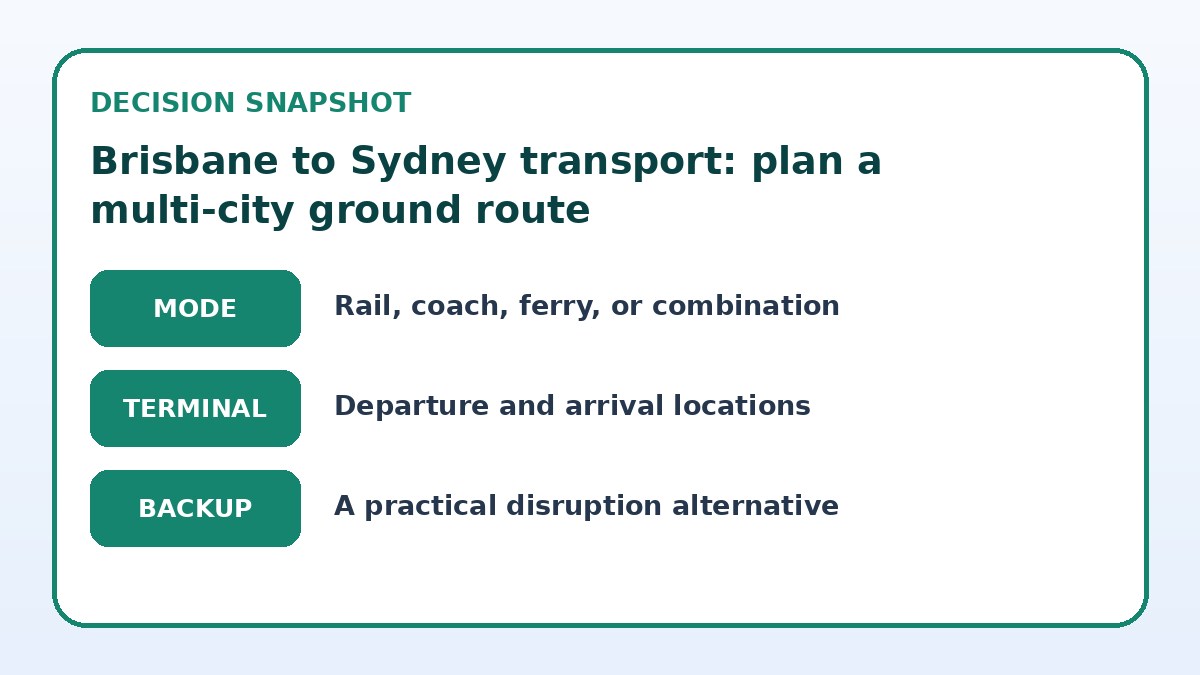
Use a simple grid to compare options for your dates and stops: list each leg, the nearest station or depot to your lodging, luggage transfer needs, and last-mile options (walk, shuttle, taxi). Check whether overnight legs require booking a sleeper-style service or an evening coach, and whether changing between modes needs a long walk or secure luggage storage. Prioritize choices that minimize transfers near arrival times when you’ll be tired. Remember to verify provider pickup/drop-off points and final booking details on the provider’s official pages before committing.
Choose the end-to-end journey plan
| Journey approach | Best for | Friction to check |
|---|---|---|
| All-rail plan | Travelers who value station-to-station comfort and central arrivals | May require extra local transfers if your accommodation isn’t near the station |
| All-coach plan | Visitors prioritising direct point-to-point stops and potentially simpler routing | Coach stops can be out of town and may need a transfer to reach hotels |
| Drive-only (hire car) | Those wanting full door-to-door freedom and to visit off-route towns | Adds driving time, parking and navigation tasks; less rest during the journey |
| Mixed plan (rail/coach + local car hires) | Travelers who want efficient intercity legs plus flexible local exploration | Requires more coordination of bookings and attention to transfer timing |
Check live intercity options
Look beyond the ride itself and compare terminals, transfers, luggage, and arrival fit.
Terminal fit and luggage/transfer friction
Terminal fit means how well a chosen station or coach stop matches your accommodation, activities, or onward connections. A central rail station often has frequent public transport and taxi ranks, which reduces taxi costs and walk time; some coach terminals can be at motorway interchanges or suburban depots requiring a transfer. For each candidate itinerary, measure the walking distance and typical transfer modes from terminal to hotel, and note whether significant uphill walks, stairs, or long indoor transfers exist so you can pack and plan accordingly.
Luggage friction is a practical constraint for first-time visitors who may carry suitcases, backpacks, or items bought en route. Check whether services offer onboard storage, easy steps, or assistance loading/unloading. If you expect multiple transfers, prefer options with minimal handling or the ability to store luggage securely at a terminal while you explore. When you switch modes, build in buffer time for collecting luggage, buying tickets, and finding the correct platform or bay—the cost of an extra 20–40 minutes on paper is often less than the stress of a missed connection.
Timing flexibility and building realistic schedules
First-time travelers often underestimate total door-to-door time. Start by adding realistic buffers: time to leave your lodging, travel to the terminal, check-in or find the boarding bay, and on arrival, time to reach your hotel. If you plan connections between different providers or modes, aim for at least 45–90 minutes buffer depending on how far apart terminals are. Evening and early-morning services can be less frequent—factor in contingency plans if your chosen service is delayed or the next departure is several hours later.
When building an itinerary, consider how fixed or flexible your plans are at each stop. If you have fixed commitments like tours or events, choose options with more reliable frequency and extra buffer. If your schedule is flexible, a cheaper or slower option with fewer transfers might be acceptable. Use local transport apps and station maps to preview walking routes and transit options; confirm final platform and bay details on the operator’s booking page before departure so you aren’t surprised by last-minute changes.
Compare the practical alternatives
Use the final page to confirm what is actually offered on your dates and save a workable fallback.
Intercity travel checklist
- Map your lodging and note the nearest stations, terminals or park-and-ride locations for both Brisbane and Sydney before comparing options.
- List each leg with preferred modes and create a time buffer of at least 45–90 minutes for transfers between modes or terminals.
- Verify luggage policies and onboard storage descriptions on the provider’s official booking page so you know what handling to expect.
- Identify one alternate provider and a local taxi or rideshare app for each leg as a disruption backup.
- Check last-mile options from each terminal to your hotel—walking distance, shuttle availability, or taxi rank—and record addresses.
- Book refundable or changeable segments where possible, or at least confirm transfer windows and cancellation rules on the operator’s booking pages.
Disruption backup and door-to-door practicality
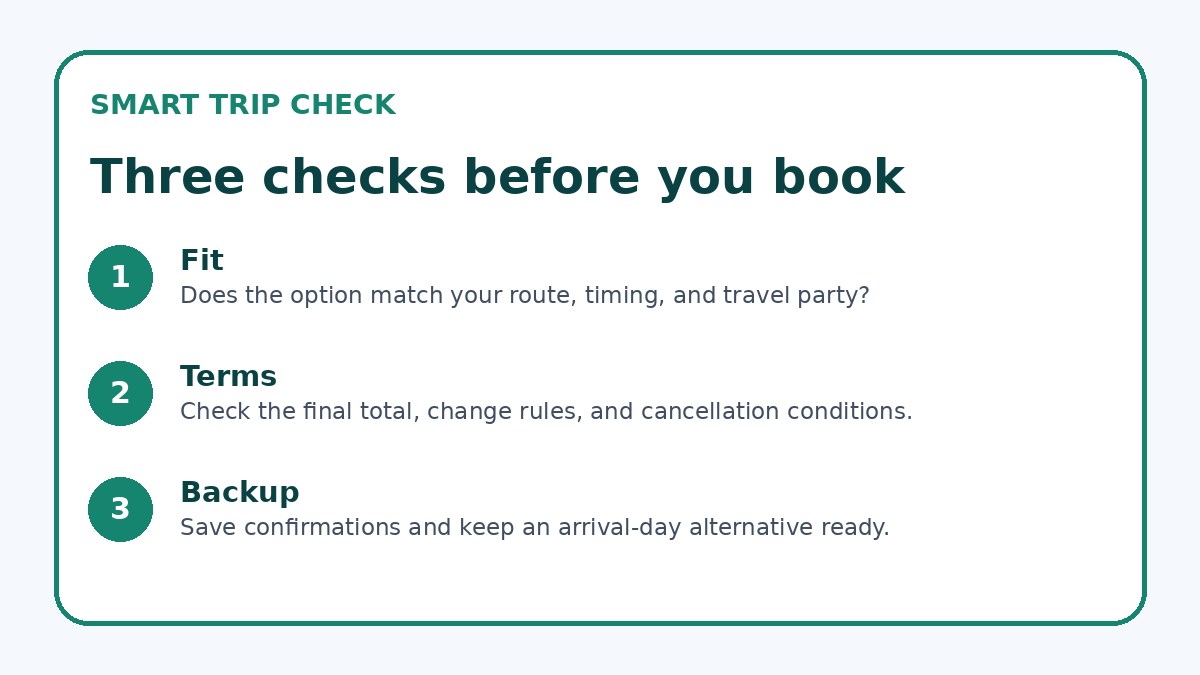
Always prepare a simple disruption backup. Identify one alternate provider for each leg, note local taxi or rideshare options near arrival terminals, and know the location of a nearby station or major bus interchange that could rescue a missed connection. Keep digital and printed copies of confirmation numbers, and download any provider apps that may offer real-time updates. A small contingency fund for an unexpected taxi or an earlier private transfer reduces stress more than last-minute frantic searching.
Door-to-door practicality is the measure of how easily you actually reach your final address from origin, not just the comfort of the main leg. For each movement, evaluate the final-mile choices: walkable distance, scheduled shuttle, frequent local bus, or easy taxi rank. If moving between cities with lots of luggage, prioritize routes that minimize the number of modal changes. Before booking, confirm pickup/drop-off addresses and exact terminal names on the provider’s final booking page—provider pages will also show any notes about accessibility, luggage rules, or required check-in times that affect the practicality of your plan.
Rail & Intercity Transport questions travelers ask
Is it better to take a train or coach from Brisbane to Sydney for a first-time visitor?
Neither option is universally better; it depends on what you value. Trains typically offer a more spacious seated ride and central stations that reduce last-mile complexity, while coaches can provide more direct routing to locations off the rail corridor. For first-time visitors, assess how each terminal connects to your accommodation, luggage handling, and whether you prefer an uninterrupted seated journey or more varied stops. Compare representative schedules and terminal addresses on operators’ official pages and include realistic transfer time when deciding.
How much buffer time should I allow for transfers between rail, coach and local services?
Allow at least 45–90 minutes depending on how far apart terminals are and whether you must collect luggage or change transport types. Short urban transfers where terminals are adjacent can be tighter; inter-suburban or highway coach stops usually need more time. If you’re traveling during peak periods, or if a leg arrives late at night or early morning when services are sparse, build extra buffer so you aren’t forced into an expensive taxi. Always check the operator’s platform or bay information before you travel for smoother connections.
What should I confirm on the provider’s booking page before finalising my Brisbane to Sydney ground plan?
On the provider’s booking page confirm the exact terminal name and address, luggage allowances and any special handling requirements, check-in or boarding times, and whether the service is direct or requires intermediate transfers. Also review transfer notes, accessibility information, and whether the provider offers real-time updates through an app or SMS. If you plan to combine providers, verify connection feasibility and whether tickets are changeable or refundable to avoid losing money if delays force a plan change.
Final decision note
First-time visitors planning Brisbane to Sydney transport should start with a clear priority list—comfort, timing, luggage handling, or local exploration—and then test simple itinerary grids that show terminal fit and transfer friction. For most travellers a mixed plan gives the best balance: a reliable intercity leg using rail or coach combined with short local car hires or shuttles at stopovers. Always confirm terminal addresses, luggage rules and transfer details on provider booking pages, and prepare an easy disruption backup like an alternate provider and local rideshare options. With these checks you’ll create a door-to-door plan that reduces stress and keeps the trip enjoyable.
Continue planning
Check current options and final conditions
Use the provider page to confirm live availability, the final total, cancellation terms, and every condition that matters to your trip.
This evergreen planning guide was created with AI-assisted drafting and a structured quality review. It does not display live prices, schedules, availability, visa guidance, or provider rankings. Verify current details before booking. Some links are affiliate links; we may earn a commission at no additional cost to you.