If you’re traveling for business, the last part of your trip—getting from central Brisbane back to the airport—needs to be efficient, predictable and stress-free. The quickest way to get practical is to pick the decision criteria you care about now: time reliability, cost versus convenience, luggage handling, and the need to work en route. Start by working backward from your flight check-in and boarding windows, factor in peak-hour congestion and any meetings or follow-ups that could overrun, then choose between options such as taxis/rideshares, private transfers, airport shuttle buses, and public transit. This article focuses on how to compare those choices for a business traveler leaving Brisbane, what to verify on the provider’s booking page, and the tradeoffs you’ll accept so you arrive calm, on time, and ready for the next step of your trip.
See current options before you compare the details
Availability and final conditions change. Open Trip.com now or keep reading for the practical comparison.
Pick the right transfer type for your priorities
Business travelers typically choose between public transit, shared airport shuttles, taxis and rideshares, or private car transfers. Public transit can be predictable in travel time windows but may require walking with luggage or transfers that eat into your schedule. Shared shuttles can be cost-efficient but add stops that increase journey time. Taxis and rideshares offer door-to-door convenience and flexible pickup, while private transfers provide a set vehicle and driver but usually require advance booking. Decide which mix of reliability, privacy and cost fits the meeting timeline you need to protect.
To make a practical choice, list nonnegotiables: must-have luggage capacity, need to keep working in the car, and tolerance for variability in arrival time. If you must be online up to departure, prioritize a quiet private car with stable seating and charging points. If budget is the central constraint and you have a generous time buffer, a shared shuttle or public service could work. Once you know the tradeoffs you accept, you can compare providers on the single criteria that matters most.
Timing and buffer planning for peak traffic and check-in
When planning the return to the airport, translate your flight’s check-in and boarding windows into a door-to-door departure time from wherever you are in Brisbane. Account for morning and late-afternoon peak traffic, plus any city events or construction that might slow travel. If you have to drop documents or equipment at the airport (for example, oversize luggage or freight), add a margin for those processes. For tight international connections, build extra buffer time; for short domestic flights with minimal check-in, the margin can be smaller but still prudent.
Work backwards from the airport arrival time you’ve set and add contingency time for delays at pickup, extra stops (for shared services), and possible re-routing. When you book a chauffeur or prebooked transfer, check the provider’s policy on waiting time and delays—this is where many business travelers decide whether to book additional wait time or choose a flexible on-demand option. Confirm pickup time with the driver the evening before and again on the morning of travel to avoid unwanted surprises.
| Approach | Best for | Tradeoff to check |
|---|---|---|
| Private chauffeur prebooked | Highest predictability and comfort for tight schedules | Higher cost and requires advance booking and confirmation |
| Taxi or rideshare on demand | Flexible last-minute departures with door-to-door pickup | Time variability during peak traffic and possible surge pricing |
| Shared airport shuttle | Balanced cost with some convenience for moderate schedules | Stops and fixed routes mean longer door-to-door time |
| Public transit (train/bus) | Lowest predictable fare when timetables align with your schedule | May require transfers and extra time handling luggage |
Ready to check the option that fits your plan?
Use your exact dates and traveler details so the provider page can show the current total and conditions.
Practical checks to run on the booking page
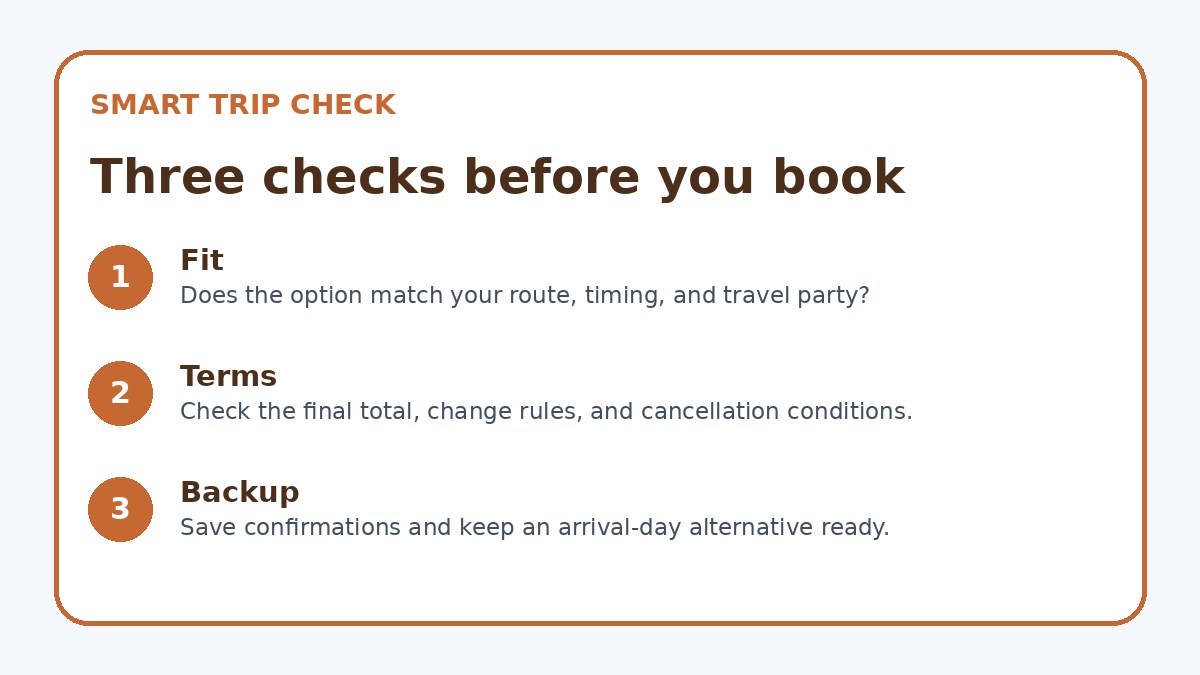
Before confirming any transfer, verify specifics you will rely on. Confirm the included vehicle size and exact pickup location instructions, how much time is allowed for waiting and cancellations, and what happens if your flight is rescheduled. Check whether the rate listed includes tolls and airport drop-off charges, and whether luggage assistance is provided. If you need onboard Wi-Fi or in-car power to keep working, confirm those amenities explicitly rather than assuming they’re available.
Also check the provider’s communication policy: how will driver details and contact numbers be delivered, and is there a mechanism for last-minute changes? If you’re booking through an aggregator or a travel manager, reconfirm on the supplier’s final booking page to ensure the most up-to-date conditions. Trip.com can be used as one place to compare availability, but always read the supplier terms on the final confirmation before relying on the service.
Before you book
- Confirm your flight’s check-in and boarding windows, then work backward to a firm airport arrival time allowing extra buffer for delays.
- Decide whether you need prebooking for reliability or on-demand flexibility, then compare cancellation and wait-time policies on the supplier page.
- Verify vehicle size and luggage capacity when you book, and request assistance if you have oversized or extra bags.
- Check whether the transfer fare includes tolls, airport drop-off charges, and whether gratuity is included or expected.
- Confirm driver contact details and pickup point the evening before travel and again on the morning of departure.
- Have at least two fallback options (taxi app ready, nearest train/bus times) in case your primary transfer is delayed.
Managing contingencies and smart alternatives
No matter how carefully you plan, have backup options ready. Keep a taxi app on your phone and know the nearest public transit departure times as a fallback. If a prebooked driver cancels or is delayed, being able to switch to a rideshare quickly will reduce risk. For teams, consider staggered pickups or booking a slightly earlier shared transfer so individuals can be flexible without derailing the whole group. Keep contact details for your hotel concierge or corporate travel manager—hotels often assist with last-minute transport options.
Finally, if your schedule includes critical calls up to the airport, choose a transfer type that supports in-car work and gives you privacy. If delays are likely, inform the airline in advance and check whether they permit later check-in at the desk. Pack a compact essentials kit for airport wait time: chargers, power bank, and any documents you might need in hand. These small preparations reduce stress and keep your focus on the outcome of the trip rather than the transit itself.
Frequently asked questions
What’s the most reliable way to get from central Brisbane to the airport for a business flight?
Reliability depends on your constraints. For minimal risk, many business travelers prebook a private chauffeur because it secures a set pickup time, a guaranteed vehicle, and direct door-to-terminal service. However, reliability also requires clear pickup instructions and understanding of the supplier’s waiting-time policy. If you need flexibility, using a reputable taxi or rideshare at departure can be reliable outside peak congestion. Regardless of choice, confirm timing with the driver or supplier the day of travel and keep a backup option ready.
How much buffer time should I allow for Brisbane road traffic when heading to the airport?
Buffer depends on departure time and your tolerance for risk. Peak morning and late-afternoon periods typically increase journey variability, so add more margin if you travel during those hours. For critical international flights, add an extra cushion beyond normal check-in recommendations to cover traffic incidents or last-minute airport procedures. If you must be certain of arrival at a specific time, choose a prebooked service with a strict pickup commitment and verify the supplier’ss policy on delays and wait times before booking.
Can I work during the transfer and stay connected en route to Brisbane airport?
Whether you can work depends on the transfer mode and vehicle amenities. Private transfers and many taxis or rideshares often provide a calmer environment and sometimes power outlets or onboard Wi-Fi, which helps continue calls and work. Shared shuttles and public transit may be noisier and less private, making focused work difficult. Always confirm the availability of Wi-Fi, mobile signal reliability en route, and whether power outlets are present before booking if uninterrupted work is a priority.
Final planning note
Planning your Brisbane airport transfer as a business traveler means trading off cost, time risk and convenience. Start by fixing the arrival time you need at the airport, then choose the transfer type that matches your tolerance for variability and need to work en route. Prebooked private cars give predictability and comfort, while taxis and rideshares offer last-minute flexibility. Shared shuttles or public transit can save money when you have time to spare. Verify pickup instructions, wait-time rules, luggage allowance and contact details on the provider’s final booking page, and keep fallback options ready so you can focus on your meetings, not the journey home.
Continue planning
Check current options and final conditions
Use the provider page to confirm live availability, the final total, cancellation terms, and every condition that matters to your trip.
This evergreen planning guide was created with AI-assisted drafting and a structured quality review. It does not display live prices, schedules, availability, visa guidance, or provider rankings. Verify current details before booking. Some links are affiliate links; we may earn a commission at no additional cost to you.