If you’re travelling between Toronto and Montreal with oversized or extra luggage, the practical decision you must make first is how to move between departure and arrival points without added stress. Start by mapping each leg: getting to your outbound terminal or station in Toronto, the intercity trip itself (train, bus, or flight), and the final transfer in Montreal. Choose a plan that keeps transfers short, avoids multiple changes, and matches luggage handling needs—taxis or private transfer for door-to-door convenience, or coordinated public transit and luggage carts for lower cost. Consider where you’ll load and unload (station entrances, curbside rules, elevator availability), and confirm what the carrier and terminals allow for baggage dimensions and counts. This article explains practical options, tradeoffs, and exactly what to verify on booking pages so you can pick the best transfer approach for extra baggage.
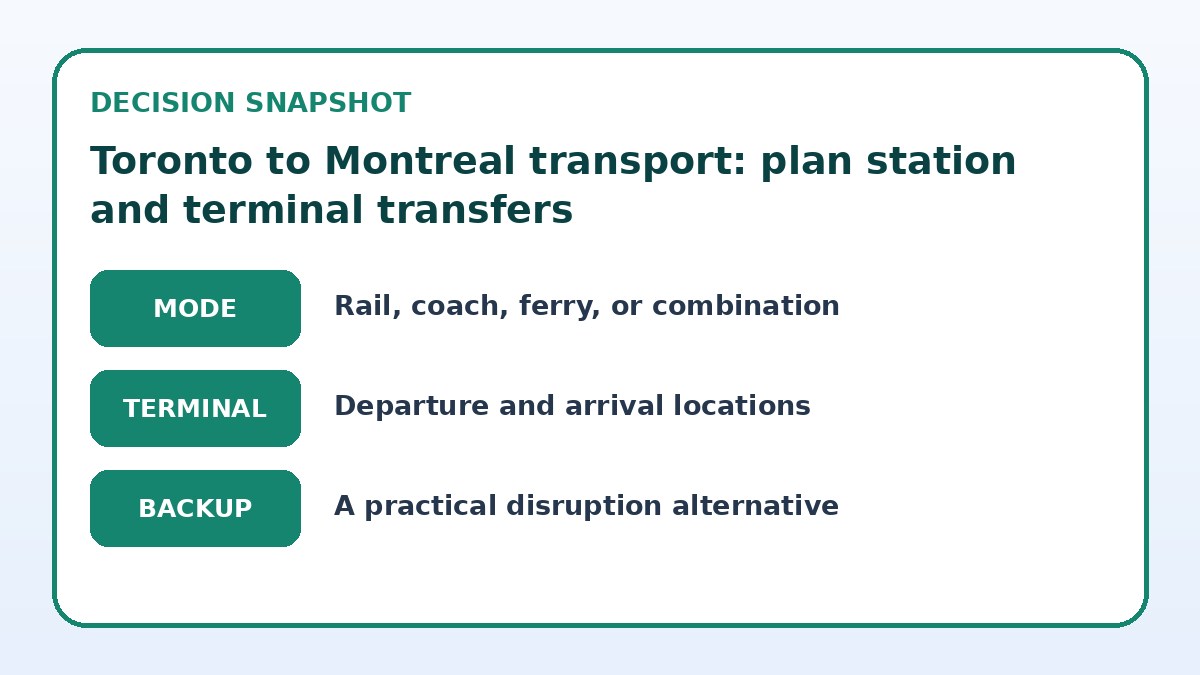
See current options before you compare the details
Availability and final conditions change. Open Trip.com now or keep reading for the practical comparison.
Deciding how to leave Toronto: stations, terminals, and luggage realities
Toronto offers multiple departure points depending on your mode of travel. Before you book, identify whether your trip starts at a train station or an airport terminal: each has different curbside layouts, elevator access, and staff support for heavy luggage. For train departures, check the station’s entry points and whether platforms are reachable without stairs; for flights, consider the transfer time required to clear check-in and security with extra bags. Where you drop off luggage and how far you’ll have to wheel it from curb to boarding point will shape whether you should hire a porter, pre-book a transfer, or rely on a rideshare.
When luggage is heavy or bulky, think beyond distance: consider the number of times you’ll need to lift bags into vehicles or up stairs, and whether elevators are reliably available on compressed schedules. Coordinate with whoever is picking you up or dropping you off so curbside zones are used legally and efficiently. If you’re connecting between downtown Toronto and an airport, weigh the predictability of a booked private transfer against potential traffic delays that could make earlier arrival necessary—more waiting time can be tolerable if it means avoiding manual carries across multiple segments.
Choosing the Toronto-to-Montreal intercity leg with extra baggage in mind
On the intercity segment, the main tradeoffs are how much baggage is allowed, where it’s stored, and how many transfers are required. Trains often allow larger carry-on items and have checked baggage options at stations; buses are cheaper but may require handling at baggage compartments and slower loading; flights may impose stricter size and weight rules but can remove the luggage-handling burden if checked. When comparing options, look at how baggage is transferred between vehicle and terminal—who lifts it, is it tagged, and will you need to collect and re-check it during a connection.
If you’re choosing between a direct service and an itinerary with connections, prioritize fewer handoffs. Each connection increases the chance you’ll need to move heavy bags between vehicles or across terminals. If a connection is unavoidable, ensure minimum connection times allow elevator use and formal baggage transfer. Finally, check whether onboard storage is accessible during the trip—on trains, you may need to stow large items in designated areas; on buses, loading and unloading may require staff assistance, so verify availability before departure.
| Approach | Best for | Tradeoff to check |
|---|---|---|
| Private door-to-door transfer | Travellers prioritizing minimal handling and direct pickup/dropoff | Higher cost and requires booking in advance; verify vehicle size for oversize bags |
| Public transit plus luggage carts | Budget-conscious travellers with manageable wheeled bags | May require multiple short carries and elevator use; less reliable with very large items |
| Train with station checked baggage | Those needing secure storage and fewer manual lifts during the trip | Requires arrivals to staffed stations and verifying baggage check rules on the booking page |
| Fly then taxi/transfer | When speed is essential and luggage fits aircraft checked-baggage rules | Airline baggage limits may be stricter; you may still face handling to and from terminals |
Ready to check the option that fits your plan?
Use your exact dates and traveler details so the provider page can show the current total and conditions.
Arrival in Montreal: terminal logistics, pickups, and last-mile solutions
Montreal’s arrival options vary by station and airport; local curbside configurations, elevator access, and baggage cart availability will shape the final leg. If you land at an airport, consider whether you will transfer into the city by train, shuttle, or private vehicle—each choice affects where you collect luggage and how many times it is handled. For train arrivals into a downtown station, check platform access and whether the station has staffed baggage services or accessible entrances to minimize stairs. Plan pick-up points where vehicles can legally stop and keep the number of short carries to a minimum.
For the last mile, a door-to-door private transfer or taxi often reduces physical effort and avoids crowded public transit; however, drivers may have limited space for oversize items, so confirm vehicle capacity when you reserve. If you prefer public transit, identify which entrances have elevators and where luggage can be left nearby while you purchase tickets. If your accommodation is within walking distance, map the best route in advance and note curb cuts, long sidewalks, or steps that could complicate wheeled baggage. Communicate clearly with hosts or drivers about arrival details so they can assist promptly.
Before you book
- Confirm luggage dimensions, weight limits, and extra-item fees on the transport provider’s final booking page before you book.
- Locate station and terminal entrances with elevators and note alternative accessible routes on a map.
- Book a private transfer or larger vehicle in advance if you have oversize or multiple suitcases.
- Label all bags clearly and attach a copy of your contact details inside each piece of baggage.
- Pack an easy-access day bag with essentials and documents so you don’t open main luggage during transfers.
- Plan at least one extra hour between connections to allow for elevator waits, traffic, or unexpected handling.
What to verify before booking and day-of tips for smooth transfers
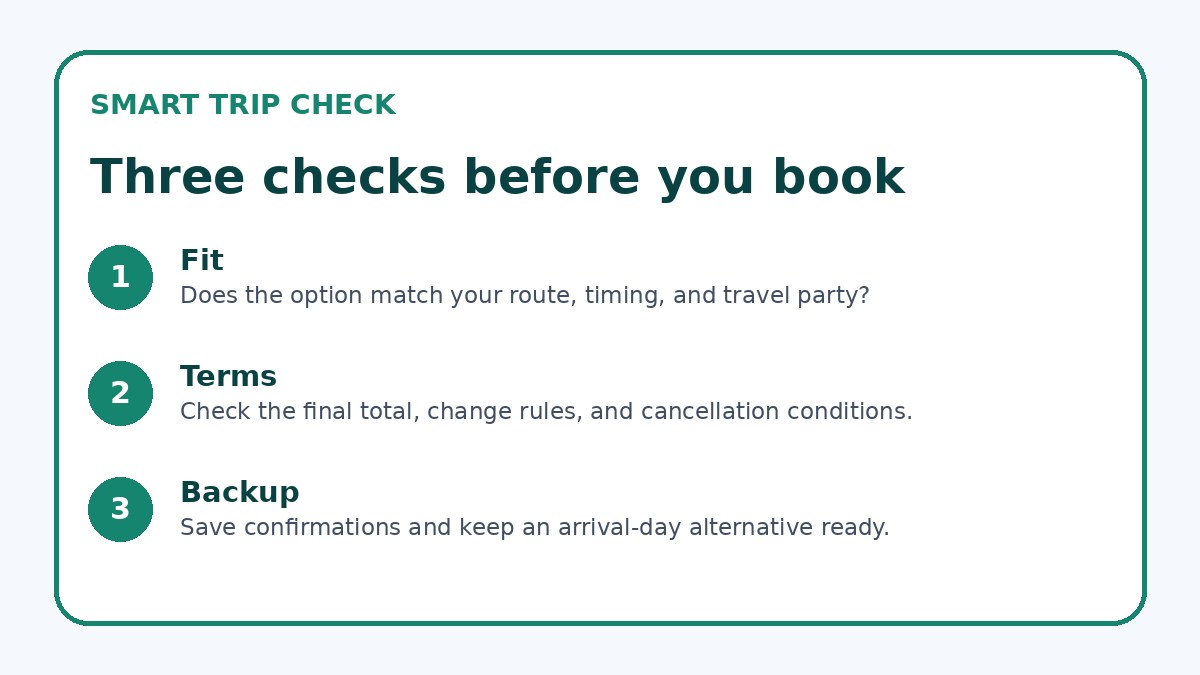
Before you finalize any booking, verify three things on the provider’s page: exact baggage allowances (size, weight, and counts), how/where luggage is handled at both origin and destination terminals, and any additional charges for oversized items or porters. Also confirm pick-up/drop-off locations and whether advance booking is needed for accessible services or large-vehicle requests. If using a third-party transfer company, check cancellation and weather-delay policies and ask how they manage unexpected waits or tight connections.
On travel day, build buffer time into your schedule and have an action plan for each transfer: where you will meet a driver, which entrance to use, and the alternative if an elevator is out of service. Keep digital copies of confirmations easily accessible and a small toolkit (straps, a compact trolley, luggage tags). Wear comfortable shoes and aim to travel with one bag you control at all times plus one larger piece to hand off to staff or a driver. Clear communication and pre-booked options reduce the physical toll of multiple transfers.
Frequently asked questions
How can I tell whether to choose a train, bus, or flight when I’m travelling with extra luggage?
Start by comparing the baggage policies and handling at origin and destination for each mode: trains often allow larger items and may offer station baggage checks, buses load luggage into undercarriage compartments, and flights restrict checked-size and weight but reduce active carrying during the trip. Next, map total handoffs: count how many times you’ll need to lift or transfer bags between vehicles or across terminals. If minimizing physical handling is the priority, choose the option with the fewest handoffs and confirm on the booking page how oversized items are handled and whether staff assistance is available.
Is it better to pre-book a private transfer for door-to-door service or use taxis on arrival with heavy luggage?
Pre-booking a private transfer guarantees a vehicle sized to your needs and reduces uncertainty about waiting times, which is valuable when you’re managing heavy items. Taxis can work if you can quickly hail or queue for one and if drivers have room for your luggage; however, peak times or limited vehicle sizes can complicate matters. If you consider taxis, verify typical taxi vehicle types at your arrival point and have a backup plan—such as a rideshare app or station porter—if the first option lacks space.
What should I do if an elevator or curbside zone is out of service on travel day?
Have contingency routes pre-identified: pick alternative entrances or ramps and note where staff can assist. If elevators are out, ask station or terminal staff for assistance—they may offer temporary staff help or direct you to a service elevator. For curbside closures, move to a nearby legal pick-up point and communicate the change with your driver or contact who is meeting you. Always allow extra time for these adjustments and keep important items with you to avoid repeated searches while rearranging.
Final planning note
Planning transfers for Toronto to Montreal travel when you have extra luggage is a balance of reducing physical handling, minimizing the number of handoffs, and choosing transportation that matches your bag profile. Start by mapping origin, intercity, and arrival points, and confirm baggage policies and curbside rules on provider booking pages. For the least effort, a pre-booked private transfer or train with station baggage service will usually reduce manual lifts; for budget travellers, public transit with luggage carts can work if you plan elevator-accessible routes and extra time. Before you book, verify vehicle capacity, elevator availability, and any oversized-item procedures; on travel day, communicate precisely and keep an essentials bag to make transfers smoother.
Continue planning
Check current options and final conditions
Use the provider page to confirm live availability, the final total, cancellation terms, and every condition that matters to your trip.
This evergreen planning guide was created with AI-assisted drafting and a structured quality review. It does not display live prices, schedules, availability, visa guidance, or provider rankings. Verify current details before booking. Some links are affiliate links; we may earn a commission at no additional cost to you.