Decide where to sleep first: for a short solo visit to New York City your best move is to choose a neighborhood that minimizes daily friction for the activities you want to do. If your priorities are museums and Midtown attractions, aim for a stay near Midtown or the Upper East/West Sides. If evenings out and nightlife matter, consider the Village, Chelsea, or Lower Manhattan. For lower cost and direct subway lines, outer Manhattan neighborhoods or parts of Brooklyn like Williamsburg are practical. This article gives the succinct answer up front — pick a neighborhood by matching one clear daily hub (work, sightseeing, nightlife, transit access) to your tolerance for walking and transfers — then explains the tradeoffs and the specific room features and booking terms to check so you can shortlist an area before checking live hotel inventory.

Check live stays in the areas that fit
Use your dates and party size to compare current rooms after you narrow the neighborhood fit.
Neighborhood fit: match your daily hub to a compact area
Start by selecting one or two anchors for each day of your short stay — examples are a museum cluster, Broadway theaters, a neighborhood where you’ll eat and drink, or a transit node where you’ll arrive and depart. For each anchor, ask: would I rather walk 10–20 minutes door-to-door, or take one quick subway ride? If most of your plans cluster in Midtown, be realistic about noise and pick side streets or smaller avenues. If your main goal is exploring neighborhoods like Greenwich Village or the West Village, book inside or adjacent to that neighborhood to preserve late-night energy.
Short trips benefit from compact geography. New York neighborhoods are dense; choosing one that contains most of your daytime activities eliminates repeated long transfers. Think in terms of walking radius (15–25 minutes) and subway lines (one transfer or none). For solo travelers who value safety and convenience, prefer well-lit streets and areas with late-night transit options. Avoid trying to split time evenly across distant hubs; instead plan one hub per day and base yourself centrally to it.
Choose an area-selection strategy
| Area approach | Best for | Tradeoff to check |
|---|---|---|
| Base near the main tourist cluster (Midtown/museum mile) | First-time visitors focused on major sights and theater | Higher noise and commercial feel; shorter travel to many attractions but less neighborhood charm |
| Stay in a neighborhood hub (Greenwich Village, Chelsea, Williamsburg) | Evening-focused solo travelers who want restaurants and nightlife nearby | May require longer commutes to some Midtown attractions and museums |
| Choose transit-node proximity (Penn Station, Grand Central) | Travelers relying on regional trains or needing fast airport transfers | Can mean busier streets, less picturesque surroundings, and more noise |
| Pick lower-cost outer Manhattan or Brooklyn areas | Budget-minded solo travelers willing to trade commute time for lower nightly rates | Longer daily travel and potential for more transfers; check late-night transit options |
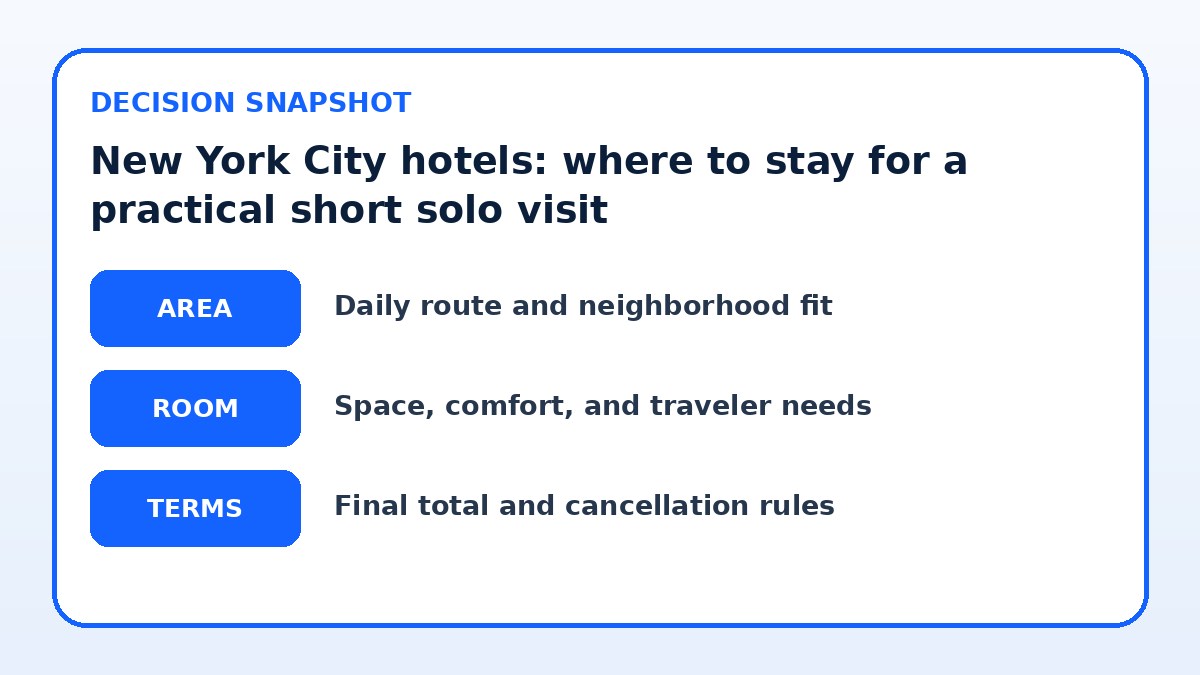
Daily-route friction: subway lines, walking, and realistic transfers
Compare routes from your hotel to each major activity rather than just distance on a map. A short walk to a station on a frequent express or a direct line is usually faster than a longer walk to a local-only station with multiple transfers. Use the number of transfers and typical stair climbs as your friction metric: each transfer can add 10–20 minutes plus waiting time. If you have a late arrival or early departure, prioritize hotels near LIRR, Penn Station, Grand Central, or direct subway lines that match your schedule.
Remember that elevators and accessibility matter if you carry a lot of luggage or prefer to avoid stairs. Check station access before booking; accessibility varies by stop and can change over time. For evening plans, consider the reliability and frequency of late-night subway service on your route. Walking is often faster than a winding subway trip across short distances, so factor in pleasantness of sidewalks, safety at night, and how enjoyable the walk will be for solo exploration.
Now compare like with like
Keep the same dates, guests, room needs, and cancellation preferences while you compare the final choices.
Room and party needs: what a solo traveler really needs in a short stay
For brief solo trips prioritize a private room with a comfortable bed, decent storage, a simple workspace, and reliable Wi‑Fi. A bathtub is nice but not essential; a good shower and strong hot water matter more. Consider noise mitigation: internal rooms or higher floors reduce street noise, while blackout curtains help if you plan early starts. If you expect to do work during the trip, confirm the desk size and lighting rather than assuming a sofa counts as a workspace.
Decide whether you want hotel services like daily cleaning, luggage hold, or a 24‑hour front desk. These conveniences can make short stays smoother but often come with stricter booking terms. For solo travelers who enjoy meeting people, a small hotel with a communal lounge or morning breakfast can be worthwhile; if you want rest and privacy, a boutique or business-focused hotel that emphasizes quiet may be better. Check the hotel’s exact room layout and photos before booking to avoid surprises.

Hotel booking check before payment
- List your top three daily hubs (sightseeing, nightlife, arrival/departure point) and rank them by priority for each day.
- Map walking times and subway routes from potential hotel areas to each hub; note number of transfers and expected stairs.
- Filter hotel results for private rooms with desk, strong Wi‑Fi, and clear noise-mitigation features in photos and descriptions.
- Open the hotel’s official booking page and confirm cancellation policy, deposit rules, taxes, and any mandatory fees.
- Check accessibility details for your station and the hotel if you have heavy luggage or mobility considerations.
- Confirm check-in/out windows and luggage storage options to avoid long waits on arrival or departure days.
Final booking terms: what to verify before you commit
Before opening live inventory, know which booking terms matter most to you: flexible cancellation, refundable deposit rules, check‑in/check‑out windows, and any mandatory fees. Hotels sometimes list resort or facility fees on their booking page; verify whether those are included in the quoted rate and whether taxes appear before final payment. If your arrival time is late or your departure early, confirm luggage storage and late‑check or early‑check policies to avoid awkward waits at the lobby.
When comparing rooms, read the provider’s room policies and the hotel’s own booking page—don’t rely solely on third‑party summaries. Confirm smoking policy, pet rules, extra person charges, and whether housekeeping is daily or on request. If a specific amenity matters—gym, laundry, breakfast—verify availability and hours on the hotel page. You may want to compare inventory on Trip.com as one option to see current availability, but always cross‑check the hotel’s official terms before finalizing.
Hotel Guide questions travelers ask
How do I choose between staying in Manhattan versus Brooklyn for a short solo trip?
Choose Manhattan if you want short walks to classic tourist sites, Broadway, and major museums—this reduces transit time between hotspots. Pick Brooklyn neighborhoods like Williamsburg or Brooklyn Heights if you prefer a more local vibe, cafes, and nightlife that’s walkable within the neighborhood; expect longer subway rides to Midtown and some museums. For short trips, favor whichever side contains most of your daily plans; the time you save by avoiding transfers will make your fewer days feel longer.
Is it worth paying more for a hotel near Penn Station or Grand Central?
Paying more for proximity to a major station can be worth it if you arrive or depart by regional train or have early/late travel connections, because it reduces stress and transfer time. If you’re flying in and out with significant luggage, being close to a direct airport rail link may save time even if the room costs more. However, if your trip is purely local sightseeing within Manhattan, a neighborhood with direct subway lines to your hubs may be a better value than being adjacent to a busy station.
What room features matter most for a solo traveler on a short stay?
Prioritize a comfortable bed, strong Wi‑Fi, and a basic workspace if you’ll do any planning or work. Good soundproofing or a higher floor improves sleep quality on short trips. Adequate storage and a reliable shower matter more than extra space you won’t use. Also check for luggage hold and 24‑hour front desk service if you have odd arrival times—those simple conveniences can significantly smooth a brief solo trip.
Final decision note
For a short solo stay in New York City the single most practical step is to choose a neighborhood that contains the majority of your daily activities or gives you a direct, low‑transfer route to them. That reduces wasted time and preserves energy for exploring. Once you’ve picked a neighborhood, shortlist rooms with the essential solo-traveler features—private room, decent workspace, good Wi‑Fi, and clear noise information—then verify cancellation terms, fees, and check-in details on the hotel’s booking page. Use the comparison rows and checklist to finalize two or three candidate areas, then open live inventory (Trip.com can be one option) and confirm the provider’s exact policies before booking. This approach makes a short New York visit feel manageable, efficient, and enjoyable.
Continue planning
Check current options and final conditions
Use the provider page to confirm live availability, the final total, cancellation terms, and every condition that matters to your trip.
This evergreen planning guide was created with AI-assisted drafting and a structured quality review. It does not display live prices, schedules, availability, visa guidance, or provider rankings. Verify current details before booking. Some links are affiliate links; we may earn a commission at no additional cost to you.