If you’re traveling to Sapporo with extra luggage, the first practical question is whether renting a car actually improves your trip. Driving gives you flexibility to reach ski areas, coastal viewpoints, or rural onsen towns without juggling trains and multiple transfers. But bulky bags change the equation: you need a vehicle with enough trunk space, clear mileage allowances, and a predictable fuel policy to avoid surprise charges. This article gives the direct answer up front — check trunk capacity and per-kilometer mileage rules, plus whether fuel must be returned full or can be paid for by the company — then explains how those checks affect route planning, insurance wording, pickup and return friction, and a realistic non-driving fallback. Follow the verification checklist before you book and know which phrases to look for on the final supplier page.
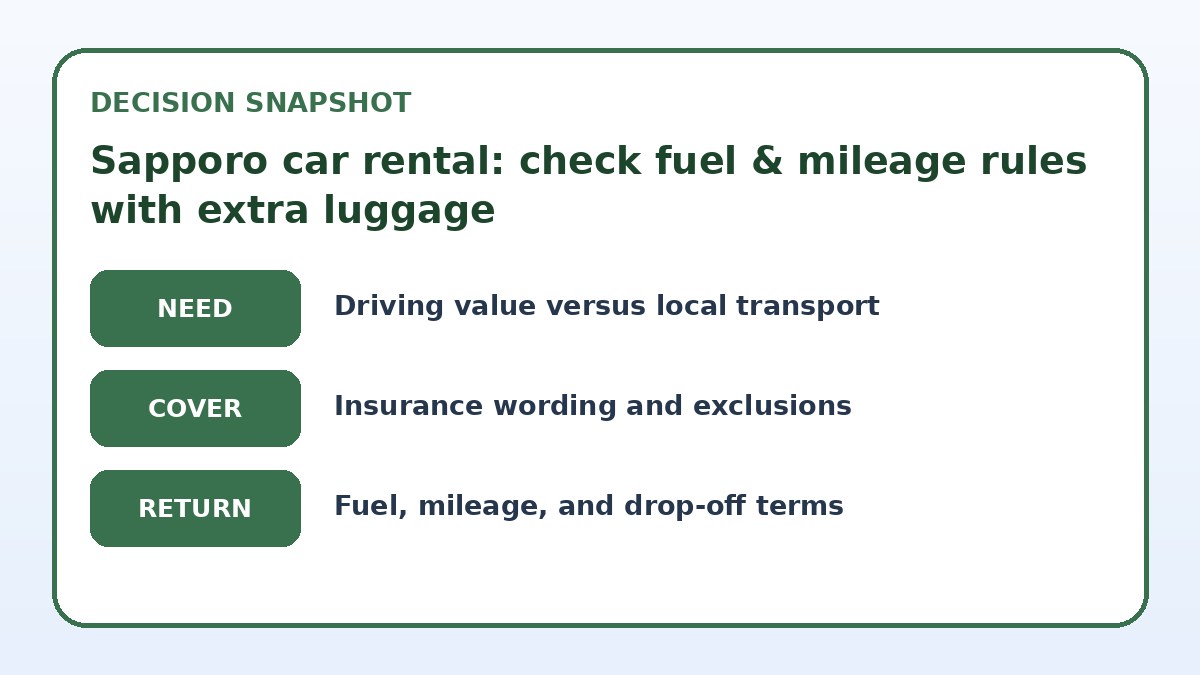
Does driving actually help your Sapporo itinerary?
Start by mapping where you want to go from central Sapporo: coastal Otaru, Niseko and nearby resorts, Jozankei Onsen, or Muroran. Driving adds clear advantages when destinations are spread out, public transit requires multiple transfers with stairs and luggage handling, or you plan side trips with heavy gear. If most of your time is inside Sapporo city, Hokkaido’s efficient subway and tram network often removes the need for a car; however, if you’re carrying skis, oversized suitcases, or photographic gear and you value doorstep convenience, a rental can save time and stress.
Weigh door-to-door convenience against parking, winter driving conditions, and extra fees for roof boxes or larger vehicle categories. Consider whether a single larger vehicle is preferable to multiple taxis or luggage forwarding services. If your planned drives are long — for example a day trip to mountain areas — check mileage rules carefully: per-day limits, excess-kilometer charges, and whether round trips between islands or prefectures are covered. These practical comparisons will determine whether driving truly improves the trip.
Decide whether driving earns its place
| Mobility strategy | Best for | Cost or friction to check |
|---|---|---|
| Rent a larger car with clear mileage and full-to-full fuel | Travelers with lots of luggage who want door-to-door flexibility | Higher rental category and fuel consumption; check trunk dimensions and per-km caps |
| Use public transit plus taxis for heavy-luggage legs | City-focused travelers avoiding driving and parking hassles | Potentially more transfers and higher taxi costs for bulky items |
| Book a standard car and add a roof box if insurer permits | Groups needing extra capacity without renting a larger vehicle | May affect insurance coverage and fuel consumption; verify installation rules |
| Skip driving and use luggage-forwarding services | Travelers valuing light transit between stations and hotels | Extra handling time and service fees; coordination required for deliveries |
Check live rental choices only after the route test
Use the exact driver, dates, pickup point, and return plan to compare current conditions.
What to verify about fuel and mileage before you book
Fuel policy language varies and can greatly affect cost and convenience: common models include 'full-to-full' (you return the same amount of fuel), 'prepaid fuel' (you pay for a tank upfront), and 'fuel charges' (company refuels at a fixed rate). For travelers with extra luggage, full-to-full is often simplest — you refuel locally and avoid company service charges that may be punitive. On the booking page, look for explicit phrases such as 'return with same fuel level' or 'prepaid fuel non-refundable' and note any per-liter refuelling fees the company lists to compare real costs.
Mileage terms also matter: verify included kilometers per rental day or per trip and the excess-kilometer rate. Some rentals offer unlimited mileage while others set tight daily caps; excess charges are often stated as a per-kilometer rate. If you plan long drives from Sapporo to Niseko or coastal loops, calculate expected kilometers and multiply by the excess rate to estimate possible overage fees. Always save a screenshot or PDF of the supplier’s fuel and mileage clauses on the final booking page; those are the exact terms you’ll need at pickup or in case of a dispute.
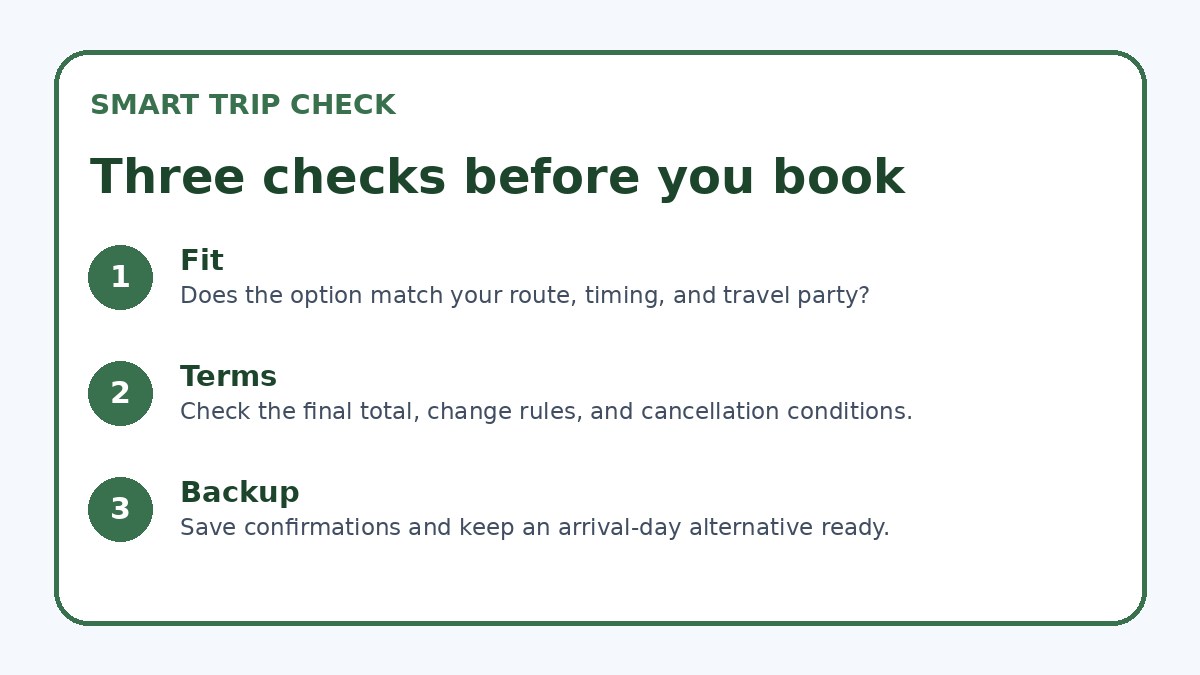
Compare the full rental conditions
Confirm insurance wording, exclusions, deposit, fuel, mileage, and return terms on the final page.
Insurance wording, luggage coverage and pickup/return friction
Read insurance and liability sections closely for how they handle luggage damage, rooftop carriers, and roadside assistance. Standard collision damage waivers (CDW) often limit liability for the vehicle but may exclude personal effects stored inside or on the roof. Look for explicit mentions of 'personal belongings' coverage or exclusions and check whether rooftop boxes require separate declarations. If you plan to mount bikes or skis to the roof, verify whether that voids certain protections and whether an extra waiver is available to cover both the carrier and the stored items.
Pickup and return friction increases when you have large bags: find out whether the rental counter is inside the airport terminal or requires a long shuttle, whether there are dedicated luggage assistance lanes, and what late-return and after-hours procedures are. Ask whether staff can demonstrate roof-box latches and trunk release before you drive off. If pickup involves a remote depot, check whether that depot can handle your baggage volume without multiple trips. These operational details are often in the FAQ or terms on the final booking page — confirm them before you commit.
Car rental terms to verify
- Confirm trunk capacity with measurements or examples (number of large suitcases) on the final booking page before you reserve.
- Verify the fuel policy wording (full-to-full, prepaid, or refuelling charge) and any per-liter refuel fees listed by the provider.
- Check included mileage limits and excess-kilometer rates; calculate expected kilometers for planned routes to estimate overage costs.
- Read insurance exclusions for personal belongings, rooftop carriers, and whether additional waivers are available for luggage or equipment.
- Ask the supplier about pickup/return logistics for bulky bags, including shuttle details, after-hours drop-off, and counter location.
- If using a roof box or carrier, confirm installation instructions, weight limits, and insurer approval on the rental company’s terms page.
Non-driving fallback and practical packing strategies
If you decide not to drive, plan a realistic fallback that reduces luggage friction: use airport-to-hotel luggage forwarding services, choose a hotel near Sapporo Station with luggage storage, or combine public transit with short taxi legs for heavy loads. These options keep you mobile without the responsibility of winter driving or parking fees. For ski travelers, many resorts and operators offer equipment delivery or storage; confirm these options before leaving Sapporo so you can travel light on trains and buses.
If you choose to drive but want to minimize hassles, pack strategically: consolidate items into one large, soft-sided bag that fits trunk contours, reserve a vehicle category with a clearly stated trunk capacity, and consider a roof box only if the rental insurer allows it and the company documents correct installation. Keep vital documents and fragile items inside the cabin. Finally, always compare the final rental terms — Trip.com can be used to view current availability and policies, but rely on the rental company’s booking page for the definitive fuel, mileage, and insurance wording.
Car Rental & Road Trip questions travelers ask
What fuel policy should I prefer when carrying extra luggage?
For travelers with bulky bags I recommend a clear full-to-full policy: you pick up the car with a full tank and return it similarly, refueling locally to avoid inflated company refuel rates. Prepaid fuel can be convenient if you expect heavy driving, but check whether any unused portion is refundable. On the supplier’s final booking page, verify exact wording such as 'return with same fuel level' or 'no refunds on unused prepaid fuel' and confirm the company’s listed refuelling charge per liter if they refuel for you.
How do mileage caps affect multi-day drives from Sapporo?
Mileage caps are commonly set per day or per rental; exceeding them triggers per-kilometer fees that quickly add up on long loops to Niseko or coastal routes. Before booking, estimate your total planned kilometers and multiply by the excess-kilometer rate shown on the provider’s terms page to see potential overage costs. If you expect long drives, prioritize rentals that explicitly state 'unlimited mileage' or a generous daily allowance, and keep a running odometer check during the trip to avoid surprises.
Will rooftop boxes void insurance or create extra charges?
Rooftop boxes often require explicit declaration and sometimes additional fees; some insurers exclude damage related to improperly installed carriers. Always confirm on the rental company’s final booking or terms page whether roof boxes are permitted, whether they require professional installation at the depot, and whether an extra waiver is necessary to extend coverage to the box and its contents. Keep documentation of installation and any additional insurance purchased to present in case of claims.
Final decision note
For many travelers with extra luggage, renting a car in Sapporo can be a practical choice—if you validate trunk capacity, choose a clear fuel policy, and confirm mileage allowances and insurance wording. The decision hinges on route value: if your plans include multiple out-of-town destinations or door-to-door transfers with heavy gear, a larger car with full-to-full fuel and transparent mileage limits will usually save time and handling stress. If most activities are inside Sapporo, public transit plus targeted taxis or luggage services may be simpler. Before you book, save the rental provider’s fuel, mileage, and insurance clauses and ask any questions the terms don’t answer; those exact phrases are what matters at pickup and return.
Continue planning
Check current options and final conditions
Use the provider page to confirm live availability, the final total, cancellation terms, and every condition that matters to your trip.
This evergreen planning guide was created with AI-assisted drafting and a structured quality review. It does not display live prices, schedules, availability, visa guidance, or provider rankings. Verify current details before booking. Some links are affiliate links; we may earn a commission at no additional cost to you.