Practical answer first: renting a car in Auckland is worth it when your plans include wineries on Waiheke, day trips to Waitomo and Coromandel coastal drives, or flexible arrival and departure logistics—provided you understand the insurance wording and accept the financial exposure spelled out in the rental contract. If most of your time is inside central Auckland, public transport, taxis, and rideshares usually cover the city purposefully and with far less paperwork. For solo travellers, the real decision hinges on two documents: the rental agreement’s insurance and excess clauses, and the credit-card or third-party policy fine print. Read them together and compare who covers what, for which drivers, and under what conditions. Below I explain which contract phrases matter, how they change your out-of-pocket risk, pickup and return frictions to expect, and a clear non-driving fallback so you can choose with confidence.
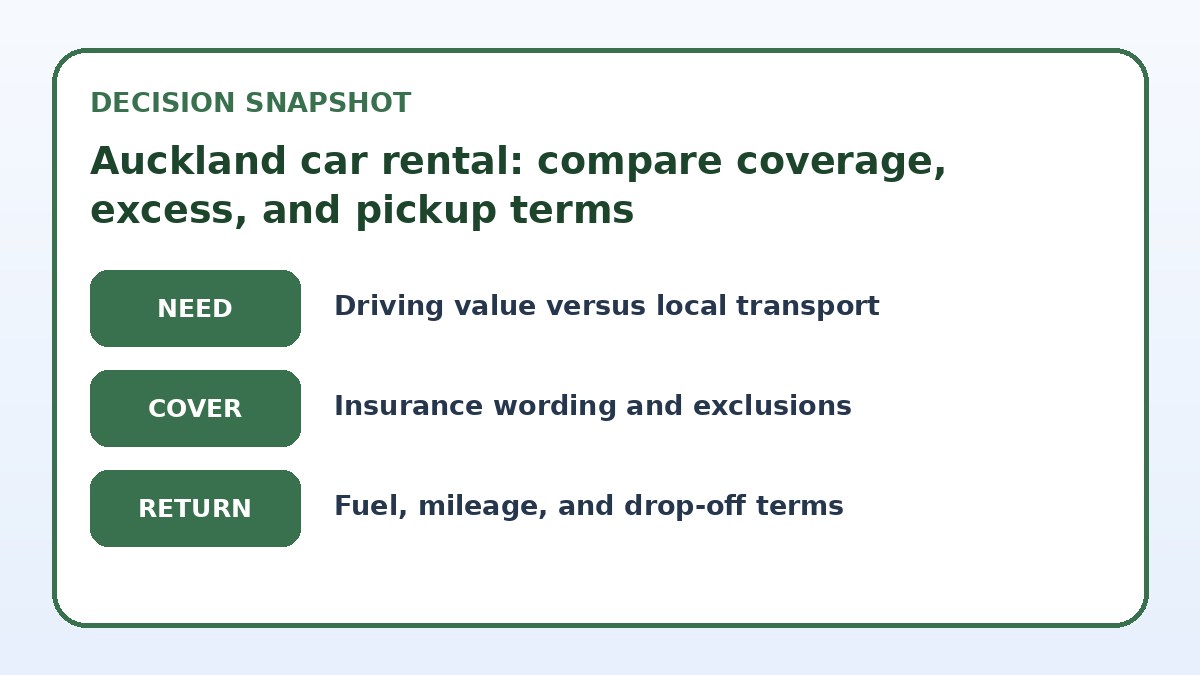
Does driving add value to your Auckland trip?
Start by matching your itinerary to what a car actually delivers. In-city sightseeing, museum visits, and evenings in Ponsonby or Viaduct Harbour usually don’t require a car—Auckland’s public transport, ferries to nearby islands, taxis, and rideshares are competitive for single travellers and avoid parking hassles. A rental becomes compelling when your plans include flexible day trips with multiple stops, early-morning departures to catch a ferry, or reaching rural attractions where timetables are sparse. Consider whether a car shortens transit time meaningfully and lets you visit places that are difficult with public transport.
Also think about personal convenience versus paperwork. Driving gives you independence, but solo travellers carry all administrative burdens—pickup inspections, fuel paperwork, and responsibility for any damage. If a rental’s insurance wording includes strict exclusions for gravel roads or certain driver ages, that can eliminate key day-trip options. Weigh the freedom of a car against the extra time and potential financial exposure described in the insurance and rental terms, then test-drive your decision by mapping one representative day with and without a car.
Decide whether driving earns its place
| Mobility strategy | Best for | Cost or friction to check |
|---|---|---|
| Self-drive rental | Complete flexibility, multi-stop day trips, early departures or remote sites | You assume insurance excess, carefully check exclusions, and manage pickup/return documentation alone |
| Rideshare and taxis | City-only travel and short hops without paperwork or excess risk | Higher per-trip cost for long journeys and limited control over rural itineraries |
| Organised day tours | Stress-free access to rural attractions with operator insurance and guides | Fixed schedules, less flexibility, and you must trust the operator’s coverage and cancellation terms |
| Private driver or chauffeur | Door-to-door convenience and bespoke routing without rental insurance complications | Usually more expensive than car hire for extended use and depends on trusted providers |
Check live rental choices only after the route test
Use the exact driver, dates, pickup point, and return plan to compare current conditions.
Understand the insurance wording that drives your financial risk
Insurance language is where decisions become tangible. Focus on these terms: 'excess' (the amount you pay on a claim), 'collision damage waiver' or CDW (a supplier option that reduces or eliminates excess), 'loss of use' or downtime charges, and 'third-party liability' (coverage for damage you cause to others). For solo travellers, two common traps are age-based surcharges or exclusions and requirements that all drivers be named on the contract—if your credit card insurance requires the driver to be the cardholder, that can matter even if the supplier’s policy looks generous.
Equally important are exclusions listed in the policy wording. Look for specific phrases such as 'unsealed roads', 'driving on beaches', 'off-road use', and 'full fuel tank return' —each exclusion can void your coverage for plausible scenarios in New Zealand. If the agreement mentions tyres, windscreens, or underbody damage as excluded, prepare for small claims you’ll otherwise carry. For any unclear clause, ask the rental company to point you to the exact paragraph in the contract and get confirmation in writing at pickup.
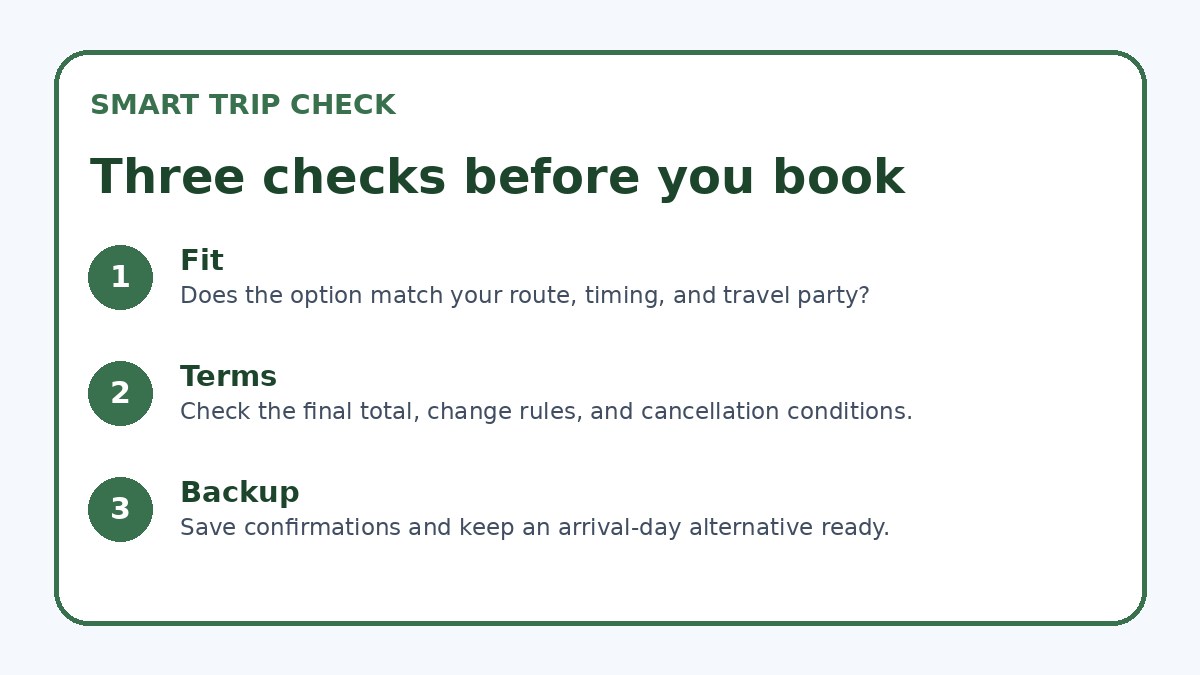
Compare the full rental conditions
Confirm insurance wording, exclusions, deposit, fuel, mileage, and return terms on the final page.
Pickup and return friction: what to expect and check in person
Pickup and return are the moments where insurance wording meets reality. At pickup, the agent should walk the vehicle with you and record existing damage on the condition report; insist on photographic evidence with timestamps if possible. Note any discrepancies between the written condition and what you observe. Ask explicitly how 'pre-existing damage' is determined and whether the company allows you to photograph the entire vehicle as proof—if they refuse, that’s a red flag. Also confirm fuel policy, mileage limits, and how additional driver fees are processed.
On return, follow the same meticulous routine: refuel according to the contract, document the car’s condition in daylight if possible, and request a final condition report. Keep all receipts and take photos or video showing odometer and fuel level. If you’re returning outside office hours, verify the out-of-hours process and who is liable for post-return claims. The insurance wording may permit after-the-fact damage claims within a set window; having timestamped proof reduces dispute risk and protects a solo traveller from unexpected charges.
Car rental terms to verify
- Read the rental agreement’s insurance and excess sections line-by-line and note the exact excess amount in the contract.
- Confirm whether your credit card or third-party policy names you as an eligible driver and covers rentals in New Zealand—get policy wording.
- Ask the rental company to identify exclusions in writing (unsealed roads, tyres, windscreens, underbody) and save that confirmation.
- Take time-stamped photos or video of the whole car at pickup and drop-off, including odometer and fuel gauge.
- Clarify out-of-hours return procedure and how post-return damage claims are handled; request contact details for disputes.
- Map one representative day of your itinerary with and without a car to compare time, cost, and coverage exposure.
Non-driving fallback: alternative mobility strategies in Auckland
If the insurance terms or your comfort level say 'don’t drive', plan a reliable fallback that still lets you see Auckland and nearby regions. Use a mixture of public transport, ferries, organized day tours, and rideshare services. Ferries connect downtown Auckland to Devonport and Waiheke Island for vineyards and beaches; buses and trains reach regional hubs and suburbs efficiently. For longer excursions where public transport is impractical, consider booking a reputable small-group tour or a private driver for a day—this transfers insurance and driving risk to the operator.
When you swap driving for other options, pay attention to booking terms and cancellation policies—some day tours include transport and entrance fees, which simplifies planning. Also consider splitting a single outing with a guided transfer: for example, a tour to Hobbiton or Waitomo can handle rural driving logistics, while you keep free time in central Auckland. This hybrid approach preserves convenience without exposing you to ambiguous rental contract clauses or excess liabilities.
Car Rental & Road Trip questions travelers ask
Can I rely on my credit card insurance to cover a rental car in Auckland?
Maybe—many cards offer rental insurance but they differ widely. Check your card’s policy wording for New Zealand coverage, any age limits, vehicle-class exclusions, and whether the cardholder must be the primary driver. Confirm if the card excludes theft or certain types of damage like tyres or windscreens. Before pickup, phone the card issuer’s insurance number to confirm coverage for the specific rental and request a reference; insist on the exact clause numbers you might cite in a claims dispute.
What does 'excess' mean and how can I reduce it?
Excess is the amount you’re obliged to pay if the rental car is damaged or stolen. Rental companies typically offer collision damage waivers (CDWs) or excess-reduction products that lower or remove this payment, but those options cost extra. Alternatively, third-party insurers sell excess-cover policies that reimburse you after a claim—read their contract for exclusions and processing times. Whatever path you choose, ensure the reduction applies to all common damage types listed in the rental agreement and get proof of purchase before driving away.
What common exclusions void coverage and how do I avoid them?
Common exclusions include driving on unsealed or restricted roads, off-road use, driving under the influence, unauthorised drivers, and damage to tyres, windscreens, and underbody. To avoid voiding coverage, obey local restrictions, follow road-surface guidance in the rental terms, and ensure any additional drivers are declared and authorised. If you plan to visit rural or coastal areas where roads may be unsealed, ask the rental company explicitly whether those routes are permitted and get their answer in writing.
Final decision note
For solo travellers, the core decision about renting a car in Auckland isn’t simply whether driving is enjoyable; it’s whether the insurance wording and operational terms make the risk acceptable for your itinerary. If your days require rural access, multi-stop flexibility, or early transfers that public transport doesn’t cover, a rental can be the right tool—provided you limit exposure by reducing excess, understanding exclusions, and documenting vehicle condition thoroughly. If your trip stays inside the city or you prefer to avoid paperwork and potential disputes, rideshare, taxis, and organised tours are viable alternatives. Before you book, compare the exact contract clauses on the supplier’s final booking page, and consider Trip.com or similar platforms only as one place to check current availability and terms.
Continue planning
Check current options and final conditions
Use the provider page to confirm live availability, the final total, cancellation terms, and every condition that matters to your trip.
This evergreen planning guide was created with AI-assisted drafting and a structured quality review. It does not display live prices, schedules, availability, visa guidance, or provider rankings. Verify current details before booking. Some links are affiliate links; we may earn a commission at no additional cost to you.