If you’re a solo traveler tracking Seoul travel deals with price alerts, the practical answer is: use alerts to gather options, not to trigger instant purchases. Set alerts for identical dates and the same traveler profile, then compare bundle inclusions, refund and change rules, and how much control you keep over each element (flight times, hotel choice, luggage). Alerts are best used as a timed research tool—collect multiple alerts, set a short evaluation checklist, and wait at least 24–72 hours before acting. That pause reduces impulse risk and gives time to verify final booking pages for change fees, cancellation terms, transfer details, and any mandatory extras. Below I’ll walk through the tradeoffs between packaged deals and separate bookings, how to judge flexibility and real value for one-person travelers, and a clear checklist to use once an alert pops up.
Test package value fairly
| Booking approach | Best for | Tradeoff to check |
|---|---|---|
| All-in-one package (flight + hotel + transfer) | Travellers who prefer a single checkout and predictable logistics | Often less flexible; verify change/cancellation rules because convenience can come with stricter penalties |
| Flight and hotel bundle with limited add-ons | Solo travelers seeking some convenience but still retaining control over extras | May save time but require checking baggage and seat policies separately to confirm true value |
| Separate booking: buy flight and hotel independently | Those who prioritize flexibility and want to shop each component for best-fit options | More transaction steps and potential loss of bundled perks; must manually ensure dates and names match |
| Alert-only monitoring, then manual purchase | Disciplined solo travelers who want to use alerts for market timing without impulse buys | Requires patience and active comparison; alerts are informational, not a substitute for final-term verification |
Check current package and separate options
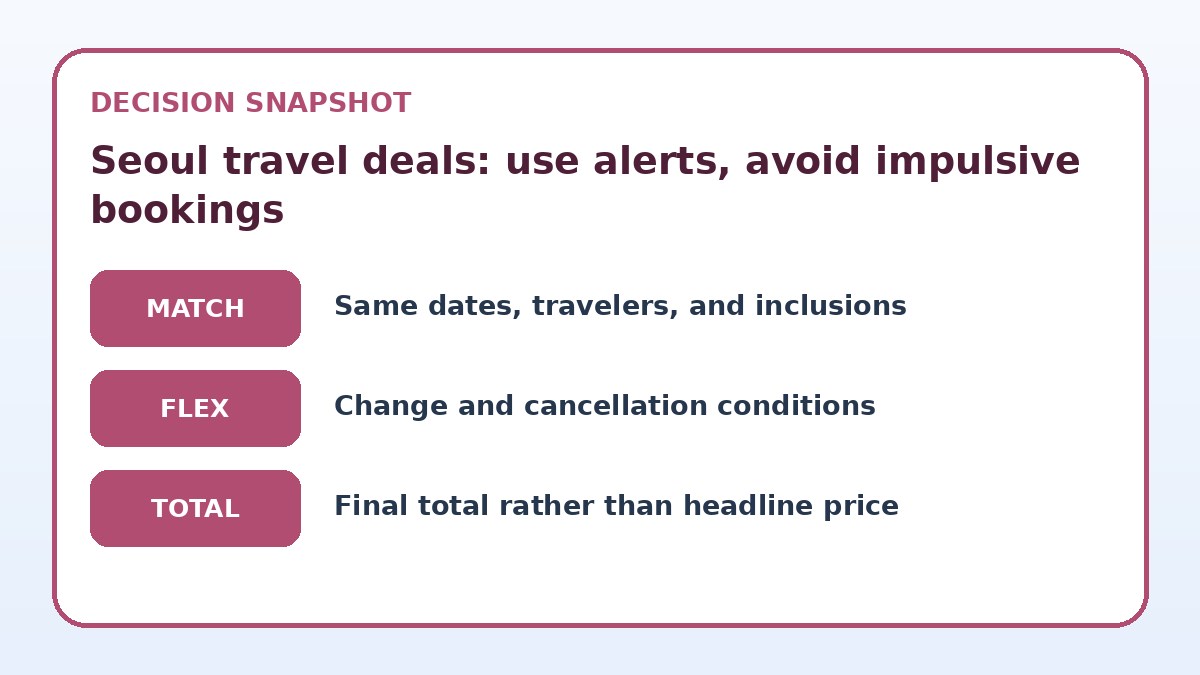
Use identical dates, travelers, room needs, baggage, and flexibility so the comparison stays meaningful.
What to compare before judging a bundle useful
Before deciding whether a package is worth it, line up apples-to-apples comparisons. That means the same travel dates, the same single traveler profile (adult, age-based fares), identical origins and destinations, and the same number of nights. Don’t let a lower headline fare sway you if it’s for different travel days, a different cabin or fare type, or excludes baggage. Also check whether the listed hotel is refundable or if the rate is non-refundable—those conditions change the real cost of flexibility and can be decisive for a solo traveler who may want to shift plans last minute.
Next, compare what’s included in the bundle: checked baggage, seat selection, transfers, breakfast, and any tour inclusions. Some packages bundle transfer services or a city tour that look valuable but aren’t relevant to your style; you might prefer to book a cheaper flight and a different neighborhood hotel separately. Equally important: verify the final price on the provider’s booking page, because online packages sometimes show pre-tax or pre-fee amounts that only update at checkout. Always confirm total out-the-door cost and cancellation/change penalties before concluding whether a package is genuinely better.
Inclusions vs. flexibility for the solo traveler
Included extras—like checked baggage, transit passes, and guided activities—can be convenient, but they reduce flexibility if they’re non-transferable or tied to set times. Travelers who prefer to keep days open, try neighborhood cafés, or change hotels mid-trip should prioritize refundable or flexible options. For solo travelers concerned about single supplements, read the booking terms carefully: some packages factor a single occupancy fee into the headline price while separate hotel bookings let you choose a room type or a guesthouse that doesn’t charge extra.
Flexibility shows up in two ways: the ability to change the flight or hotel without heavy penalty, and the freedom to unbundle the itinerary when you want. If you value changing arrival time or staying longer in Seoul, a slightly higher refundable fare or a hotel with a flexible cancellation window can be more valuable than a ‘cheap’ bundled price with strict terms. Always calculate the cost of likely changes—how much you’d pay to move the flight or cancel the hotel—then compare that to the potential savings offered by a package.
Look past the headline total
Compare inclusions and change conditions before deciding whether a package is genuinely useful for this trip.
Deal comparison checklist
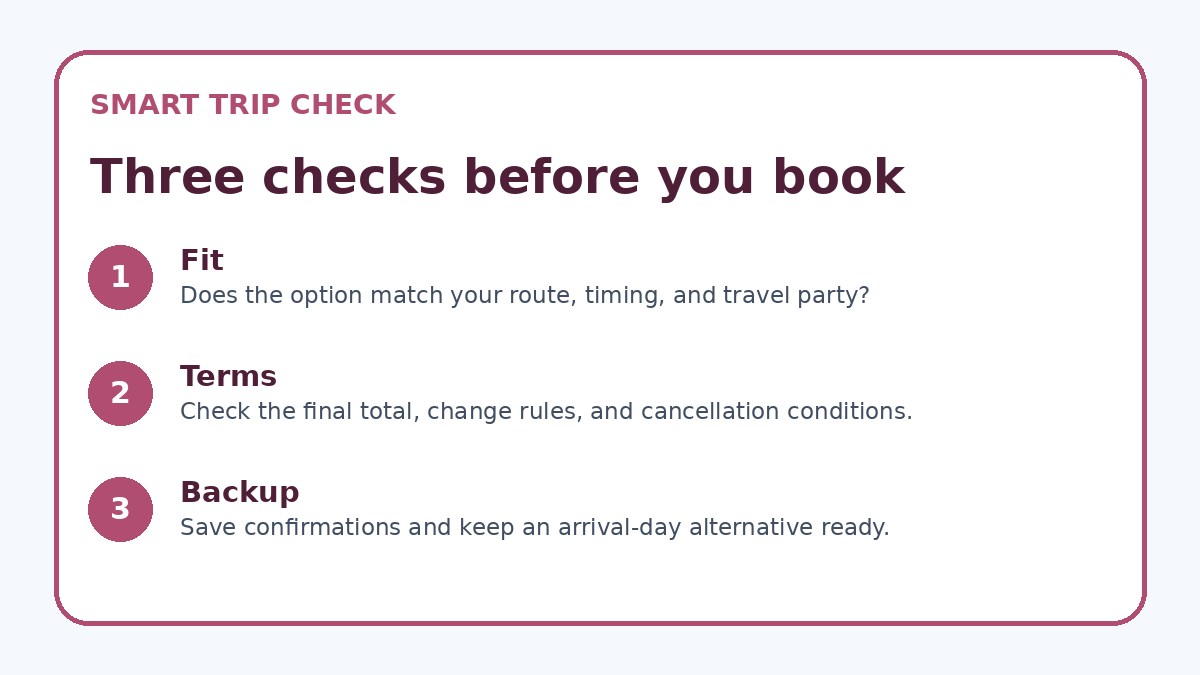
- Match the exact travel dates, origin, and passenger count across all alert options before comparing prices.
- Open the provider’s final booking page to confirm total price, taxes, fees, baggage and seat policies.
- Compare the package against separate flight and hotel bookings for the same itinerary and conditions.
- Check change and cancellation penalties for every component: flight, hotel, transfer, and included activities.
- Set a mandatory decision window (24–72 hours) after an alert triggers to re-check alternatives and avoid impulse.
- Log any loyalty or card benefits that apply only to direct bookings and factor them into your cost comparison.
Traveler-specific value: what solo travelers should prioritize
Solo travelers often prioritize simplicity, safety, and neighborhood convenience over extras they won’t use. Prioritize hotels near transit lines like Seoul Metro stations or areas you plan to explore, rather than a distant hotel that’s cheaper on paper. When an alert shows a package with a hotel that adds long transfers, factor the time and transport cost into your evaluation. Also, weigh whether included meals or guided group activities truly fit your solo travel style; if not, the package isn’t saving you meaningful value.
Consider also seat and luggage policies when a single traveler is booking a short trip. Low-cost fares with no seat selection or bag included may be cheap initially but add cost and stress later. Conversely, some packages include baggage and a standard seat at a slight premium; that can be worth it if you value a single all-in booking experience. The right choice depends on how much you value changing plans, your tolerance for extra fees, and whether you want fewer transaction points on the trip.
How to verify final terms and avoid false savings
When an alert looks promising, click through to the provider’s final booking page and verify each condition that could change the deal: taxes and fees, baggage rules, seat selection fees, change and cancellation penalties, and whether the hotel rate is refundable. Check whether the package price assumes online-only payment, third-party insurance, or non-refundable deposits. If the bundled itinerary includes transfers or activities, confirm the provider’s cancellation and rescheduling policies for those elements too—sometimes transfers are non-refundable, which alters the effective flexibility.
Also compare the same itinerary as separate purchases: the exact flight(s) you’d get in the package and the exact hotel nights. Factor in any loyalty benefits you might use, and whether your credit card offers trip protections that apply only to direct bookings. Use a simple spreadsheet row for each option to ensure you compare total cost, total cancellation exposure, and total convenience. If you use an aggregator or alert service, you can also re-check the quoted items on the airline, hotel, and tour operator pages for any fine-print differences before booking.
Travel Deals & Booking Strategy questions travelers ask
Can price alerts be trusted for planning a solo trip to Seoul?
Price alerts are a useful market signal but not a guarantee. Use them to gather options and timing information rather than as a final booking trigger. When an alert fires, check the exact itinerary the alert referenced—dates, carrier class, and baggage allowance—and then confirm total cost and terms on the provider’s checkout page. Alerts may miss mandatory taxes or optional extras; always verify final cancellation and change rules and consider whether those rules fit a solo traveler’s need for flexibility.
Should a solo traveler book a bundled deal if an alert shows a good price?
A good-looking alert should prompt a side-by-side comparison, not an immediate purchase. Ask whether the bundle’s inclusions actually match your needs—baggage, transfers, hotel location, and cancellation policies—and compare that bundle to separate bookings for the identical dates and traveler profile. If the bundle restricts changes or adds a single-occupancy fee, the apparent savings can vanish. Only proceed after verifying the final booking page and ensuring the bundle’s conditions align with your itinerary and comfort with change.
How do I avoid impulse booking when a limited-time alert appears?
Use a disciplined response plan: when an alert appears, capture the full offer details and add them to a comparison list. Enforce a cooling-off period (24–72 hours) before booking, during which you confirm the same itinerary’s price on the airline and hotel pages, check cancellation fees, and re-evaluate your calendar. If you rely on alerts frequently, standardize the comparison fields you check each time—total price, refundable status, baggage, transfer logistics—so you can decide rationally rather than emotionally.
Final decision note
Price alerts are a powerful tool for solo travelers planning Seoul travel deals, but they work best when combined with deliberate comparison and a cooling-off routine. Treat alerts as prompts to verify the same itinerary across providers, check final checkout terms, and weigh flexibility against any apparent savings. For many solo travelers, a slightly higher refundable option or separate hotel choice near transit can reduce stress and cost if plans change. When an alert looks tempting, pause, compare like-for-like, and confirm all fees and policies on the booking page before you click purchase.
Continue planning
Check current options and final conditions
Use the provider page to confirm live availability, the final total, cancellation terms, and every condition that matters to your trip.
This evergreen planning guide was created with AI-assisted drafting and a structured quality review. It does not display live prices, schedules, availability, visa guidance, or provider rankings. Verify current details before booking. Some links are affiliate links; we may earn a commission at no additional cost to you.