If your trip to Rome includes exploring beyond the historic center — coastal day trips, Tuscany, or remote hill towns — a rental car can open much more flexible routing than relying on trains and buses. For many first-time visitors the immediate question is practical: pick up the car at the airport for convenience, or collect it inside the city to avoid driving in Rome and reduce parking hassles? The simple answer: pick up at the airport if you prioritize time and long-distance routes; pick up in the city if you want to avoid radial traffic, limited traffic zones (ZTL), and early parking headaches. Below I’ll explain the tradeoffs for route value, insurance and booking language, pickup and return friction, and a ready non-driving fallback so you can choose confidently and know exactly what to verify on booking pages.
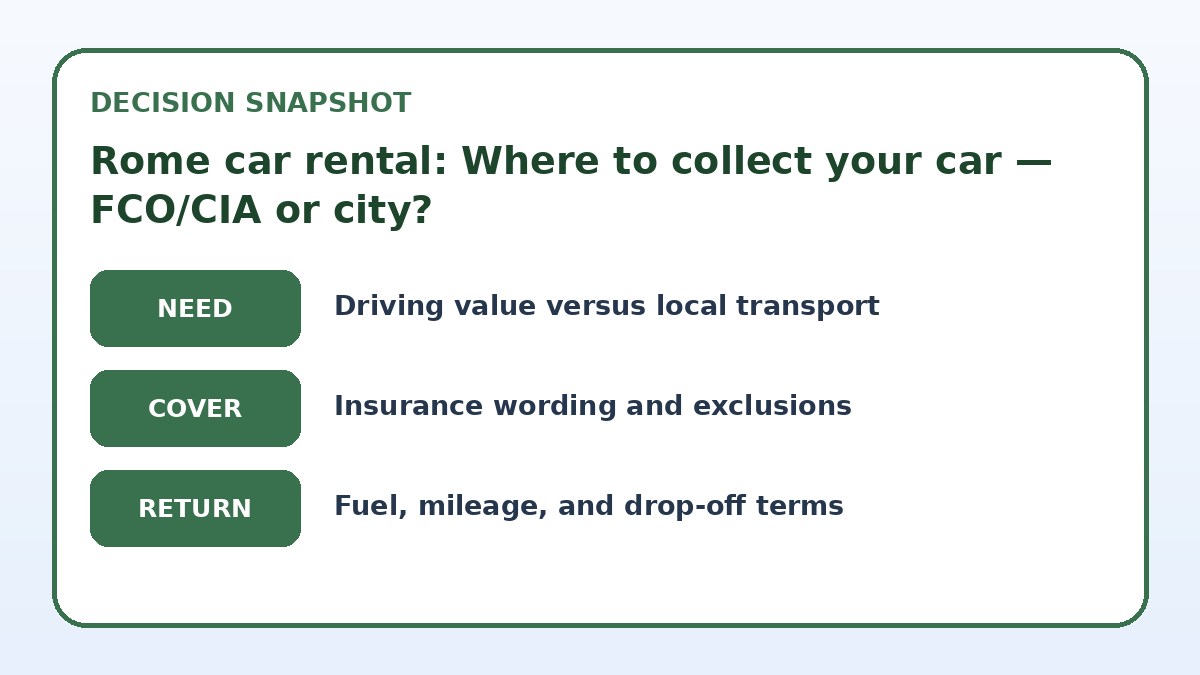
Does driving add value to your Rome itinerary?
Start by asking what you’ll actually do with a car. Driving is high-value when your plans include countryside routes (for example, Etruscan sites, parts of Tuscany, Umbria, or coastal drives) or when you need flexible schedules for multiple smaller towns that trains don’t connect efficiently. If your stay is centrally focused — Vatican, Colosseum, Trastevere, and nearby museums — public transport, walking, and short taxis generally deliver more convenience and lower stress than managing parking and ZTL restrictions.
Also estimate daily time costs: navigating Rome’s central traffic takes patience, parking can require extra walking and time to find legal spaces, and fuel plus autostrada tolls add to trip overhead. Compare that to train travel between major hubs (fast, comfortable, and often cheaper for two people). If your plan mixes a few long drives with several downtown days, consider a hybrid approach: pick up or drop off the car outside the ZTL boundary or for just the days you intend to travel farther.
Decide whether driving earns its place
| Mobility strategy | Best for | Cost or friction to check |
|---|---|---|
| Airport pickup and return | Travelers with long-distance drives, one-way itineraries, or tight arrival schedules. | Faster on arrival but may include airport surcharges, longer shuttle times, and obligations to return to the same terminal. |
| City pickup and return | Visitors staying centrally who want to avoid driving through Rome’s restricted zones and difficult central parking. | Less exposure to ZTL but often slower collection, limited opening hours, and navigating narrow streets with luggage. |
| Public transport + taxis/rideshares | Sightseer-first travelers who plan day trips along well-served train lines and prefer to avoid driving stress. | Cost-effective and relaxed for in-city travel, but less flexible for remote villages or very early/late departures. |
| Short-term or suburban hire (hybrid) | Those who need a car only for specific days — pick up outside the ZTL or in a suburban location. | Minimizes city driving and parking headaches but requires extra transfers and careful timing on pickup/return days. |
Check live rental choices only after the route test
Use the exact driver, dates, pickup point, and return plan to compare current conditions.
Insurance and booking language: what to verify
Rental contracts and insurance wording vary widely. Before you book, verify the collision damage waiver (CDW) terms, the deductible (excess) amount, and exactly which damages are excluded — for example, damage to tyres, windscreens, undercarriage, or interior may be treated differently. Look for whether third-party liability cover is included to the statutory minimum and whether you want to buy supplemental protection from the rental company or a reputable third-party insurer. If you rely on a credit-card benefit, confirm in writing it applies in Italy and covers the full rental period and vehicle category.
Airport pickups sometimes carry additional airport surcharges and may restrict your ability to purchase certain coverages at the counter. City counters can have different opening hours and stricter late-return penalties. On the supplier’s final booking page, check the cancellation policy, fuel rules (full-to-full vs pre-purchase), mileage limits, and what documents are required at pickup: local driving licence rules, ID, and the exact card-holder requirements for deposits. If any term is unclear, contact the supplier directly and save the written response.
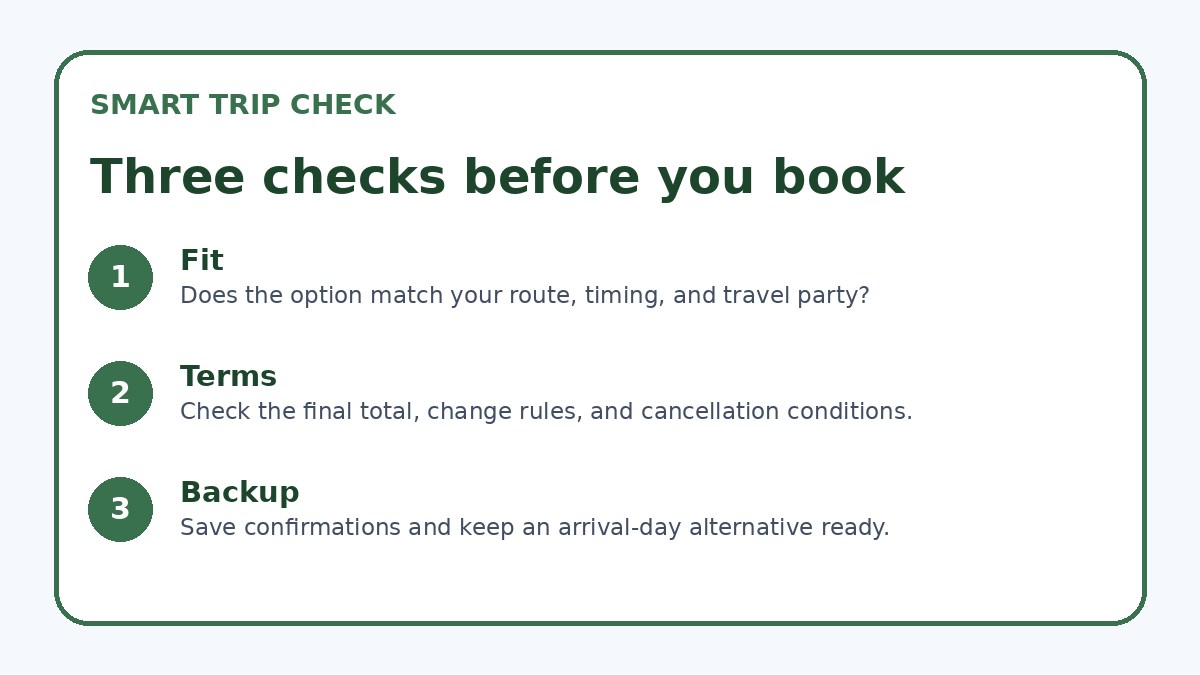
Compare the full rental conditions
Confirm insurance wording, exclusions, deposit, fuel, mileage, and return terms on the final page.
Pickup and return friction: airports vs city locations
Airport pickup tends to be faster on arrival: you collect luggage and walk directly to the rental desk or consolidated rental center. That saves time compared with traveling into the city with bags and then finding a pickup location. However, airport contracts sometimes require you to return to the same terminal and impose penalties for off-airport returns; verify whether one-way fees apply if you plan to drop the car elsewhere. Also check whether shuttles are used between terminals and rental lots, and whether those shuttles run late at night.
City pickups reduce the risk of driving through Roman restricted traffic zones (ZTL), but they often require navigating narrow streets, limited parking, and sometimes arranging an appointment window for collection. Urban counters may close earlier in the evening, and longer opening-hour windows are worth noting if your arrival is late. For returns, a city drop-off can be quicker if you are staying in a hotel nearby; airport returns can be preferable for onward flights but allow extra time for counters and shuttles before check-in.
Car rental terms to verify
- Confirm whether the rental rate is full-to-full fuel, and whether fuel bought in advance is refundable or not.
- Check CDW deductible amounts and list exactly which damages are excluded or treated separately (tyres, windscreen, undercarriage).
- Verify the exact pickup and return addresses, opening hours, and whether a shuttle or off-site lot is used at airports.
- Ask whether one-way rentals incur extra fees and confirm any required return terminal or office.
- Save screenshots or PDFs of the quoted terms and any written responses from the supplier about coverage or exceptions.
- Note local ZTL boundaries for your hotel and planned routes, and ask your hotel about validated or recommended parking options.
Non-driving fallback and hybrid options
If you decide against a full rental, plan a robust fallback. Rome’s rail network connects to Florence, Naples, and many regional hubs quickly; regional buses and private transfers serve smaller sites not on mainlines. For flexible local movement, use taxis or app-based rideservices for museum runs and late-night trips. For day trips to the countryside where a car would be handy, consider a guided day tour or renting a car only for the days you need it — collect from a suburban location outside the ZTL boundary to reduce inner-city driving.
A practical hybrid is to book a city-based rental for selective days and rely on public transport the rest of the time. When using mixed options, sync train/bus timetables with your car rental dates and factor in buffer time for pickups and returns. Always checklist the written parking rules at hotels and the ZTL times for your planned driving routes; these small verifications often decide whether driving will be a stress or a freedom on your Rome trip.
Car Rental & Road Trip questions travelers ask
Will a Rome rental car save time compared with trains for day trips?
It depends on your destination. For major corridors (Rome–Florence, Rome–Naples), high-speed trains are usually faster and avoid traffic; they’re great for day trips to main cities. For dispersed rural destinations, hill towns, or itineraries where trains require long bus connections, a car offers pace and freedom. Compare door-to-door time: add travel to and from stations or rental desks, parking and check-in buffers, and then judge whether driving reduces total trip time. If keeping flexibility for multiple small stops, a car often wins; if going to a single big city, the train can be quicker.
How do I avoid ZTL fines when driving in Rome?
ZTL (restricted traffic zones) are active in many central areas and cameras record license plates; fines are issued to the registered renter. Avoid fines by confirming your hotel’s location relative to ZTL maps and asking whether the hotel can register your license plate for short timed entries (some hotels do for loading/unloading). Plan parking outside ZTL boundaries and walk or use local transport into the center. On the booking page, verify whether maps, customer support, or written guidance about local restrictions are provided before you finalize the rental.
What should I check about insurance on the final booking page?
On the supplier’s final page, look for clear statements about CDW and theft protection, the deductible value, and whether supplemental waivers reduce or eliminate the excess. Confirm whether roadside assistance is included and whether there are geographic restrictions (for example, leaving Italy or crossing into certain neighboring countries). If you rely on a credit-card benefit, verify eligibility conditions and whether the rental company requires you decline their supplemental coverage to use the card benefit. Save screenshots of insurance language and contact customer service when in doubt.
Final decision note
For first-time visitors, the practical choice hinges on what you plan to do beyond Rome’s core. If your trip involves long-distance drives or a one-way route, airport pickup usually wins for convenience and time saved. If you plan to spend most days inside the historic centre and want to avoid ZTL fines and parking headaches, a city pickup or a hybrid approach will reduce stress. Whatever you choose, read insurance and fuel wording closely, confirm pickup/return logistics on the booking page, and prepare a non-driving fallback so you can switch strategies if plans change. Trip.com can be used to compare current availability and terms, but always verify contract details with the provider before booking.
Continue planning
Check current options and final conditions
Use the provider page to confirm live availability, the final total, cancellation terms, and every condition that matters to your trip.
This evergreen planning guide was created with AI-assisted drafting and a structured quality review. It does not display live prices, schedules, availability, visa guidance, or provider rankings. Verify current details before booking. Some links are affiliate links; we may earn a commission at no additional cost to you.