If you land late in Bangkok and are traveling with extra luggage, choose a hotel area that minimizes transfers, offers flexible check-in and simple onward options. Head straight to neighborhoods near the arrival route — either the city’s main airport transit lines, a major train or river hub, or a reliable taxi corridor — so you cut time and handling stress. Prioritize properties that explicitly advertise late check-in, luggage storage, and elevators or ground-floor rooms; these features matter more than boutique perks when you’re tired and laden. This guide gives a quick practical pick, then walks through how neighborhood fit, daily-route friction, room and party needs, and booking terms should shape your shortlist. Use it to make a confident selection before opening live inventory and double-check the hotel's late-arrival policies and baggage assistance on the booking page.

Check live stays in the areas that fit
Use your dates and party size to compare current rooms after you narrow the neighborhood fit.
Neighborhood fit: pick an arrival-friendly area
Decide where to stay by mapping the simplest route from your arrival point. If you arrive at Suvarnabhumi (BKK), consider areas along the Airport Rail Link or main taxi corridors like Ploenchit/Asok or Silom/Sathorn. If you arrive at Don Mueang (DMK), look to northern neighborhoods with straightforward road access or good bus/minivan links to the city. For river access arrivals or transfers via boat, the riverside makes sense. The goal is not to be in the most central tourist zone but to be in the least complicated place to reach after a late flight with luggage.
Also weigh where you want to be first thing the next morning. If you need to be near meetings in Sathorn, or markets in Pratunam, choose the closest neighborhood to cut morning travel time. Nighttime safety, lighting, and presence of 24-hour shops or food outlets can matter when you step out with bags after midnight. Finally, check whether the streets between your arrival point and the hotel are taxi- and ride-hail friendly late at night; some small sois can be hard to navigate with big suitcases.
Choose an area-selection strategy
| Area approach | Best for | Tradeoff to check |
|---|---|---|
| Stay near the airport rail or bus link | Fast, low-transfer arrival when you want minimal handling after a flight | Less central for daytime sightseeing; sometimes fewer evening services nearby |
| Choose a hotel by the main taxi corridor or highway | Direct, simple drop-offs and quick access to taxis for big luggage | Can be noisier and less walkable; check safe, well-lit pedestrian access |
| Pick a riverside or boat-hub area | Easy onward travel by river and scenic first impression with fewer road transfers | May require a longer taxi or transfer from airports; check late-night boat schedules |
| Stay in a central BTS/MRT node | Best balance for next-day travel and repeated commutes across the city | Might add one extra transfer from some airport options; station navigation with luggage can be tight |
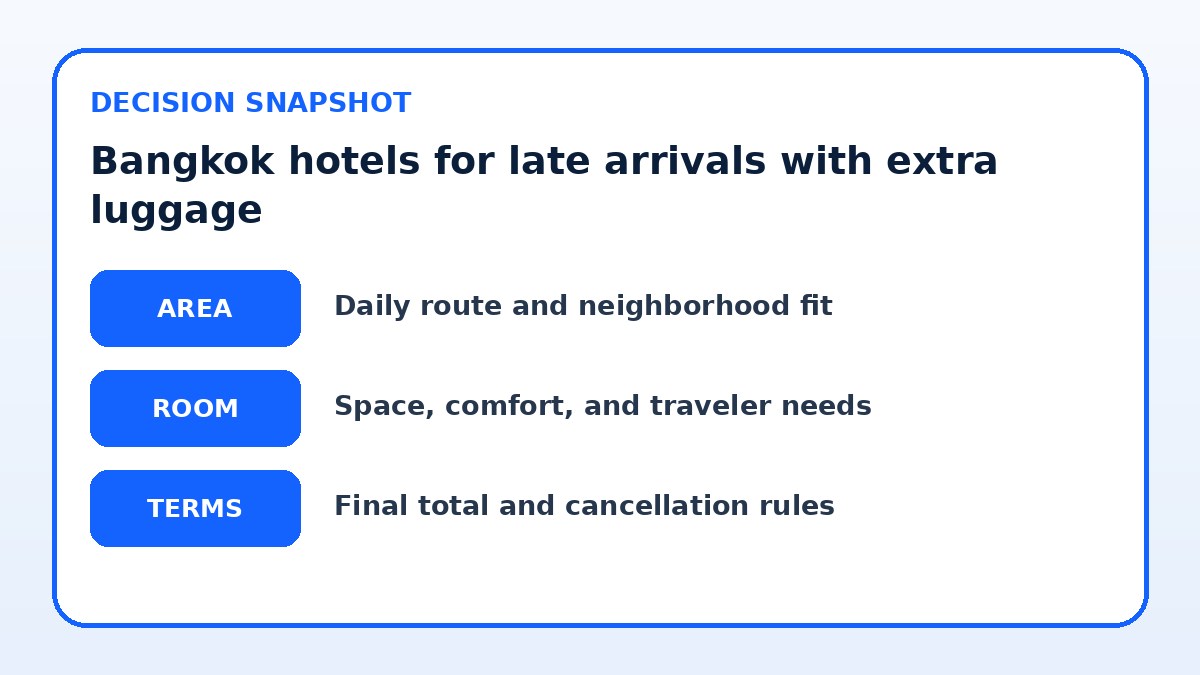
Daily-route friction: reducing transfer steps
Count transfers from plane to hotel as friction points: terminal to rail or bus, rail changes, and a final short taxi with luggage. Each transfer adds time and handling. Choose a hotel near a single, direct link where possible. For example, a hotel close to an airport rail station or mainline railway spares you an extra taxi. If you must take a taxi from the airport, prefer hotels on main roads with hotel driveways or clear drop-off points to avoid lugging bags across sidewalks or steps.
Also consider the return and subsequent days. If you plan day trips, a base with easy access to the BTS, MRT, or river boats will reduce repeated heavy-luggage transfers. If you’ll leave early for another destination, staying near the transport hub for that departure (train station, van terminal, or airport link) minimizes last-minute rushing. When comparing properties, check how many stairs, how narrow the corridors, and whether elevators reach the lobby — these small details change the effort of moving luggage.
Now compare like with like
Keep the same dates, guests, room needs, and cancellation preferences while you compare the final choices.
Room and party needs: what to request when booking
When you book, select room types and options that make late arrivals manageable. Request a ground-floor or low-floor room if elevators or porter staffing are uncertain. If you travel with family or a group, confirm bed layouts, connecting rooms, or sofa-bed availability to avoid surprises late at night. If a large suitcase won’t fit through narrow corridors, ask the hotel to confirm room access and whether bags can be stored temporarily in a secure area until a preferred room is ready.
Also communicate arrival time and baggage specifics in your reservation notes and double-check the hotel confirms late check-in procedures. Ask whether there's a 24-hour front desk, after-hours check-in desk, or a key collection box. If you need porter service or help moving oversized items, request that explicitly and ask where porters meet guests at night. If you rely on third-party booking platforms, verify any late-arrival instructions shown on that listing against the hotel’s own confirmation page.

Hotel booking check before payment
- Confirm the hotel’s official check-in window and how they handle arrivals after those hours.
- Notify the hotel of your expected arrival time and baggage details in writing (reservation notes or email).
- Ask whether the property provides porter service, elevator access, or ground-floor rooms for large suitcases.
- Verify luggage storage policy, including maximum storage duration and any fees, before relying on it.
- Check the hotel’s late-arrival contact method (phone number, WhatsApp, or after-hours desk) and save it.
- Compare transfer routes from your arrival point and choose the hotel with the fewest transfers with luggage.
Final booking terms: what to check before you confirm
Before you click book, check a few concrete items on the hotel’s booking page and confirmation. Confirm the stated check-in window and whether a late arrival incurs any special instructions. Look for explicit luggage storage policies, whether the property charges for early/late arrival or baggage holding, and how to reach reception after hours. If the hotel requires prepayment or has a cancellation window, make sure those terms align with your uncertainty about arrival time.
When provider-specific facts could change, verify contact numbers and the procedure for late check-ins directly with the hotel. If you used a third-party site, cross-check the hotel’s own site or call reception to ensure the notes in your reservation reflect any late-arrival arrangements. If you prefer to compare live availability and policies before finalizing, Trip.com is an optional place to view current listings — but always confirm the hotel’s direct instructions for late arrivals on the hotel’s official confirmation.
Hotel Guide questions travelers ask
Can I rely on luggage storage if I arrive late in Bangkok?
Many hotels offer luggage storage but do not assume universal policies. Always confirm the storage rules — how long they hold items, whether there’s a fee, and where stored luggage is kept. Ask whether storage is supervised or in a secure room and whether you need ID to reclaim bags. If using a third-party booking site, check that the hotel’s own confirmation or direct reply reflects the same storage availability and terms before you arrive.
Is it better to take a taxi from Suvarnabhumi or use the Airport Rail Link with extra luggage?
For heavy or multiple suitcases, a taxi often reduces transfers because it provides door-to-door service and avoids stairs or platform changes. The Airport Rail Link is efficient if you can manage your bags on and off trains and have a hotel close to a rail station. Compare the convenience of a single taxi ride against the potential cost and effort of moving luggage through stations; when in doubt, prioritize the option that minimizes handling and steps after a late arrival.
What should I request in my reservation notes for a late-night arrival?
Specify your arrival time, flight or bus details, and the number and size of bags. Request late check-in confirmation, ask for porter support if needed, and note any special access needs (ground-floor room, elevator access). Ask the hotel to confirm the after-hours procedure and provide a direct contact number. These explicit requests give staff time to prepare and create a record you can reference if anything is unclear on arrival.
Final decision note
When you arrive late in Bangkok with extra luggage, your priority is reducing steps and uncertainty. Choose a neighborhood that shortens the route from your arrival point and matches your morning plans, then confirm the practical hotel details that matter: late check-in, luggage handling, elevator access, and the property’s after-hours contact method. Communicate your arrival time and baggage in writing, verify storage or porter services, and pick a room type that avoids narrow stairs or awkward corridors. Shortlist an area first, then open live inventory and confirm the hotel’s own late-arrival instructions on the booking page — doing so turns a potentially stressful late-night arrival into a manageable start to your trip.
Continue planning
Check current options and final conditions
Use the provider page to confirm live availability, the final total, cancellation terms, and every condition that matters to your trip.
This evergreen planning guide was created with AI-assisted drafting and a structured quality review. It does not display live prices, schedules, availability, visa guidance, or provider rankings. Verify current details before booking. Some links are affiliate links; we may earn a commission at no additional cost to you.