
The practical answer: pick a central neighbourhood (close to the waterfront and public transport) if you want short transfers and easy sightseeing; choose a quieter suburb with parks if you prefer more space and lower noise at night. For families, the two most important booking items are room configuration (connecting rooms or a family suite) and easy access to grocery or convenience stores. When comparing Auckland hotels, focus first on where you’ll spend most of your time — evenings and sleep are as important as daytime walking distances — and then narrow by family-focused amenities like kitchenettes, laundry, and on-site play areas. Below I explain how to weigh tradeoffs, what questions to ask on the booking page, and a simple checklist you can use before you confirm a reservation.
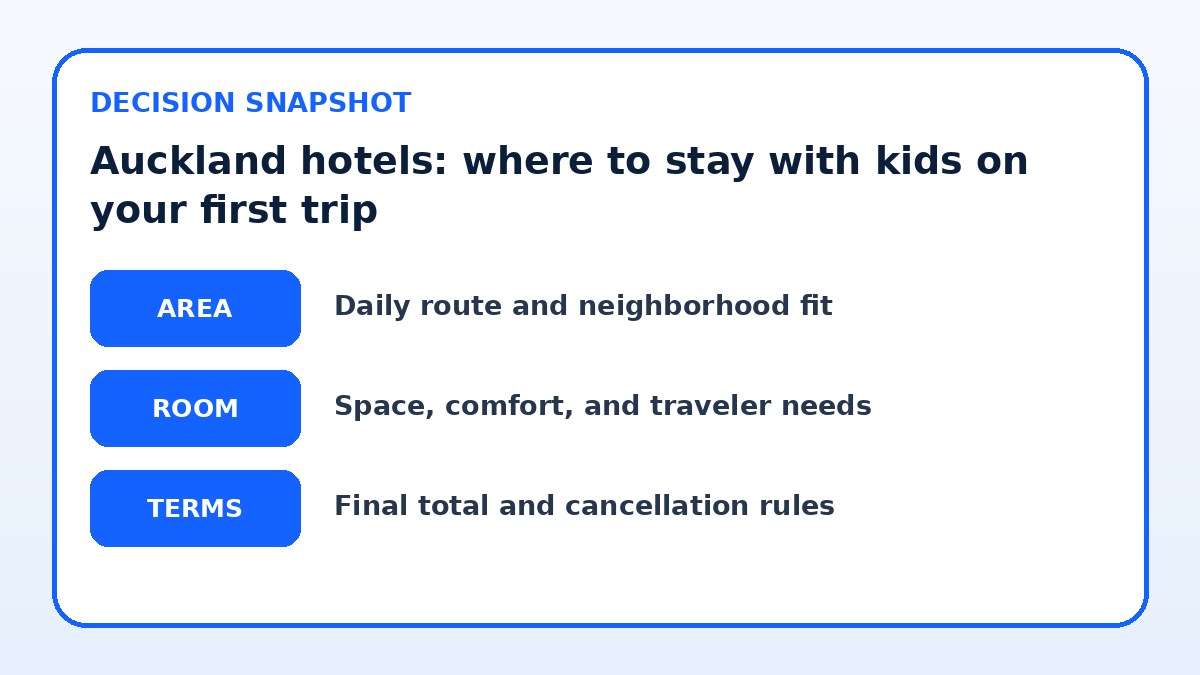
See current options before you compare the details
Availability and final conditions change. Open Trip.com now or keep reading for the practical comparison.
Pick the right neighbourhood for your family’s rhythm
Central Auckland near the waterfront keeps most touristable sites within easy reach and reduces daily travel time when you have little ones. From a practical viewpoint, being close to ferries, quayside promenades, and a compact selection of museums means you can do shorter outings and return to the room for naps. The tradeoff is that city-centre hotels tend to be busier and sometimes noisier in evenings, so check whether a room faces the inner courtyard or street and whether windows are double-glazed when you compare listings.
Quieter suburbs like Parnell, Grey Lynn, or Remuera offer leafy streets, parks, and a more residential feel that many families prefer for longer stays. These areas may require a short bus, ferry, or rideshare ride to reach downtown attractions, so factor transit time into each day’s plan. If you want a balance, look for hotels near a transport link — a short walk to a ferry terminal or bus stop gets you the calm of a suburb and the convenience of easy access to central Auckland.
Room type and facilities that reduce friction
Room layout matters more with children than with adults. Interconnecting rooms or suites with separate sleeping areas let parents keep a later schedule while kids sleep. Apartments or rooms with kitchenettes give you flexibility for breakfasts and reheating snacks, which is particularly useful for toddlers and picky eaters. When a hotel description mentions family rooms, open-plan suites, or rollaway options, check the provider’s booking page for exact bed sizes, any extra-bed charges, and whether cribs are supplied.
Beyond sleeping arrangements, look for in-room conveniences that cut stress: laundry (self-service or same-day), refrigerators, blackout curtains, and climate control. Pools and play areas help with downtime, but verify pool depth and supervision rules on the hotel’s page if swimming supervision is a concern. Also consider whether breakfast is included, and if not, how close the hotel is to casual cafes or supermarkets for quick, child-friendly meals.
| Approach | Best for | Tradeoff to check |
|---|---|---|
| Central waterfront hotel | Families who prioritise short walks to main attractions and ferries | More noise and less space than suburban options; check room orientation and noise-reduction features |
| Suburban hotel or serviced apartment | Families wanting quieter nights, parks nearby, and apartment-style living | Longer daily commutes to city sights; consider proximity to public transport |
| Hotel with family suites or interconnecting rooms | Families needing separate sleeping areas and parental privacy | Fewer such rooms available — verify layout and booking conditions directly before payment |
| Budget hotel near transport hubs | Cost-conscious families who plan to spend most time outside the room | Smaller rooms and fewer amenities; confirm laundry and kitchenette availability if needed |
Ready to check the option that fits your plan?
Use your exact dates and traveler details so the provider page can show the current total and conditions.

Transport and day-to-day logistics with kids
Auckland’s spread makes transport a planning decision. If you don’t plan to rent a car, prioritise hotels near frequent public transport (ferry terminals, bus routes, or train stations) to reduce reliance on taxis. For families carrying strollers or prams, check accessibility details: elevator availability, step-free access from street to lobby, and whether the hotel can help with luggage storage when you arrive early or leave late. When booking, look for explicit notes about shuttle services or partnerships with local transport providers and verify these on the hotel’s final page.
If you prefer occasional car use, evaluate parking options and policies — on-site parking vs. nearby lots can differ in convenience. For short sightseeing days, being within walking distance of a few attractions saves time and keeps children happier. Also map nearby essentials such as pharmacies, grocery stores, and playgrounds before you book; having these within a short walk can save a hotel stay from becoming a logistical headache.
Before you book
- Confirm exact room layout and bed configuration (photos and floor plan) on the hotel’s final booking page before reserving.
- Request and get written confirmation of cots/extra beds and whether there is an additional charge.
- Check access options (elevators, step-free routes) if you have a stroller or mobility needs.
- Map nearby essentials — grocery, pharmacy, playground — and note travel time for nap or return-to-room breaks.
- Verify pool rules, life-guarding or supervision policies, and whether pool hours suit your family routine.
- Confirm cancellation, modification, and check-in/out policies directly with the hotel before completing payment.
Safety, booking details, and what to verify
Safety and reliable booking information are essential. On the hotel’s booking page, confirm cancellation and modification policies, the hotel’s child policy, whether pools or gyms require bookings, and any cleaning procedures important to your family. If you rely on a third-party site for comparison, use it to narrow choices but always open the hotel’s own page to verify room layout, crib availability, and any special conditions that may not transfer correctly between platforms.
If you’ll be using travel comparison tools, you can look at Trip.com among other bookers to compare availability and policies, but treat those listings as starting points: final confirmation should come from the hotel’s own booking engine or written communication from the property. Questions to ask before finalising: Can you request a quiet room? Are interconnecting rooms guaranteed or allocated on arrival? Is there a charge for extra beds or cots? Get these answers in writing where possible.
Frequently asked questions
Which Auckland neighbourhoods are easiest for families who don’t want to rent a car?
Choose a neighbourhood with good public transport links and walkable attractions. Central waterfront areas put ferries, museums, and short walking routes within reach, reducing the need for a car. Some inner-city suburbs combine quieter streets and parks with short bus or ferry rides into the centre. Before booking, check the hotel’s proximity to a ferry terminal or frequent bus stops, and verify accessibility details like step-free routes and elevator access for strollers on the hotel’s official page.
How do I decide between a family room, interconnecting rooms, or an apartment?
Start with your family’s sleep habits and schedules. If adults need privacy while kids sleep, interconnecting rooms or suites with separate sleeping areas work best. For those who prefer to prepare simple meals and manage laundry, serviced apartments or rooms with kitchenettes are more practical. Compare long-stay convenience against nightly comfort: verify exact bedding arrangements, kitchen appliances, and laundry facilities on the hotel’s booking page before deciding.
What family amenities should I verify on a hotel’s booking page?
Look for readily available amenities that matter to your family: crib or extra-bed availability, laundry options, refrigerator or kitchenette, pool supervision rules, and breakfast arrangements. Also confirm practical details such as check-in/out flexibility, early arrival or luggage storage, and whether the hotel enforces noise or curfew rules that could affect evening plans. If the listing is unclear, contact the hotel directly and keep written confirmation of anything important to your stay.
Final planning note
Booking family-friendly Auckland hotels is a balance between convenience, space, and your daily routine. Start by deciding whether you want minimal transit time to sights (pick a central waterfront base) or quieter evenings and more room (choose a residential suburb or serviced apartment). Make room layout and in-room facilities your second filter — sleeping arrangements, kitchen access, and laundry often make the biggest difference to comfort. Use the checklist to confirm key details on the hotel’s booking page, and consider comparison sites like Trip.com for availability snapshots, but always verify final policies and room specifics with the property directly before you pay.
Continue planning
Check current options and final conditions
Use the provider page to confirm live availability, the final total, cancellation terms, and every condition that matters to your trip.
This evergreen planning guide was created with AI-assisted drafting and a structured quality review. It does not display live prices, schedules, availability, visa guidance, or provider rankings. Verify current details before booking. Some links are affiliate links; we may earn a commission at no additional cost to you.