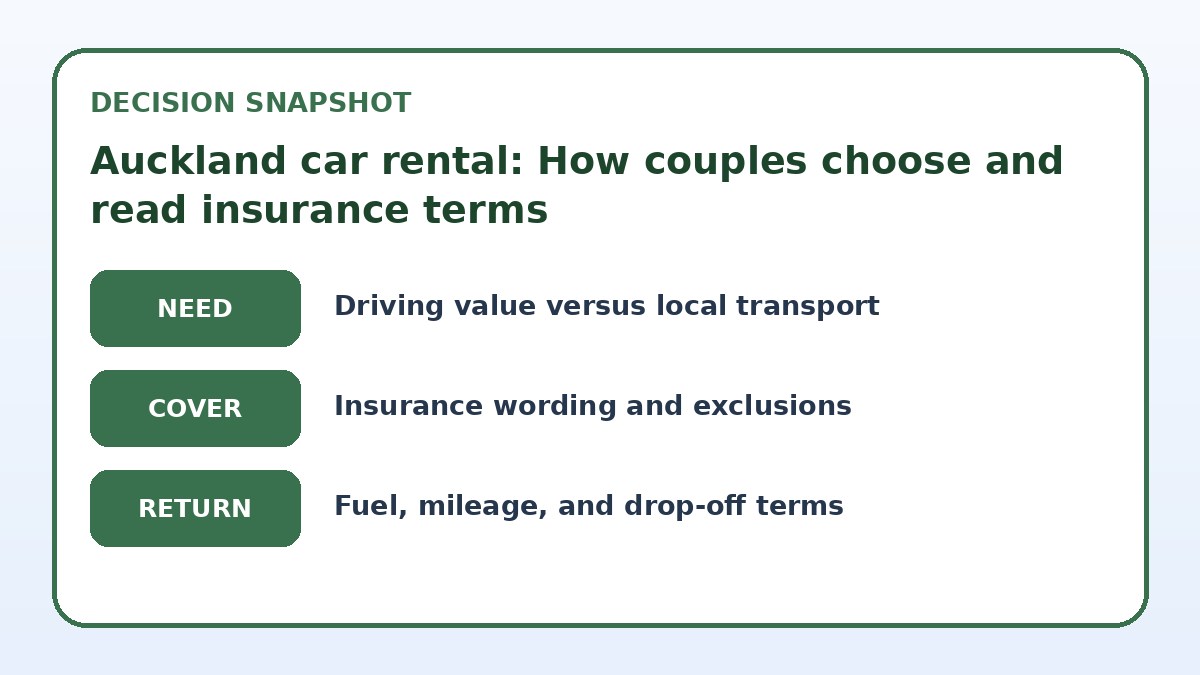
When a couple books a car in Auckland, the insurance wording on the rental contract can determine whether an unexpected scratch becomes a small inconvenience or a large bill. The practical priority is simple: read who is covered (named drivers versus authorised drivers), what the excess is, which damage types are excluded, and whether third-party liability meets New Zealand legal expectations. Decide together whether to accept the company’s collision damage waiver (CDW), buy a supplemental excess reduction, or rely on personal credit-card or travel insurance cover—each option shifts cost, paperwork, and risk. Before you commit, confirm exact cover amounts, exclusions, and how theft or cross-border travel is handled on the provider’s final booking page. If you want a quick comparison, Trip.com can show current rental options; always treat those listings as a starting point and verify policy details with the supplier.
See current options before you compare the details
Availability and final conditions change. Open Trip.com now or keep reading for the practical comparison.
Who counts as a covered driver and why naming matters
Rental contracts differentiate between named drivers and any-authorised-drivers clauses. For couples, the cleanest approach is to list both partners on the rental agreement at booking or pick-up. If only one partner is listed, an unauthorised driver who uses the car could void the insurer’s obligation and the renter may become fully liable for damage and loss. Some agencies allow additional drivers for a fee; others include partners for free. Ask at booking and confirm the exact wording on the final rental page—“authorised drivers” can be defined differently by each supplier.
Also check age and licence requirements for each named driver. Different excess levels, additional charges, or outright refusals may apply to drivers under a certain age or without a full international or New Zealand licence. If a partner plans to drive only occasionally, explicitly confirm whether temporary swaps at checkpoints, ferries, or when travelling outside Auckland remain covered. When in doubt, get the supplier to write authorization into the booking confirmation so you have proof if a dispute arises.
Excesses, waivers and what reducing excess really does
Excess (sometimes called a deductible) is the amount you pay toward a claim before other cover applies. Many rental companies offer a Collision Damage Waiver (CDW) that limits your legal liability for damage, but it doesn’t always remove the excess. A supplemental excess reduction or ‘super CDW’ often reduces excess to a smaller sum or zero. For couples weighing cost versus peace of mind, consider how comfortable you are with paying the excess if you’re involved in low-speed parking damage versus a major accident. Remember to confirm exactly how the excess is applied on the supplier’s final booking page—wording about waivers and excess reduction can be specific and conditional.
If you rely on credit card or travel insurance to cover the excess, check if they reimburse only after the provider charges you and whether they require a police report, repair quotes, or photographic evidence. That process can take weeks and might require you to advance the excess amount upfront. Also verify whether a credit card’s cover is primary (pays first) or secondary (pays after the rental company). These differences affect how soon you recover costs and whether the rental company will pursue you for unpaid excess while a third-party reimbursement is pending.
| Approach | Best for | Tradeoff to check |
|---|---|---|
| Buy rental company excess reduction | Couples who want immediate, hassle-free reduction of liability at pick-up | Higher daily cost and sometimes strict claim rules requiring fast reporting |
| Use credit card insurance | Couples with suitable card benefits and a willingness to handle claims later | May be secondary cover, require upfront excess payment, and have exclusions |
| Purchase standalone travel insurance with excess cover | Couples seeking broader trip protection including medical and baggage cover | Policy conditions and required documentation can delay reimbursements |
| Accept standard CDW and self-insure the excess | Couples comfortable taking on limited financial risk to save on daily fees | You remain liable for the full excess amount if damage occurs |
Ready to check the option that fits your plan?
Use your exact dates and traveler details so the provider page can show the current total and conditions.
Typical damage exclusions couples often miss
Not all damage is treated equally. Windshield, tyre, roof, undercarriage, and interior damage are commonly excluded from standard CDW coverage. If you plan to drive coastal roads, gravel backroads, or cross short ferry routes near Auckland, those exclusions matter—models for adventurous driving may need additional protection. Read the exclusion list on the booking page and ask the provider to clarify whether the waiver covers glass and tyres or whether you must purchase extra protection. If you’re hiring a compact car to nip around the city, some exclusions may be low risk; for weekend escapes into rural areas they gain importance.
Theft protection can also be conditional. Claims for theft may be voided if the car was left unlocked, keys were unattended, or personal items were inside in plain sight. Couples should agree on practical safeguards: where to store valuables, where to keep the car when exploring beaches or trailheads, and how to document key handover. If you anticipate leaving belongings in the vehicle, confirm whether theft cover is reduced or voided for unattended property and whether an additional theft protection policy is available.
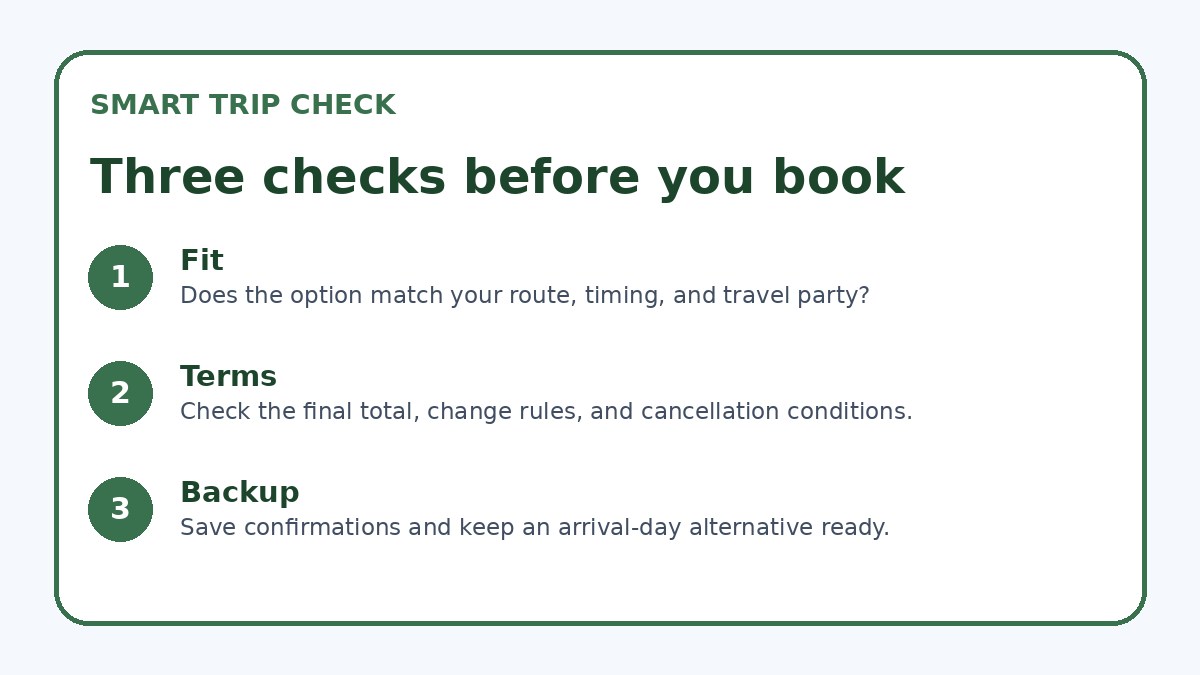
Before you book
- List both partners as authorised drivers on the booking confirmation and keep a copy of that confirmation with you at pick-up.
- Request the exact excess amount and any excluded damage types in writing; save the provider’s final booking page as evidence.
- If using a credit card or travel policy, photocopy or screenshot the policy wording that mentions car rental cover and New Zealand jurisdiction.
- Inspect the vehicle at pick-up with both partners present, photograph all existing damage, and get staff to initial or note any issues on the condition report.
- Ask how theft, key loss, and unattended-vehicle claims are treated and what documentation the provider requires for those claims.
- Confirm whether driving on specific roads (beach, gravel, unsealed rural roads) is permitted and covered; if not, reconsider your route or buy extra cover.
Comparing policy sources: rental company, credit card, and travel insurance
There are three common ways couples obtain cover: buying the rental company’s product, relying on a credit card benefit, or using standalone travel insurance. Each choice has tradeoffs. Rental company cover is simple and immediate—pay the fee and the provider acknowledges your reduced liability—but it can be costly and sometimes has strict claim procedures. Credit cards may offer free secondary cover or limited primary cover; however, card benefits often exclude certain vehicle types, drivers under a specific age, or travel in particular areas. Read the card issuer’s terms for New Zealand roadside requirements.
Travel insurance can include excess reimbursement or primary collision cover, and it often protects passengers and belongings as well. But travel policies vary widely in definitions and exclusions; some require that you decline the rental company’s damage waiver to claim reimbursement. Before relying on travel insurance, compare the insurer’s wording to the rental provider’s policy and verify whether they require police reports, original invoices, or a written estimate from the supplier. Always confirm these provider-specific facts on the final booking or policy page to avoid surprises.
Frequently asked questions
If only one partner’s name is on the rental, will the other partner still be covered for driving?
Not necessarily. Many contracts only cover named or explicitly authorised drivers. An unauthorised driver who uses the vehicle can cause the insurer to deny a claim, leaving the renter personally liable. If you expect both partners to drive, add both names at booking or at pick-up and have that permission recorded. Some agencies charge for additional drivers; other agencies include partners for free. Verify the precise wording on the provider’s final booking page so you know whether a spouse or partner needs to be listed.
Can a credit card automatically cover the rental excess for both partners?
Card benefits vary widely. Some credit cards provide primary cover for rental damage and may include multiple drivers, but many offer only secondary cover that reimburses after the rental company’s liability is settled. Coverage often depends on the cardholder being the renter and may exclude drivers under a certain age or specific vehicle categories. To be safe, review the card’s policy wording and confirm whether it covers additional drivers; save any required claim documentation instructions so you can comply if damage occurs.
What evidence do couples need to make a successful damage or theft claim?
Providers and insurers commonly require a combination of: the rental agreement; the vehicle condition report signed at pick-up; timestamped photographs of the damage; a police report for theft or hit-and-run incidents; repair estimates or invoices from the rental company; and, for third-party reimbursement, the original payments or receipts. Couples should take photos of the car from all angles at pick-up and after any incident, keep correspondence with the rental company, and follow the supplier’s claim process exactly. Check the rental provider’s final booking page for a list of required documents.
Final planning note
For couples renting a car in Auckland, the most practical immediate steps are to name both drivers, confirm the excess and exclusions in writing, and decide whether the rental company’s waivers, a credit card, or travel insurance best fits your comfort with risk and paperwork. Each approach trades convenience, cost, and claim complexity: company waivers are straightforward but pricier, card cover may need follow-up, and travel insurance can offer broader trip protection but stricter documentation requirements. Before you finalise the booking, verify all policy details on the rental provider’s final booking page and keep copies of confirmations and photos. These small steps will reduce the chance of surprises and let you focus on exploring Auckland together.
Continue planning
Check current options and final conditions
Use the provider page to confirm live availability, the final total, cancellation terms, and every condition that matters to your trip.
This evergreen planning guide was created with AI-assisted drafting and a structured quality review. It does not display live prices, schedules, availability, visa guidance, or provider rankings. Verify current details before booking. Some links are affiliate links; we may earn a commission at no additional cost to you.