If you need to book Singapore to Bangkok flights for business, start with a focused pre-booking checklist that prioritizes schedule reliability, airport access, and flexibility. Before you open any vendor page, decide which matters most for your trip: departure window in Singapore, arrival time in Bangkok relative to meetings, and whether you need a refundable or changeable fare. Once priorities are set, compare direct and connecting options, factor in ground transfers and the total door-to-door time, and verify baggage, change and cancellation rules on each carrier’s final booking page. This article gives a concise checklist and explains the tradeoffs so you can choose the option that keeps your trip on track without surprises.
See current options before you compare the details
Availability and final conditions change. Open Trip.com now or keep reading for the practical comparison.
Set your schedule constraints and priorities
Begin by listing non-negotiable appointment times in Bangkok and work backwards to acceptable arrival windows. For most business travelers, arriving the evening before an early meeting or the morning of a mid-day meeting are different planning scenarios: overnight arrival reduces risk from morning traffic but adds a night away; same-day arrival is faster but riskier. Factor in commute time from the likely arrival airport to your meeting district, and include a buffer for immigration and taxi or rideshare pickup. If you’re traveling during local rush hours, add extra time for road congestion or choose an earlier or later flight to avoid the worst of it.
Prioritize what you can trade off: cost, total travel time, and schedule flexibility. If your calendar can absorb a late change, lower-cost, non-refundable fares may be acceptable. If a meeting schedule is firm, prioritize changeable or refundable tickets even if they cost more. Also think about in-flight productivity needs—a non-stop option with predictable timing can preserve working hours, but a connection at a favorable airport might provide a quieter lounge or meeting facilities. Decide these priorities early so comparisons focus on what matters for your business outcome.
Compare direct and connecting flight options
When both direct and connecting options exist, always compare total journey time and reliability rather than just air time. A direct flight typically reduces variables—one check-in, one boarding, and no risk of missed connections—but it may depart or arrive at inconvenient times. Connecting flights can open up more schedule options or lower fares but introduce extra points of failure: a short connection time can be stressful and risky for checked luggage, while a long layover increases door-to-door time and fatigue. For business trips, weigh the cost savings of a connection against the potential loss of time or the need to rebook if a first leg is delayed.
On provider booking pages verify minimum connection times, layover airports, and whether your tickets are on a single ticket or separate bookings. Single-ticket connections typically protect you if the first flight is delayed, while separately booked legs usually do not. Also check if your connection requires an airside transit or a transfer between terminals—some airports require baggage recheck or additional security that can add significant time. If you use travel booking tools like Trip.com for a quick comparison, be sure to cross-check those itinerary details on the carrier’s final booking page before purchase.
| Approach | Best for | Tradeoff to check |
|---|---|---|
| Direct non-stop flights | Minimizing travel risk and simplifying logistics | Often fewer schedule choices and potentially higher fares |
| One-stop connections on a single ticket | More schedule flexibility with protected connections | Longer travel time and possible layovers that reduce work hours |
| Separate, self-connect bookings | Lower fares or custom timing when schedules don’t align | No protection for delays and extra stress managing rebookings |
| Flexible refundable or corporate fare | Last-minute changes and corporate policy compliance | Higher upfront cost compared with basic restricted fares |
Ready to check the option that fits your plan?
Use your exact dates and traveler details so the provider page can show the current total and conditions.
Verify fare rules, change policies, and corporate benefits
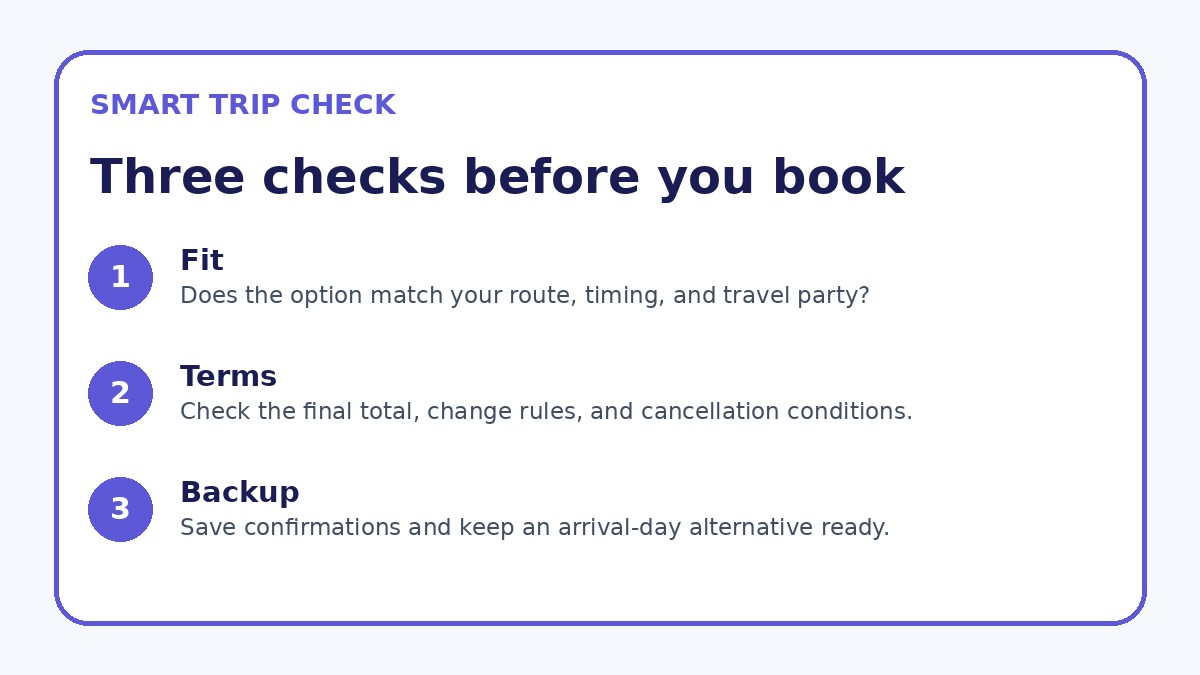
Business travel frequently needs flexibility. Before committing, open the final booking page and read the exact fare rules: what changes are allowed, how much they cost, how cancellations are handled, and whether refunds are processed as a voucher or to the original form of payment. Corporate ticketing often offers different conditions or negotiated waivers—check if your company’s travel policy or preferred booking channel provides additional flexibility, fee waivers, or centralized help with rebooking. Also confirm whether frequent flyer benefits or corporate discounts apply and how they affect seat selection and baggage allowances.
Consider travel insurance or an enhanced corporate protection product if your schedule could change. Insurance can cover missed connections caused by delays, but policies vary on what they reimburse; read the fine print for business equipment, trip interruption, and cancellation cover. If you rely on the ability to change flights at short notice, verify how quickly changes can be made (online, app, or phone) and whether reissue fees and fare differences will apply. These details determine how easily you can adapt if meetings move or you need to extend your stay.
Before you book
- Set your arrival and departure time windows based on meeting schedules and add a realistic buffer for immigration and transit to and from airports.
- Decide whether you need nonstop service or an acceptable connection, then compare total door-to-door time for each itinerary option.
- Open each carrier’s final booking page to verify fare rules: change fees, refund conditions, and how refunds or vouchers are processed.
- Confirm baggage allowances and carry-on rules, and make any paid upgrades (extra baggage, exit row, or premium seats) before checkout to avoid gate charges.
- Check terminal and transfer details for both airports and pre-book reliable airport transfers that match your arrival time and meeting locations.
- Confirm passport validity, required travel documents, and any corporate approval or payment method needed before completing the booking.
Confirm practical trip details before checkout
Before you finalize a booking, confirm the airports and terminal information for both departure and arrival. Bangkok has multiple airports and ground transfer times can vary dramatically depending on which one you use; similarly, Singapore’s airport access and your city-side transport options should influence your departure choice. Check baggage weight and size limits, carry-on rules for laptops and work samples, and whether priority boarding or lounge access is included or can be added. Also verify seating options if you need a workspace or extra legroom to be productive in flight.
Finally, check visa, entry, and health requirements as part of pre-trip planning even though those rules change. For business travelers, ensure passport validity meets the destination’s requirement, and confirm any required documentation for meetings (invitations, permits). On the booking page, look for details about check-in windows, recommended arrival times at the airport, and how to add special assistance or corporate billing. Make any needed reservations for airport transfers, and save booking confirmations, e-tickets, and contact numbers where your team can access them quickly.
Frequently asked questions
Should I always pick the earliest flight to avoid delays when traveling Singapore to Bangkok?
Picking an earlier flight can reduce exposure to afternoon traffic or cascading delays later in the day, but it’s not always the optimal choice. Consider whether an early departure requires waking unusually early and whether airport transfers at that hour are reliable. Evaluate the total door-to-door time and whether an overnight arrival or later flight better serves your meeting schedule. Also check if earlier flights are direct or have short connections—single non-stop flights often reduce complexity even if they depart later in the morning.
How do I evaluate whether a refundable fare is worth the extra cost for a business trip?
Assess how likely your travel dates are to change: if meetings are tentative or approvals are pending, the value of a refundable or easily changeable fare increases. Compare the cost difference to the potential cost of rebooking at short notice, including lost productivity and any rush fees. Also factor in corporate policy—some companies will prefer higher-fare bookings for the predictability and central management they provide. Finally, read the exact change and cancellation terms on the carrier’s booking page to know whether changes are truly fee-free or subject to fare differences.
What should I verify on a booking page that isn’t always obvious on search results?
Search results often omit specific fare rules and the precise baggage allowance for the price class you select; on the booking page confirm change and cancellation fees, whether the fare is ticketed on a single record for connections, and exact carry-on and checked baggage limits. Also look for seat assignment rules, whether lounge access or priority boarding is included, and any corporate or frequent-flyer benefits that apply. If you’ll be traveling with equipment or samples, verify size restrictions and any declared value or special handling options.
Final planning note
A compact, business-focused pre-booking checklist keeps Singapore to Bangkok travel decisions practical and defensible. Start by locking your schedule priorities—arrival windows, need for flexibility, and in-flight productivity—and then compare total door-to-door times rather than just flight durations. Always inspect fare rules, baggage allowances, terminals, and connection protections on the carrier’s final booking page before you commit. If your company uses a managed booking tool or has negotiated fares, coordinate with travel administrators to confirm corporate policies. With the checklist complete, you’ll reduce last-minute surprises and keep the focus on your business objectives.
Continue planning
Check current options and final conditions
Use the provider page to confirm live availability, the final total, cancellation terms, and every condition that matters to your trip.
This evergreen planning guide was created with AI-assisted drafting and a structured quality review. It does not display live prices, schedules, availability, visa guidance, or provider rankings. Verify current details before booking. Some links are affiliate links; we may earn a commission at no additional cost to you.