If you’re bringing extra luggage to Auckland, the single most useful tactic is to search with flexible dates and compare fare rules, baggage allowances and overnight options together — not separately. Start by identifying a range of travel dates (±3–7 days), then filter results by baggage policy rather than only by price. That will quickly reveal flights and packages where the lowest logical total cost covers your extra carry-on or checked pieces, or where the same carrier runs a cheaper fare on an adjacent day with a more generous allowance. Be ready to trade slightly different times or an extra connection for much lower baggage charges; conversely, a small fare premium can sometimes eliminate unpredictable add-on fees and save time at the airport. Verify final baggage allowances, size limits and fees on the airline or booking provider’s page before you pay.
See current options before you compare the details
Availability and final conditions change. Open Trip.com now or keep reading for the practical comparison.
How to structure flexible-date searches for luggage savings
Begin by building three parallel searches: your exact travel dates, a -3 to +3 day range, and a -7 to +7 day range. Use the wider range to identify patterns — for example, mid-week departures sometimes allow checked baggage to be included in a lower fare class, or late-night flights might offer cheaper bundles. When tools let you, filter by baggage or fare type (economy standard vs economy plus) rather than raw price. If the booking engine lacks a baggage filter, inspect the fare rules column or expand each fare to view included allowances; mark the cheapest option that meets your luggage needs and use that as your baseline.
Next, compare itineraries side-by-side, keeping total travel time, number of connections and the baggage rules in view. For heavy or irregular items (surfboards, bikes, musical instruments) add special-handling lines into your comparison; those items often have separate fees that don’t appear in a simple baggage allowance. Don’t forget arrival-side logistics in Auckland: if you’ll need temporary storage, overnight transfers, or an airport pickup large enough for your bags, those costs and convenience factors should feed into which day you choose to arrive.
When to favor a slightly pricier ticket that includes baggage
There are clear moments when paying more up front is the smarter decision. If you have many checked pieces or expect to check items on both legs of a round trip, inclusive fares remove the risk of oversize or overweight surprises at the airport counter. Also favor inclusive fares if your itinerary has tight connections: a single-carrier fare that includes baggage usually protects checked luggage through connections, avoiding the need to collect and re-check bags on a separate ticketation.
Another reason to pick a higher fare is if it simplifies refunds, rebooking and handling. Bundled fares often come with friendlier change conditions or clearer reissue fees, which matters if your travel dates are flexible but not certain. Finally, for oversized sports gear or fragile items, paying for carrier-recognized special handling through a confirmed fare class can provide clearer instructions for packing, weight limits and liability — details you should verify on the airline’s detailed baggage pages before booking.
| Approach | Best for | Tradeoff to check |
|---|---|---|
| Shift dates slightly to find a fare that includes checked bags | Travelers who prefer fewer surprises and smoother airport handling | May cost more in base fare or require a less convenient departure time |
| Book the cheapest fare and add baggage only when necessary | Travelers maximizing upfront savings and willing to manage add-ons | Risk of higher total fees at checkout and administrative hassle at the airport |
| Choose a single-carrier itinerary with connections on one ticket | Travelers carrying multiple pieces who want baggage protection through connections | Fewer scheduling options and sometimes higher initial fare |
| Use flexible-date packages (flight+hotel) that list baggage-inclusive options | Travelers wanting simplified logistics and one checkout for big trips | Packages may lock dates or suppliers, reducing last-minute flexibility |
Ready to check the option that fits your plan?
Use your exact dates and traveler details so the provider page can show the current total and conditions.
Using flexibility to lower hotel and transfer friction with large bags
Dates affect more than flights. Hotels and transfers near Auckland Airport or CBD have different pickup policies, elevator sizes and storage options depending on day of week and occupancy. Look for arrival days with straightforward late check-in policies or early check-in availability if you need a room to drop heavy bags without waiting. Also compare hotel room types carefully — some standard rooms can’t accommodate oversized bags without blocking walkways, whereas slightly larger rooms or serviced-apartment options provide useful space for gear.
Transfers are easier on certain arrival times. Early morning and late evening airport services may have limited vehicle types; if you need a van or vehicle with roof racks for bulky items, search for dates and times when those services are regularly available. If timing flexibility lets you avoid peak airport traffic, you’ll find more shuttle and taxi availability with room for luggage. Always confirm the vehicle type, any extra transfer fees for oversized items, and door-to-door baggage help directly with the provider before you finalize the booking.
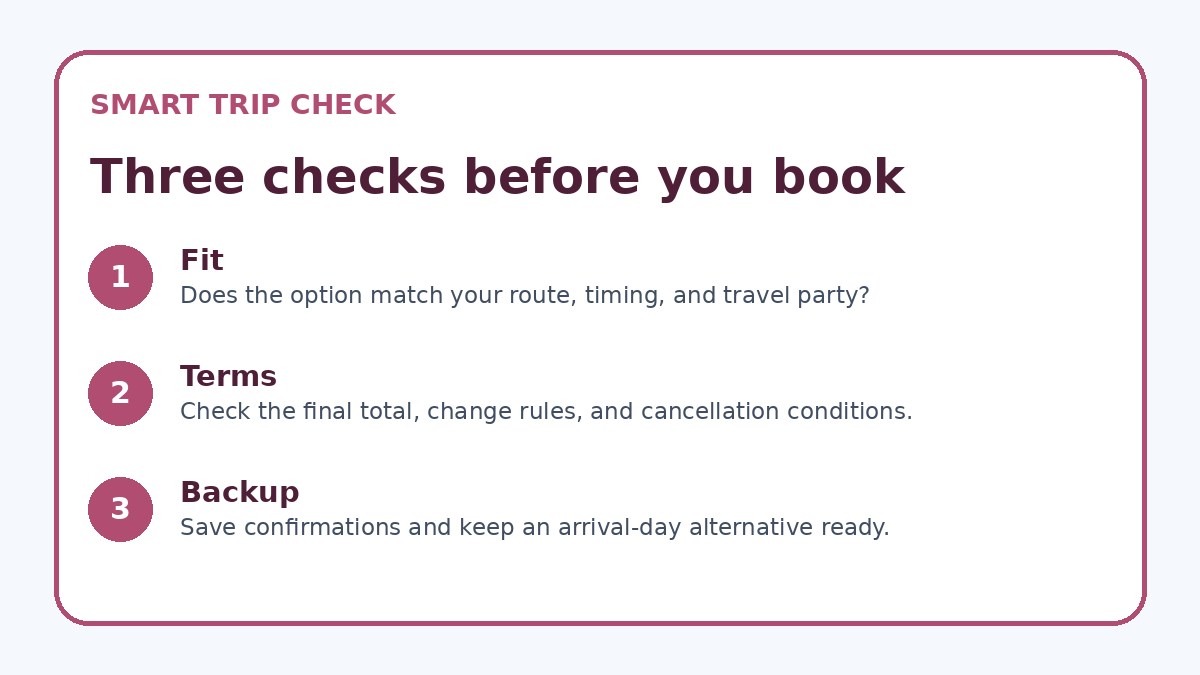
Before you book
- Search fares using a ±3 and ±7 day window and note which dates include free or bundled checked baggage.
- Compare total trip cost: base fare plus documented baggage fees, transfer charges, and any required overnight stays.
- Confirm size, weight and special-item rules on the airline’s baggage policy page before finalizing payment.
- If booking separate tickets, ensure minimum connection times and allow buffer time to recheck luggage at Auckland transfers.
- Call or message your transfer or shuttle provider to confirm vehicle type and extra fees for oversized equipment.
- Set price-and-baggage alerts on two booking platforms and verify final baggage charges on the carrier’s booking page before you click purchase.
Practical tradeoffs: time, cost, and risk management
Flexible dates give options but introduce tradeoffs. Shifting a trip by a day may save baggage fees but extend travel time or add an early-morning connection, increasing fatigue and risk of missed transfers. Evaluate the real cost of extra time in transit, overnight layovers, or airport wait times against potential savings on baggage fees. If the savings are small relative to the hassle — for example when you’d need an overnight layover to save a small baggage charge — booking the more convenient option may be wiser.
Risk tolerance matters. A flexible-date itinerary that relies on mixing low-cost carriers can be cheaper but increases the chance you’ll need to rebook separately if a flight is delayed. Single-ticket itineraries with baggage included reduce that operational risk. Make a short pros-and-cons list for each candidate itinerary: total door-to-door time, baggage policy clarity, number of paid extras, and the difficulty of arranging last-minute changes. Verify the supplier’s change and compensation rules on the final booking page before you commit.
Frequently asked questions
Can changing my travel date really save on baggage fees to Auckland?
Yes — small date changes can move you into a different fare class or carrier schedule where checked baggage is included or cheaper to add. Airlines often have lower-inclusive-baggage fares on less popular days or flights, and package deals (flight plus hotel) sometimes bundle baggage allowances. However, the only reliable way to confirm savings is to compare total out-the-door costs across dates and verify allowances on the airline’s official baggage policy and the booking confirmation page before payment.
What should I verify on the airline’s booking page when I have extra or oversized luggage?
On the airline’s page check the exact number of included checked pieces, maximum weight and linear dimension limits, and the cost structure for overweight or oversized items. For sports gear, verify whether it’s classified as checked baggage or requires special handling, and note any advance booking requirements. Also check whether the fare protects baggage through connections and the carrier’s stated liability or damage policy. If any detail is unclear, contact the airline directly and get a written confirmation if possible.
Is it better to buy a package (flight+hotel) with baggage included or to buy flights and hotels separately?
Packages can simplify logistics and sometimes include baggage allowances that make sense for heavy packers; they also reduce the number of bookings you manage. Buying separately may offer more flexibility to swap dates, carriers, or hotel types, and could produce lower base fares if you’re willing to manage baggage add-ons. Decide by comparing total costs and cancellation/change terms: if the package locks dates or makes changes costly, separate bookings might suit flexible travelers; if simplicity and predictable baggage rules matter more, a package can be preferable.
Final planning note
If you’re arriving in Auckland with extra luggage, flexible dates are a practical lever to reduce total travel friction and cost. Use a three-tiered date search (exact, ±3 days, ±7 days), always compare total out-the-door costs — including baggage, transfers and any overnight waits — and prioritize straightforward fare rules when convenience matters. For bulky or special items, verify special-handling requirements and confirm vehicle size with transfer providers. Use alerts and a secondary search tool like Trip.com to monitor availability, but always verify baggage allowances and final totals on the airline or booking provider’s final page before paying. That verification step prevents the biggest surprises at the airport and helps you choose the best tradeoff between cost and convenience.
Continue planning
Check current options and final conditions
Use the provider page to confirm live availability, the final total, cancellation terms, and every condition that matters to your trip.
This evergreen planning guide was created with AI-assisted drafting and a structured quality review. It does not display live prices, schedules, availability, visa guidance, or provider rankings. Verify current details before booking. Some links are affiliate links; we may earn a commission at no additional cost to you.