
If you’re picking Hanoi hotels as a solo traveler, the quickest practical rule is this: prioritize a safe, central neighborhood with honest transit options, then select a room that gives you the sleep quality and privacy you need. In Hanoi the neighborhoods and the rooms pull in different directions — Old Quarter and Hoàn Kiếm put you next to nightlife and attractions, while Tay Ho and Ba Đình offer quieter streets and larger hotel rooms. Decide which tradeoff matters more for your trip: do you want to walk to most sites and risk street noise, or prefer a calm room and accept longer rides? This article walks you through the core decision criteria, how to compare options at booking, and a checklist of concrete things to verify on the hotel’s booking page before you commit.
See current options before you compare the details
Availability and final conditions change. Open Trip.com now or keep reading for the practical comparison.
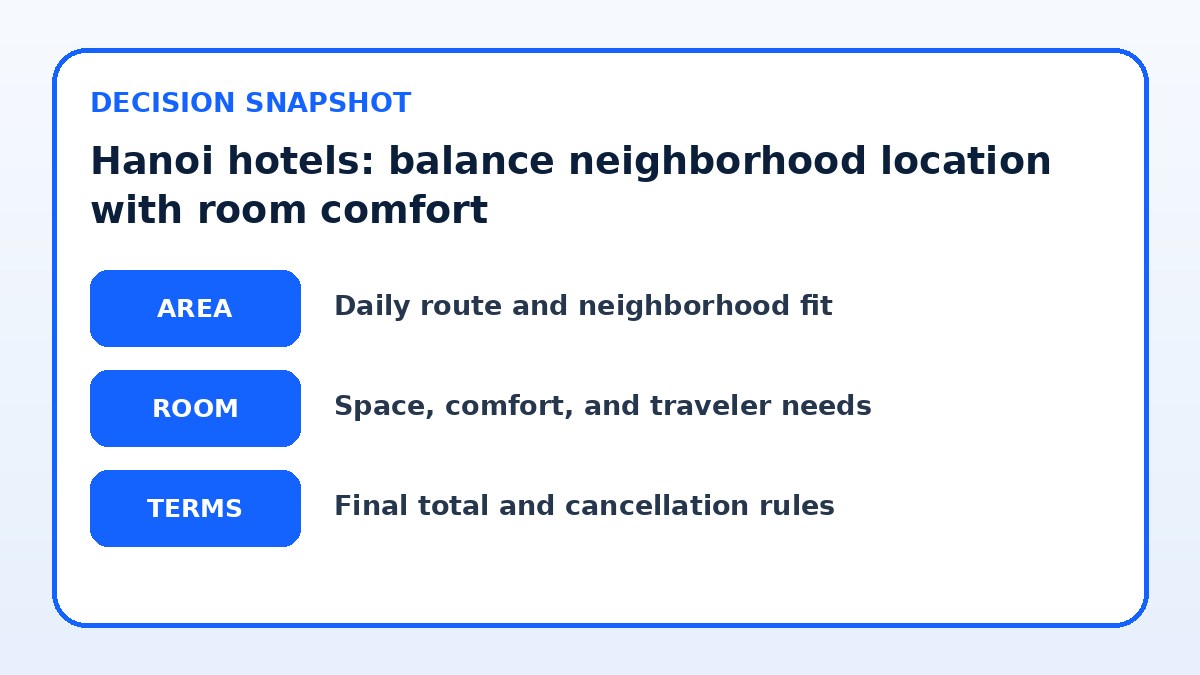
Neighborhoods vs. room features: the essential tradeoff
Hanoi neighborhoods vary widely in vibe. The Old Quarter and Hoàn Kiếm are compact, pedestrian-friendly, and close to major attractions and street food, but the streets can be noisy and crowded at night. In contrast, Tay Ho (West Lake) and parts of Ba Đình tend to be quieter, with tree-lined streets and bigger hotels or serviced apartments that offer more room space and a calmer atmosphere. Solo travelers should decide whether being in the middle of action outweighs having a restful, private room.
Room features matter differently depending on your priorities. If you want restful sleep and a place to work, insist on a room with good soundproofing, a comfortable workspace, reliable Wi‑Fi, and blackout curtains. If your plan is to spend little time in your room and maximize sightseeing, a smaller, well-located room might be acceptable. Consider how much time you’ll actually spend in the room before prioritizing size or neighborhood.
Safety, solo-friendly amenities, and practical checks
Safety for solo travelers is not just about neighborhood reputation; it’s about specific hotel features. Look for 24-hour reception, a secure entry system, CCTV in public areas, and the ability to store luggage securely. Single travelers often prize hotels that offer airport transfer or clear directions for safe taxi or ride-hailing pickup spots. On the booking page, verify what safety features are listed and confirm them with the property if anything is unclear.
Practical amenities also shape comfort: reliable Wi‑Fi, a bathroom with good water pressure and hot water, daily housekeeping, and an accessible power outlet layout matter more than decorative extras. If you need to work, ask about quiet hours and whether the hotel has a business center or café with solid Wi‑Fi. When the booking page mentions specifics like 'fast Wi‑Fi' or 'airport transfer', confirm the details directly with the property or on the provider’s final booking page before booking.
| Approach | Best for | Tradeoff to check |
|---|---|---|
| Central Old Quarter location, small quiet room | Sightseeing-focused solo travelers who want to walk to attractions | Street noise and smaller room space in exchange for maximum convenience |
| Tay Ho larger room, suburban calm | Remote workers or travelers who value rest and longer stays | Longer rides into central attractions and fewer late-night options nearby |
| Midtown Ba Đình, balanced location and space | Travelers seeking a middle ground between convenience and comfort | Moderate commute time to nightlife and sometimes fewer dining choices within walking distance |
| Boutique guesthouse in a quiet alley, basic room | Travelers prioritizing local character and budget while accepting simple rooms | Less soundproofing and fewer hotel services compared with larger hotels |
Ready to check the option that fits your plan?
Use your exact dates and traveler details so the provider page can show the current total and conditions.

How to compare listings without overthinking price alone
When scanning Hanoi hotels, it’s tempting to filter immediately by price. Instead, set filters for neighborhood and room essentials first: non-smoking room, private bathroom, and an accessible location near a main road or transit stop. Read recent guest comments that specifically mention sound levels, bed comfort, and the reliability of Wi‑Fi rather than overall star ratings. Photos can be useful, but check multiple images and look for images that show the entire room layout rather than staged angles.
Compare the final booking details before committing. Look at the room’s floor location (lower floors can be noisier but easier to exit), bed size, and whether the room has a window that opens onto a street or an internal courtyard. Confirm whether breakfast is included and understand cancellation terms. Trip.com can be a place to compare current availability, but always verify the precise room type and hotel policy on the provider’s final booking page.
Before you book
- Confirm the exact room type, floor, and whether the window faces a street or courtyard on the booking page.
- Verify that the property has 24-hour reception, secure entry, and specified luggage storage if you need it.
- Check the provider’s listing or contact the hotel to confirm Wi‑Fi speed reliability and any business facilities you need.
- Ask the hotel about typical noise levels at night and whether rooms come with blackout curtains or white-noise options.
- Confirm transportation options from the hotel to the airport or main rail station and safe taxi/ride-hail pickup instructions.
- Read recent guest comments specifically mentioning bed comfort, room cleanliness, and bathroom water pressure.
Making the choice: sample approaches for different solo traveler types
If your priority is sightseeing and meeting people, choose a central neighborhood like the Old Quarter with a compact, well-reviewed room that lists soundproofing or higher-floor placement. You’ll be within walking distance of many attractions and evening activities, which reduces transport time and can be safer late at night because more people are around. Balance this by selecting rooms with clear mentions of quiet hours or by booking a mid-level floor away from street-facing windows.
If rest, remote work, or prolonged stays matter more, pick a quieter district such as Tay Ho or a residential part of Ba Đình with larger rooms or serviced apartments. Expect longer commutes into the Old Quarter, so verify taxi and ride-hailing availability and safe pickup spots. For longer stays, prioritize kitchenette options, laundry facilities, and flexible check-in policies to make day-to-day life easier while keeping your home base comfortable and secure.
Frequently asked questions
Which Hanoi neighborhood is safest and still convenient for a solo traveler?
Safety and convenience depend on your definition of safe. Central areas like Hoàn Kiếm keep you near main attractions and busier streets, which can feel safer at night due to more people and visible activity. Tay Ho and parts of Ba Đình are quieter and may feel safer if you prefer low-traffic streets and larger properties. To choose, list what makes you feel safe (well-lit streets, 24-hour reception, nearby transport) and verify those features on the hotel’s booking page or by contacting the property directly.
How can I ensure my room in Hanoi will be quiet enough to sleep or work in?
Look for rooms described as soundproof, set on higher floors, or facing an internal courtyard rather than the street. Read guest reviews that mention noise levels and sleeping conditions, and check room photos for window placement. On the booking page, confirm the exact floor or request a quiet room during booking. If noise is critical, message the property ahead of time to request confirmation: ask about nearby nightlife, traffic patterns, and whether the hotel can place you away from elevators and service areas.
Should I prioritize price or location when booking a short solo trip to Hanoi?
For a short trip, location usually has a bigger impact on your experience than saving a small amount on price: being near attractions and reliable transport reduces wasted time and can be safer at night. However, if your primary need is restful sleep or remote work, a slightly higher spend for a quieter, more comfortable room may be worth it. Compare total travel time and transport costs alongside room features, and always confirm essential amenities and cancellation terms on the final booking page before you commit.
Final planning note
Choosing Hanoi hotels as a solo traveler is a balancing act between neighborhood convenience and the comfort of your room. Start by deciding whether you want to spend your days within walking distance of attractions or prefer a calmer, larger room for sleep and remote work. Use the checklist to verify specific claims on the booking page — exact room placement, security features, Wi‑Fi, and transport options — and don’t hesitate to message the hotel with questions. By prioritizing the single factor that matters most for your trip and then checking practical room details, you’ll create a stay that supports both your safety and enjoyment.
Continue planning
Check current options and final conditions
Use the provider page to confirm live availability, the final total, cancellation terms, and every condition that matters to your trip.
This evergreen planning guide was created with AI-assisted drafting and a structured quality review. It does not display live prices, schedules, availability, visa guidance, or provider rankings. Verify current details before booking. Some links are affiliate links; we may earn a commission at no additional cost to you.