
If you’re traveling from Amsterdam to Rome for the first time and want to prioritize comfort on a long connection, start by deciding how much time and effort you’re willing to trade for fewer hassles. The simplest practical choice is a single checked bag, a seat with extra legroom if you’ll be on a long sector, and a connection with at least 90–120 minutes for transfers when changing terminals or airlines. Consider overnight or daytime breaks depending on jet lag and whether you prefer airport lounges, a short city stopover, or an onward red-eye. Before you lock in tickets, check baggage transfer rules, minimum connection times on the carrier’s booking page, and the passport/entry requirements for any transit stop—Trip.com can be used to compare current schedules and conditions, but always verify details on the operating carrier’s final booking page.
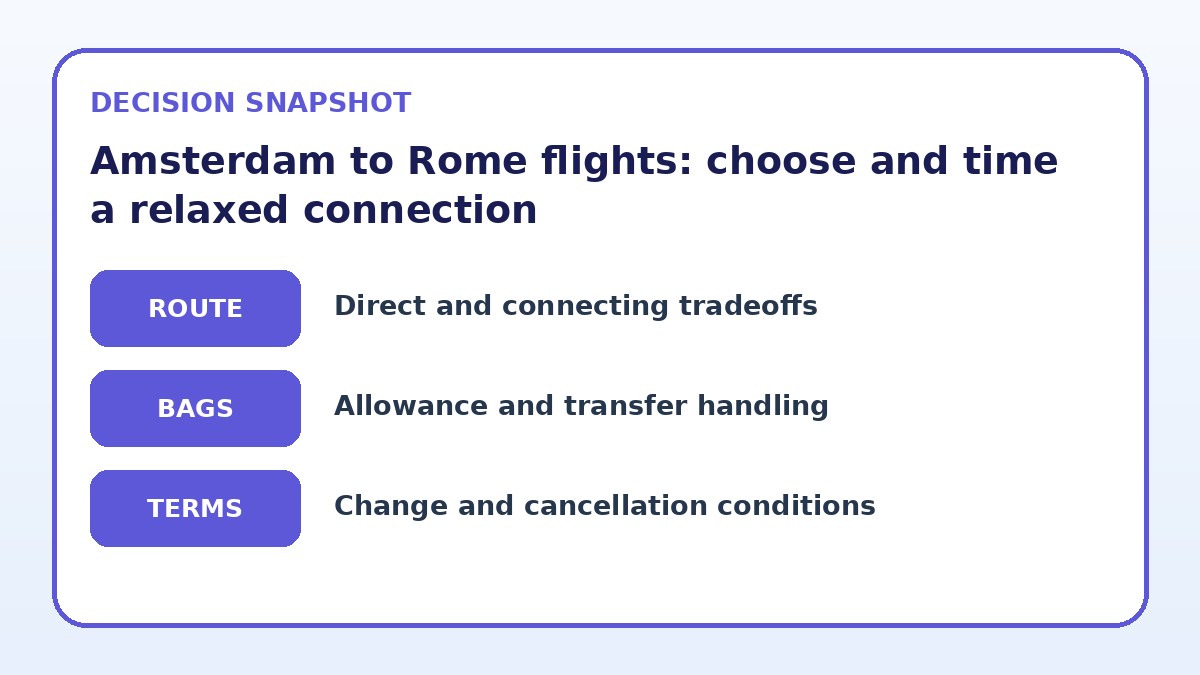
See current options before you compare the details
Availability and final conditions change. Open Trip.com now or keep reading for the practical comparison.
Compare direct versus connecting itineraries
A direct flight avoids the uncertainty and extra movement of a connection, which can be appealing to first‑time visitors who want to minimize navigation and luggage handling. However, direct options may be fewer or timed poorly for your schedule; a single connection can open later departure windows and sometimes more comfortable aircraft. When evaluating, look beyond duration: check aircraft type for seat comfort, the operator’s baggage policy, and whether meals or inflight amenities are included on the longer sector.
For a connecting itinerary, think about where you will change planes. Major hubs often have efficient transfer processes and lounges, while smaller airports may require longer minimum connection times and carry a higher risk of missed connections if the inbound leg is late. Always compare total door‑to‑door travel time rather than just airborne time, and factor in time needed to clear customs or to collect and recheck luggage if carriers do not have an interline agreement.
Choose layover length and location for comfort
Aim for a buffer that matches the complexity of your transfer: 60–90 minutes can work for same‑terminal connections on the same airline, but 120–180 minutes is safer when you must change terminals, airlines, or clear immigration. Longer layovers let you use lounges, nap in a transit hotel, or leave the airport briefly to stretch in a nearby town. If you plan to exit the airport, check visa or entry rules for the transit country, and leave at least three hours for re‑entry and security checks on the return leg to be conservative.
When selecting a layover city, prioritize airports known for smoother transfers if comfort is your priority—wide walkways, clear signage, good lounge access, and straightforward immigration control reduce stress. Think about time of day too: a late‑night hub might have limited services, while daytime hubs are livelier and offer more food, shops, and airport lounges. If you have mobility concerns or are traveling with small children, filter for airports with reliable wheelchair services and family facilities.
| Approach | Best for | Tradeoff to check |
|---|---|---|
| Direct flight (nonstop) | Travelers who want the simplest routing with the least navigation | May offer fewer schedules and less flexibility for preferred departure times |
| Single connection with long layover | Those who value a relaxed transfer with time to rest or use a lounge | Adds total travel time and may require extra visa checks if you exit transit |
| Tight connection on same carrier | Passengers prioritizing shorter door‑to‑door time and through‑checked bags | Higher stress and risk if inbound flights are delayed |
| Multi‑carrier connection to save cost or open times | Travelers needing broader schedule choices or lower fares | Often requires rechecking luggage and guarantees are weaker for missed connections |
Ready to check the option that fits your plan?
Use your exact dates and traveler details so the provider page can show the current total and conditions.
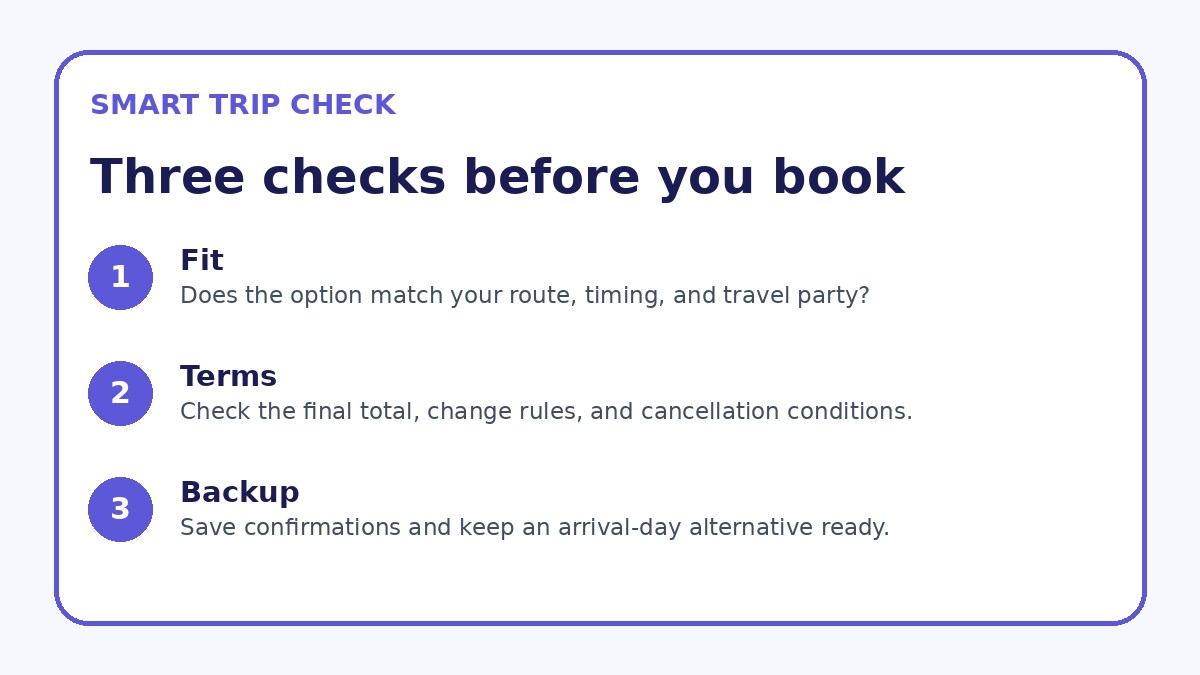
Seat, baggage and lounge choices that reduce hassle
Reserve seats that match how you travel: aisle for frequent walks, window for uninterrupted sleep, bulkhead for more legroom if you have a toddler. On longer sectors, consider paying for extra legroom or a premium economy seat if available; these provide measurable comfort gains without the full cost of business class. Before you pay, confirm seat dimensions and recline policies on the carrier’s official seat map—aircraft interiors and seat layouts vary even within the same airline.
Baggage rules are crucial to a smooth connection. If your itinerary involves different airlines, verify whether checked luggage transfers automatically; when it doesn’t, plan to pick up and recheck your bags and allow extra time. A carry‑on optimized for easy access—one main compartment and a front pocket for travel documents—helps during quick security or immigration checks. If lounge access or a day room would improve your layover, check eligibility and book in advance when possible.
Before you book
- Confirm on the airline booking page whether checked baggage is transferred automatically between legs.
- Verify exact terminals and minimum connection time for each transfer and add a 30–60 minute buffer for walking and security.
- Reserve seats for the longest sector now and check seat pitch measurements on the carrier’s seat map.
- Book lounge access or a day‑room for long layovers if you want privacy and a quiet space to rest.
- If changing airlines, check visa/entry rules for the transit country before planning to exit the airport.
- Arrange special assistance or pet transport directly with the operating airline at least 48–72 hours before departure.
What to verify before you complete your booking
On the carrier or booking agent’s final page, confirm the operating airline for every leg, the exact connection time, the terminal transfer process, and whether baggage will be checked through to your final destination. If you’re changing airlines, verify the minimum connection time the second carrier recommends and whether you must collect and recheck luggage. Check the cancellation and change terms so you understand flexibility if a delay affects your connection.
Also verify passport, visa and health entry requirements for any country you transit through, not just your final destination. Look for seat assignment options and whether the booking includes inflight meals or allows upgrades at check‑in. If you rely on specific services—wheelchair assistance, pet transport, or medical oxygen—confirm availability directly with the operating airline and request those services well before departure.
Frequently asked questions
How much connection time should I allow when flying from Amsterdam to Rome?
Connection time depends on whether you change terminals, airlines, or need to clear immigration. For same‑terminal, same‑airline transfers, 60–90 minutes can work; for terminal changes, different carriers, or when baggage must be rechecked, plan 120–180 minutes. If you intend to exit the airport during a stopover, allow at least three hours to clear passport control, travel to a nearby point of interest, and get back through security. Always check the airline’s minimum connection time and add extra buffer for peace of mind.
Can I mix a budget airline and a full‑service carrier on the same itinerary?
You can mix carriers, but that often affects baggage handling and protection for missed connections. Low‑cost airlines rarely have interline agreements, so you may need to collect and recheck luggage and rebook if your inbound leg is delayed. If you choose this approach, build longer layovers, insure your trip for missed connections, and verify baggage transfer rules on each carrier’s booking page. For smoother transfers, consider booking carriers within the same alliance or those that explicitly allow through‑checked bags.
What helps most to stay comfortable during a long connection?
A few practical choices make a major difference: selecting a seat with extra legroom on the longest flight, bringing layered clothing and noise‑reducing headphones, and planning layovers that allow rest—either in a lounge, day room, or a nearby hotel. Hydration and light exercise during a long travel day reduce stiffness and jet lag effects. Also pack essentials in a carry‑on (medications, chargers, change of clothes) in case checked luggage is delayed during a connection.
Final planning note
For first‑time visitors, planning a comfortable Amsterdam to Rome connection comes down to knowing the complexity you’re willing to accept: direct flights minimize steps, while a well‑chosen connection can offer better timing and a more comfortable aircraft. Focus on practical checks—baggage transfer, terminal changes, seat selection, and allowable connection times—before you book. Use the airline’s booking page to confirm operating carriers, baggage rules, and seat maps; Trip.com is useful for comparing schedules and availability, but always verify specifics with the operating airline. With a little extra planning you can turn a long travel day into a manageable, even restorative, part of your trip.
Continue planning
Check current options and final conditions
Use the provider page to confirm live availability, the final total, cancellation terms, and every condition that matters to your trip.
This evergreen planning guide was created with AI-assisted drafting and a structured quality review. It does not display live prices, schedules, availability, visa guidance, or provider rankings. Verify current details before booking. Some links are affiliate links; we may earn a commission at no additional cost to you.