If you’re in Singapore on business and need a stress-free return to Changi, start by choosing an option matched to your flight time, luggage, and meeting schedule. The fastest way to decide is to pick between door-to-door private transfer, taxi/ride-hail, express train plus a short taxi, or hotel-arranged shuttle — each balances speed, predictability, and cost differently. For tight schedules favor predictable travel windows; if flexibility matters more, allow buffer time and use options that can be booked last-minute. Below I explain what to compare right now — how to check availability, confirm luggage rules, and set pickup timing — and the tradeoffs that matter for a business traveler who can’t afford a missed departure.
See current options before you compare the details
Availability and final conditions change. Open Trip.com now or keep reading for the practical comparison.
Decide by schedule: matching transfer to your flight window
Begin by establishing the non-negotiable points of your trip: the check-in or curbside deadline, whether you need to be at the airline desk for oversized luggage, and whether your flight is domestic, regional, or international. For short windows — for example when your meeting finishes late or traffic is unpredictable — prioritize door-to-door services where the vehicle waits or a direct transfer with a guaranteed pickup time. If you have a relaxed buffer and want to save money, the rail link to the airport plus a short taxi can be an efficient alternative that avoids most traffic.
When comparing options, think in terms of total predictable minutes, not just nominal travel time. Rail services can be faster during peak road traffic but add fixed walking and transfer time that can be burdensome with heavy luggage. Taxis and ride-hail services reduce walking and loading time but are subject to surge pricing and road delays. Private prebooked transfers can offer the best balance of reliability and convenience for executives because they confirm exact pickup windows and often provide a professional meeting experience.
Luggage, lanes, and accessibility: practical checks before booking
Business travelers often travel with roller cases, a briefcase, and sometimes presentation materials. Before you book, confirm the vehicle type and luggage allowance listed on the operator’s booking page; if that information isn’t explicit, ask the provider for a specific vehicle model or trunk dimensions. Also check whether the pickup point requires stairs, long walks, or elevator access — some hotel driveways and business parks have restricted curb access that changes how early you should schedule pickup. If you need assistance with loading or a vehicle with extra cargo space, make that a binding requirement at booking.
Accessibility matters if you have mobility concerns or are carrying fragile equipment. Verify that the driver can meet you at the building entrance and can help with luggage. If travelling in peak morning or evening periods, consider booking a slightly larger vehicle to ensure space for both passengers and materials. Keep printed or digital copies of your booking confirmation and a local contact number so building security or concierge can coordinate with the driver on the day.
| Approach | Best for | Tradeoff to check |
|---|---|---|
| Private prebooked transfer | Tight schedules and predictable pickup needs | Higher cost and lower last-minute flexibility |
| Taxi or ride-hail | Quick on-demand pickups and short notice changes | Exposure to traffic, surge pricing, and variable wait times |
| Airport express train + short taxi | Avoiding road congestion and consistent journey times | More walking, transfers, and potential luggage handling |
| Hotel shuttle or concierge-arranged transfer | Simplicity and consolidated billing through the hotel | Fixed schedules, limited capacity, and variable pickup details |
Ready to check the option that fits your plan?
Use your exact dates and traveler details so the provider page can show the current total and conditions.
Booking and confirmations: what to verify on the final page
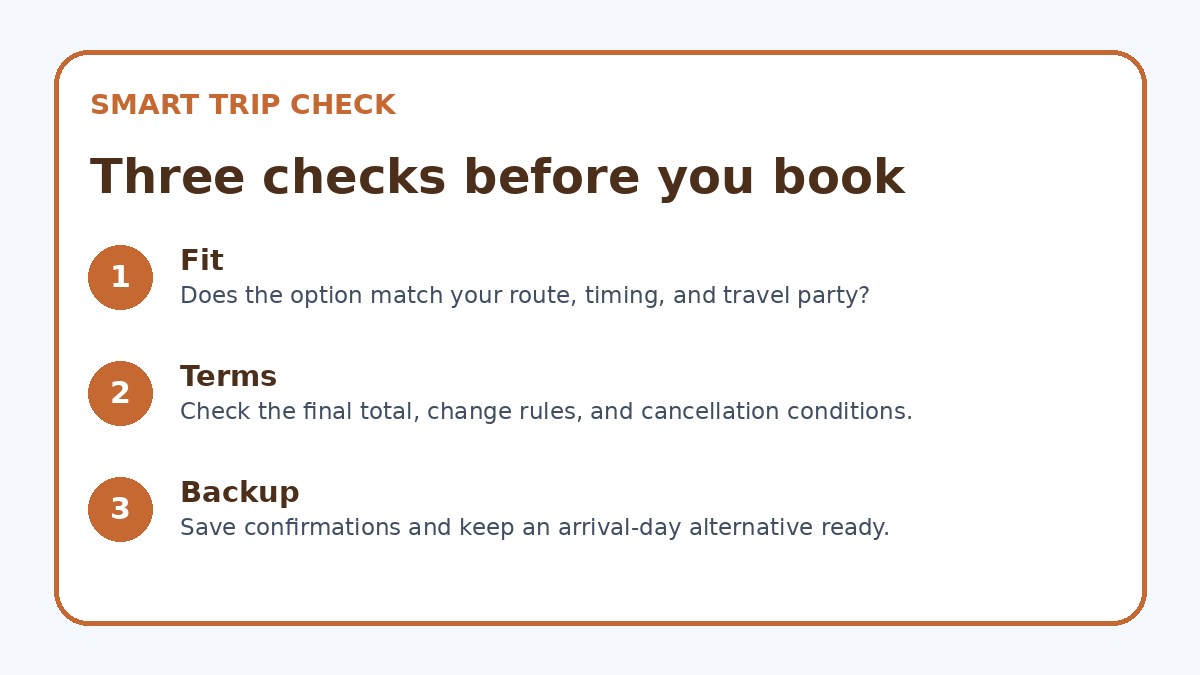
On any provider’s final booking page, look for precise pickup time windows, cancellation or change terms, refund conditions, and the operator’s local contact number. For hotel-arranged shuttles or third-party bookings, confirm whether the pickup is curbside or from the hotel lobby, and whether the driver can wait beyond a standard grace period. If you find the information unclear, contact the supplier directly and request written confirmation of pickup location, allowed luggage, and the driver’s phone number. Trip.com can be used as one place to compare availability and conditions, but always verify essential details with the operator listed on the final booking page.
Also confirm payment and receipt policies: does the booking charge your card in advance or allow payment to the driver, and is a receipt provided for company expense claims? If you plan to expense the transfer, ensure the receipt contains the company name or a sufficient breakdown for accounting. Finally, add the booking confirmation to your calendar with a reminder that triggers at least 90 to 120 minutes before your required airport arrival, depending on how much buffer you prefer.
Before you book
- Confirm your flight check-in and security cutoff time and work backward to establish the required airport arrival time.
- Choose the transfer mode that matches your buffer preference: private transfer for predictability, train for congestion-proofing, or ride-hail for flexibility.
- Verify vehicle size and luggage allowance on the provider’s booking page and request a larger vehicle if you carry extra equipment.
- Obtain a local contact number for the driver or operator and save it with your booking confirmation.
- Schedule the pickup on your calendar with a reminder 90–120 minutes before your needed airport arrival.
- Prepare a contingency plan: identify an alternate transfer option and the steps to switch if your meeting runs late.
Tradeoffs and contingency planning for busy schedules
Every choice requires balancing reliability, cost, and flexibility. Private prebooked transfers shrink uncertainty but may cost more and are less flexible if your meeting overruns. Ride-hail and taxis are flexible and easy to arrange, but they can be affected by traffic and have variable availability during event-heavy periods. Rail plus taxi is robust against congestion on major corridors but adds transfer time and more steps, which can be awkward if you’re carrying many items or in a suit.
Plan a clear contingency: if your meeting runs late, decide whether your backup is to rebook the same operator for a later pickup, switch to the express rail, or accept a rapid ride-hail. Save local numbers and be ready to authorise a quick change to avoid last-minute stress. For critical departures, consider booking a slightly earlier pickup than you think you need — it’s usually easier to relax in the airport lounge than to recover a missed flight.
Frequently asked questions
How much buffer time should business travelers leave when traveling to Changi from central Singapore?
Buffer time depends on your transfer choice and how predictable you need the journey to be. If you take the airport express train with a short taxi, you can rely on a more consistent travel window through busy hours, but you should still allow time for luggage handling and station transfers. For road transfers — taxi, ride-hail, or private car — add extra buffer for potential traffic, security checkpoints at your pickup point, and loading time. A practical approach is to add a firm margin to your required arrival time and plan contingencies if your meeting overruns.
Can I rely on hotel shuttles for late-night or early-morning departures?
Hotel shuttles are convenient but often run on fixed timetables and can have limited availability outside typical hours. For departures at very early or late times, confirm the shuttle schedule directly with the hotel and ask whether private off-schedule pickups can be arranged. If the shuttle isn’t guaranteed at your required time, consider prebooking a private transfer or arranging a taxi ride-hail as a reliable fallback. Always obtain written confirmation of any special pickup request for accounting and peace of mind.
What should I check about luggage and corporate billing when booking an airport transfer?
On the booking page, verify allowed luggage counts and whether oversized items require an upgraded vehicle. For corporate billing, confirm the payment method, whether the operator issues VAT or GST-inclusive receipts suitable for expense reports, and if the booking can be invoiced to your company. If the information is not explicit, request written confirmation from the provider before travel. Keep a copy of the receipt and booking details for reconciliation and expense submission after your trip.
Final planning note
Planning your Singapore airport transfer for the return leg should start with a clear decision about how much unpredictability you can accept. Match your transfer mode to your schedule: private transfers for tight windows, rail plus taxi for traffic-proof journeys, and ride-hail for last-minute changes. Verify vehicle size, pickup location, and the operator’s contact details on the final booking page, and add a buffer that reflects your tolerance for risk. Prepare a simple contingency plan so you can switch options quickly if meetings run late. With these checks done, you can finish meetings calmly and reach Changi with confidence.
Continue planning
Check current options and final conditions
Use the provider page to confirm live availability, the final total, cancellation terms, and every condition that matters to your trip.
This evergreen planning guide was created with AI-assisted drafting and a structured quality review. It does not display live prices, schedules, availability, visa guidance, or provider rankings. Verify current details before booking. Some links are affiliate links; we may earn a commission at no additional cost to you.