If you’re booking a car for a family trip to Munich, check a few insurance terms before you commit. Focus first on the rental agreement’s liability limits, collision damage waiver (CDW) or loss damage waiver (LDW) scope, theft protection, and any named driver rules. Make sure child seats are listed separately from insurance — they are safety items, not insurance coverage. Verify who counts as an insured driver, whether there’s a deductible or excess, and whether third‑party liability meets Germany’s legal minimums or leaves gaps. These are the practical items to resolve right away so the family trip isn’t interrupted by a surprise bill or denied claim. Below are clear explanations of common wording, tradeoffs families face, and exactly what to verify on the car company’s final booking page before you click confirm.
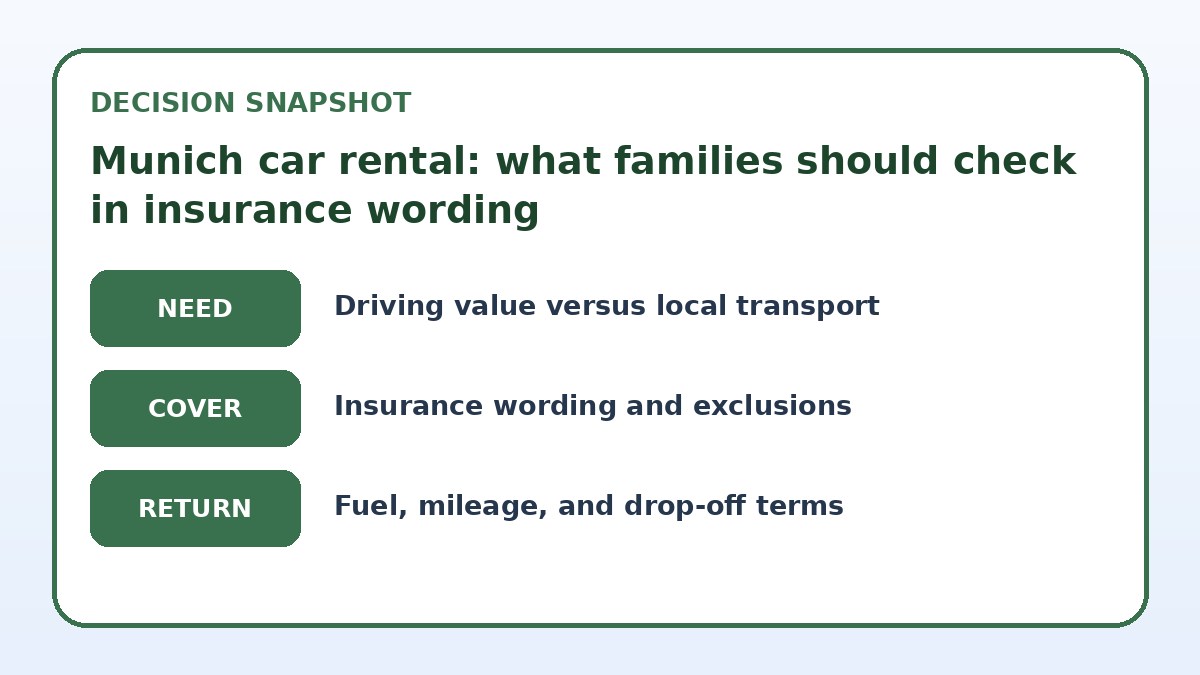
See current options before you compare the details
Availability and final conditions change. Open Trip.com now or keep reading for the practical comparison.
Key insurance terms families should understand
Liability, collision damage waiver (CDW), loss damage waiver (LDW), theft protection, and personal accident insurance are the phrases you’ll see most often. Liability insurance covers damage and injury to other people and vehicles; this is legally required. CDW or LDW reduces the renter’s financial responsibility for damage to the rental car itself but typically leaves an excess — a fixed amount you must pay if the car is damaged. Theft protection limits your obligation if the vehicle is stolen but often excludes unattended items and requires proof that locks and keys were used properly.
Personal accident insurance covers medical costs for occupants and is separate from liability and CDW; families with comprehensive travel or health insurance may already have better protection. Named driver clauses specify who is covered to drive the vehicle; an unnamed family member using the car can void coverage. Also search for exclusions such as off‑road driving, driving under the influence, or driving on certain mountain roads — these can invalidate claims. Read the exclusion list carefully to avoid a denied claim in a stressful situation.
Deciding how much excess to accept or reduce
The excess (also called deductible) is the amount you pay if the rental car is damaged or stolen before the rental company pays the remainder. A higher excess lowers the rental rate but raises your potential out‑of‑pocket cost after an incident — a real consideration for families who want predictable budgeting. Many families choose to pay extra for an excess‑reduction waiver offered by the rental company or buy a separate third‑party excess insurance policy; both options reduce or eliminate your liability for damage, but the small print matters for refundable deposits and claim processes.
If you consider relying on a credit‑card insurance benefit to cover the excess, verify the card’s terms: payment of the rental with that card is usually required and some cards exclude certain vehicle categories or countries. Also check the claim process timeline and documentation requirements: some insurers ask for police reports, repair invoices, and proof of fault determination. Weigh the convenience of a rental company waiver against the potentially lower cost and longer claims process of a third‑party policy.
| Approach | Best for | Tradeoff to check |
|---|---|---|
| Accept standard excess and pay lower rental rate | Families prioritizing lower upfront rental costs and comfortable with carrying a risk of higher out‑of‑pocket expense | You save on the daily rate but face potentially large charges after damage or theft, and claims processes may be lengthy. |
| Buy the rental company’s excess‑reduction waiver | Families wanting immediate peace of mind with a simple, on‑arrival solution and minimal claim paperwork | This is convenient at the desk but often costs more per day than third‑party excess insurance and varies in coverage details. |
| Use credit‑card insurance for excess coverage | Families with eligible cards that cover excess and who prefer not to buy extra waivers at pickup | May require paying with the specific card and can involve complex documentation and delayed reimbursement after an incident. |
| Purchase a separate third‑party excess insurance policy | Families seeking lower total cost for excess coverage and willing to handle claim submission after an incident | Lower premiums but longer reimbursement timelines and the need to follow strict claim documentation procedures. |
Ready to check the option that fits your plan?
Use your exact dates and traveler details so the provider page can show the current total and conditions.
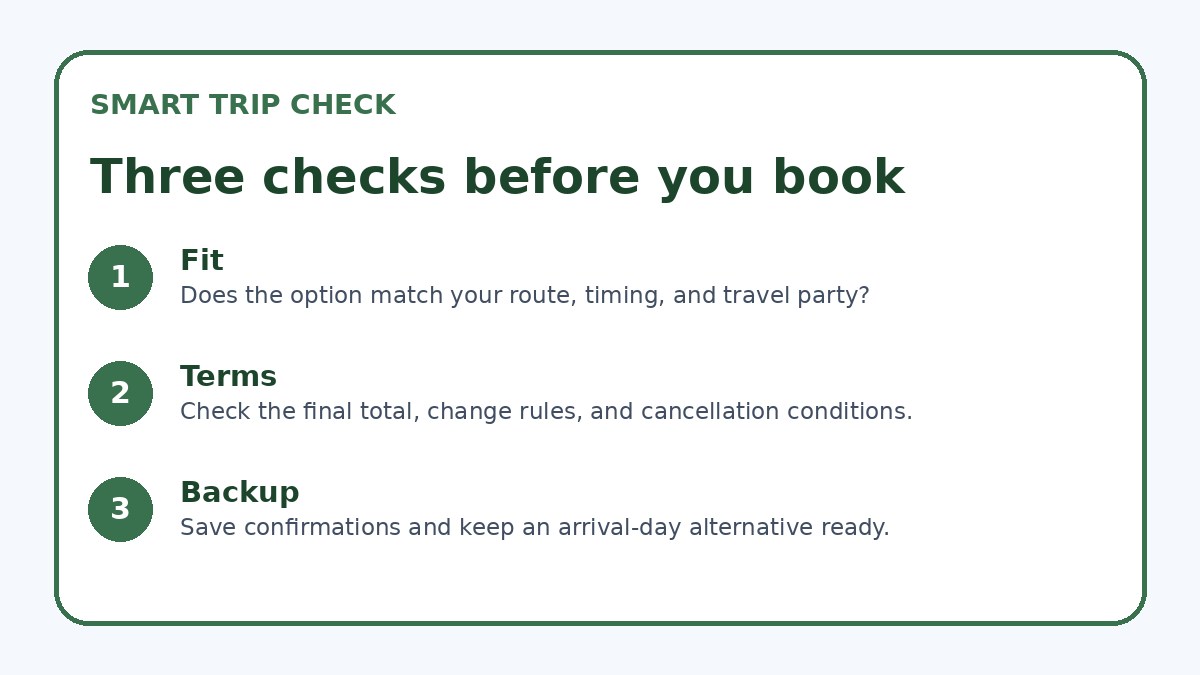
What to verify on the rental booking page and paperwork
Before finalizing a Munich car rental, confirm specific items on the booking page: the exact excess amount, whether CDW/LDW and theft protection are included or optional, named driver rules, and whether child seats are a separate charge rather than an insurance term. Also check the fuel policy, mileage limits, and cross‑border rules if you plan a day trip outside Germany. If any wording is unclear, use the supplier’s chat or phone support to get a written clarification you can save with your booking confirmation.
When you pick up the car, inspect it thoroughly and document any pre‑existing damage on the company’s checklist; take timestamped photos and keep the report copy. Verify that the insurance printed on the rental voucher matches what you booked online — especially the excess amount and included drivers. If a sales agent offers upgrades or waivers at the desk, ask for the exact policy name and ask them to email or print the final terms before you accept anything. Never accept verbal-only promises.
Before you book
- Confirm the excess/deductible amount in the booking details and whether it applies per incident or per rental period.
- Verify that all adult drivers who may operate the car are named on the booking and meet the rental company’s age and license requirements.
- Check whether CDW/LDW and theft protection are included or optional, and read any exclusions on the provider’s final booking page.
- Document pre‑existing damage with timestamped photos and get a signed condition report from the agent at pickup.
- Decide whether to accept the rental company waiver, use credit‑card coverage, or buy third‑party excess insurance and keep policy numbers handy.
- Ensure child seats are reserved if needed, confirm their cost and safety standard compliance, and bring documentation if you supply your own seats.
Special family considerations: child seats, additional drivers, and belongings
Child seats are regulated safety equipment, not insurance. The rental fee for seats is separate from insurance coverage, and the rental company’s liability if a seat is faulty varies. If you bring your own seats, check that they meet EU safety standards and that installers are compatible with your chosen car. Whether you rent seats or bring them, carry a documentation of installation guidance and ensure seats are correctly fitted before driving; insurance may be affected if improper installation contributes to injury.
Belongings left in the vehicle are seldom covered by rental insurance. Check whether your travel insurance or homeowner’s policy covers theft from a rental car, and always secure valuables out of sight or in the trunk. For additional drivers — grandparents or older children who may take the wheel — confirm they are listed on the agreement and understand the local rules; some policies require drivers to have held a license for a minimum number of years. Unlisted drivers can invalidate coverage and create financial risk for the whole family.
Frequently asked questions
Does Munich car rental insurance cover a child’s medical costs after an accident?
Rental insurance products differ. Liability insurance covers others’ injuries where you are at fault, and personal accident insurance (if offered) can cover occupant medical costs. However, many families rely on travel health insurance or national health systems for medical treatment. Before renting, check whether the rental’s personal accident policy exists, what it covers, and the claim limits. If in doubt, verify your travel or health insurance policy for coverage of children injured in rental‑car accidents and keep emergency contact and policy numbers with you.
Can I rely on my credit card to cover the rental excess in Germany?
Some credit cards offer secondary or primary rental excess coverage but terms vary by issuer and card level. Typical requirements include charging the entire rental to the card and declining the rental company’s damage waiver. Exclusions may include luxury or commercial vehicle categories, specific countries, and drivers under a certain age. Before you rely on card coverage, call the card issuer or read the card’s rental insurance terms and confirm whether Munich/Germany is covered, whether the excess is reimbursed directly, and which documents are required to support a claim.
What should I do immediately after a minor collision to protect insurance claims?
Safety first: check everyone, move to a safe spot if possible, and call emergency services if needed. Then document the scene thoroughly: take photos of vehicle positions, damage, license plates, and surroundings; collect other driver details, insurance and license information, and witness contact details; and make a police report if local regulations or your insurer require it. Notify the rental company as instructed in your agreement and follow their claims steps. Save all receipts, the police report, and repair estimates — insurers often require timely, detailed documentation.
Final planning note
For families renting a car in Munich, reading insurance wording carefully prevents stress and surprise costs. Focus on excess amounts, named drivers, CDW/LDW scope, theft protection, and how child seats are handled. Decide whether you prefer a lower upfront rate with a higher excess, the on‑desk convenience of a rental waiver, the potential coverage of a credit card, or the lower premiums and paperwork of third‑party excess insurance. Before you finalize a booking, verify the exact policy names, excess amounts, included drivers, and exclusions on the provider’s final booking page. Keep all documentation together during pickup and the trip so you can resolve incidents quickly and keep your family holiday moving.
Continue planning
Check current options and final conditions
Use the provider page to confirm live availability, the final total, cancellation terms, and every condition that matters to your trip.
This evergreen planning guide was created with AI-assisted drafting and a structured quality review. It does not display live prices, schedules, availability, visa guidance, or provider rankings. Verify current details before booking. Some links are affiliate links; we may earn a commission at no additional cost to you.