If you need a clear answer before you book: for most first-time visitors the train is the most practical option between Rome and Florence because it balances speed, frequency, and convenience for city-center to city-center travel. However, coaches, driving, and mixed options exist and can be better depending on priorities—budget, luggage, scenic detours, or smaller budgets. This article compares the main approaches, explains the tradeoffs that matter for a first trip, and gives decision rules so you can choose the mode that fits your travel style. Read the quick points, then use the longer sections to check what to confirm on provider pages before you finalize a booking.
See current options before you compare the details
Availability and final conditions change. Open Trip.com now or keep reading for the practical comparison.
Train: straightforward for most first-time visitors
Trains are the common choice for travelers moving between Rome and Florence because they link central stations, removing the need for airport transfers or long road drives into city centers. For first-time visitors the convenience of arriving and departing from main stations shortens door-to-door travel time—especially when you account for check-in buffers required by flights. Trains also offer predictable comforts such as seats with space for luggage, the ability to walk around, and easy access to onward local transit on arrival. If minimizing time and hassle is your priority, focus on trains as your first option.
When considering trains, compare direct and connecting services if both are available: direct trains reduce complexity but sometimes have fewer departure times; connections may increase choices but add risk of tight transfers. Before booking, check the provider’s final booking page for exact station names, potential seat reservation rules, luggage allowances, and any terms for changes or cancellations. Trip.com can be used as one place to compare current schedules and availability, but always verify the details on the operator’s official booking page.
Coach: lower cost with longer journey tradeoffs
Coaches between Rome and Florence are typically cheaper than trains and can be a good option for travelers who prioritize savings and are comfortable sitting longer. Buses may offer generous luggage limits and sometimes overnight departures that save on a night’s accommodation. However, coaches usually take longer and their city-center stops may require short transfers to reach central rail stations. For first-time visitors, coaches make sense when you want to stretch a tight budget or when chosen routes match your schedule without inconvenient connections.
When you consider a coach, evaluate total door-to-door time, pick-up and drop-off locations, and onboard amenities like toilets and Wi‑Fi, which can matter on longer runs. Also verify the ticket terms on the operator’s final booking page—refund/transfer rules, exact boarding points, and identification required at check-in. If you have limited time in Italy and value predictability, the lower price of a coach may not offset the longer travel time.
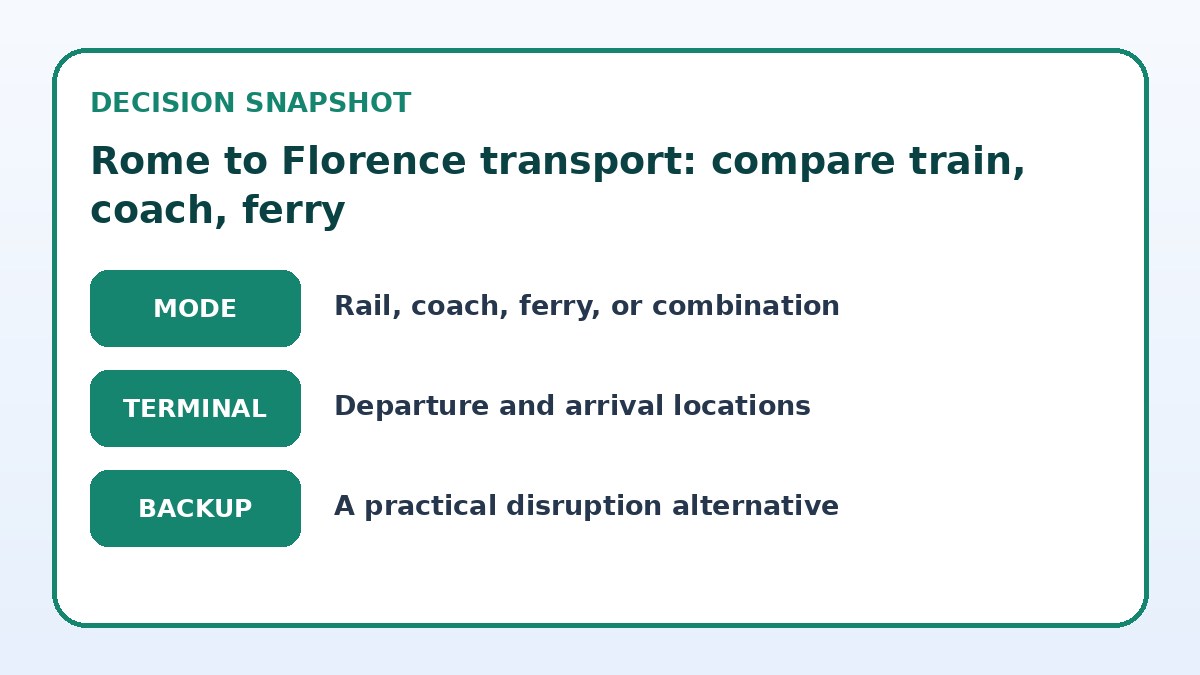
| Approach | Best for | Tradeoff to check |
|---|---|---|
| Train | Travelers prioritizing time, city-center convenience, and straightforward planning | Usually higher cost than the cheapest coach options and subject to seat reservation rules |
| Coach | Budget-focused travelers who accept longer door-to-door times | Slower journeys and sometimes less convenient city drop-offs |
| Driving / Car hire | Those wanting flexibility to explore Tuscany and carry more luggage | Adds parking, tolls, ZTL complexity, and driving stress in historic towns |
| Ferry + land mix | Leisure travelers planning scenic coastal detours as part of a longer trip | Not direct; requires careful connection planning and seasonal schedule checks |
Ready to check the option that fits your plan?
Use your exact dates and traveler details so the provider page can show the current total and conditions.
Driving and car hire: flexibility vs. city hassles
Hiring a car gives you full flexibility to stop in smaller towns, explore Tuscan countryside, and carry oversized luggage or equipment. Driving allows an itinerary tailored to your interests—vineyards, hilltop villages, or detours that public transport cannot reach easily. But for first-time visitors unfamiliar with narrow historic streets, restricted traffic zones (ZTL) in Italian city centers, and local parking rules, driving adds complexity and possible fines if you enter restricted areas unintentionally. Factor in the stress of urban driving and the cost of tolls and parking when weighing this option.
If you lean toward driving, plan a clear route and parking strategy: identify park-and-ride lots or garages on the edge of city centers and confirm ZTL boundaries before entering. Check vehicle insurance details, fuel policy, and the final hire terms on the rental company’s booking page. Driving is most appealing if you plan multiple stops in Tuscany or travel with a group splitting rental costs—less practical for short point-to-point transfers where trains excel.
Before you book
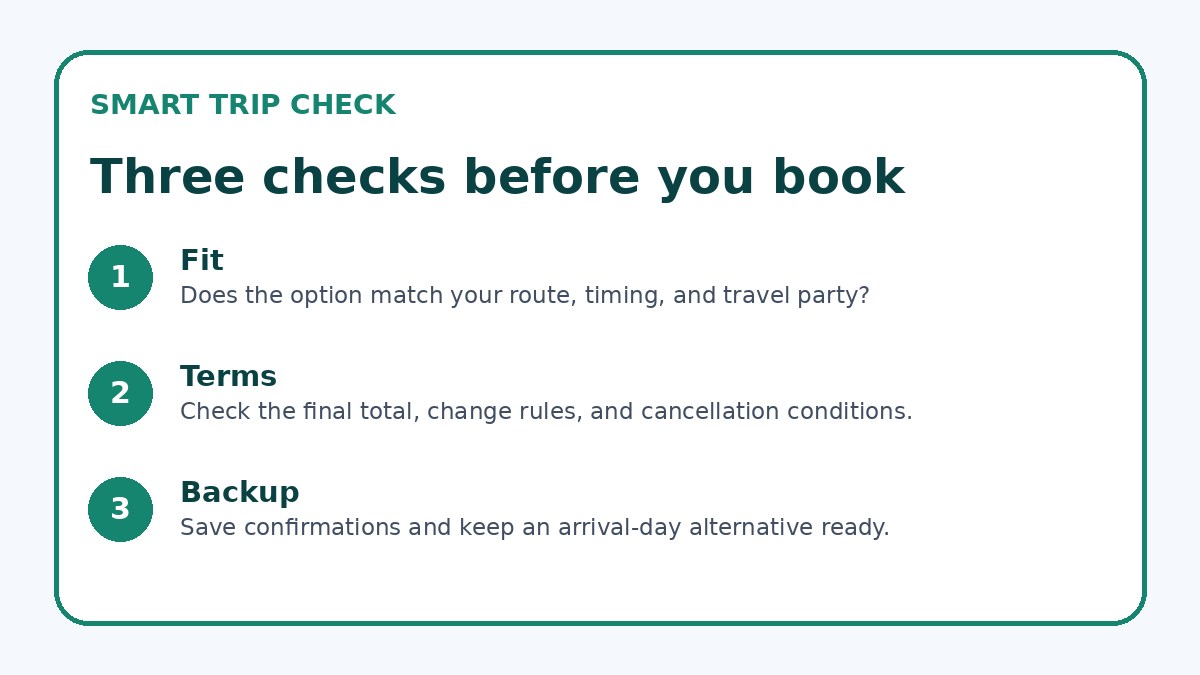
- Decide if city-center pickup/drop-off or total trip cost matters most for your itinerary.
- Compare total door-to-door travel time, including transfers to and from stations or ports.
- Check the final booking page for seat-reservation rules, luggage allowances, and change/cancellation terms.
- If renting a car, confirm insurance cover, fuel policy, and ZTL maps for Rome and Florence.
- For coaches and ferries, verify precise boarding points and any ID or printed-ticket requirements.
- Plan where you will store or park luggage on arrival—station lockers, hotel early check-in, or garage options.
Ferry and mixed routes: scenic detours and combined travel
A direct ferry service between Rome and Florence does not exist because both cities are inland; however, ferries can become part of a larger scenic route if you’re combining coastal travel with overland legs. For example, travelers could travel from Rome to a coastal port, take a ferry to a Tuscan port, and continue by train or car to Florence. These combinations are attractive if the journey is part of a relaxed itinerary focused on landscapes rather than speed, and when you want to experience coastline travel.
Before choosing a mixed ferry-plus-land route, map total door-to-door times and connections carefully—seasonal ferry schedules and limited port transit options can create long waits. Confirm exact ferry departure points, luggage rules, and how to transfer between ports and rail or road options on the provider pages. Mixed routes are best for travelers who prioritize a scenic or leisurely journey and have flexible time, not for those needing the most efficient transfer between Rome and Florence.
Frequently asked questions
How do I compare direct and connecting train options between Rome and Florence?
When trains offer both direct and connecting options, compare total journey time, number of transfers, and minimum connection windows. Direct services minimize risk from missed transfers and reduce complexity—helpful for first-time visitors—while connecting options may depart at times that better fit your schedule or cost less. Look at the operator’s final booking page to confirm whether connections are guaranteed and what happens if a missed connection is caused by a delayed inbound train. Also verify whether seat reservations are included or optional so you can reserve seats on busy services.
Is it worth taking a coach instead of a train to save money?
Coaches can be attractive for saving money but weigh the savings against longer travel time and potential inconvenience reaching central locations. If your schedule allows extra travel time and you prefer a smaller travel budget, a coach is a practical choice. Conversely, if you have limited days in Italy or prefer a predictable arrival time to make the most of your stay, the time saved by a train may justify the higher fare. Always check the final coach operator page for exact boarding locations, luggage permissions, and refund policies before booking.
Can I use a ferry as a scenic alternative between Rome and Florence?
Because Rome and Florence are inland, there’s no direct ferry connection—ferries are only practical as part of a broader coastal route. If you want coastal scenery, plan a multi-leg journey: travel from Rome to a port, take a ferry along the Italian coast, then continue overland to Florence. This approach works best when you have flexible time and when ferry schedules align with onward transport. Confirm seasonal ferry timetables, luggage rules, and transfer options on the ferry and rail operators’ booking pages before committing.
Final planning note
Choosing how to travel from Rome to Florence depends on whether you value speed, cost, flexibility, or scenery. For most first-time visitors who want fast, simple, and central arrivals, trains are the practical default; coaches save money but add journey time; driving unlocks Tuscany at the cost of added planning; and mixed ferry routes suit relaxed, scenic itineraries. Use the checklist to verify practical details on the provider’s booking pages—seat reservations, boarding points, luggage rules, insurance, and ZTL maps—and consider Trip.com or an operator site to compare current schedules and availability before you book. With those checks complete, pick the mode that aligns with your time, budget, and tolerance for planning complexity.
Continue planning
Check current options and final conditions
Use the provider page to confirm live availability, the final total, cancellation terms, and every condition that matters to your trip.
This evergreen planning guide was created with AI-assisted drafting and a structured quality review. It does not display live prices, schedules, availability, visa guidance, or provider rankings. Verify current details before booking. Some links are affiliate links; we may earn a commission at no additional cost to you.