Practical answer first: for most first-time visitors traveling between Barcelona and Madrid, the high-speed train will be the most convenient balance of time, comfort, and city-center arrival. Coaches are typically the most budget-oriented option if you don’t value speed and can tolerate longer road time. Driving gives flexible stopovers and luggage freedom but adds planning for tolls, parking, and city driving. A ferry has no direct route to Madrid because Madrid is inland, so any sea travel becomes a detour and requires extra rail or road connections. Below you’ll find clear tradeoffs, simple decision rules to match your priorities, and a checklist of what to verify before you book so you can decide with confidence.
See current options before you compare the details
Availability and final conditions change. Open Trip.com now or keep reading for the practical comparison.
Train: speed, comfort, and city-center convenience
High-speed rail links between Barcelona and Madrid are designed for travelers who prioritize time and comfort. Trains generally depart and arrive at major central stations, which saves you transfers to and from airports. Seats are typically comfortable, and onboard amenities vary by service and fare class; check what’s included and whether seat reservations, Wi‑Fi, or food services are offered on the departure you’re considering. For first-time visitors, choosing a daytime high-speed train lets you see landscapes while traveling and reduces the hassle of late-night arrivals in an unfamiliar city.
When comparing train options, look at journey time, number of changes, luggage rules, and how close the stations are to your accommodation. Some services are direct while others include a change — always read the booking page to confirm whether a ticket covers connecting segments. If you have tight onward connections or mobility needs, prefer direct trains or longer connection windows. Before booking, verify cancellation and exchange policies, baggage allowances, and whether a specific seat number is assigned; those details often appear only on the provider’s final booking page.
Coach: cheapest headline cost but longer travel time
Coaches are often the most economical headline choice for Barcelona to Madrid travel, though they usually take longer than trains and follow road conditions. Modern coach services can be comfortable, with reclining seats and onboard restrooms, but you should be prepared for fewer amenities and reduced personal space compared with trains. Coaches depart from different terminals around cities; check exact pickup and dropoff locations and plan extra time for transfers, especially if you’re carrying large suitcases or arriving from an airport.
When deciding on a coach, factor in total door-to-door time and how tired you’ll be upon arrival. Overnight coaches can save a night’s accommodation but may not be restful after city sightseeing. For good decisions, compare coach schedules with daytime trains and see whether the cost savings are worth the extra hours. Confirm luggage limits, stops en route, refund or change policies, and where the terminal is relative to your accommodation on the operator’s booking page.
| Approach | Best for | Tradeoff to check |
|---|---|---|
| High-speed train | Travelers who value short travel time and central arrivals | Higher ticket cost than coaches and limited flexibility for roadside detours |
| Coach | Budget-conscious travelers with flexible schedules | Longer journey time and potentially less comfort or onboard amenities |
| Driving / rideshare | Those wanting flexible stops, rural exploration, or bulky luggage | Tolls, fuel, parking, and urban driving complexity can offset convenience |
| Ferry + rail/coach (multimodal) | Travelers planning coastal detours or island visits en route | Adds transfers, extra time, and complicated luggage/logistics planning |
Ready to check the option that fits your plan?
Use your exact dates and traveler details so the provider page can show the current total and conditions.
Driving and rideshares: flexibility with planning tradeoffs
Hiring a car or driving your own gives maximum flexibility: you control your route, timing, and stops. That freedom lets you explore smaller towns, detour to scenic areas, and carry luggage without size limits. But remember that driving between major cities brings considerations first-time visitors often underestimate: toll roads, fuel costs, fuel type, traffic around both cities, and parking availability and cost. Urban driving also requires familiarity with local traffic rules and parking systems, which can be stressful in busy city centers.
If you plan to drive, compare total costs including tolls, fuel, and parking rather than looking at rental rates alone. Check whether your rental contract includes cross-region travel, roadside assistance, and the appropriate insurance. If you prefer not to drive yourself, rideshares or private transfers can provide door-to-door convenience but may be expensive for a long intercity ride — clarify whether quoted fares include tolls and waiting time. Always verify cancellation terms and pick-up logistics on the provider’s final booking page.
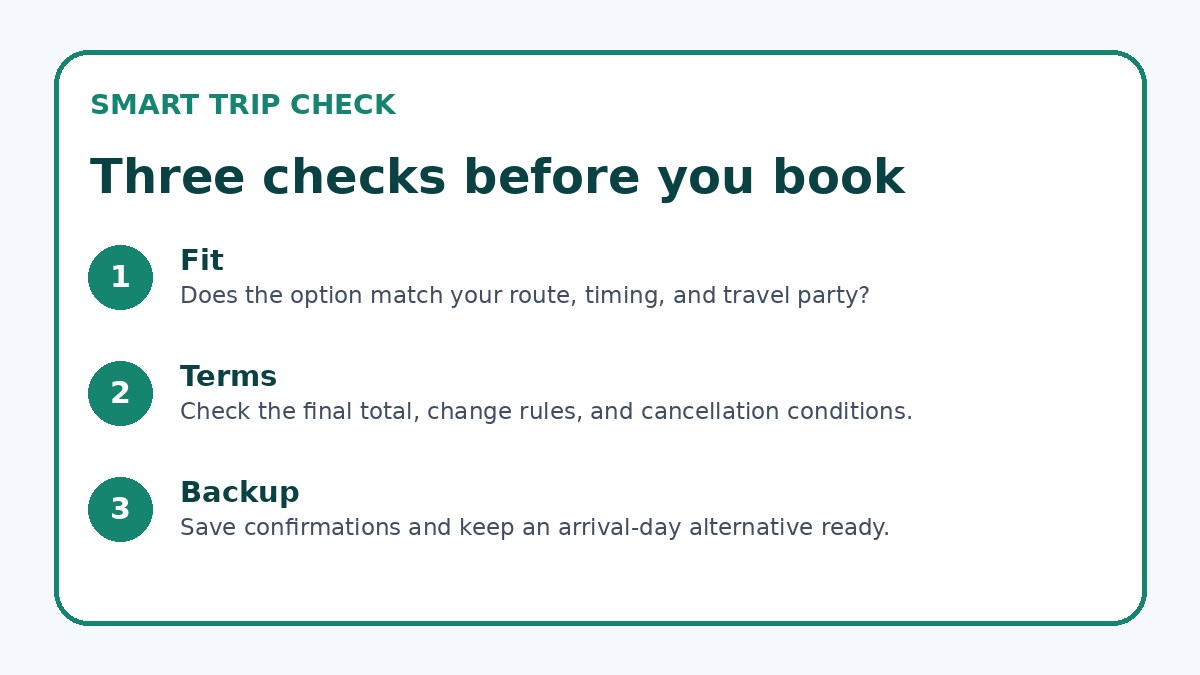
Before you book
- Confirm whether your chosen option is direct or requires changes, and check connection times on the provider’s final booking page.
- Compare door-to-door travel time, not just in-transit time — include transfers, waiting time, and travel to/from stations or ports.
- Verify baggage allowances, seat reservations, and onboard amenities for trains, coaches, ferries, or flights before purchasing tickets.
- If driving, calculate tolls, estimated fuel costs, parking options at both ends, and whether rental insurance covers your trip.
- Check refund and change policies carefully; flexible tickets cost more but can save money if plans shift unexpectedly.
- Map pickup and dropoff locations relative to your accommodation and verify accurate addresses and terminal names on the booking confirmation.
Ferry and multimodal options: when sea travel makes sense
Because Madrid is far from the coast, there is no practical direct ferry route between Barcelona and Madrid. Ferries can become part of a more scenic or leisurely itinerary if you want to include Mediterranean islands or coastal cities before heading inland to Madrid. That means combining a ferry with trains or buses — for example, a coastal ferry to another port and then onward rail to Madrid — which adds transfers, time, and planning complexity, but can be rewarding if the sea segment is an intentional part of your trip.
If you consider a ferry-based itinerary, map the full door-to-door travel time, connection reliability, and luggage logistics before booking. Ferries may have different baggage rules, and some ports sit far from main rail stations, requiring further ground transport. For travelers attracted to coastal views or island stops, a multimodal route can be memorable; for first-time visitors focused on time efficiency, the direct train or coach options are usually the simpler choice. Confirm ferry schedules, port transfer options, and through-ticketing possibilities on provider pages before committing.
Frequently asked questions
Is the train always faster than taking a coach between Barcelona and Madrid?
Trains are usually faster for this route because they run on high-speed lines and travel between central stations. However, a few coach services can be competitive at off-peak times or if a train option requires multiple changes. Always compare total door-to-door times, factoring in station transfers, check-in, or extra walking. Use the operator’s timetable pages to confirm whether a selected train is direct and to compare it with coach departure and arrival locations.
Should I worry about luggage limits on trains, coaches, or ferries?
Luggage policies vary by operator and sometimes by fare class. Trains often have generous, informal luggage allowances but may require you to stow bags in designated racks. Coaches and ferries usually have clearer limits for checked items and carry-ons; some low-cost services restrict size or number. Don't assume flexibility: read the baggage rules on the booking confirmation and check whether large items incur extra fees or require pre-declaration before you travel.
When is driving between Barcelona and Madrid a better choice than public transport?
Driving makes sense if your priority is stopping at small towns, carrying oversized or many bags, or following a specific scenic route that public transport doesn’t serve. It’s also useful for group travel where the per-person cost falls. For first-time visitors focused on minimizing stress and arriving in city centers smoothly, rail or coach are often simpler. If you plan to drive, check rental conditions, local traffic rules, toll systems, parking availability, and total costs on the car rental firm’s booking page.
Final planning note
Choosing between train, coach, car, or a multimodal ferry route depends on what you value most: time, cost, flexibility, or experience. For first-time visitors focused on efficiency and a straightforward arrival, the high-speed train generally offers the best balance of speed and comfort with central stations. Coaches can slash headline costs if you have extra travel time, while driving unlocks flexible exploring but requires more logistical planning. Ferry travel only makes sense as an intentional detour because Madrid is inland. Before booking, map door-to-door time, check baggage and cancellation rules, and confirm all details on the provider’s final booking page — you can also compare current availability on Trip.com if you want a quick market snapshot.
Continue planning
Check current options and final conditions
Use the provider page to confirm live availability, the final total, cancellation terms, and every condition that matters to your trip.
This evergreen planning guide was created with AI-assisted drafting and a structured quality review. It does not display live prices, schedules, availability, visa guidance, or provider rankings. Verify current details before booking. Some links are affiliate links; we may earn a commission at no additional cost to you.