
If you’re flying from Seoul to Da Nang for the first time, the practical choice is to plan a connection that minimizes stress: aim for a single checked-bag transfer, a layover long enough to handle delays (but not so long you burn energy), and seat choices that save your back and sleep. Start by comparing direct and connecting itineraries, then prioritize total door-to-door time, transfer complexity, and airport comfort during the layover. Consider flight times that match your body clock and whether you prefer to arrive in daylight. Finally, confirm transfer policies for checked luggage, passport and visa requirements, and what ground transport is available at Da Nang on arrival. These steps will keep decision-making straightforward and let you focus on enjoying Vietnam rather than recovering from travel logistics.
See current options before you compare the details
Availability and final conditions change. Open Trip.com now or keep reading for the practical comparison.
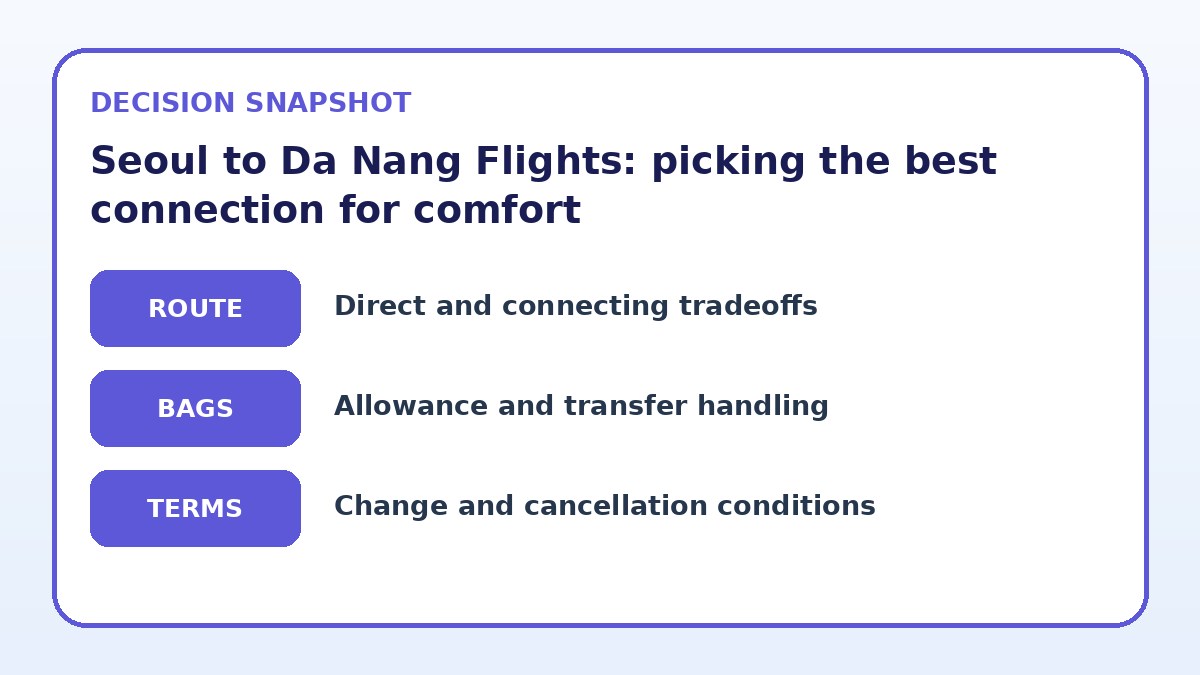
Direct vs connecting flights: what to compare
Direct flights are usually simpler: one boarding, one landing, and no change of aircraft. If a non-stop option exists between Seoul and Da Nang, weigh the tradeoff between convenience and timing. Direct services reduce the number of things that can go wrong (missed transfers, baggage delays), so they’re a strong choice when available at a reasonable schedule. However, direct flights sometimes depart at inconvenient hours or have limited frequency, so you may pay with less favorable departure or arrival times.
Connecting itineraries can offer more schedule flexibility and possibly better seat choice or pricing, but they require more attention to layover length and airport logistics. When comparing connections, look beyond total travel time: check if both legs are on one carrier or alliance, whether you must re-check baggage, and whether you change terminals. Also consider the layover airport’s passenger facilities—benches, lounges, immigration procedures—and whether you need a transit visa. These details determine whether a connection feels smooth or becomes a tiring hurdle.
Choosing layover length and timing
Aim for a cushion that protects you from common delays without turning the trip into an endurance test. For same-airline or alliance connections with baggage transfer, a 60–120 minute layover often suffices at efficient airports; if you must change terminals or clear immigration, treat 120–180 minutes as safer. Overnight layovers can be useful if schedules don’t align, but they add hotel logistics and extra transit, so use them only when necessary. Always factor in the time you’ll need to move between gates, clear security, and refill food or water.
Time of day matters as much as minutes on the clock. Flying overnight from Seoul can allow you to sleep on the plane and arrive in Da Nang early morning refreshed, while an afternoon arrival suits beach-first itineraries. If you’re sensitive to jet lag, planning flight times that let you sleep at normal hours or arrive during daylight helps your body clock adapt. Also account for peak-hour road traffic and local airport processing times; arriving late at night may reduce transport options to central Da Nang.
| Approach | Best for | Tradeoff to check |
|---|---|---|
| Book the fastest total travel time | Travelers prioritizing time on the ground in Seoul or Da Nang | May involve tight layovers and higher stress if delays occur |
| Choose a single-ticket connection with one carrier | Passengers wanting baggage protection and easier rebooking options | Fewer carrier choices and sometimes higher costs |
| Select a longer, comfortable layover | Those who prefer low stress and time to recover between flights | Longer overall journey and potential extra airport expenses |
| Split tickets to save money or change airlines | Flexible travelers who can handle re-checking baggage and risk | Higher chance of missed connections and no transfer protection |
Ready to check the option that fits your plan?
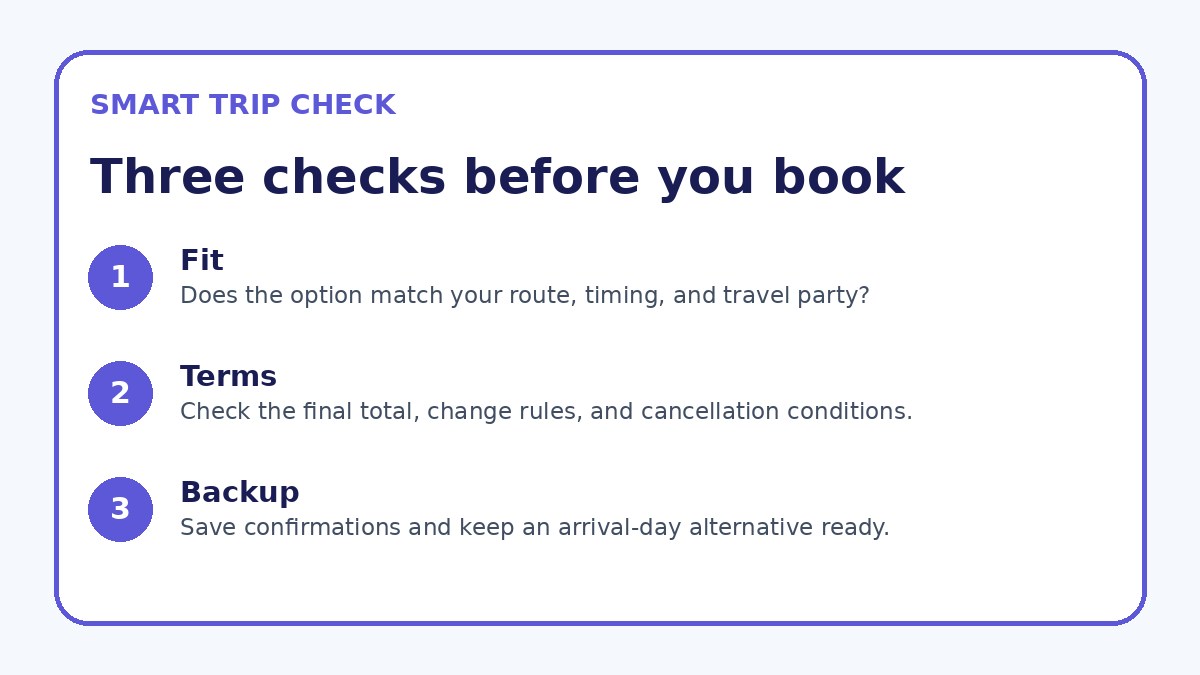
Use your exact dates and traveler details so the provider page can show the current total and conditions.
Seat selection, baggage and onboard comfort
For a long-haul connection, your seat choice influences comfort for both flight legs. Favor bulkhead or exit row seats for extra legroom, or aisle seats if you need frequent mobility; window seats are better for resting without disturbance. If you’re sensitive to noise or frequent service disruptions, avoid seats near galleys or lavatories. When booking, check whether seat assignments are included or cost extra and whether the carrier lets you choose seats at check-in if you decline paid selection.
Baggage policies and carry-on allowances directly affect how smoothly you’ll transfer. If you’re booking separate tickets for each leg, plan as if you’ll need to retrieve and re-check checked bags. For single-ticket itineraries, verify that the airline transfers checked bags through to Da Nang without re-clearing. Pack essential items—medication, travel documents, a change of clothes, and chargers—in your carry-on for immediate access. Consider small comfort items like a travel pillow, eye mask, and layered clothing to adapt to cabin temperature differences.
Before you book
- Confirm which Seoul airport (Incheon or Gimpo) serves your chosen flights and plan ground transport time accordingly.
- Verify baggage transfer rules on the carrier’s final booking page—ask if checked bags are tagged through to Da Nang on connecting itineraries.
- Pick seats that support sleep or mobility needs and check seating assignment options before check-in closes.
- Plan a layover with at least 60–120 minutes for same-carrier transfers and 120–180 minutes for terminal changes or immigration.
- Pack essential items and documents in carry-on luggage: passport, itinerary, chargers, medication, and a fresh change of clothes.
- Pre-arrange or confirm airport pickup and local transport options in Da Nang, including after-hours transfer availability.
Airport and ground logistics in Seoul and Da Nang
Seoul has multiple airports and busy terminals; confirm which airport your flight uses before booking ground transport. Whether you depart from Incheon or Gimpo affects how early you should arrive and which transit options you use to reach the airport. Allow extra time for check-in and security if you’re traveling during peak commuter hours. On any layover in Seoul, pick facilities—lounges, quiet areas, or family rooms—that fit your needs, especially if you’re traveling with children or prefer rest between flights.
Da Nang’s airport is compact compared with larger hubs, but ground transport options and immigration lines vary with arrival times. Check what kind of public transport, shuttle or taxi availability exists for late arrivals, and whether your hotel offers airport pickup. If arriving after hours, pre-arrange a reliable transfer. On arrival, have printed or clearly accessible reservation details and local contact numbers. Lastly, whether arriving on a direct flight or via connection, factor in time for immigration, luggage claim and customs to estimate realistic onward travel time to your accommodation.
Frequently asked questions
How do I decide between a direct flight and a connection from Seoul to Da Nang?
Start by listing priorities: time, cost, and convenience. A direct flight simplifies the trip—fewer touchpoints, less chance of missed connections, and easier baggage handling—so pick it when available at a departure time that works for you. Connections expand schedule choices and may reduce fare or let you use preferred carriers, but they require attention to layover length, terminal changes, and whether baggage moves automatically. Check the carrier’s booking page to confirm baggage transfer rules and whether both legs are on the same ticket; that protects you if a delay requires rebooking.
What’s a safe minimum layover when transferring in Seoul?
There’s no single number that fits every traveler or airport. For same-airline transfers within one terminal, many passengers find 60–90 minutes workable, while connections that require changing terminals, clearing immigration, or re-checking baggage need at least 120–180 minutes. Factor in time for potential delays, security lines, and moving between gates. If you’re risk-averse or traveling with family, aim for the longer side of these ranges. Verify terminal maps and connecting procedures on the airline’s booking page so you can plan realistic transfer time.
What should I pack in my carry-on to make the connection comfortable?
Pack items you’ll need regardless of delays: passport and travel documents, any medication, a phone charger and power bank, a light layer for varying cabin temperatures, and a spare change of clothes. Bring a small travel pillow, eye mask, and earplugs to rest during longer waits or overnight legs. Include basic hygiene items and snacks, especially if you have dietary needs or arrive during airport limited-service hours. Keep important documents and small valuables in an easily reachable pocket so you don’t have to open checked luggage during a transfer.
Final planning note
Planning a comfortable Seoul to Da Nang connection is about choosing the right tradeoffs for your priorities: convenience, time, and personal comfort. Start by checking whether a direct flight fits your schedule, and if not, prefer single-ticket connections that transfer baggage automatically to reduce hassle. Add buffer time for tight terminals or immigration, choose seats that support rest or mobility, and pack a carry-on with essential items to handle delays. Confirm final baggage and transfer policies on the airline’s booking page before you commit. With a little upfront planning, you’ll turn the travel day from a logistical challenge into a straightforward start to your time in Da Nang.
Continue planning
Check current options and final conditions
Use the provider page to confirm live availability, the final total, cancellation terms, and every condition that matters to your trip.
This evergreen planning guide was created with AI-assisted drafting and a structured quality review. It does not display live prices, schedules, availability, visa guidance, or provider rankings. Verify current details before booking. Some links are affiliate links; we may earn a commission at no additional cost to you.