
If you and your partner need schedule freedom on the Tokyo to Kyoto route, choose tickets that let you change plans without expensive penalties. For many couples the tradeoff is simple: more flexibility costs more upfront but reduces stress if you want to linger in Tokyo, extend a Kyoto stay, or face unpredictable arrival times. This article lays out practical differences—fully refundable or changeable fares, flexible seat reservations, and low-cost fixed tickets—and explains how to compare them side by side. Read this to decide whether to prioritize low fare, easy changes, paired seating, or simple travel logistics so you both enjoy the trip without last-minute friction.
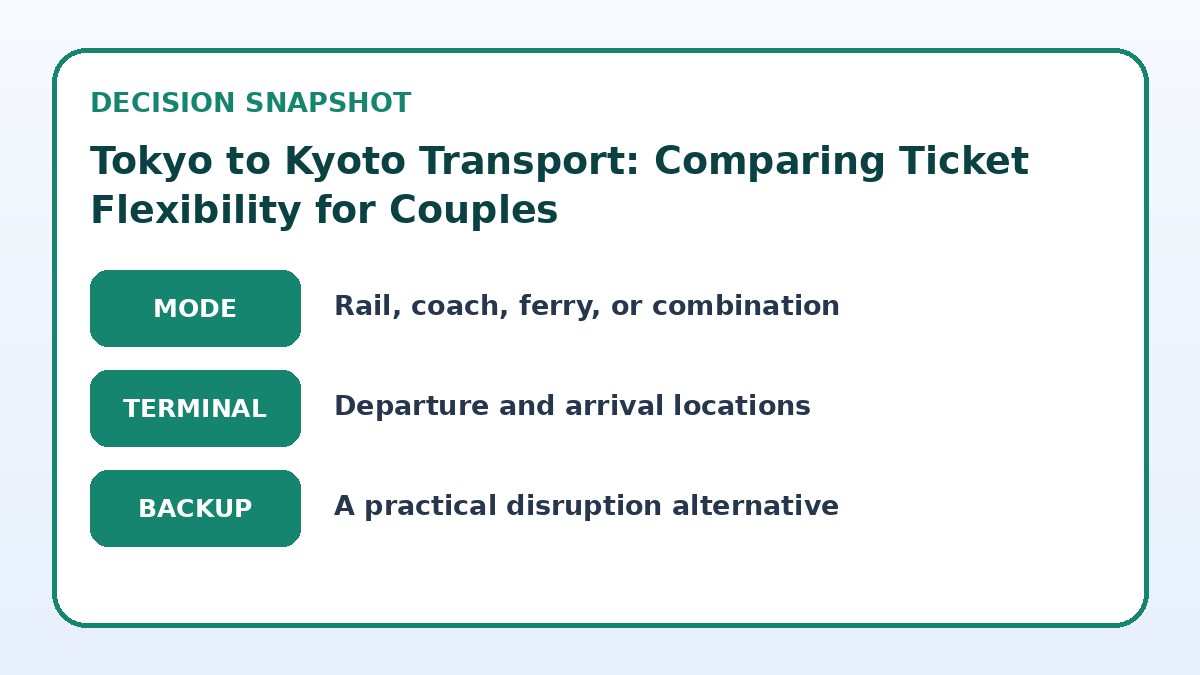
See current options before you compare the details
Availability and final conditions change. Open Trip.com now or keep reading for the practical comparison.
Types of tickets and what flexibility means
On the Tokyo to Kyoto corridor you’ll encounter a few common ticket types: fully refundable/changeable fares, partially flexible tickets (date or time changes with a fee), and non-changeable low-cost fares. Flexibility can apply to the base ticket (the right to change or cancel) and to seat reservations (ability to move or reseat together). For couples, both elements matter: an otherwise flexible ticket is less useful if seat assignments can’t be aligned, and a fixed ticket with easy reservation swaps can still work when plans shift.
When comparing options, separate two questions: can you change the travel date/time and will you retain paid benefits (refunds or fee credits) if you change? Also check seat pairing policies—some operators let you reserve adjacent seats for pairs, while others assign seats at departure. When provider-specific facts could change, verify the exact change, refund, and seating rules on the carrier’s or reseller’s final booking page before you buy.
How couples’ priorities change the ticket choice
Consider your priorities as a couple: flexibility for unexpected work or health issues; desire to linger in a city; budget limits; or need for guaranteed adjacent seats. If one partner has a variable schedule or you want freedom to extend the trip, choose tickets with low change fees or refundable options. If you both have firm plans and want to save, a fixed lower-cost ticket with pre-assigned seats may be fine—just accept the risk of change penalties.
Balancing cost and convenience also involves travel rhythm: are you hopping between cities quickly or staying several days in each place? Couples planning a relaxed honeymoon-style trip often value flexible tickets and seat comfort; those on a tight itinerary may prefer strict tickets and firm reservations. For every option you consider, read the booking terms so you can compare likely out-of-pocket change costs against the fare difference.
| Approach | Best for | Tradeoff to check |
|---|---|---|
| Fully refundable/changeable fares | Couples needing maximum schedule freedom and peace of mind. | Higher upfront cost than fixed fares; verify refund processing rules on booking pages. |
| Partially flexible tickets with change fees | Couples who want some flexibility but want to limit costs. | Change fees still apply and can approach the saved fare difference if plans shift often. |
| Low-cost fixed tickets with reserved seats | Budget-focused couples with firm travel dates and little chance of change. | Little to no refundability; changing plans can be expensive or require buying new tickets. |
| Unreserved or open-seat options | Flexible, spontaneous couples comfortable with seating uncertainty. | No guaranteed adjacent seats; less suitable for couples wanting guaranteed proximity. |
Ready to check the option that fits your plan?
Use your exact dates and traveler details so the provider page can show the current total and conditions.
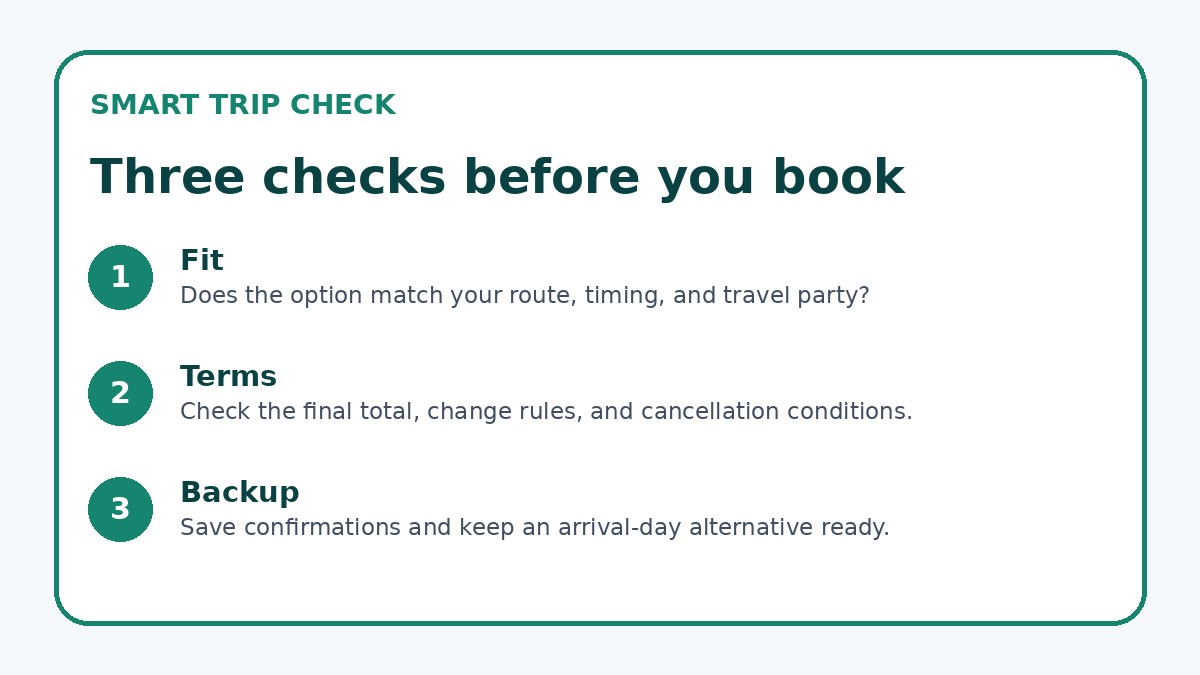
Practical steps to compare and book together
Start by listing your non-negotiables: must-travel dates, whether you need adjacent seats, and how much uncertainty you expect. Search the same date and nearby dates to see how fares and change rules vary. If you find both refundable and inexpensive fixed fares, calculate the breakeven point: how many days or how likely a change would justify the price gap. Keep a note of change fees and the conditions that trigger them (time window, reason, refund method), and verify those on the provider’s final booking screen.
When ready to buy, book both passengers on the same PNR or booking reference where possible—this preserves paired seats and ensures changes can be applied to both tickets together. If a provider splits bookings, ask about joint change options. For last-minute alignment or special requests (seats together, storage for luggage), contact the operator after booking and keep screenshots of any promised adjustments or refunds to avoid disputes.
Before you book
- Decide whether you need refundable tickets or will accept change fees, then shortlist fares by that rule before comparing prices.
- Check if the booking can be made under one reference number so changes apply to both passengers together.
- Confirm seat pairing or adjacent-seat options on the provider’s final booking page, and request seats together immediately after booking.
- Note exact change and cancellation windows and fees, saving screenshots of the final booking terms for reference.
- Compare the cost of a flexible fare against the potential total of change fees or a replacement ticket for likely scenarios.
- If you buy non-flexible tickets, consider travel insurance that covers specified cancellation reasons and confirm claim requirements.
When to use travel credit, insurance, or third-party resellers
Travel credit and insurance can be helpful supplements when you choose less flexible tickets. If you buy a low-cost ticket but want protection against major disruption, consider a travel insurance policy that covers cancellations for specified reasons or a provider credit that can be applied to future travel. Read policy exclusions carefully—many insurance products do not cover changes of mind and have strict claim deadlines.
Third-party resellers can simplify searching and may bundle protections, but check their change/refund handling and whether they charge extra service fees. Trip.com is one optional place to compare current availability and booking conditions, but always confirm final rules and fees on the carrier’s official booking page before completing a purchase. Clear documentation from your insurer and the carrier makes changes easier if plans shift.
Frequently asked questions
Can couples reserve adjacent seats when changing train times?
Seat availability during a change depends on the carrier and fare class. Some operators allow you to keep or adjust seat reservations when you change the ticket, while others reassign seats at the time of travel. To avoid surprises, check the provider’s change policy on the final booking page: it should explain whether existing seat reservations transfer, whether you’ll be charged for new reservations, and how to request adjacent seats. If seating together is essential, prioritize fares or booking channels that guarantee paired seating or let you rebook seats without excessive fees.
Is it safer for one partner to book refundable and the other a cheaper fare?
Mixing fare types can save money but creates coordination challenges if the flexible passenger changes plans. If one ticket is refundable and the other is fixed, a date change may require separate handling and could leave you unable to guarantee adjacent seats. For most couples, booking both passengers on the same refundable or similarly flexible fare simplifies changes and preserves seating together. Only mix fares if you’re comfortable managing separate change processes and the risk of being separated on a train.
How should couples compare change fees versus higher flexible fares?
Run a simple cost comparison: estimate the probability you’ll change travel and multiply by an expected change fee, then compare that to the price difference for a flexible fare. Also factor in non-monetary costs—stress, time spent rearranging plans, and the importance of sitting together. If the expected cost of a change (probability times fee) plus inconvenience exceeds the flexible fare premium, choose the flexible option. Always verify the exact change fee and conditions on the carrier’s final booking page before deciding.
Final planning note
For couples traveling Tokyo to Kyoto, the right ticket balances flexibility, seating, and budget. If schedule uncertainty or the need to linger matters, favor refundable or low-fee changeable fares and confirm adjacent seats on the booking page. If your dates are fixed and you prioritize savings, low-cost tickets with reserved seats can work—just accept the change risk or add insurance. Always compare the total likely cost of a change against the flexible-fare premium, book both passengers together when possible, and verify all change, refund, and seating rules on the final booking screen before completing your purchase.
Continue planning
Check current options and final conditions
Use the provider page to confirm live availability, the final total, cancellation terms, and every condition that matters to your trip.
This evergreen planning guide was created with AI-assisted drafting and a structured quality review. It does not display live prices, schedules, availability, visa guidance, or provider rankings. Verify current details before booking. Some links are affiliate links; we may earn a commission at no additional cost to you.