If you’re traveling solo between Sydney and Melbourne, choose the option that matches your priorities: time savings, comfort, scenery, or budget. For most solo travelers who value simplicity and lower stress, a daytime or overnight train (where available) or a direct flight will usually be the most practical choices: trains for relaxed travel and city-centre-to-city-centre convenience, flights for the quickest door-to-door time. Buses and driving can be cheaper or more flexible but add planning, road fatigue, or longer journey times. This guide breaks down decision criteria so you can weigh trade-offs—time, cost, luggage, transfers, safety, and how much sightseeing you want en route—and then shows what to check on the provider’s booking page before you commit.
See current options before you compare the details
Availability and final conditions change. Open Trip.com now or keep reading for the practical comparison.
Time and schedule: how much travel time can you tolerate?
When picking transport between Sydney and Melbourne, start by assessing your available time. If you need to maximize sightseeing at either city or have limited days, flying typically scores best on raw travel time, though you must include transfers and airport procedures. Trains can be competitive for door-to-door timing if you’re staying near city stations and want to avoid the waits associated with airports. Buses and driving usually take longer but can depart from more neighbourhood-friendly locations and offer flexible departure times.
Look beyond advertised journey durations and map total door-to-door time: travel to the terminal, check-in or arrival windows, and onward connections at your destination. If you’re packing light and staying centrally, a train that arrives downtown may beat a flight that lands outside the city once you factor in transit. Conversely, if you’re on a tight schedule, prioritize options with consistent, frequent departures that match your calendar.
Comfort and convenience: luggage, seating, and solo traveler needs
Comfort matters more when you travel alone because you rely on yourself for navigation and security. Trains tend to offer more legroom, space to move, and predictable baggage space, which helps if you carry a larger backpack. Flights give speed but include tighter seating and stricter carry-on rules. Buses vary widely in comfort—some are modern and comfortable, others more basic—so check real seat layouts and onboard facilities before booking. Driving grants full control over stops and luggage but means you must drive long distances and handle navigation.
Consider convenience details: ease of booking, mobile boarding, onboard Wi-Fi, power outlets, and food options. Solo travelers often value single seats or quiet zones and direct connections into the city centre. If safety or late arrivals worry you, prefer daytime services or providers with clear arrival procedures. Always read the provider’s current baggage and accessibility policies on their booking page so you aren’t surprised at check-in.
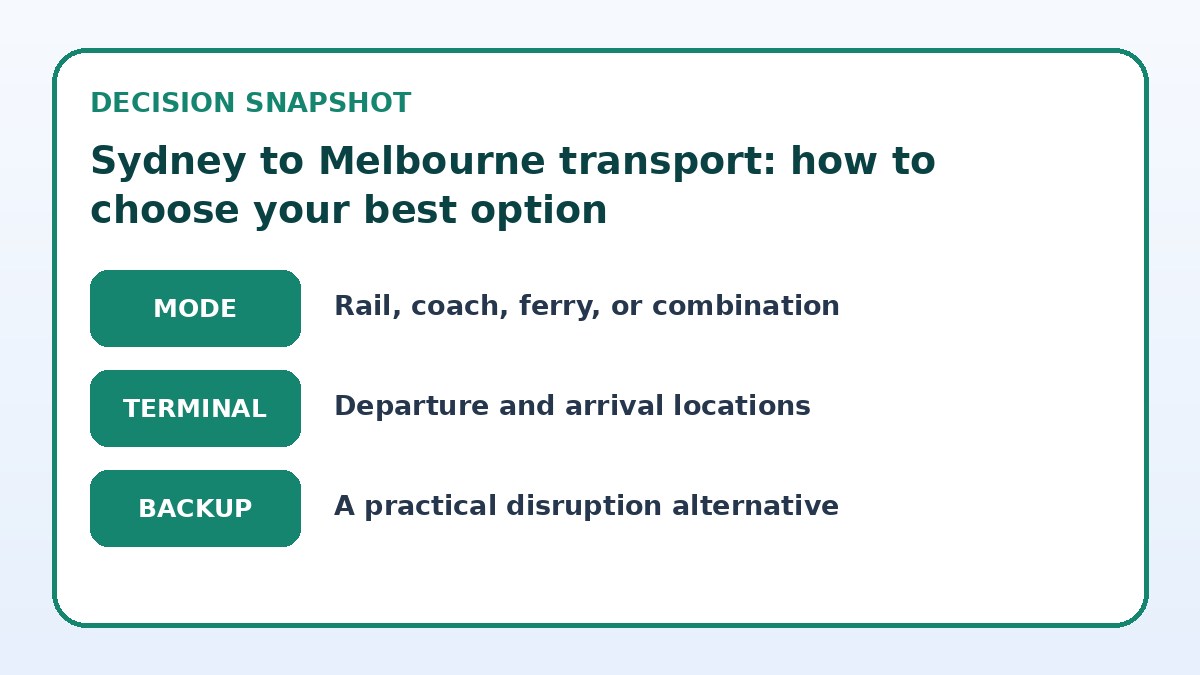
| Approach | Best for | Tradeoff to check |
|---|---|---|
| Direct flight | Solo travelers prioritizing the quickest total travel time | Add airport transfers, security time, and stricter baggage rules to the clock. |
| Intercity train | Those valuing comfort, space, and downtown arrivals | Potentially longer scheduled duration but simpler station access and more legroom. |
| Long-distance coach | Budget-conscious travelers flexible with time | Variable comfort and longer journey time; check onboard facilities before booking. |
| Driving yourself | Travelers who want itinerary control and scenic stops | Solo driving increases fatigue and cost responsibility; plan rest breaks and parking. |
Ready to check the option that fits your plan?
Use your exact dates and traveler details so the provider page can show the current total and conditions.
Cost and value: more than just the headline price
Comparing costs isn’t just comparing ticket prices. Add the cost of getting to and from airports or stations, luggage fees, and any overnight parking if you drive. A low-cost flight might be less attractive once you add airport transfers and baggage charges, while a slightly more expensive train that arrives downtown could save on extra transfers and taxi fares. For solo travelers, splitting a rental car cost isn’t an option, so driving can be less economical unless you value the itinerary flexibility it provides.
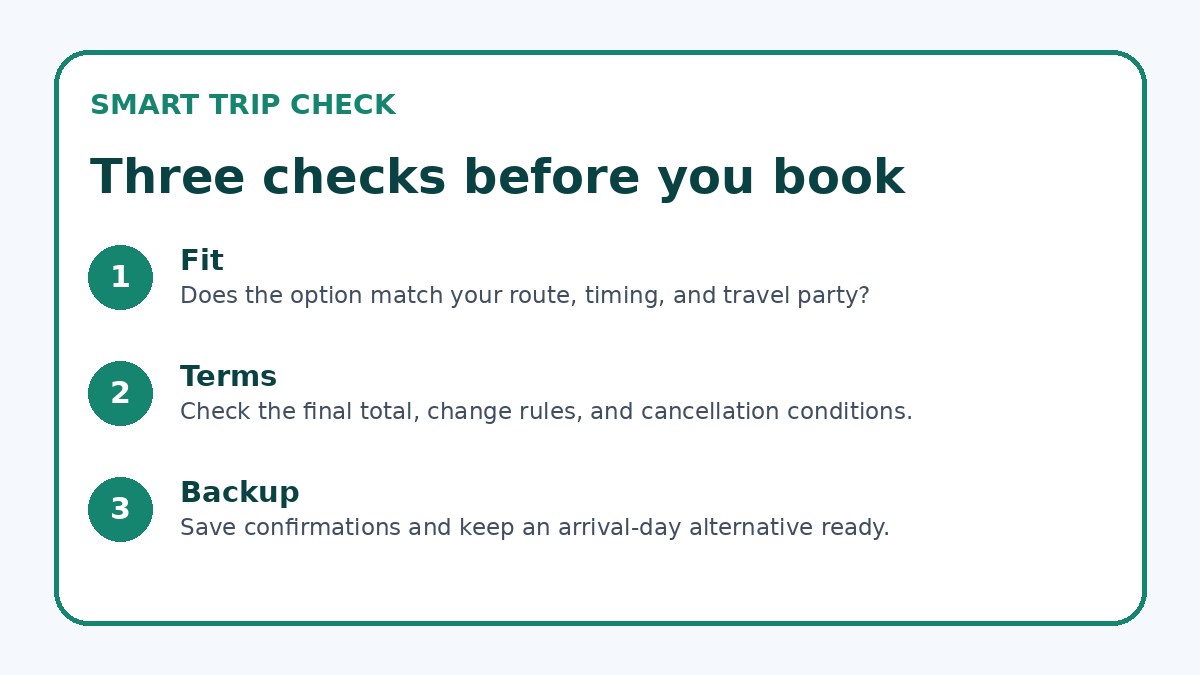
Value also means what you get for the money: legroom, refundability, and schedule reliability. Some fares are non-refundable or changeable only with penalties, which affects solo travelers who prefer flexible plans. Look for fares with clear change and cancellation rules, and factor in the cost of travel insurance if your plans are uncertain. Before booking, verify total price, baggage allowances, and refund rules on the operator’s official page or a trusted aggregator like Trip.com.
Before you book
- Decide your top priority: saving time, saving money, seeing scenery, or minimizing stress before comparing options.
- Map total door-to-door time including transfers, check-in, and transit to accommodations rather than comparing journey times alone.
- Verify baggage allowances, carry-on limits, and any extra fees on the operator’s official booking page prior to purchase.
- Check cancellation and change policies to match your flexibility needs and consider travel insurance for unpredictable plans.
- Confirm exact pickup and drop-off locations in the city and how you’ll travel between them and your accommodation.
- Read recent traveler reports or photos of seating and onboard facilities to ensure the comfort level meets your expectations.
Experience and scenery: do you want the journey to be part of the trip?
If the route and landscapes matter, trains and driving offer a chance to see more of the Australian coastline and countryside. Trains allow you to relax, read, or work while enjoying views without the fatigue of driving. Driving gives the most freedom to stop at coastal towns or lookouts, but solo drivers should plan safe rest breaks and consider overnight stops. Flights remove the scenery from the experience but can be optimal for arriving refreshed and starting your visit sooner.
Think about how the journey itself fits your travel goals. If you want to use travel time productively—sleeping, working, or reading—trains and some long-distance buses can be ideal. If every hour counts toward sightseeing at the destination, flying often wins. Balance your desire for scenery against how much planning and energy you want to invest during transit, and choose the mode that aligns with your travel priorities.
Frequently asked questions
Is taking the train between Sydney and Melbourne a practical choice for a solo traveler?
The train is practical if you value a comfortable, relaxed journey and prefer arriving in central stations. Trains generally offer more space to move, room for luggage, and a calmer travel environment that suits solo travelers who want to work, read, or sleep. However, check the exact timetable, whether the service is direct or requires a connection, and the station locations relative to your accommodation. Always confirm baggage rules and on-board amenities on the provider’s booking page before you buy a ticket.
Should I fly if I want to maximize sightseeing time in both cities?
If maximizing time at your destinations is the priority, flying often shortens the travel block, letting you spend more hours in each city. But compare the total door-to-door time including airport transit, recommended arrival before departure, and any transfers at the other end. If flights require long transfers to central areas, a train arriving downtown could be just as time-efficient in practice. Check current schedules and ground transfer times on the provider’s page to make an accurate comparison.
How do I decide whether to drive solo or use public transport for this route?
Choose to drive if you value route flexibility and want to stop at towns or lookouts; driving gives control over pace and luggage. But remember solo driving requires more energy and planning: rest stops, navigation, parking, and road conditions. Public transport reduces driving stress and often drops you in central locations, though it may require more time. Assess costs, your comfort with long drives, and whether you prefer to spend travel time relaxing rather than operating a vehicle.
Final planning note
For most solo travelers, the practical choice between Sydney and Melbourne comes down to priorities. If speed and minimizing travel days are critical, prioritize flights after mapping total door-to-door time; if comfort, workspace, and downtown arrivals appeal, trains are a strong choice. Buses and driving remain useful when budget or flexibility take precedence, but they require more planning for breaks, luggage, and rest. Before booking, verify schedules, baggage rules, and cancellation policies on the operator’s official page and compare total travel time rather than headline durations. For current availability and comparisons you can optionally check a booking site like Trip.com, but always confirm provider details during checkout.
Continue planning
Check current options and final conditions
Use the provider page to confirm live availability, the final total, cancellation terms, and every condition that matters to your trip.
This evergreen planning guide was created with AI-assisted drafting and a structured quality review. It does not display live prices, schedules, availability, visa guidance, or provider rankings. Verify current details before booking. Some links are affiliate links; we may earn a commission at no additional cost to you.