If you’re a solo traveler booking London to Paris flights, the practical first step is simple: check the carrier’s change and cancellation policy on the final booking page before you pay. Focus on three things — how much a change or cancellation will cost (including fare difference), which ticket elements are refundable or non-refundable, and the time windows that affect fees or eligibility for waivers. These rules vary dramatically between low-cost carriers, legacy airlines, and rail-ferry-air combinations, and they can change during sale periods or as part of ticket-class restrictions. Knowing the likely out-of-pocket cost and the time limits for making changes lets you decide whether to accept a stricter low-cost fare or to pay a bit more for flexibility. Below I’ll walk through how to compare options, weigh tradeoffs for different solo-traveler priorities, and build an actionable checklist you can use when booking.
See current options before you compare the details
Availability and final conditions change. Open Trip.com now or keep reading for the practical comparison.
Where to find the exact change and cancellation terms
When you’re comparing London to Paris flights, the definitive source for change and cancellation rules is the final basket or booking page and the fare rules linked there. Look for a fare conditions link, refundability indicator, or full fare rules PDF. These documents state whether the fare is refundable, the amount of any administrative fee, whether taxes are refundable, and how far in advance you must request a change. Screenshots or secondary summaries can be useful for quick comparison, but the carrier’s posted fare rules are the legally binding terms.
If you’re searching on an aggregator, meta-search engine, or an OTA, remember those sites can display summary terms that differ from the airline’s final conditions. Always click through to the airline or the single-ticket provider’s final booking confirmation page to confirm. If the trip uses separate tickets (for example a low-cost carrier plus a train), you’ll need to inspect each provider’s policy separately and budget for missed-connection risk because protection is usually not included.
How to compare direct and connecting options
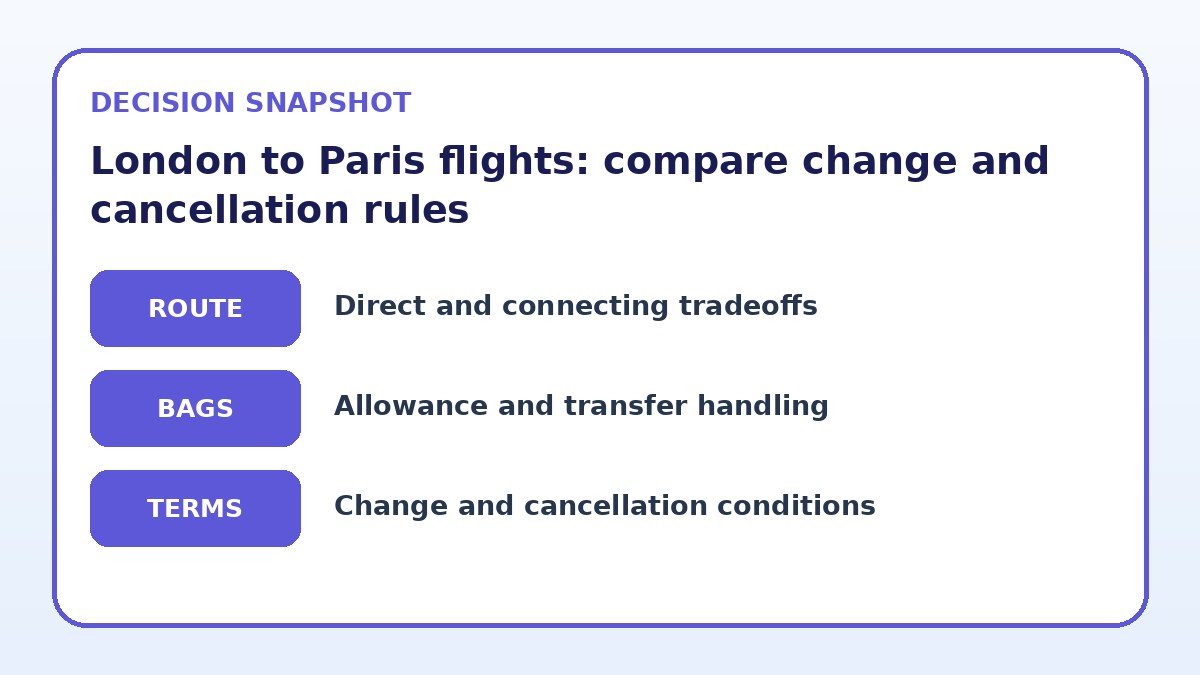
Direct flights are simpler when it comes to changes: usually one provider handles any modification, so a single change fee and fare difference apply. Connecting options, whether they’re airline connections or combinations like flying to an alternate airport and taking rail onward, can complicate refunds and rebooking. With separate tickets you may face multiple change fees and no obligation from either provider to rebook you onto a later connection if you miss the second leg. That risk matters more for solo travelers without companions to help manage logistics on the fly.
When comparing options, map out the worst-case change scenario: what each provider would charge if you needed to move your outbound date by 48–72 hours, and whether you could rebook without incurring a full new fare. Also check whether the itinerary is sold as a single contracted connection (through-ticket) or as separate segments. A through-ticket normally provides protection under the airline’s interline or alliance agreement; separate tickets do not. Factor in the convenience of direct travel against the price and flexibility differences.
| Approach | Best for | Tradeoff to check |
|---|---|---|
| Lowest base fare (no flexibility) | Solo travelers with fixed dates and tight budgets | High change/cancellation fees and limited refund options if plans change |
| Semi-flexible fare (reduced fees) | Travelers who may adjust dates within a short window | Higher upfront cost but lower penalty for small date shifts |
| Fully refundable or flexible fare | Solo travelers valuing peace of mind and easy rebooking | Significantly higher ticket price but predictable change/cancellation handling |
| Mixed itinerary (separate tickets or modes) | Those optimizing schedule or price across carriers/modes | Lowest protection for missed connections and multiple providers to deal with |
Ready to check the option that fits your plan?
Use your exact dates and traveler details so the provider page can show the current total and conditions.
Tradeoffs: low-cost fares versus flexible full-fare options
Low-cost carriers often have very low base fares but strict change and cancellation rules — fees that can exceed the original fare, and non-refundable ancillary charges. For solo travelers focused on a fixed plan, this can be economical. But if there’s any chance your dates will shift, a mid-range refundable or semi-flexible fare might save money and stress by avoiding large change fees or fare differences. Evaluate how likely you are to change plans and whether the premium for a flexible fare is less than a probable change fee plus any fare increase.
Legacy carriers and flexible fare classes usually allow free changes within a set window or offer low change fees; they may also permit refunds with a cancellation fee. That flexibility comes at a higher upfront cost but reduces the administrative hassle of calling customer service and juggling separate payments. For solo travelers who value peace of mind, the predictability of flexible tickets can outweigh the savings of stripped-down fares. Remember to check whether the fare allows rebooking onto a lower-priced flight and whether refunds will be issued as cash or travel credit.
Before you book
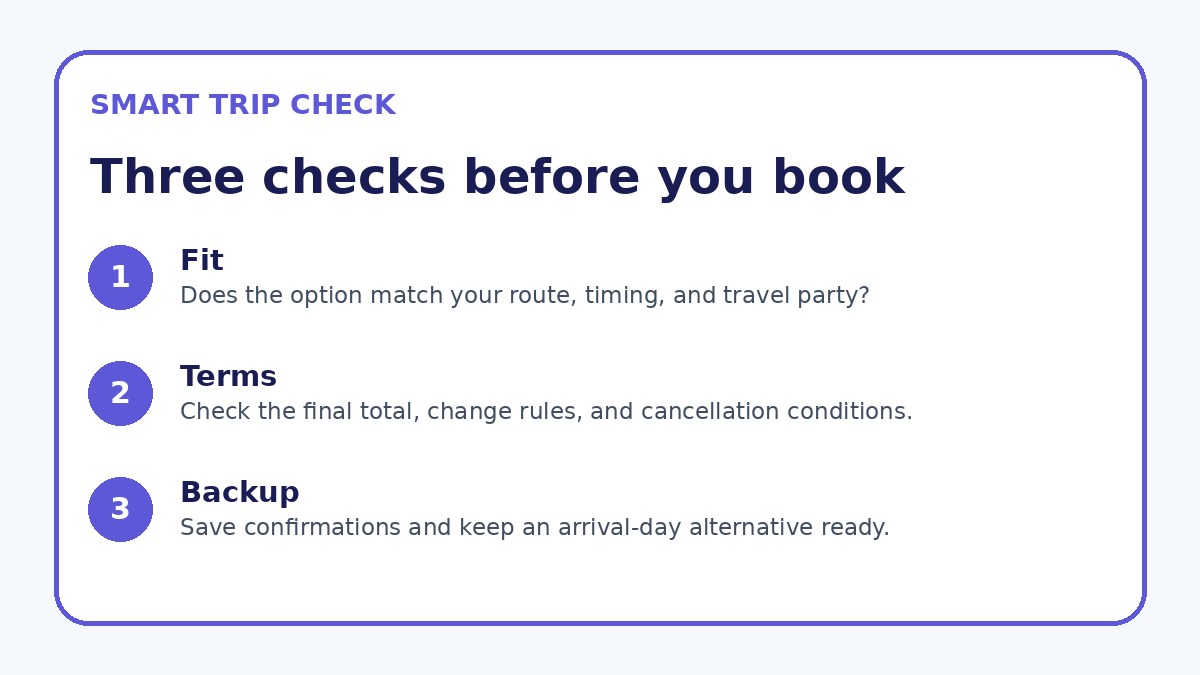
- On the final booking page, click the full fare rules or fare conditions PDF and save a copy or screenshot for reference.
- Confirm which elements are refundable (fare, taxes, ancillary services) and note any administrative fees for cancellations.
- Check the time windows for fee-free or reduced-fee changes and whether same-day rebooking options exist.
- If your trip mixes carriers or trains/ferries, determine whether the itinerary is on a single ticket or separate contracts.
- Decide whether to pay for a flexible fare or buy travel insurance based on the likelihood and cost of a change.
- Record the carrier’s contact methods for changes (online, phone, airport desk) and the expected response time in case you need urgent help.
Practical decision criteria for solo travelers
Start by ranking what matters most to you: absolute lowest cost, ability to cancel and get money back, or ability to change dates with minimal fees. Next, determine your date flexibility window and how far ahead you’re booking. If you expect plans to change within a week of travel, prioritize tickets with free or low-cost changes up to that time. If you’re booking months ahead with firm dates, a low-cost fare might be acceptable. Also think about baggage and seat-change rules — if these extras are non-refundable, a refundable base ticket becomes more valuable.
Finally, plan for contingencies: know the process to request a change (online vs phone), typical response times, and where credits or refunds will be issued. If you’re mixing carriers or modes, consider buying travel insurance that covers missed connections on separate tickets, or restructure the trip so major legs are on a single contract. Before you finalize, use the carrier’s final booking page to confirm the exact fee amounts, any time limits, and which payments (fare, taxes, fees) are refundable.
Frequently asked questions
Can I cancel London to Paris flights and get a full refund?
That depends on the fare class and the carrier’s refund policy. Fully refundable fares explicitly state that the base fare is refundable, while many low-cost fares only refund government taxes and fees. Some carriers allow refunds within a short window after booking without penalty; others do not. Always confirm the refundability line on the fare rules on the final booking page and note whether refunds will be issued to your original form of payment or as travel credit.
How much will it cost to change my flight date on a typical route?
Change costs vary by carrier and fare class and may include a change fee plus any fare difference. On stricter low-cost fares, the change fee can exceed the original fare; flexible fares can allow changes for little or no fee. Because these amounts fluctuate, do not rely on aggregate figures — check the carrier’s fare conditions and the final booking summary where the exact change fee or policy is displayed before you pay.
If I book a flight to Paris and a separate train, who is responsible if I miss the connection?
If the flight and train are on separate tickets, each provider treats its leg independently; airlines and rail companies usually do not rebook you for free if you miss a separately ticketed connection. That means you risk paying new fares for later travel. To reduce that risk, book a through-ticket where available, leave a long connection buffer, or purchase travel insurance that covers missed connections on separate tickets. Verify protections on the provider’s booking page before purchasing.
Final planning note
For solo travelers on the London to Paris corridor, change and cancellation rules should steer your booking choice more than the initial fare alone. Confirm the carrier’s exact fare rules on the final booking page and weigh how likely you are to change dates, the ease of rebooking, and whether ancillary purchases are refundable. Direct flights simplify changes; separate-ticket itineraries increase risk and complexity. If peace of mind matters, a more flexible fare — or travel insurance that covers specific risks — can be worth the premium. Use the checklist above every time you book, and consider Trip.com or the airline’s own site to compare live conditions before you pay.
Continue planning
Check current options and final conditions
Use the provider page to confirm live availability, the final total, cancellation terms, and every condition that matters to your trip.
This evergreen planning guide was created with AI-assisted drafting and a structured quality review. It does not display live prices, schedules, availability, visa guidance, or provider rankings. Verify current details before booking. Some links are affiliate links; we may earn a commission at no additional cost to you.