If your visit to Tokyo is all within central business areas — Chiyoda, Minato, Chuo — driving rarely speeds things up once you include parking and congestion. Conversely, if meetings scatter across suburbs or nearby prefectures where train links are poor or schedules conflict with tight access requirements, a rental can be justified. This guide gives a practical decision: favor public transport for most downtown itineraries; consider a rental for multi-site regional work where door-to-door control matters. Below you’ll find clear tradeoffs on route value, insurance language to check, pickup and return friction, and a fallback plan if driving proves impractical. Read the checklist before booking and verify final rental terms, coverage details, and toll or parking rules on the provider’s booking page (you can also compare availability on Trip.com).
Route value: which itineraries actually benefit from driving
Start by mapping your appointments by borough and time. Driving only adds clear value if your daily stops are widely dispersed, located outside easy rail access, or require frequent equipment transfers that are impractical on trains. For example, multiple meetings across Saitama, western Tokyo suburbs, or late-night sites with poor transit frequency may justify a car because it reduces connection complexity and gives you a mobile workspace between appointments.
Contrast that with concentrated downtown schedules where rail and subway lines provide dense, high-frequency service and dedicated express options; in these cases driving brings limited speed advantage. Also consider meeting-room availability for parking or valet, and whether client sites reimburse tolls and parking. If parking is uncertain or expensive at several stops, the time and cost penalty can erase any door-to-door advantage a car might provide.
Decide whether driving earns its place
| Mobility strategy | Best for | Cost or friction to check |
|---|---|---|
| Rely on Tokyo public transport (trains + subways) | Dense downtown schedules and tight, time-sensitive meetings in central wards. | Less flexibility for off-rail suburbs and late-night returns; potential crowded transfers during peak hours. |
| Rent a car for the entire trip | Multi-site regional itineraries and work requiring equipment transport or flexible on-demand movement. | Higher operational friction: pickup/return time, parking costs, tolls, and complex insurance checks. |
| Short, single-day car hire (airport pickup, same-day return) | One or two full-day excursions outside the rail network or tightly scheduled regional meetings. | You still face pickup/return delays and must validate one-day rental insurance and potential extra fees. |
| Mixed approach: public transport inside city, car for regional legs | Business trips combining downtown meetings with occasional distant sites beyond efficient rail service. | Requires careful planning for where to park, where to hand back the car, and whether one-way rentals are permitted. |
Check live rental choices only after the route test
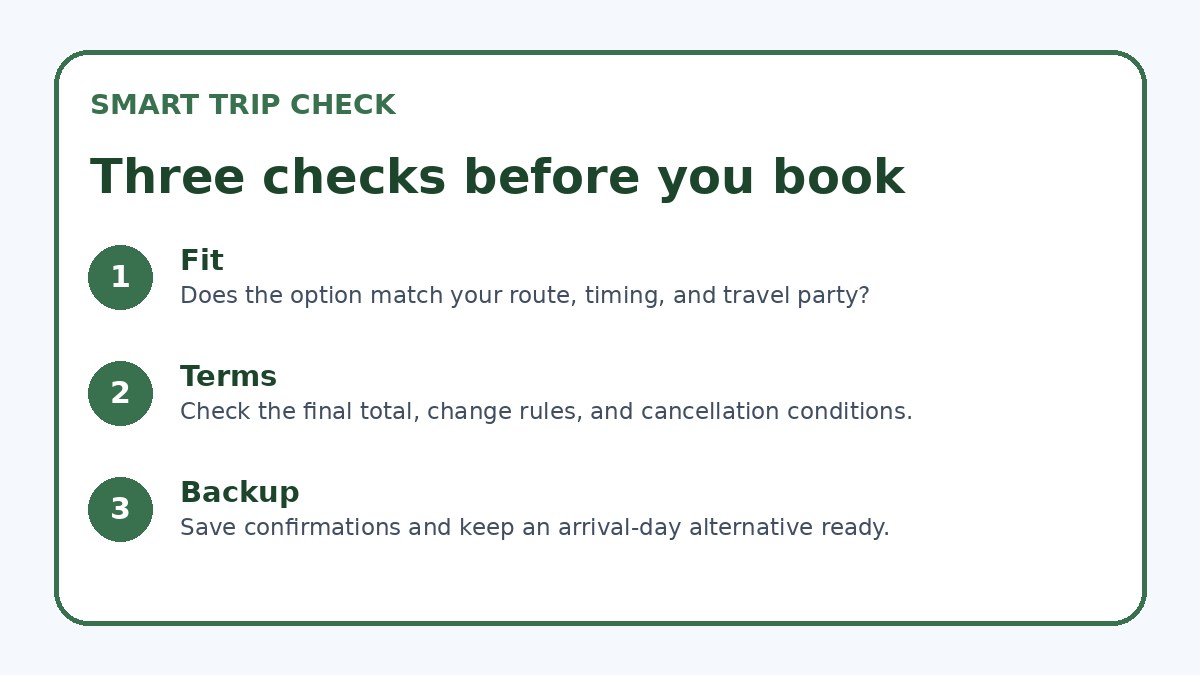
Use the exact driver, dates, pickup point, and return plan to compare current conditions.
Insurance and coverage: what to read on the rental page
Insurance wording matters: check exactly what the rental company lists as liability coverage, collision damage waiver (CDW), theft protection, and excess amounts. Look for explicit language on international driver acceptance, any mandatory add-ons, and whether roadside assistance is included. The fine print often explains exclusions — for example, damage from unpaved roads, driving under influence, or unauthorized drivers — which you need to know before you sign.
Confirm whether your corporate policy or personal credit card provides secondary or primary coverage and whether it applies in Japan; many cards require you to decline the rental company’s CDW to activate their benefit, but rules vary. Always verify final coverage limits, excess fees, and required documentation on the rental provider’s booking page and keep a PDF or screenshot of the policy when you pick up the car.
Compare the full rental conditions
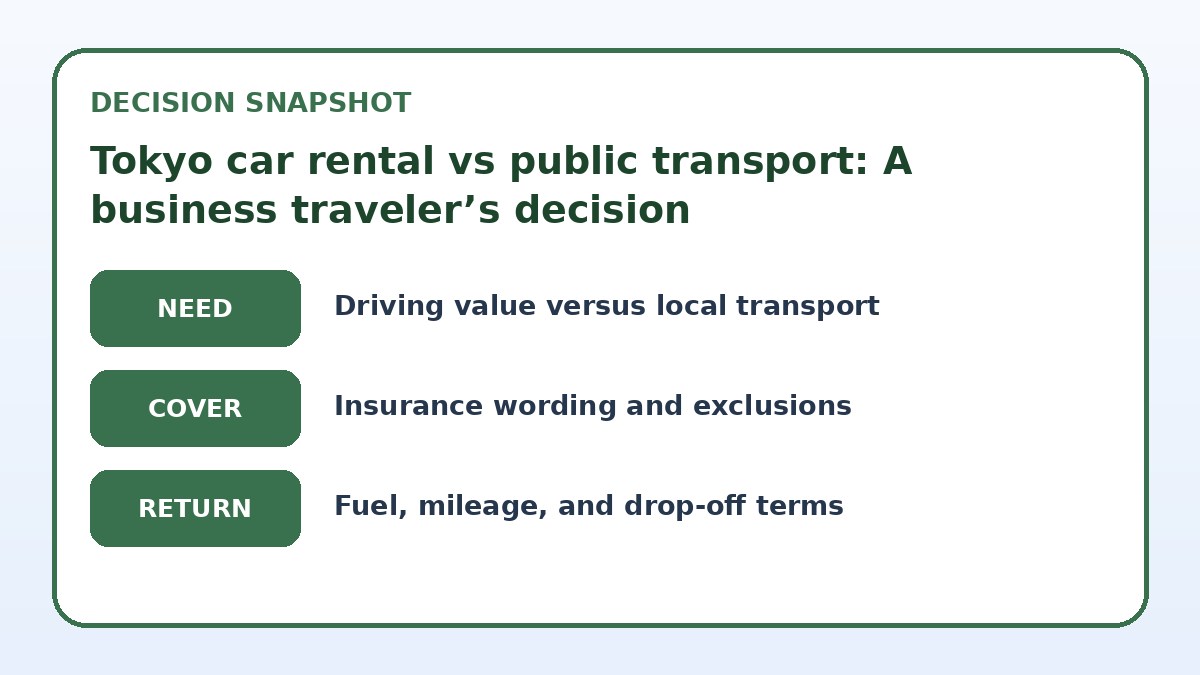
Confirm insurance wording, exclusions, deposit, fuel, mileage, and return terms on the final page.
Pickup, return friction and operational realities
Factor in time lost at pickup and return. Airport counters, local office shuttles, paperwork, and vehicle inspections can take 30–90 minutes, and returning at peak times may mean queues. If your schedule chains tight morning meetings to evening flights, even a short delay at the return counter or while refueling can jeopardize connections. Also plan for navigation setup, SIM or hotspot arrangements, and vehicle handover notes when time is tight.
Parking logistics are equally important: hourly parking, limited on-street options, and client sites that lack dedicated spots will push up costs and add walking time. Toll roads simplify some long distances but incur fees and sometimes require electronic toll devices. Before booking, check the supplier page for pickup hours, after-hours return procedures, and any stated penalties for late return or refueling requirements.
Car rental terms to verify
- Map all meeting addresses and tag each as rail-accessible, taxi-only, or remote before deciding to rent.
- Verify the rental’s insurance policy, excess amount, roadside assistance, and international driver conditions on the booking page.
- Check pickup and return hours, after-hours drop-off rules, and whether the location charges for late returns or refueling exceptions.
- Confirm parking availability and estimated costs at each meeting location; ask clients or the hotel in advance when possible.
- If using a credit card for coverage, review its rental-car terms and keep required documentation handy during pickup.
- Plan a concrete fallback route using stations and taxis, and pre-load a Suica/Pasmo card and navigation apps on your phone.
Non-driving fallback: concrete alternatives if you decide no car
A reliable fallback gives you flexibility without a car. Build an itinerary using station-to-station travel times, then add conservative buffers for transfers. Use a rechargeable IC card (Suica or Pasmo) for seamless trains and buses and keep estimated taxi legs for late meetings or wholly off-rail venues. Arrange hotel locations near a major station with good onward connectivity or reserve a meeting room with easy transit access to minimize last-mile risk.
Where taxis are necessary, use apps or call a dispatch to avoid searching lanes; many business hotels can arrange a trusted driver on short notice. For regional legs beyond rail reach, consider pre-booked airport or intercity shuttle transfers, or a one-way rental where you pick up and drop off at different locations—confirm availability on the booking page and ensure it won’t incur excessive fees before committing.
Car Rental & Road Trip questions travelers ask
Can I use my international driver’s license to rent and drive in Tokyo?
Rules for driving in Japan depend on your country of issue: some travelers can use an International Driving Permit (IDP) based on the 1949 Geneva convention, while others may need a translated license or local license. Rental companies will state accepted documents on their booking and pickup pages; check those requirements before booking and carry originals plus passport. At pickup, agents commonly inspect the documents and may refuse rental if paperwork is incomplete, so verify the exact acceptance list on the provider’s final booking screen.
How do I estimate whether tolls and parking will make driving more expensive than public transport?
Estimate tolls by identifying likely expressway segments between sites and checking the operator’s stated toll calculators or route planners; tolls can add materially to a regional day. For parking, request estimated hourly or daily rates from hotels and meeting venues, and factor in potential valet or overnight charges. Compare these sums against train and taxi fares for the same legs; include time value for transfers and the cost of any taxi backups you might need when not driving. Always verify final toll and parking fee policies on the rental or venue pages before committing.
What should I do if my meetings run late and I need to return a rental car outside office hours?
Many rental companies offer after-hours return slots or key-drop services, but these often come with specific procedures and may still record late fees. Before you rent, check the provider’s stated after-hours return instructions, required paperwork, and whether an inspection will be done later. If late returns risk disrupting your schedule, arrange a flexible pickup/return plan—such as returning at a branch near your departure airport earlier in the day—or have taxi and train alternatives prepared. Keep receipts and photos documenting the car’s condition if you use an after-hours drop-off.
Final decision note
For most business travelers whose appointments cluster in Tokyo’s urban core, public transport is usually the faster, lower-stress choice. Rent a car when you have multiple, dispersed sites beyond frequent rail coverage, need to transport equipment, or must operate on an irregular schedule where trains and taxis won’t suffice. Before you decide, map meetings, check rental insurance language and pickup/return procedures on the provider’s booking page, and estimate tolls and parking costs. If you opt not to drive, assemble a fallback that pairs a station-forward hotel, a loaded IC card, and ride services for late or remote legs—this combination keeps your schedule reliable without the added friction of a vehicle.
Continue planning
Check current options and final conditions
Use the provider page to confirm live availability, the final total, cancellation terms, and every condition that matters to your trip.
This evergreen planning guide was created with AI-assisted drafting and a structured quality review. It does not display live prices, schedules, availability, visa guidance, or provider rankings. Verify current details before booking. Some links are affiliate links; we may earn a commission at no additional cost to you.