If you and your partner want to travel to Chiang Mai in a shoulder season, start by comparing the same dates, the same travelers, and identical inclusions before judging any package deal. The practical answer: don’t assume a bundle is cheaper—compare a bundled package against building your trip piece-by-piece, matching flights, hotels, transfers, and activities line-by-line. Shoulder seasons (the months between high and low tourist flow) can offer lower rates and quieter experiences, but those benefits are only real if you check cancellation rules, change fees, and what’s actually included. This guide walks couples through the four booking approaches to compare, explains which tradeoffs matter most for relationship-focused trips, and gives a checklist of exactly what to verify on provider booking pages so you can decide calmly and confidently.
Test package value fairly
| Booking approach | Best for | Tradeoff to check |
|---|---|---|
| All-in-one package (flight+hotel+transfers+activities) | Couples wanting convenience and a single booking to manage | Potentially less flexibility and harder-to-compare itemized costs when checking refunds or changes |
| Flight + hotel bundled; activities booked separately | Couples who want coordinated travel and hotel logistics but tailored daily plans | Better activity flexibility but you must reconcile separate change/cancellation policies |
| Book flights and hotel separately; prebook only key transfers | Couples prioritizing control over accommodation and schedule while retaining some convenience | More time assembling the trip and comparing rates; potential for lost bundle discounts |
| Fully independent bookings (flight, hotel, transfers, activities) | Couples who want maximum customization and the ability to mix providers freely | Higher administrative overhead and more individual supplier policies to monitor |
Check current package and separate options
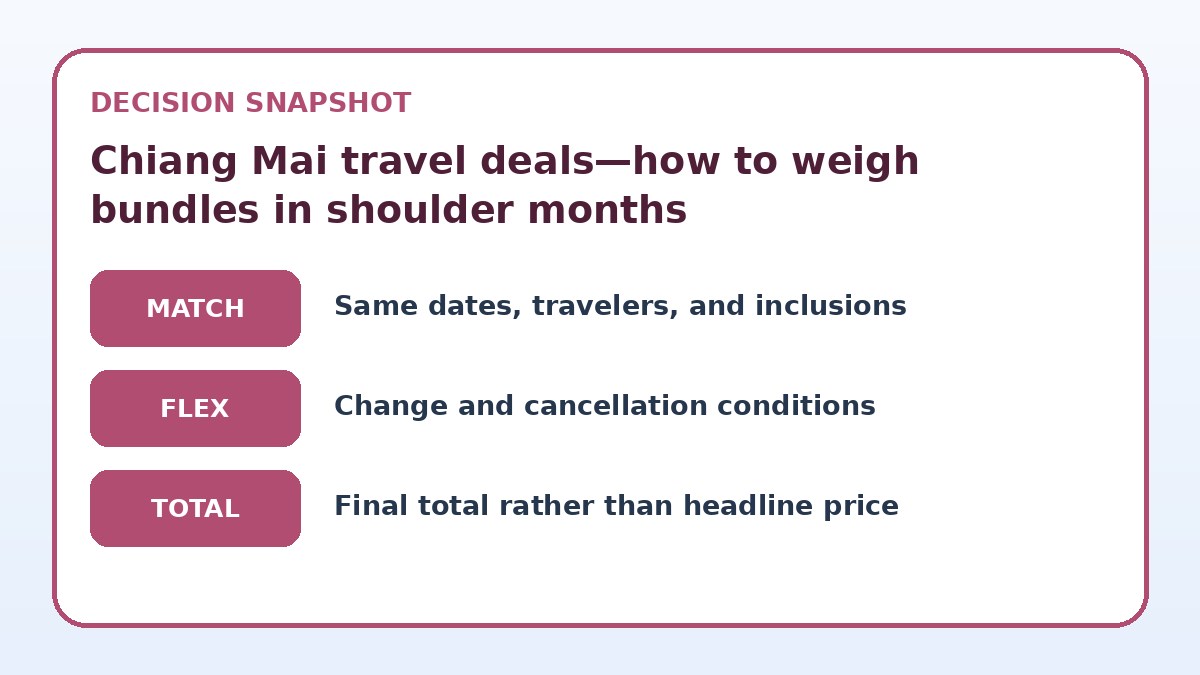
Use identical dates, travelers, room needs, baggage, and flexibility so the comparison stays meaningful.
What to compare before judging a package
Start by lining up the baseline facts: exact travel dates, total travelers, room configuration (double or twin), and airport transfer needs. Put together the same itinerary if you test a package versus separate bookings so you compare apples to apples. For flights, compare fare classes and baggage allowance; for hotels, compare room category and whether breakfast and taxes are included. For activities, look for differences in group size (private vs shared), included meals, and start times—these details affect both price and the experience, especially for couples seeking quiet or romantic moments.
Next, make a checklist of contract terms to read on the final booking page: total price, payment schedule, cancellation and change fees, and what documents you will receive (vouchers, e-tickets). Pay special attention to name-change policies, transfer pick-up windows, and refund processing times. If a deal bundles non-refundable elements (cheap flights plus non-refundable tours), that can reduce flexibility. Taking a methodical, side-by-side approach keeps surprises low and helps you identify which inclusions truly deliver value for your relationship-focused trip.
Inclusions: what to look for and why they matter
For couples, the most meaningful inclusions are often those that reduce friction or enhance intimacy: private airport transfer, breakfast in a room with a view, a welcome amenity, or a private guided activity. These add convenience and create memory-rich moments without requiring extra planning on arrival. When you compare deals, ask whether included transfers are private or shared, whether breakfast is buffet or à la carte, and whether included activities are scheduled for the morning or evening—timing shapes intimacy and crowd levels, particularly in shoulder months when operators may run fewer departures.
Some inclusions can look attractive but have little practical value if they don’t fit your plans. For example, a voucher for a group cooking class is great if you actually want that experience, but worthless if you prefer a private spa or a quiet café morning. Also check whether included tickets are time-fixed or open-dated: fixed-time inclusions may limit flexibility if your arrival time changes. Verify what’s provided on the supplier’s final booking page; inclusion descriptions there determine what you receive at check-in or boarding.
Look past the headline total
Compare inclusions and change conditions before deciding whether a package is genuinely useful for this trip.
Deal comparison checklist
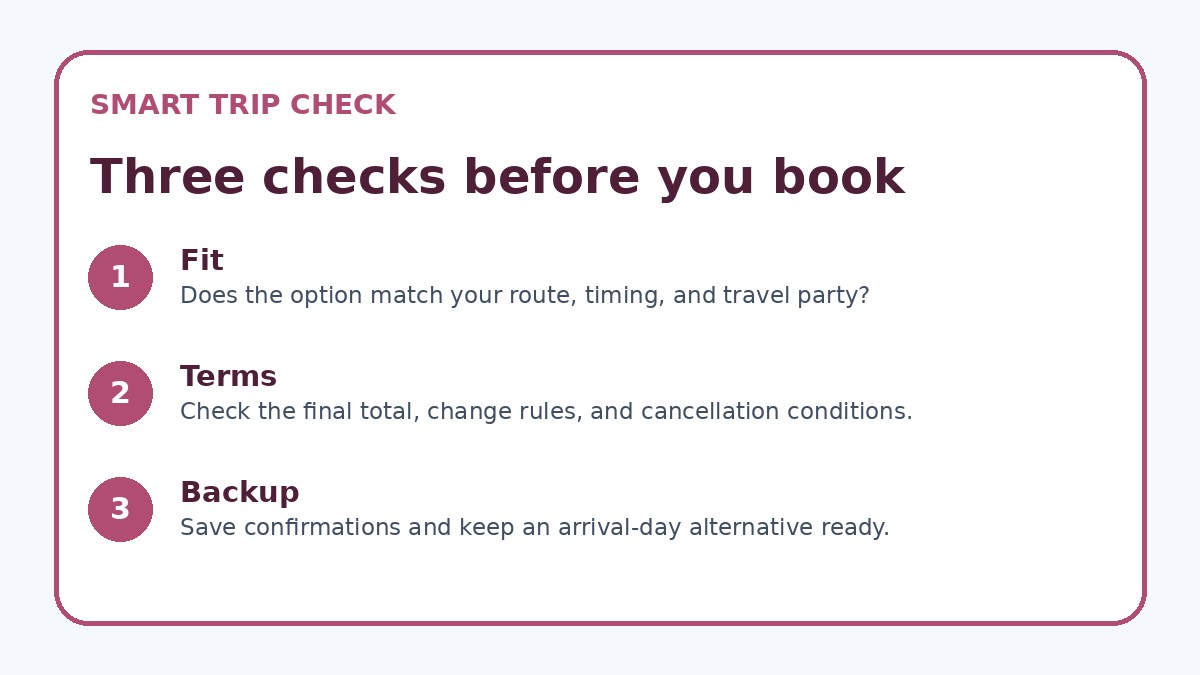
- Match exact travel dates, room category, bed type, and number of travelers across any package and independent quotes.
- Compare cancellation and change policies line-by-line on the provider’s final booking page before payment.
- Verify whether airport transfers are private or shared, plus any pick-up windows and name requirements.
- Confirm which meals, taxes, and local fees are included in the hotel rate displayed on the final confirmation.
- Check whether included activities are time-fixed or open-date, and if group size or private options are specified.
- If comparing bundles, calculate the total refundable portion versus non-refundable portion to assess real flexibility.
Flexibility: cancellations, changes, and contingency plans
Shoulder seasons reduce crowding but can bring variable weather and erratic service schedules; that makes flexible terms more valuable. Read the cancellation and change policy for each element—flights, hotels, transfers, and experiences—on the final booking screen. Look for explicit windows (e.g., free cancellation until X days) and compare them across options. For couples who value carefree travel, paying a modest premium for a refundable rate or a low-fee change policy can be worth it; for travelers on a strict budget, non-refundable options might be acceptable but require more careful coordination.
Also plan small contingency buffers: arrive a day earlier if you want to avoid stress from possible flight delays, or book one flexible night at the start or end of the stay. If a package ties everything together tightly—fixed transfer time, pre-scheduled tours—ensure the supplier’s change policy lets you move times without hefty fees. On provider pages verify how refunds are processed and what documentation you need to claim one. That concrete verification prevents surprises and ensures a shoulder-season trip stays enjoyable rather than stressful.
Traveler-specific value: what matters most for couples
Couples often prioritize privacy, timing, and atmosphere more than sheer cost. If you want sunrise views from Doi Suthep or a quiet evening in Nimmanhaemin, check whether a package’s included excursions run at times that match your preferences and whether small-group or private options are available. Consider lodging location carefully: staying near the Old City suits temple visits and markets, while Nimmanhaemin is better for trendy cafes and nightlife. When evaluating a bundled deal, ask whether the hotel room category and bed type match your needs, and whether any romantic touches are included or can be added for a fee.
If you and your partner have specific mobility, dietary, or activity preferences, evaluate how well each booking approach can accommodate those needs. Packages may offer convenience—single purchase, coordinated transfers—but can be less flexible if you need special meals, late check-in, or customized private tours. Separate bookings give fine-grained control but require time and confidence to assemble. Decide which matters most: convenience and coordination, or tailored experiences and control over each supplier’s terms.
Travel Deals & Booking Strategy questions travelers ask
Are shoulder-season Chiang Mai travel deals usually worth it for couples?
Shoulder seasons can deliver quieter streets, better hotel availability, and more relaxed service, which many couples find appealing. Whether they are worth it depends on how much you value these softer benefits versus price and flexibility. If you prefer fewer crowds for temple visits or romantic dinners, shoulder months often align well with those priorities. However, verify change and cancellation terms carefully—savings are only meaningful if you aren’t locked into non-refundable elements that could create stress if plans shift.
Should we choose a bundled package or book everything separately for a Chiang Mai trip?
There’s no single right answer—choose based on your priorities. Bundles simplify logistics and reduce the work of coordinating suppliers, which is attractive for couples wanting to minimize planning. Booking separately offers more control over room choice, flight times, and private experiences. The best approach is to compare the same dates and inclusions side-by-side, checking final cancellation and change fees. If convenience and a single point of contact matter more, a bundle makes sense; if customization matters more, assemble the trip yourself.
What final details must we verify on a provider’s booking page before paying?
On the provider’s final booking page, confirm the total price with taxes and fees, the exact room type and meal plan, flight fare class and baggage allowance, and whether transfers are private or shared. Read cancellation and change terms carefully, including time windows and any penalty amounts. Check voucher or e-ticket delivery method and required traveler name formats, plus any age or ID requirements for activities. If anything is unclear, use the provider’s customer service or booking chat to get written confirmation before you complete purchase.
Final decision note
For couples planning Chiang Mai travel around shoulder seasons, the most useful approach is a careful, side-by-side comparison that matches dates, traveler counts, and inclusions. Decide first whether convenience or customization is more important, then inspect cancellation rules, transfer types, and time-fixed activities on the supplier’s final booking page. Bundles can reduce coordination work, but separate bookings give finer control; a hybrid approach often balances both advantages. If you want a quick comparison, tools like Trip.com can show current availability, but always verify the provider’s contract terms before you pay. With the right checks, shoulder seasons can offer a quieter, more intimate Chiang Mai experience for couples.
Continue planning
Check current options and final conditions
Use the provider page to confirm live availability, the final total, cancellation terms, and every condition that matters to your trip.
This evergreen planning guide was created with AI-assisted drafting and a structured quality review. It does not display live prices, schedules, availability, visa guidance, or provider rankings. Verify current details before booking. Some links are affiliate links; we may earn a commission at no additional cost to you.