
If you’re traveling to Hong Kong with oversized suitcases or extra bags, the quickest planning move is to add flexible-date searching to your booking routine. Shift departure and return by a few days, compare one- versus two-leg flights, and filter hotels and transfers that explicitly list baggage allowances or luggage storage options. Flexible-date searches often reveal lower baggage fees, different carrier combinations, or overnight routings that let you split heavy items into two passengers’ allowance. Use the flexible-date window to surface flights that include checked bags in their base fare or that allow a cheap paid upgrade instead of steep per-kilo surcharges. Before you click pay, confirm the exact baggage allowance, change/cancellation rules, and transfer conditions on the airline and hotel booking pages — those are the facts that actually affect your cost and convenience.
See current options before you compare the details
Availability and final conditions change. Open Trip.com now or keep reading for the practical comparison.
How flexible dates affect airfare baggage costs
Airline pricing mixes seat inventory and ancillary fees; flexible-date searches surface variations that single-date lookups can miss. By expanding your search to a window of several days you might find a fare class that includes one or two checked bags in the ticket price, or a comparatively cheap fare bundle with a larger free allowance. Also compare outbound and return separately—moving one leg by 24–72 hours can shift that leg into a different inventory bucket where the included baggage or upgrade cost is more favorable.
When evaluating itineraries, track total trip cost: add the real baggage charge the airline will apply at check-in, not only the base fare. Different connections create opportunities — a one-stop routing operated by a partner airline might allow different baggage rules on each segment; check whether the contract carrier or the marketing carrier governs allowance. Always verify on the carrier’s final booking page and in your reservation email which allowance, overweight fees, and carry-on limits apply, because these details determine whether the flexible-date saving remains after baggage is included.
Timing your arrival and departure with luggage needs in mind
Flexible dates can smooth the logistics beyond the ticket price. Arriving in Hong Kong late at night with extra suitcases often means paying for a private transfer or expensive taxis; a date change that shifts arrival into daytime can let you use airport express trains, cheaper shared shuttles, or hotel shuttles that handle luggage. For departures, a morning flight might allow hotel check-out plus paid late checkout to avoid leaving heavy bags in storage, whereas an evening flight could require an extra day of accommodation if baggage storage options are limited.
If you’re choosing between dates, factor in baggage handling at both ends: some hotels offer free luggage hold for guests but may not accept oversized items, while dedicated luggage storage services near major transit hubs charge by size or weight. Use the flexible-date window to align with hotels that advertise luggage assistance or to secure a daytime arrival when staff can help. Confirm the hotel’s policy on oversized items and the availability of porters before you finalize dates because those operational details change more often than published rates.
| Approach | Best for | Tradeoff to check |
|---|---|---|
| Strict single-date booking | Travelers with fixed schedules who value itinerary certainty. | May miss lower baggage-inclusive fares and flexible hotel/storage options. |
| ±1–2 day flexible search | Slightly flexible travelers who can shift a night to reduce baggage fees. | Small shifts may not uncover better baggage rules but cost minimal schedule disruption. |
| ±3–7 day wide window | Travelers with high luggage volume seeking significant fare or service savings. | Requires tolerance for changing travel days and could affect work or local arrangements. |
| Mixed routing (direct + connection comparison) | Those willing to compare different carriers to optimize total baggage cost. | More complex to verify baggage rules and increases risk of missed connections. |
Ready to check the option that fits your plan?
Use your exact dates and traveler details so the provider page can show the current total and conditions.
When to use connecting flights versus direct options
Direct flights are simpler with heavy bags—fewer handoffs reduce the risk of mishandled luggage and often have clearer baggage rules. But flexible-date searches sometimes reveal connecting itineraries with lower combined ancillary costs because one segment offers a more generous allowance or a cheaper checked-bag add-on. When a connection allows you to buy a single checked bag that covers both segments for less than two separate paid bags, the total cost and convenience may improve despite the longer travel time.
To decide, compare the full trip: total journey time, number of transfers, baggage allowance across all operating carriers, and the visibility of baggage policies at booking. Don’t assume a single rule applies—partners may have different weight limits or maximum linear dimensions. Before booking, read the carrier and booking-site language about interline baggage, confirm which carrier’s baggage policy controls the ticket, and check minimum connection times if you’re moving between terminals with heavy luggage.
Before you book
- Run a flexible-date search with at least a ±3-day window for both outbound and return legs and record fares and baggage allowances for each date.
- On the airline booking page, confirm which carrier’s baggage policy applies, exact free allowance, overweight fees, and dimensional limits before completing payment.
- Contact your chosen hotel to ask about oversized luggage acceptance, porter service, and complimentary or paid luggage storage hours for your adjusted dates.
- Compare total transfer options for each potential arrival time—airport express, public transit, shuttle, and private transfers—factoring in luggage handling and costs.
- If considering connecting flights, verify minimum connection times and whether you must re-check luggage between carriers or terminals.
- Book luggage storage or a porter service in advance if your flexible dates create a daytime gap between arrival and check-in or between check-out and departure.
Using hotels, storage services and local transport with flexible dates
A small date shift can change your options for storing and moving luggage within Hong Kong. Hotels with luggage storage, concierge service, or porter service can remove last-minute headaches, but availability and terms vary by property and season. Flexible-date searches can surface nights where hotels include complimentary late check-out, or where nearby co-working spaces and luggage storage providers operate longer hours, letting you time arrivals and departures to minimize paid storage or extra hotel nights.
Local transport choice also responds to timing. Peak-hour trains and buses are crowded and difficult with oversized suitcases; off-peak arrivals and departures make monorail, MTR, or bus travel far more manageable. If a date change means you’ll arrive in an off-peak window, you can often avoid a private transfer. Verify luggage dimension rules on local carriers (for example, limits on folding strollers or very large suitcases) and confirm storage-service hours on their booking pages before you lock in dates.
Frequently asked questions
How far should I shift my travel dates to find better baggage options?
Start with a ±1–3 day window; this often reveals nearby inventory differences that include checked bags or cheaper add-ons. If those searches don’t help, widen to a ±7 day window to spot shoulder-period fares or different carrier routings with more generous allowances. The trade-off is that larger shifts affect your schedule and connecting arrangements, so weigh potential baggage savings against the convenience cost of moving dates. Always re-check the carrier’s baggage rules on the final booking page because the fare class that looks promising on a search results page might still require a paid bag at purchase.
Can I rely on fare bundles shown in search results to include my extra luggage?
Use the bundle descriptions as a starting point but don’t rely on them alone. Fare bundles and their baggage inclusions vary by operating carrier, market, and even booking channel. Before confirming, open the airline’s official booking page for that flight and fare code to verify exact allowances, overweight and oversize fees, and whether the allowance applies per segment or for the whole itinerary. If you’re comparing through an agent or aggregator, double-check the carrier-supplied terms in your confirmation email and the airline’s policy pages.
If a direct flight has a smaller checked allowance, is it worth choosing a connection to save on luggage costs?
Possibly, but calculate the whole picture. A connecting itinerary might let you buy a single checked bag at a lower combined cost than two separate checked bags on a direct routings, or it might place you on a carrier with a more generous allowance. Factor in the additional transfer time, risk of delays, and whether you must collect and re-check luggage during the connection. Also confirm which carrier governs the ticket’s baggage rules. If minimizing handling and complexity is your priority, staying direct may be preferable even if the luggage fee is somewhat higher.
Final planning note
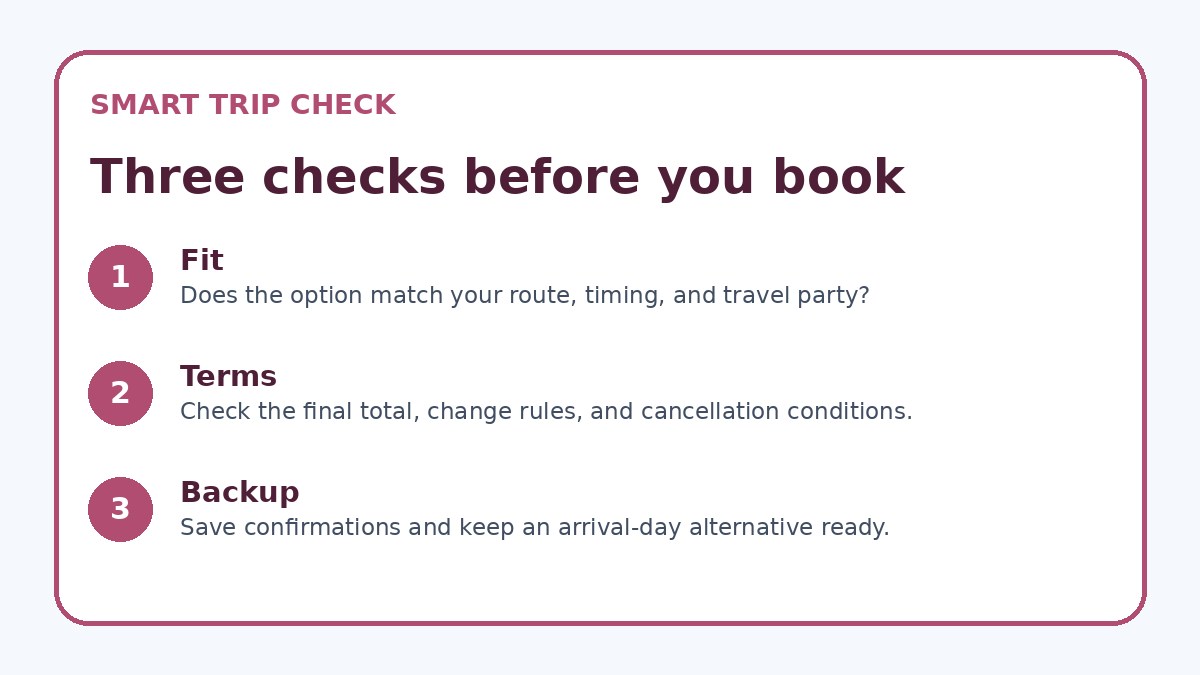
For travelers headed to Hong Kong with extra luggage, flexible dates are a tactical lever that changes more than airfare totals — they alter baggage rules, transfer choices, and hotel logistics. Use a stepped approach: start with a narrow ±1–3 day search, expand if needed, and always verify baggage allowances on the carrier’s own booking page before you pay. Balance potential savings against the extra coordination of changing dates and the operational details at hotels and transit options. If you want a quick comparison of current availability and terms, you can check Trip.com as one of several sources, but rely on the airline and hotel confirmation pages for the definitive baggage rules that will affect your trip.
Continue planning
Check current options and final conditions
Use the provider page to confirm live availability, the final total, cancellation terms, and every condition that matters to your trip.
This evergreen planning guide was created with AI-assisted drafting and a structured quality review. It does not display live prices, schedules, availability, visa guidance, or provider rankings. Verify current details before booking. Some links are affiliate links; we may earn a commission at no additional cost to you.