Practical answer up front: for most first-time visitors a car is more hassle than help—Seoul’s subway and buses cover the city efficiently, taxis are plentiful, and parking and traffic add time and stress. That said, there are clear situations where renting makes sense: multi-day trips that venture into Gyeonggi-do or Gangwon-do, travelers with young children or mobility needs, early-morning or late-night schedules beyond public transit hours, or groups wanting the flexibility of a single vehicle. This article helps you weigh the tradeoffs, compare four decision approaches, and use a simple checklist to reach a confident choice. It focuses on how Seoul’s transport patterns and practical realities affect first-time visitors rather than on rental company specifics.
How Seoul’s transport landscape shapes the decision
Seoul’s subway and bus network is dense, punctual, and cost-effective for most tourist itineraries. Major attractions and neighborhoods—Insadong, Gyeongbokgung, Hongdae, Gangnam—are directly reachable by subway, and most travelers find that a combination of subway and short taxi rides minimizes time spent in traffic. For first-timers, the convenience of hopping between sites without hunting for parking and without navigating congested central streets often outweighs the appeal of having a private car.
At the same time, Seoul’s scale, surrounding provinces, and mountains create scenarios where a car adds real value. If your plan includes multiple day trips to coastal towns, mountain areas, or the DMZ region, public transit becomes slower and less direct. Also consider group size and luggage: a family of four with suitcases and a stroller will appreciate the door-to-door ease of a car. Think of Seoul’s transport map as a tool—use it to test whether your itinerary has many stops inside the metro core or significant travel beyond it.
Practical tradeoffs when you pick a rental
Time vs. convenience: driving can save transfers and waiting if your itinerary has scattered rural destinations, but in the city it often costs extra minutes in traffic and searching for parking. Parking in central districts can be scarce or costly, and some hotels don’t include parking. Factor in the time to find legal parking, walk from lots, and use parking apps or pay machines—those minutes add up, especially during evening rush hours.
Cost vs. control: a rental adds base fees, fuel, and tolls that are easy to overlook, plus potential charges for returning late or with damage. However, a car gives you schedule control—no waiting for the last subway or relying on rideshare availability late at night. If you value schedule freedom or are traveling with equipment or children, that control can be worth the expense. Always inspect insurance options closely and confirm what’s covered before driving off the lot.
| Approach | Best for | Tradeoff to check |
|---|---|---|
| No rental — public transit and taxis | First-time visitors focused on central Seoul museums, palaces, nightlife, and shopping. | Limited flexibility for day trips outside the metro and potential inconvenience for large luggage or small children. |
| Full trip rental | Travelers planning multiple out-of-city day trips or multi-destination road travel around the region. | Higher costs, parking and traffic headaches in central Seoul, and more logistics to manage. |
| Hire driver or private van | Groups who want door-to-door service without someone in the party driving or navigating. | Typically more expensive than self-drive and requires advance arrangement, but reduces local driving stress. |
| Mixed approach — transit in city, rent selectively | Visitors who want subway convenience plus a car for one or two planned day trips outside Seoul. | Requires extra planning to coordinate rental days, pickup/drop-off logistics, and possibly extra fees. |
Key criteria to decide whether to rent
Start by mapping your itinerary on a simple two-column list: places inside Seoul’s central subway zones versus places outside the metro area. Count how many days you plan to spend outside the city center and whether those outings cluster into full day trips where a car would reduce transfers. Also consider mobility: if someone in your party has difficulty walking or carrying luggage over transfers, a car may be the kinder option.
Next, check practical constraints: who will drive and whether they meet licensing requirements, comfort with left/right-hand differences, and night driving in unfamiliar traffic. Factor in parking availability at destinations, likely toll roads on routes outside the city, and whether you’ll need child seats. Finally, estimate budget impact by adding a conservative allowance for rental fees, fuel, parking, and tolls rather than relying on a low headline rate.
Before you book
- Map your daily stops and mark which are inside the subway network and which require driving to reach.
- Confirm the primary driver’s eligibility, license format, and whether you need an international driving permit for the rental company.
- Check rental insurance options and document what the provider’s final booking page says about coverage, excess, and damage claims.
- Estimate extra costs: fuel, parking charges, tolls on highways, and any one-way drop-off fees shown on the booking page.
- Plan pickup and drop-off locations that avoid narrow city streets—coordinate with your hotel or a major transport hub if possible.
- Download navigation and parking apps with Korean-language options and save emergency numbers and the rental company’s contact.
How to manage a rental smoothly if you choose one
Book with clear confirmation of what’s included: insurance levels, fuel policy, mileage limits, cross-border restrictions, and age requirements. When you collect the car, inspect the vehicle closely and photograph any pre-existing damage. If you’re using an international driving permit, bring the original license and confirm the rental company accepts your country’s permit type. These checks avoid common disputes at return time.
Use apps and local resources to reduce friction: navigation tools with Korean signage options, parking finder apps, and toll card recommendations can save time. Plan pickups and drop-offs at locations with straightforward access rather than cramped city streets. If you’re unsure, consider a hybrid approach: use public transit in the city and rent a car for one or two full days when you venture beyond the metro—this often delivers the best balance of convenience and cost.
Frequently asked questions
Is driving in Seoul much harder than other big cities?
Driving in Seoul presents familiar big-city challenges: heavy traffic during rush hours, many lanes, and complex intersections. Signage often includes English but can use unfamiliar abbreviations, and lane discipline differs from some countries. Parking can be tight in older neighborhoods and expensive in commercial districts. If you’re comfortable with urban driving and navigation apps, it’s manageable. If you prefer a low-stress experience on a first visit, public transit and taxis remove most of these worries and usually shorten travel times within the core city.
Can I park at major attractions and hotels easily with a rental car?
Some large hotels and newer attractions offer on-site parking, but availability varies widely and may incur fees. Historical neighborhoods and popular shopping streets often have limited road-side parking and rely on paid lots. For museums and palaces near central subway stations, walking from transit is usually simpler than driving and parking. Always check parking details on your hotel or attraction’s official page and verify any charges, restrictions, or reservation requirements on the rental provider’s booking page before committing to a car.
How should families or travelers with mobility needs approach the decision?
Families with young children, lots of luggage, or mobility challenges often benefit from a car’s door-to-door access and the ability to carry bulky items without transfers. A rental paired with a child seat or a private van can make daily logistics easier. Yet, consider where you’ll spend most time—if your days center on dense urban neighborhoods, frequent parking and walking from lots could offset those benefits. Balance the reduced physical strain against the added time and cost of parking, and confirm any special equipment or accessibility needs directly with the rental provider ahead of booking.
Final planning note
For most first-time visitors to Seoul, the subway, buses, and taxis provide the best combination of speed, cost-efficiency, and low stress inside the city. A rental car makes sense when your plan includes multiple day trips outside the metro area, when you must travel on a schedule not served by transit, or when mobility and luggage needs make transfers impractical. If you do decide to rent, prepare by verifying driver eligibility, insurance, fuel and return policies on the provider’s booking page, and plan pickup/drop-off points that avoid downtown parking headaches. A mixed approach—using transit for city days and renting for one or two off-city excursions—often captures the advantages of both options for first-time visitors.
Continue planning
Check current options and final conditions
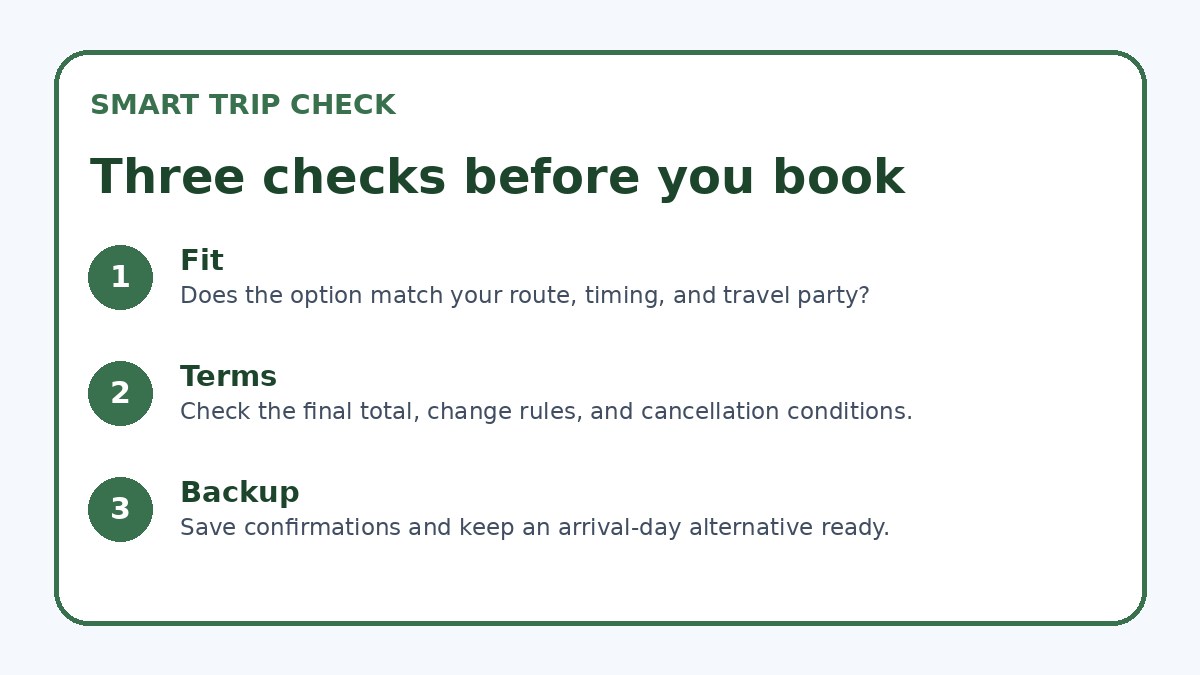
Use the provider page to confirm live availability, the final total, cancellation terms, and every condition that matters to your trip.
This evergreen planning guide was created with AI-assisted drafting and a structured quality review. It does not display live prices, schedules, availability, visa guidance, or provider rankings. Verify current details before booking. Some links are affiliate links; we may earn a commission at no additional cost to you.