Practical answer: for most couples staying inside central San Francisco, rely primarily on public transport and occasional rideshares; rent a car only if you plan day trips outside the city or need flexible mobility. San Francisco’s compact neighborhoods, frequent transit links, and parking constraints make getting around without a car attractive for couples who want to relax, drink wine, or enjoy pedestrian-friendly areas. A rental makes sense when your itinerary includes wine country, the coast, or multiple day trips with luggage or outdoor gear. Decide by comparing convenience (door-to-door needs), cost (rental, parking, fuel vs transit fares or passes), and comfort (privacy, child or pet needs, mobility limitations). Read on for tradeoffs, where a car helps versus when transit wins, and a checklist of what to verify before booking a rental.
See current options before you compare the details
Availability and final conditions change. Open Trip.com now or keep reading for the practical comparison.
How public transport works for couples
San Francisco’s transit network—Muni buses and light rail, historic cable cars, and BART regional trains—covers most central neighborhoods and major tourist spots. For couples, transit supports a relaxed rhythm: strolls between stops, coffee breaks, and spontaneous detours. Using transit avoids finding and paying for parking, and it removes the stress of one partner navigating narrow, hilly streets while the other relaxes. Transit also pairs well with walking; many attractions cluster close together, so a single short ride plus a walk often replaces a car trip.
Consider comfort and timing: if one partner prefers moving at a different pace or you plan late-night returns, rideshares complement transit without committing to a rental. Carry a compact daypack and plan for some standing on busy lines. Also, verify any transit pass options and how to load fare cards before you travel; when comparing to a rental, estimate the number of trips, occasional rideshare use, and the convenience value of not having to hunt for parking.
When renting a car makes sense
A rental is the better choice when your couple’s itinerary includes multiple out-of-city destinations that are difficult or time-consuming by public transport. Think wine regions, the Point Reyes coastline, or multi-stop coastal drives where timetables are infrequent and flexibility matters. A car allows you to carry picnic gear, camera equipment, or outdoor clothing without negotiating luggage on trains or buses. For some couples, privacy and the ability to set your own pace—stop where you please for photos or linger at scenic pullouts—are decisive benefits.
That said, city driving brings drawbacks: steep hills, narrow one-way streets, and scarce curbside parking can turn short drives into longer stops hunting for a space. Before you book, map typical routes to your planned day trips and estimate driving time plus parking logistics at each stop. If you plan a hybrid approach—rent for select days and rely on transit otherwise—check local rental policies on pick-up/drop-off flexibility and whether your hotel offers secure long-term parking for the days you return.
| Approach | Best for | Tradeoff to check |
|---|---|---|
| Public transport and walking | Couples staying within central neighborhoods and preferring a relaxed, car-free experience | Lower parking hassle and costs but less flexibility for out-of-city day trips or luggage-heavy travel |
| Rent a car for the whole stay | Couples planning multiple day trips outside the city or needing private carspace and flexible timing | Greater convenience for day trips but adds driving, parking stress, and multiple extra costs |
| Hybrid: transit in-city, car for select days | Couples wanting transit convenience in the city plus the freedom for planned excursions | Requires careful scheduling and possibly extra pick-up/drop-off logistics around hotel reservations |
| Rideshares and day rentals | Couples who want occasional private rides without the commitment of a multi-day rental | More flexible with lower commitment, but can be expensive for long or frequent day trips |
Ready to check the option that fits your plan?
Use your exact dates and traveler details so the provider page can show the current total and conditions.
Key tradeoffs: cost, convenience, and stress
Cost comparison goes beyond rental rates. Add expected parking fees, fuel, insurance options, and possible congestion or bridge tolls when tallying a rental’s total cost. With transit, your main expenses are passes or pay-as-you-go fares and occasional rideshare legs. Couples should calculate both scenarios for their exact itinerary: how many round trips, any late-night or early-morning transfers, and the number of out-of-city excursions. Consider soft costs too—time spent finding parking, queueing for transit at peak times, or waiting during connections.
Convenience and stress balance differently for each couple. If neither partner enjoys city driving, transit reduces friction. If you value spontaneous detours, a car provides freedom. Also think about accessibility: for travelers who need step-free access, a rental might be simpler than some historic cable cars or steep stations. Finally, factor weather and luggage: if you’ll be carrying large suitcases between neighborhoods, the convenience of a car may outweigh the city-specific hassles.
Before you book
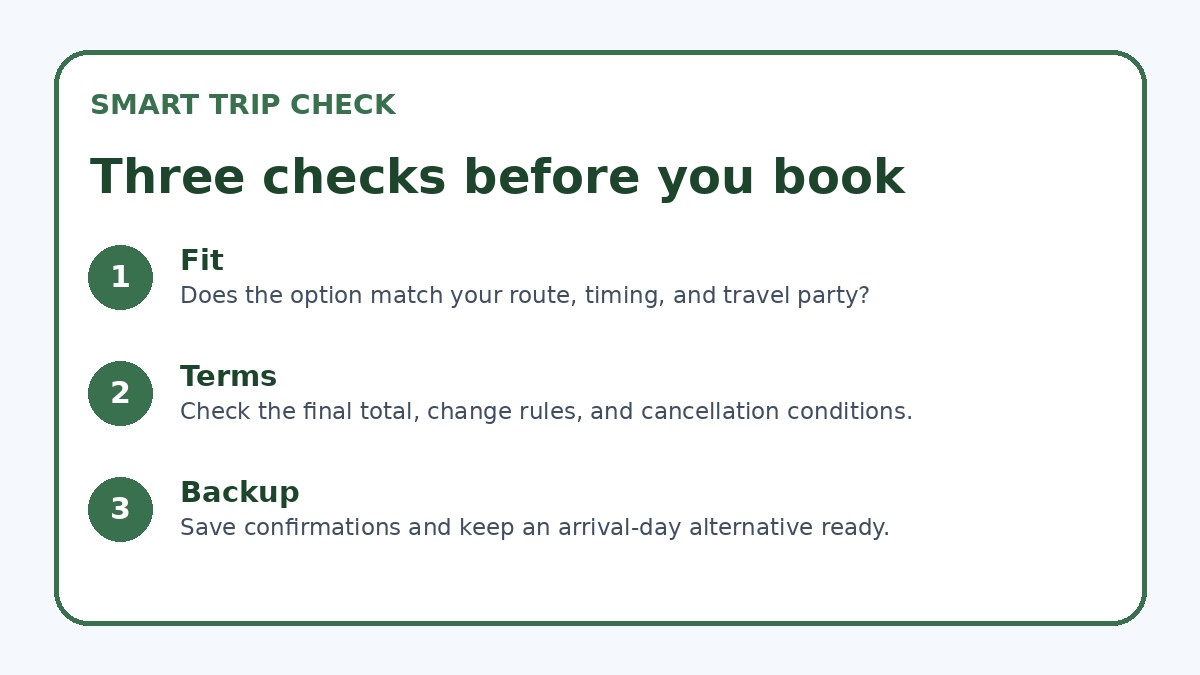
- Make a list of every planned day trip and mark whether public transit serves the route or if driving is significantly faster or simpler.
- Contact your chosen hotels about parking availability, nightly parking rates, and whether spaces are guaranteed or on a first-come basis.
- Compare total costs for your itinerary: rental rate plus estimated parking, fuel, tolls, and insurance versus transit fares and occasional rideshares.
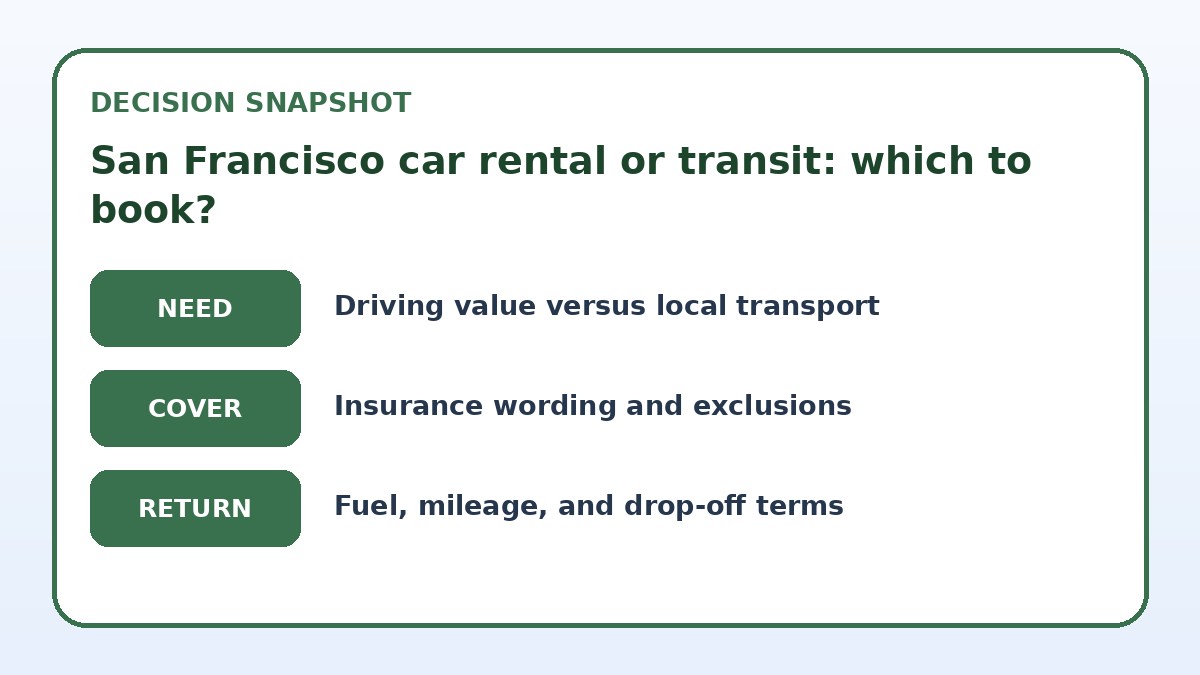
- If renting, confirm pick-up/drop-off locations, age and license rules, mileage limits, and the provider’s cancellation and modification terms.
- Check whether your personal auto insurance or credit card covers rental insurance and decide whether to buy additional coverage at pickup.
- Plan a hybrid schedule: identify specific calendar days you would definitely need a car and book only those rental days if practical.
Practical booking and verification steps
If you lean toward car rental, verify critical details on the provider’s booking page before confirming: exact pick-up and drop-off locations, mileage limits, fuel policy, insurance coverage options (and whether your credit card or personal auto policy already covers rentals), and any age or driver license restrictions. Confirm cancellation and change policies so you can adapt if your plans shift. Check whether your hotel offers validated or discounted parking and whether on-street parking near your accommodations is safe and legal overnight.
If you’ll rely on public transport, check the latest route maps, service advisories, and how to purchase or reload fare cards—you can usually find current information on official transit websites or apps. For occasional rideshares, compare pick-up points near transit hubs and whether surge pricing could affect late-night returns. Trip.com is an option to compare current rental availability, but always verify the final terms, fees, and insurance on the rental provider’s page before booking.
Frequently asked questions
Can couples park easily near popular San Francisco attractions?
Parking availability varies greatly by neighborhood and time of day. Tourist hotspots often have limited curbside parking and regulated meters, and hotel garages may charge for overnight spaces. For specific sites, check the attraction’s website or your hotel for recommended parking options. If you plan to drive, allow extra time for finding legal parking or reserve a garage space in advance when possible. For multi-stop days, consider parking in a secure lot and walking or using short transit legs to avoid repeated searches for daytime spots.
Is it safe to rely on public transport late at night as a couple?
San Francisco’s transit runs later on many core routes, but frequency drops overnight and some lines have limited service. For late-night plans, couples often combine transit with short rideshares for the final leg home. Check current service advisories and night schedules for the specific lines you’ll use. If safety or comfort is a concern, prefer well-lit major stops, travel together, and consider rideshare pickup spots off busy streets. Always verify the latest service patterns on the official transit website or app before relying on an overnight schedule.
How should couples compare rental insurance options?
First, verify whether your personal auto policy or credit card already provides coverage for rental cars—contact your insurance and card issuer for written confirmation. On the rental site, compare the types of coverage offered: collision damage waivers, liability supplements, and theft protection. Understand what deductibles apply and whether coverage is location-specific. If the rental will cross state lines or include bridge tolls, confirm policy details with the provider. Never assume coverage—always read the rental agreement and verify what is covered on the provider’s final booking page.
Final planning note
Choosing between a San Francisco car rental and public transport comes down to your couple’s priorities: convenience and freedom versus simplicity and lower city stress. For most couples who plan to stay in central neighborhoods and enjoy dining and walking between sights, public transit with occasional rideshares is the easier, less stressful option. Rent a car if your itinerary includes multiple off-city day trips, large gear, or mobility needs that make transit impractical. Use the checklist to run the numbers specific to your plans, verify policies and parking details on provider pages before you book, and consider a hybrid approach if you want the best of both worlds.
Continue planning
Check current options and final conditions
Use the provider page to confirm live availability, the final total, cancellation terms, and every condition that matters to your trip.
This evergreen planning guide was created with AI-assisted drafting and a structured quality review. It does not display live prices, schedules, availability, visa guidance, or provider rankings. Verify current details before booking. Some links are affiliate links; we may earn a commission at no additional cost to you.