If you’re crossing the border from Vancouver to Seattle with oversized suitcases, sports gear, or more bags than usual, start by choosing the mode of transport that accepts the physical size and number of items you’re carrying. The most practical approaches are driving your own vehicle or renting a car, taking a private shuttle or coach with generous luggage compartments, or using train services that allow larger baggage with advance notice. For each option, verify luggage allowances, how bags are loaded and unloaded, and any border procedures that affect access to your bags. This article lays out tradeoffs—door-to-door convenience, hands-on control of heavy items, cost and time predictability, and customs handling—so you can decide which balance fits your needs and what to confirm on the provider’s booking page before you finalize plans.
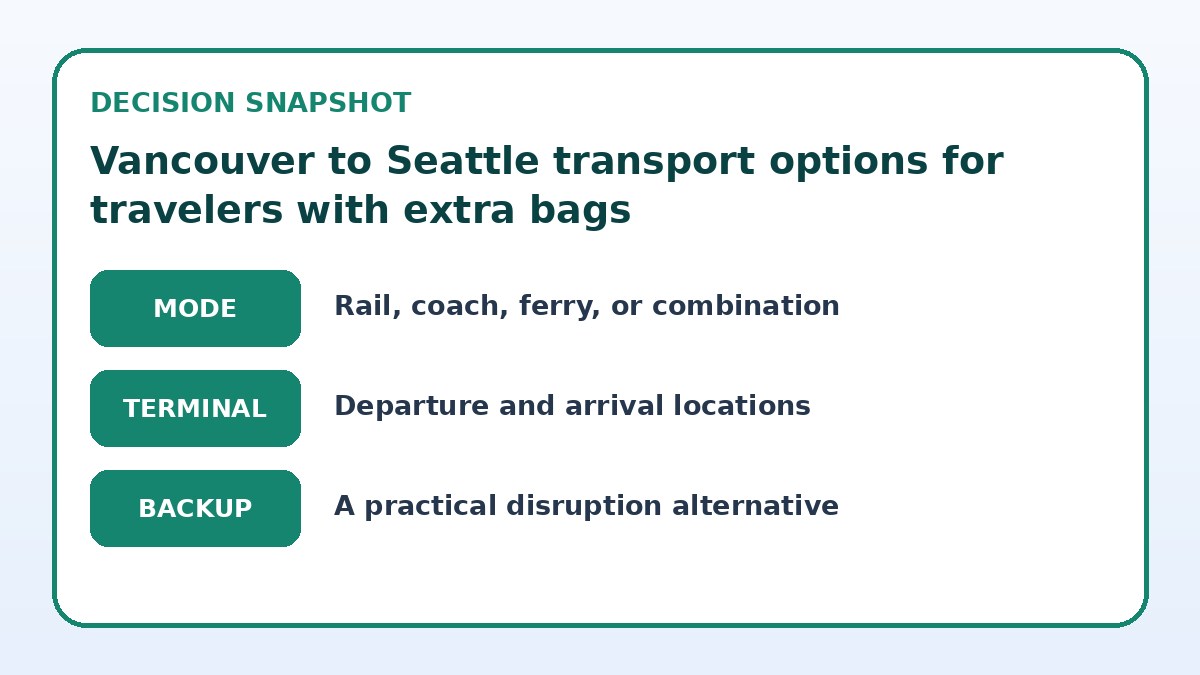
See current options before you compare the details
Availability and final conditions change. Open Trip.com now or keep reading for the practical comparison.
Choose by how much you want to handle your luggage
If minimizing physical handling is the priority, look for services that load and store bags in dedicated compartments. Private door-to-door shuttles and many intercity coaches offer external luggage bays where drivers lift and stow suitcases; that reduces how often you need to lift heavy items yourself. When booking, confirm whether the driver handles loading, whether bulky items count toward passenger limits, and whether there are any maximum dimensions. These practical details determine whether a single extra-large bag is feasible or if you should split contents between smaller cases.
Driving yourself or renting a vehicle gives the ultimate control: you decide how luggage is packed, where it sits, and whether to lock items in the trunk when you cross the border. This control comes at the cost of driving responsibilities—navigation, parking, and fuel. If you choose to drive, plan how luggage is distributed for safe visibility and handling, and consider whether you need a larger vehicle or a roof box. Also check whether rental agreements or insurance policies have any restrictions tied to cross-border travel or particular types of cargo.
Compare time, comfort and customs tradeoffs
Travelers balancing speed and comfort should weigh directness against luggage handling. Direct services reduce transfers and the need to move your baggage multiple times; however, not all direct buses or trains have generous baggage policies. If you’re prone to delays at the border, consider options that let you remain with your luggage during inspections versus those that store baggage out of reach. Also check departure and arrival station locations—central stations may be easier to reach but could require navigating stairs or ramps with heavy bags.
Customs inspections can be more time-consuming when you carry many items. Some providers allow passengers to keep luggage with them through inspection, while others require luggage to be unloaded and presented separately. Anticipate additional time at the border, especially during peak periods, and pack essential items (documents, medications, chargers) in an easily accessible bag. For comfort on longer ground journeys, confirm onboard space for carry-on items and whether seating choices (aisle versus window) affect your ability to stow a small bag beside you.
| Approach | Best for | Tradeoff to check |
|---|---|---|
| Drive or rent a car | Travelers who want full control of large, irregular, or many items | You handle all loading, parking, and border coordination; driving fatigue and costs may rise with vehicle size |
| Private shuttle or shared coach | Groups with multiple heavy bags who prefer less lifting and lower per-person cost | You may be limited by compartment sizes and scheduled stops; confirm whether drivers load heavy items |
| Train travel | Those who prefer a smoother ride and can reserve space or carry bags through stations | Station access and baggage policies vary; you might need to carry items through platforms and transfer points |
| Ride-hailing to a ferry or airport hub | Flexible door-to-door connections where public options lack direct baggage support | Multiple transfers increase handling; some vehicles limit trunk space, so confirm vehicle type in advance |
Ready to check the option that fits your plan?
Use your exact dates and traveler details so the provider page can show the current total and conditions.
Understanding luggage policies and what to verify before booking
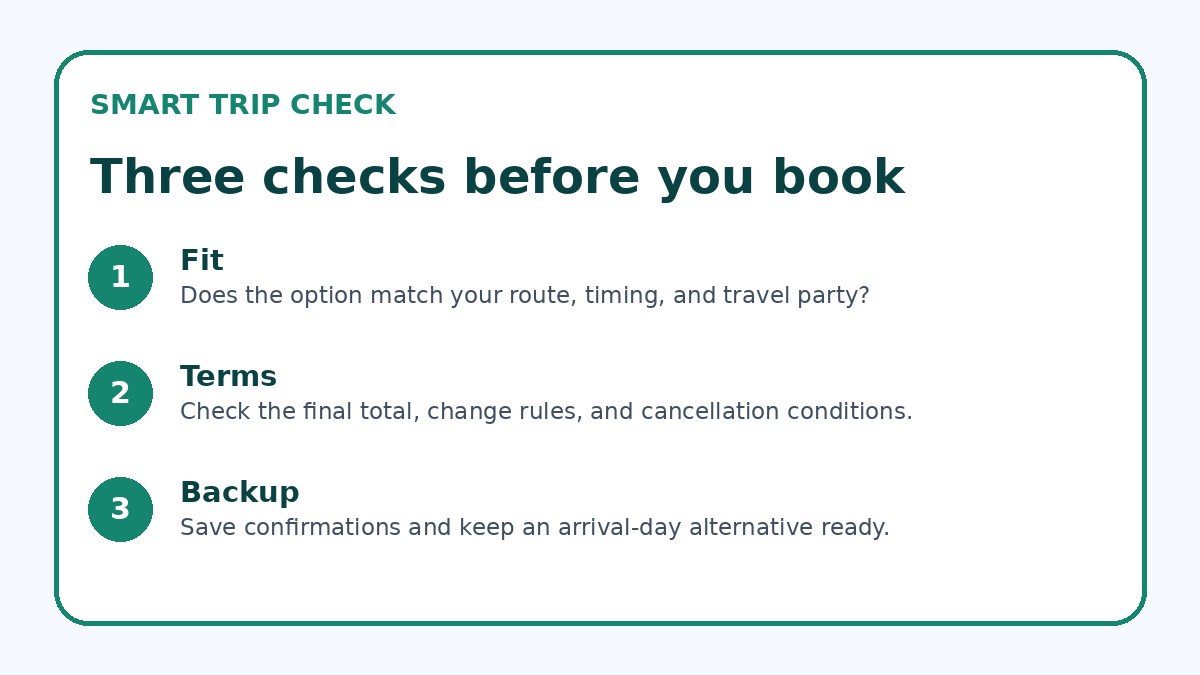
Always read the carrier’s luggage policy on the final booking page before you pay. Look specifically for the allowed number of pieces, maximum weight or size per piece, rules for sports equipment or musical instruments, and whether there is an extra-fee structure for oversized or excess bags. If the policy mentions advance notice or reservations for large items, act early—some services require pre-booking of oversized baggage to ensure space. If a provider’s policy is unclear, contact them directly and get specifics in writing or email.
Beyond the written policy, verify operational details that affect your experience: how luggage is handled at pickup and drop-off, whether drivers will assist at curbs or stairs, and who is responsible if a bag is damaged in transit. For train travel, check if station platforms have elevators or ramps suitable for heavy trolleys. If using a booking platform to compare options, you can use Trip.com as one place to view current availability, but always confirm baggage rules on the chosen carrier’s official site or booking page before finalizing your reservation.
Before you book
- Confirm the carrier’s maximum dimensions, weight limits, and number-of-items policy on the provider’s official booking page before purchasing.
- Ask whether drivers or staff will assist with loading and unloading heavy or oversized luggage and whether you must be present for handling.
- Pack essential documents, medications, and one change of clothes in a carry-on that you keep with you during customs checks.
- Measure and weigh your largest bags at home to ensure they meet the booked service’s allowance and avoid unexpected refusal at pickup.
- Reserve or pre-notify the carrier about any oversized sports equipment, musical instruments, or non-standard items that need special accommodation.
- Plan extra time for border inspections, and identify nearby parking or pickup locations that minimize the distance between vehicle and terminal.
Packing, equipment and day-of tips for heavy luggage
Organize luggage to make border checks and transfers simpler: place passports, travel documents, medications, and a change of clothes in a small carry-on that stays with you. Use durable, labeled luggage and consider protective covers for bulky gear. Pack heavier items low and near wheels to improve trolley balance, and secure loose straps or external pockets so nothing snags during loading. If you expect to lift bags often, bring a collapsible trolley or luggage dolly—these can dramatically reduce strain and speed transfers between vehicles and terminals.
On travel day, arrive early enough to handle any unexpected delays at parking, loading, or customs. If you’ve booked a shuttle or coach, confirm pickup instructions and where luggage should be waiting; for private pickups, position your vehicle for easy loading. If driving, plan parking or drop-off spots at both ends that minimize carry distance. Finally, keep a simple toolkit—zip ties, tape, a small padlock, and a flashlight—handy for securing loose items or managing small repairs on the road.
Frequently asked questions
Can I bring oversized sports equipment like skis or bikes from Vancouver to Seattle?
Many carriers provide options for oversized sports equipment, but policies differ widely. Before booking, check whether the provider requires advance notice or a separate reservation for items such as skis or bikes and whether there’s a size or packaging requirement. You’ll also want to confirm how the item is loaded and stored during transit and whether there are any fees. If you’re using a rental car, check the rental agreement for cross-border rules and whether a roof rack or bike rack is available or allowed; always secure any mounts or packaging to avoid damage in transit.
How should customs affect my packing and luggage handling plans?
Customs procedures can change how you pack and manage bags because officers may request to inspect items. Keep travel documents and any receipts for goods you’re carrying in an accessible bag. If your luggage is stored out of reach, ask the carrier how inspections are handled—will bags be removed and opened in front of you, or must you unload them? Allow additional time at the border for inspections, and avoid sealing luggage with tamper-evident locks that customs may need to break; instead use locks that customs can open and re-lock if necessary.
Is it better to split possessions between multiple smaller bags or keep one large suitcase?
Splitting possessions reduces the weight of individual items and can make handling and lifting easier, especially if stairs or short carries are involved. Several smaller bags can also fit into different compartments and distribute weight more evenly in a car or coach bay. However, more pieces increases the number of items to keep track of and may carry higher per-piece fees on some services. Evaluate how much lifting you’ll do, whether the carrier charges per piece, and whether you’ll be the one regularly moving bags during transfers before deciding which approach to use.
Final planning note
Traveling from Vancouver to Seattle with extra luggage is a solvable logistical challenge if you match your needs to the transport style that minimizes handling and border friction for you. Driving gives complete control but shifts effort to you; shuttles and coaches reduce lifting but require confirming compartment capacity and loading practices. Trains can be comfortable but vary in station accessibility and baggage rules. Before you book, verify luggage limits, loading assistance, and customs handling on the provider’s final booking page. With measurements, a small carry-on for essentials, and a pre-planned pickup or parking plan, you’ll reduce surprises and arrive in Seattle ready to move on with minimal stress.
Continue planning
Check current options and final conditions
Use the provider page to confirm live availability, the final total, cancellation terms, and every condition that matters to your trip.
This evergreen planning guide was created with AI-assisted drafting and a structured quality review. It does not display live prices, schedules, availability, visa guidance, or provider rankings. Verify current details before booking. Some links are affiliate links; we may earn a commission at no additional cost to you.