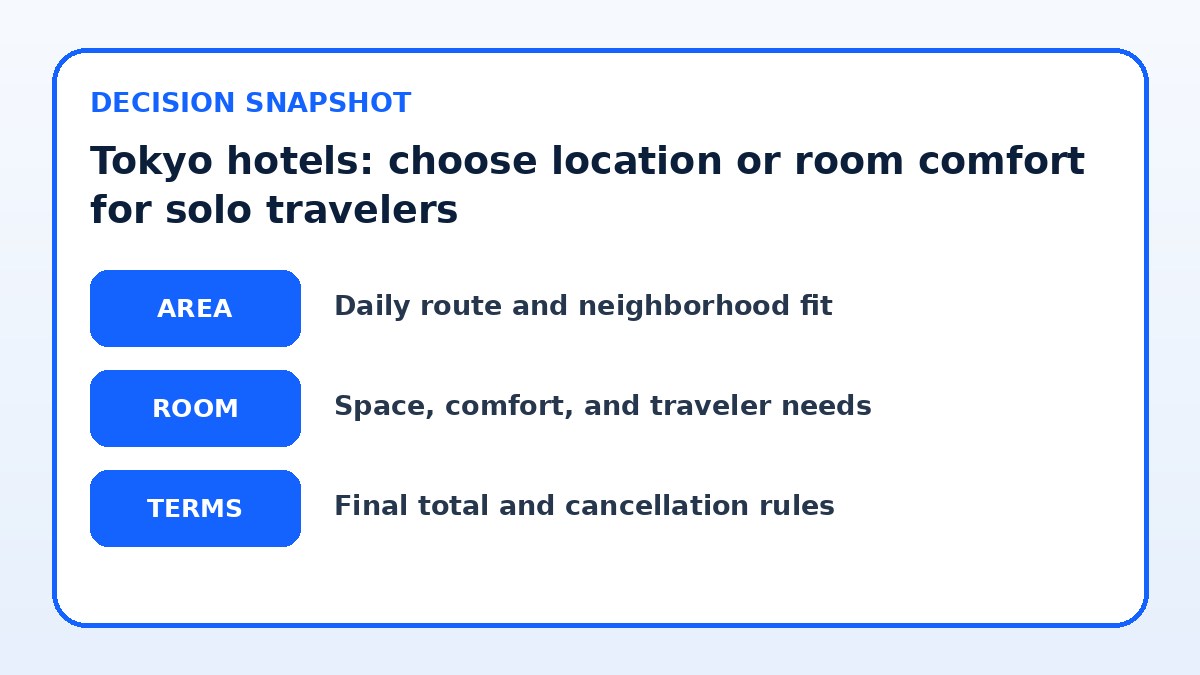
Quick answer: prioritize a hotel near the transit hub(s) you’ll use most and accept a smaller private room if you value fewer transfers and simpler logistics; pick a quieter neighborhood or a station-edge hotel if you prize sleep and time to relax. In Tokyo, “location” often means being a short walk from a major JR or metro station, which can cut travel time and late-night navigation stress. “Room comfort” ranges from generous single rooms in business hotels and compact boutique rooms to tiny capsule options; think about mattress quality, soundproofing, and desk space rather than square meters alone. Before booking, compare exact access routes to your planned attractions, check recent guest feedback for noise and bed quality, and verify amenities—especially Wi‑Fi, luggage storage, and 24-hour front desk—on the hotel’s final booking page.
See current options before you compare the details
Availability and final conditions change. Open Trip.com now or keep reading for the practical comparison.
Decide what “location” means for your trip
Location can mean different things for different solo travelers: proximity to a specific attraction, easiest access to the airport or bullet train, or a short walk to evening dining and nightlife. Start by plotting your must-see neighborhoods and the stations you’ll likely use most—this will reveal whether you need a hotel next to a JR line, a metro hub, or a private railway station. If you plan early-morning or late-night travel, prioritize a hotel within a five- to ten-minute walk of your chosen station to minimize confusion and reduce the stress of navigating unfamiliar streets after dark.
Balance convenience with the kind of environment you want: central wards like Shinjuku, Shibuya, and Ginza put you in the middle of activity but can be louder and busier; quieter areas such as Koenji or Meguro offer calmer evenings and often better-value rooms but require slightly longer transit times. When looking at listings, verify how many exits your walk involves and whether there are stairs or elevators at the station—these details matter if you travel with bulky luggage or prefer barrier-free access. For safety and independence, pick a hotel near a well-lit, populated route for late arrivals.
Understand Tokyo room types and what they mean for you
Tokyo hotels offer a range of single-room types: compact business rooms, slightly larger boutique singles, and very small capsule or pod-style accommodations. The same square footage can feel very different depending on layout, ceiling height, storage, and natural light. For many solo travelers, a comfortable bed, a firm mattress, and a quiet room outweigh an extra desk or wardrobe. If you work from your room, check for a stable work surface, reliable Wi‑Fi, and power outlet placement; if you plan only to sleep and store luggage, prioritize bed size and blackout curtains.
When reading descriptions, look for indications of soundproofing, window type, and whether the room faces a courtyard or street—these cues predict sleep quality more than listed square meters. Shared-bath options can reduce cost but may require more time and exposure to other guests; decide if saving space is worth the potential inconvenience. If you’re unsure how the room will feel, use recent guest photos and comments focused on sleep and noise, and verify specifics like bed dimensions and carpet vs. hard floor on the booking page before confirming.
| Approach | Best for | Tradeoff to check |
|---|---|---|
| Station-adjacent small rooms | Maximizing sightseeing time and minimizing late-night navigation | Less private space and possibly smaller furniture for work or gear |
| Quieter neighborhood larger rooms | Longer in-room work sessions, better rest, and space for luggage | Longer daily transit times and fewer late-night dining options nearby |
| Business hotels with efficient layouts | Solo travelers who want functional comfort and consistent amenities | Standardized small rooms that can be predictable but lack local character |
| Capsule or pod stays | Very budget-conscious travelers who spend minimal time in-room | Very limited personal space and shared facilities, less privacy |
Ready to check the option that fits your plan?
Use your exact dates and traveler details so the provider page can show the current total and conditions.
Tradeoffs: save travel time or save square footage?
The core tradeoff most solo travelers face is whether to spend more on a central location with small, comfortable rooms, or to accept longer transit rides for a larger or quieter room. A hotel adjacent to a major station can shave off 15–40 minutes per day in transfers, which adds up across a multi-day trip and reduces decision fatigue after museum-closing times or evening plans. Conversely, a cheaper, roomier option a few stops away can be a better choice if you plan long in-room work sessions or need more space for gear and unpacking.
Think about your daily rhythm: if you will be out long hours and mainly use the hotel to sleep and recharge, prioritize location. If you plan to stay in mid-day to work, relax, or sort photography gear, prioritize room size and comfort. For mixed itineraries, pick a station-edge hotel that trades a small walk for quieter rooms, or choose a central hotel with dedicated quiet floors. Always check the route and frequency of trains at your times of travel to ensure the location savings are real for your schedule.
Before you book
- Map your must-see spots and mark the nearest stations—target hotels within a 10-minute walk of the station you’ll use most.
- Confirm bed size, room facing (street or courtyard), and any mentions of soundproofing on the hotel’s official booking page.
- Verify luggage storage, late check-in, and early check-out policies directly with the property before final payment.
- If you work in your room, check that the listing or hotel confirms reliable Wi‑Fi, a desk, and nearby power outlets.
- Look at recent guest photos focused on the room layout, mattress, and curtains, and read comments about nighttime noise.
- Compare train frequencies for your expected arrival and departure times to ensure location savings are real for your itinerary.
Practical booking checks and things to verify
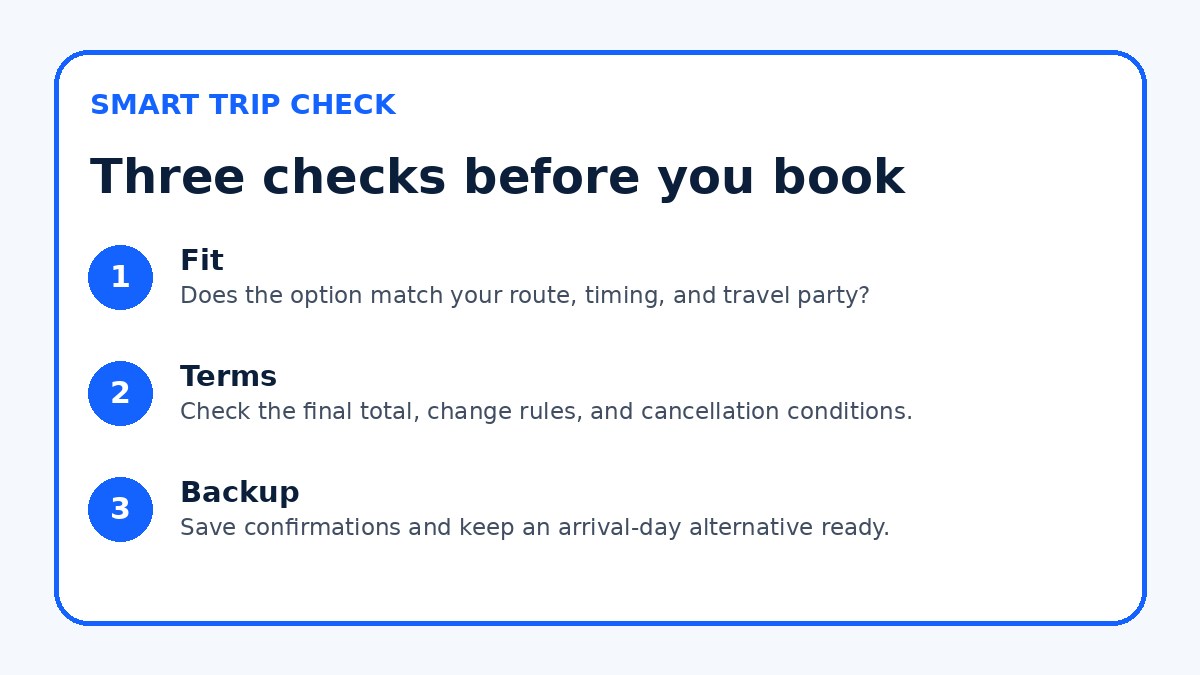
Before you finalize a reservation, confirm the exact address and nearest station exit; many Tokyo stations are large and have multiple numbered exits that affect walking time. Verify whether the hotel’s booking page lists bed dimensions, whether rooms are interior or street-facing, and whether soundproofing is specified. If early check-in or luggage hold matters, confirm those policies directly with the hotel; listings sometimes omit or generalize these operational details. For arrivals from airports, check transit options to your chosen station and whether a late check-in is allowed.
Use recent guest photos to assess room layout, lighting, and noise, but cross-check those impressions with text comments about sleep and comfort. If you rely on specific amenities—iron, hairdryer, kettle, mini-fridge, daily housekeeping—verify they’re included and whether any come with extra fees. Trip.com is a reasonable place to compare current availability and conditions, but always confirm final cancellation terms, additional fees, and exact room descriptions on the hotel’s own booking page before paying.
Frequently asked questions
Is it better to stay in Shinjuku/Shibuya or a quieter neighborhood if I'm solo in Tokyo?
If you prioritize being in the thick of dining, nightlife, and shopping, staying inside busy hubs like Shinjuku or Shibuya cuts walking time to many attractions and late-night options. However, these areas tend to be louder and busier, which may impact sleep quality. A quieter neighborhood a few stops away—such as a station on the same line—can offer larger rooms and calmer evenings while still keeping you connected. Choose based on whether you will be out during the day or need a restful base for work and recuperation.
How can I judge room comfort from online listings for Tokyo hotels?
Focus less on square meters and more on indicators of comfort: bed size and firmness notes, guest comments on noise, and room-facing descriptions (street vs. courtyard). Recent guest photos often reveal mattress height, pillow types, and whether the room has usable desk space or awkward layouts. Also check whether the hotel advertises blackout curtains, air conditioning controls, and heating—small features that greatly affect sleep. When in doubt, message the property to ask about mattress type or pillow options before booking.
Are capsule hotels safe and practical for solo travelers?
Capsule hotels are generally safe and popular for short stays, offering private sleeping pods within shared facilities; they can be a practical, affordable choice if you plan to spend most of your time out. Consider whether shared bathrooms and the communal atmosphere suit your comfort level, and check gender-separated sections and luggage storage policies. If you require workspace or extended downtime in the room, a capsule’s limited personal space may feel restrictive, so compare capsule options with compact single rooms to match your needs.
Final planning note
Choosing Tokyo hotels as a solo traveler comes down to a clear priority: save time and simplify travel by staying near the stations you’ll use most, or save stress and gain personal space by staying slightly farther out. There isn’t a single right answer—your daily rhythm, luggage needs, and tolerance for noise should drive the decision. Use station proximity as a primary filter, then narrow options by bed quality, noise reports, and practical hotel services like luggage hold and late check-in. Confirm critical operational details and room specifics on the hotel’s booking page before you pay, and use comparison sites such as Trip.com only to cross-check availability, not as a substitute for the hotel’s own policies.
Continue planning
Check current options and final conditions
Use the provider page to confirm live availability, the final total, cancellation terms, and every condition that matters to your trip.
This evergreen planning guide was created with AI-assisted drafting and a structured quality review. It does not display live prices, schedules, availability, visa guidance, or provider rankings. Verify current details before booking. Some links are affiliate links; we may earn a commission at no additional cost to you.