
If you want a straightforward answer: for most couples planning a leisure trip to Melbourne, start searching and comparing offers 8–12 weeks before departure, and lock in bookings 4–10 weeks out depending on your priorities. That window balances fair availability with reasonable flexibility for changing plans. If you need the most flexible cancellation options, book later with refundable fares or flexible hotel rates; if your dates are fixed around events, book earlier and accept lower flexibility to secure the right room or flight timing. Use the 8–12 week range as your baseline, then adjust inward for short trips and outward for peak periods, festivals, or specific accommodation types. Below I explain the tradeoffs, how to compare options, and practical checks to make the best choice for your couple’s priorities.
See current options before you compare the details
Availability and final conditions change. Open Trip.com now or keep reading for the practical comparison.
Why a realistic booking window matters for couples
Couples often juggle two schedules, budget priorities, and shared preferences, so choosing when to book shapes how relaxed the trip planning feels. A realistic booking window helps avoid the stress of last-minute searches while keeping some flexibility if work or family obligations shift. Booking too early can lock you into plans that later feel inconvenient; booking too late can leave you with limited room types, awkward flight times, or higher costs. Framing a window around your tolerance for risk and flexibility makes the process practical: pick a sensible search start date, monitor options, and set a deadline for commitment that both partners agree on.
A clear window also helps you prioritize where to spend: if both of you value a particular neighbourhood or room type, an earlier commitment secures that choice; if you value free cancellation and price watching, a later booking with flexible fares suits better. For couples combining sightseeing with date-night priorities—restaurants, theatre, special dinners—factor in extra lead time to secure reservations once you have travel dates. Ultimately, the booking window is a tool to balance emotional comfort with logistical realities: it reduces fight-risk and ensures you both know what tradeoffs you accept.
How seasonality and events change the timeline
Melbourne’s calendar includes sports, arts festivals, and public holidays that noticeably shift demand. During event clusters, availability of well-located rooms and convenient flight times tightens, so move your search-and-book timeline earlier by at least six weeks. If your travel overlaps with a specific sporting match, concert, or cultural festival, treat it like a fixed-date trip: prioritize securing accommodation and refundable transport options sooner rather than later. Conversely, traveling in quieter shoulder months lets you compress the window and potentially wait for last-minute fare drops or hotel promotions.
Also consider weekday versus weekend stays: Friday–Sunday bookings for short city breaks fill faster, especially for boutique hotels and weekend brunch spots, so allow extra lead time for those. If you and your partner plan long stays or linking Melbourne with other Australian destinations, coordinate bookings for the whole itinerary early enough to avoid inconvenient flight connections. Always check the final provider page for exact cancellation windows, change fees, and whether any special event surcharges apply—those are the facts that most affect whether your chosen timeline actually protects you.
| Approach | Best for | Tradeoff to check |
|---|---|---|
| Book early (10–12+ weeks) | Couples with fixed dates or event-driven travel | More choice but less flexibility and possible change fees |
| Standard window (6–10 weeks) | Balanced couples who want decent choice and some flexibility | Good balance, but may miss last-minute discounts |
| Late booking (2–6 weeks) | Flexible couples chasing short-notice deals | Fewer room types and riskier scheduling around events |
| Last-minute (under 2 weeks) | Spontaneous couples with flexible dates and tolerance for uncertainty | High risk of limited availability and inconvenient times |
Ready to check the option that fits your plan?
Use your exact dates and traveler details so the provider page can show the current total and conditions.
Comparing fare flexibility and accommodation choices
When deciding your booking window, compare refundable or changeable flight fares with restricted, lower-cost options. Flexible fares let you book later with peace of mind but typically limit the potential savings from last-minute discounts. If both partners need maximum certainty—say because work schedules are locked—prioritize a firm booking earlier, then purchase travel protection if it eases anxiety. When it comes to hotels, many properties offer different rate types: non-refundable, partially refundable, and fully refundable. Weigh the premium for refundable rates against how likely your plans are to change.
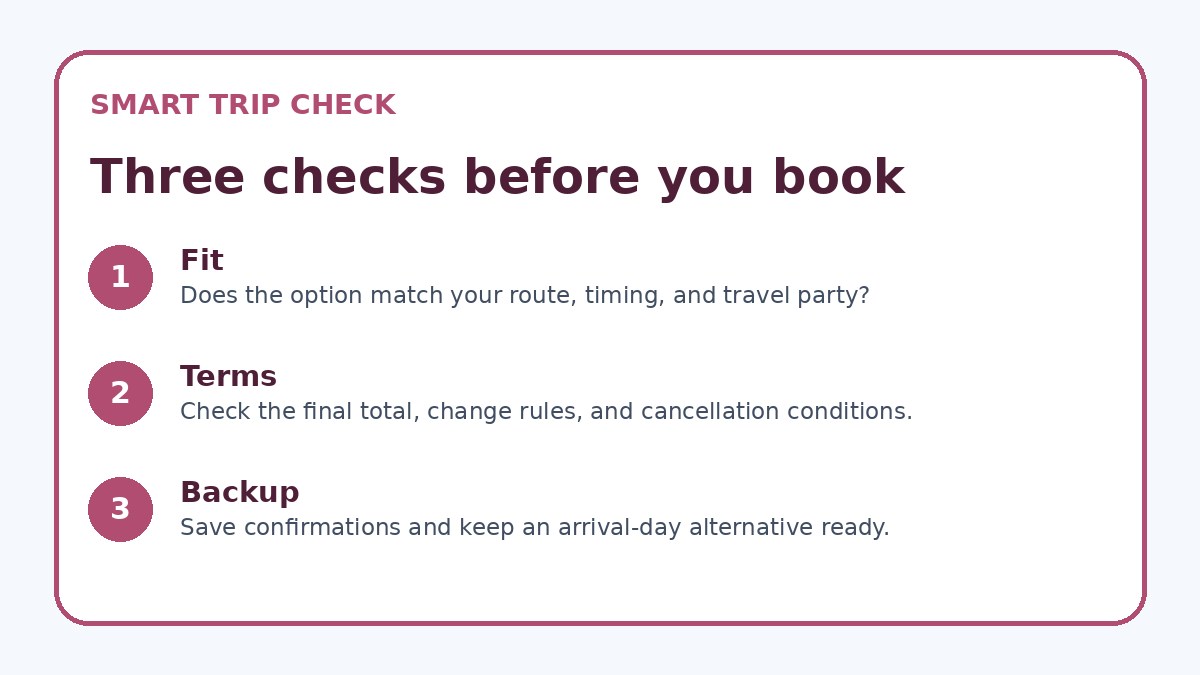
Do a side-by-side comparison before committing: check the total cost difference, the provider’s cancellation policy, and any blackout or date-change rules on the final booking page. If you’re saving by booking a non-refundable room, confirm if the property allows name changes or date swaps for a fee—this can reduce the practical risk. Remember to compare not just nightly rates but also what’s included (breakfast, taxes, resort fees) and whether those extras match your couple’s travel style. Trip.com can be used as one place to compare current availability and conditions, but verify the provider page for final terms.
Before you book
- Agree on travel priorities and hard dates together before you begin searching.
- Set price alerts for flights and hotels starting about three months out and monitor them daily for two to four weeks.
- Compare refundable and non-refundable rates and calculate the net cost including potential change fees.
- Identify events near your dates and move your booking window earlier if any affect Melbourne during your stay.
- Verify cancellation, change policies, and exact room or fare details on the provider’s final booking page before payment.
- Save confirmations and screenshots of the terms, and add a calendar reminder for any penalty-free cancellation deadlines.
Practical tactics for monitoring and locking in bookings
Set up price alerts for flights and hotels starting about three months before travel and check them regularly for two to four weeks. Use calendar reminders to force a decision point—decide together whether to commit when prices reach a level you both accept or when your preferred room or flight disappears. For couples who like hands-on tracking, maintain a short list of two or three acceptable options and compare cancellation terms. If you both value spontaneity, limit pre-bookings to essentials like return travel and leave some flexibility for in-city plans.
When you decide to book, do a final verification: read the provider’s cancellation policy, change fees, baggage rules, and any traveller requirements shown on the booking page. Confirm the exact room description and bed configuration if that matters for comfort, and check arrival logistics such as airport transfer options. Keep copies of confirmation emails and screenshots of the cancellation terms. If using bundled deals or third-party platforms, ensure you understand who is responsible for refunds and changes—this avoids surprises if something needs adjusting.
Frequently asked questions
How far ahead should couples book hotels in Melbourne to get both location and value?
Aim to start searching three months before travel and be ready to commit within six to ten weeks if you want a good combination of location and value. This gives time to spot patterns in pricing and room availability without locking in unnecessarily early. If you’re traveling near a festival or major sporting event, move that window earlier, because desirable neighbourhoods and boutique properties fill first. In quieter months you can compress this timeline, and for absolute flexibility pay for refundable rates that let you change dates if plans evolve.
Are last-minute fares to Melbourne worth waiting for if we’re flexible?
Last-minute fares can be attractive if you and your partner truly have flexible dates and accommodation standards, but they come with tradeoffs. You may find savings, but you might also face limited flight times, inconvenient connections, or only remaining rooms that lack preferred amenities. For couples prioritizing comfort, it’s safer to secure at least the outbound travel or key hotel nights earlier and leave optional nights or in-city activities open. Monitor prices, but set a firm cutoff where you’ll book what’s good enough to avoid scrambling.
What should we always check on the booking page before paying?
Before you finalize any booking, confirm the cancellation and change policy, whether the rate includes taxes and fees, and if there are any restrictions like non-refundable deposits or blackout dates. Check the exact room type and bed configuration, any included extras (breakfast, parking), and the stated check-in/out times. For flights, verify baggage allowance, transfer times, and whether connections are protected on a single itinerary. If you use a third-party platform, identify who handles refunds and changes—this determines who you contact if plans change.
Final planning note
For most couples planning a Melbourne getaway, treating 8–12 weeks before travel as your practical starting window gives a useful balance between choice and flexibility. Tailor that window: move it earlier for fixed-date events and weekend city breaks, or compress it when you travel in quieter months and can tolerate some uncertainty. Compare refundable and non-refundable rates, track fares with alerts, and agree on a clear decision point together. Always verify cancellation, change rules, and room or fare details on the provider’s final booking page before you pay—those specifics determine how much flexibility your chosen window actually buys.
Continue planning
Check current options and final conditions
Use the provider page to confirm live availability, the final total, cancellation terms, and every condition that matters to your trip.
This evergreen planning guide was created with AI-assisted drafting and a structured quality review. It does not display live prices, schedules, availability, visa guidance, or provider rankings. Verify current details before booking. Some links are affiliate links; we may earn a commission at no additional cost to you.