If you need a simple answer: book a private transfer or a family-sized taxi in advance and ask the operator to confirm a child seat and extra luggage space. That gives you door-to-door convenience, controlled timing, and fewer changes with strollers and suitcases. If a private vehicle is unavailable or not within your budget, consider a meet-and-greet with porters and an elected family-friendly public transfer that minimizes walking and steps. Whichever option you prefer, check the operator’s final booking page to confirm vehicle size, child restraint availability, luggage allowances, meet-point details, and cancellation terms. This opening tells you the fastest way to reduce stress; below you’ll find how to compare cost, convenience, and timing for different approaches so you can make the best choice for your family’s comfort and budget.
See current options before you compare the details
Availability and final conditions change. Open Trip.com now or keep reading for the practical comparison.
Choosing the right transfer: private car, taxi, or shuttle
Families often trade cost for convenience. Private transfers provide the simplest door-to-door experience—drivers meet you at arrivals and help with bags, reducing stressful transfers between terminals. Private vehicles usually let you pre-book a specific car size so you can fit large suitcases and a stroller. Before booking, verify on the provider’s final page that the vehicle listed will carry the number of passengers and luggage you have and that child seats are available or can be supplied for your airport pickup.
Taxis and shared shuttles can be cheaper but require more flexibility and may involve extra walking or waits. If you’re considering a taxi, ask at the airport help desk whether family-sized cabs are staffed and whether drivers carry or install child restraints. For shuttles, check the boarding point, expected stops, and whether strollers must be folded for loading. Always weigh the savings against how much hassle you—and your children—can tolerate after a long flight.
Managing luggage, strollers and carry-ons
Start by auditing what you’ll need immediately after landing. Keep critical items in a single easily reachable bag: passports, a few snacks, a favorite toy, medication, and a change of clothes. If you’re carrying a stroller, choose one that collapses compactly and can be checked at the gate or folded into the transfer vehicle. Confirm with your chosen transfer provider whether folded strollers are considered carry-on or need to be counted toward luggage allowance on their booking page.
When packing checked luggage, consolidate items to reduce the total number of bags and use packing cubes or compression organizers to make space. If you expect to bring bulky items like car seats, check that the vehicle you reserve has sufficient trunk capacity and can accept those items without blocking seats. Consider a soft-sided car-seat bag or travel-friendly booster that’s easier to store in cramped trunks than a rigid shell seat.
| Approach | Best for | Tradeoff to check |
|---|---|---|
| Pre-booked private transfer | Families wanting minimal walking, door-to-door service, and luggage help | Usually higher cost and requires advance booking to secure child seats |
| Airport taxi | Flexible travelers seeking quicker booking on arrival | May have limited space for large luggage and uncertain availability of child restraints |
| Shared airport shuttle | Budget-conscious families willing to accept stops and longer travel time | Extra stops and walking can be tiring with young children and many bags |
| Meet-and-greet with porter assistance | Families who need help through immigration and fast baggage handling | Adds an extra service layer and coordination; verify exact pickup logistics at booking |
Ready to check the option that fits your plan?
Use your exact dates and traveler details so the provider page can show the current total and conditions.
Timing, airport navigation, and arrival logistics
Build generous buffers into your arrival schedule. Flights can be on time yet slower through immigration or baggage claim when many flights arrive together. Plan extra time before onward connections or hotel check-in; this reduces stress and prevents rushing with children who are tired or jet-lagged. Confirm the pickup point on the transfer operator’s booking page and ask whether they meet at the baggage hall, curbside, or a designated meeting lounge—different meeting points change how much walking you’ll need to do with children and suitcases.
If you’re arriving during peak periods, consider pre-booking assistance such as porters or meet-and-greet services to speed up movement from plane to vehicle. For short stays, request hotel express check-in or ask if the property will hold luggage if your room isn’t ready. Always reconfirm how the driver will identify you—nameplate, mobile number, or app notification—so you don’t spend valuable minutes searching the arrivals area.
Before you book
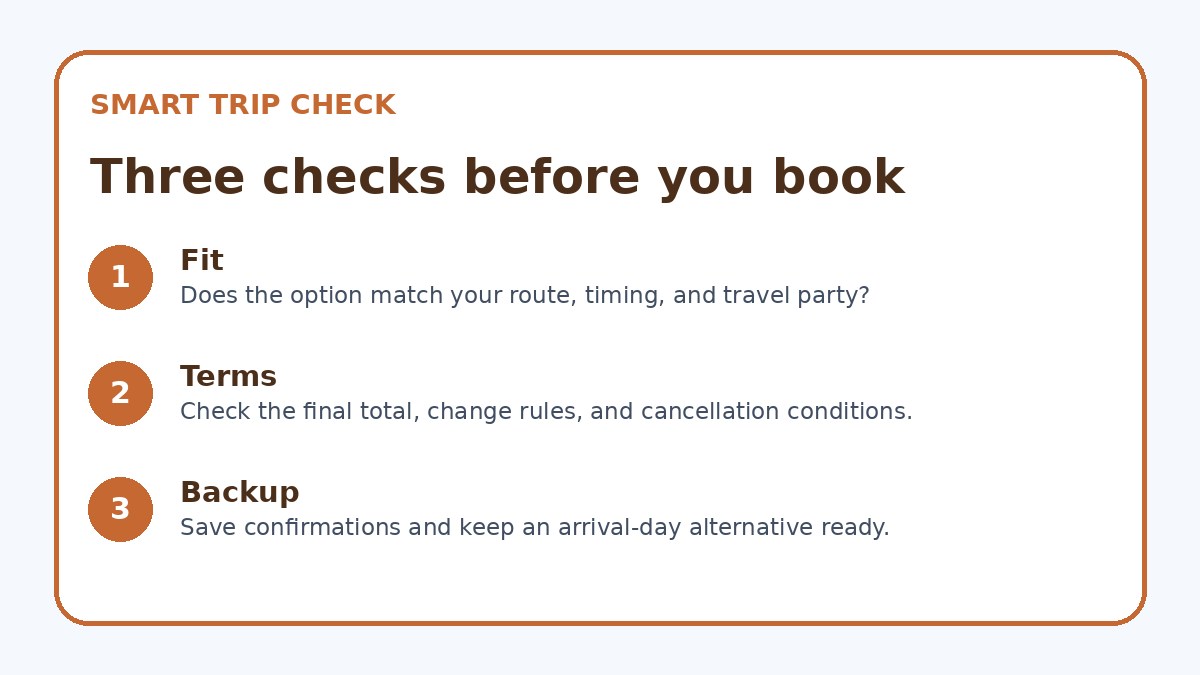
- Confirm vehicle size, luggage capacity, and number of seats on the provider’s final booking page before purchase.
- Request and verify child seat type and installation availability; bring your own seat documentation if needed.
- Fold or gate-check your stroller; label it with contact details and a bright ribbon for quick ID.
- Pack a single accessible family travel bag with snacks, medicines, wipes, spare clothes, and entertainment.
- Save driver contact details and the operator’s meeting-point instructions to your phone and a printed copy.
- Allow at least 45–90 minutes buffer beyond scheduled arrival for immigration, baggage, and transfer pickup.
Special needs and safety considerations for families
Child safety should guide your transfer choice. Confirm availability of correctly installed child seats or bring an FAA-approved car seat if you prefer to use your own. If your children need medication, sensory aids, or mobility assistance, flag these needs when you reserve the transfer so the provider can allocate an appropriate vehicle and allow extra time. Check the final booking page for the provider’s policy on child restraints, liability, and any documentation required on pickup.
Think about health and comfort: pick a vehicle with climate control, shade options, and space to manage short naps on the ride. If a long transfer is unavoidable, plan breaks and bring small comforts like neck pillows, familiar snacks, and quiet activities. For international families arriving from Oceania or elsewhere, verify whether multilingual support is offered by the operator or hotel staff to make transitions smoother.
Frequently asked questions
Can I rely on airport taxis in Doha to have car seats for children?
Airport taxis vary in equipment and policies. Many taxis do not routinely carry child restraints, so do not assume one will be available. If a car seat is essential for your family, either pre-book a private transfer that confirms a child seat or bring an approved, travel-friendly seat to install yourself. If you must use a taxi on arrival, ask airport staff about family or larger cabs and confirm driver willingness to allow your own seat to be used; always verify any commitments on the operator’s official booking or information page.
How should I handle oversized luggage or sports equipment when transferring from the airport?
Before you travel, check the transfer option’s vehicle trunk capacity and any restrictions listed on their booking page. For oversized items like surfboards or large sport cases, prioritize a private transfer with confirmed cargo space or an airline-arranged cargo service if the item cannot safely fit in passenger vehicles. Consider soft bags instead of hard cases for easier trunk packing, and label irregular items clearly. At the airport, allow extra time for loading and ask porters or the driver about secure placement to prevent damage during the journey.
What is the best way to keep children comfortable and happy during the transfer to a Doha hotel?
Comfort comes from planning and small comforts: schedule the transfer at a time aligned with your children’s sleep windows when possible, bring favorite snacks and a few compact toys, and have a small blanket or neck pillow for naps. Keep entertainment simple—downloaded videos or audio stories and a surprise activity can help. If the transfer is long, plan a short break where safe and practical. Finally, communicate expected duration to children in simple terms so they know what to expect; this reduces anxiety and makes transitions smoother.
Final planning note
Traveling through Doha with children and luggage is manageable with a clear plan: prioritize booking a transfer that fits your family’s size and carry-on needs, confirm child-seat availability, and allow generous time buffers for arrivals. Balance convenience against cost—pre-booked private cars reduce stress, while taxis and shuttles save money but may demand more flexibility. Always verify vehicle details, luggage policies, meet-and-greet points, and child-restraint commitments on the provider’s final booking page. If you want to compare current availability, Trip.com can be used as one place to check options, but always confirm specifics with the chosen operator directly before you travel.
Continue planning
Check current options and final conditions
Use the provider page to confirm live availability, the final total, cancellation terms, and every condition that matters to your trip.
This evergreen planning guide was created with AI-assisted drafting and a structured quality review. It does not display live prices, schedules, availability, visa guidance, or provider rankings. Verify current details before booking. Some links are affiliate links; we may earn a commission at no additional cost to you.