If your family is weighing a Honolulu car rental, the quick answer is: usually yes for island flexibility, but only after you confirm routes, parking and insurance nuances. Honolulu and Oʻahu offer concentrated attractions, so a car transforms days when you want beach-hopping, East Shore drives, and a manageable sunset stop without depending on transit schedules. That said, inner-city stays—near Waikīkī or downtown—can be easier to navigate without a car due to heavy traffic, limited parking, and short distances between many family-focused sites. This article gives a practical decision framework: evaluate route value for your specific daily plans, read insurance wording closely, calculate pickup and return friction at the airport or offsite locations, and prepare a non-driving fallback. Use these criteria to decide before you book and follow the checklist to verify provider pages and local rules.
Does driving improve your Honolulu family itinerary?
Start by listing the family activities you want: beaches, cultural centers, botanical gardens, and a few scenic drives. Driving clearly adds value when your days include East Coast beaches like Lanikai and Kailua, the North Shore, or remote viewpoints that require a car to reach convenient parking. A car also helps with timing when you have young children who nap or when you want to carry beach gear, coolers, or a stroller without juggling transit transfers.
But driving can be more of a burden if your stay concentrates in Waikīkī or downtown Honolulu where attractions, shops, and many hotels are within walking distance or quick ride shares. Factor in peak traffic windows, typical parking costs near attractions and hotels, and the family’s tolerance for navigation and car-seat handling. Use this practical test: if more than two days of your itinerary involve places hard to reach by public transport, a rental likely improves the trip.
Decide whether driving earns its place
| Mobility strategy | Best for | Cost or friction to check |
|---|---|---|
| Full rental for all days | Families wanting maximum flexibility for multi-stop island days and convenient gear transport. | Higher parking and rental costs plus potential traffic stress within Honolulu and added responsibility for insurance and inspections. |
| Partial rental (select days only) | Families on a mixed itinerary who need a car for one or two long-day excursions but not daily urban travel. | Requires extra planning for pickup/return days and possibly paying daily rental minimums or shuttle fees. |
| No rental—public transit and guided tours | Families staying in central Honolulu who prefer to avoid parking hassles and let someone else handle driving. | Less flexibility for early or late departures and potential time lost waiting for transit or tour schedules. |
| Rideshare and point-to-point taxis | Short hops within the city, beach transfers, and families who dislike driving but value convenience. | Can become expensive for longer cross-island trips and may be less reliable in remote areas or during peak demand. |
Check live rental choices only after the route test
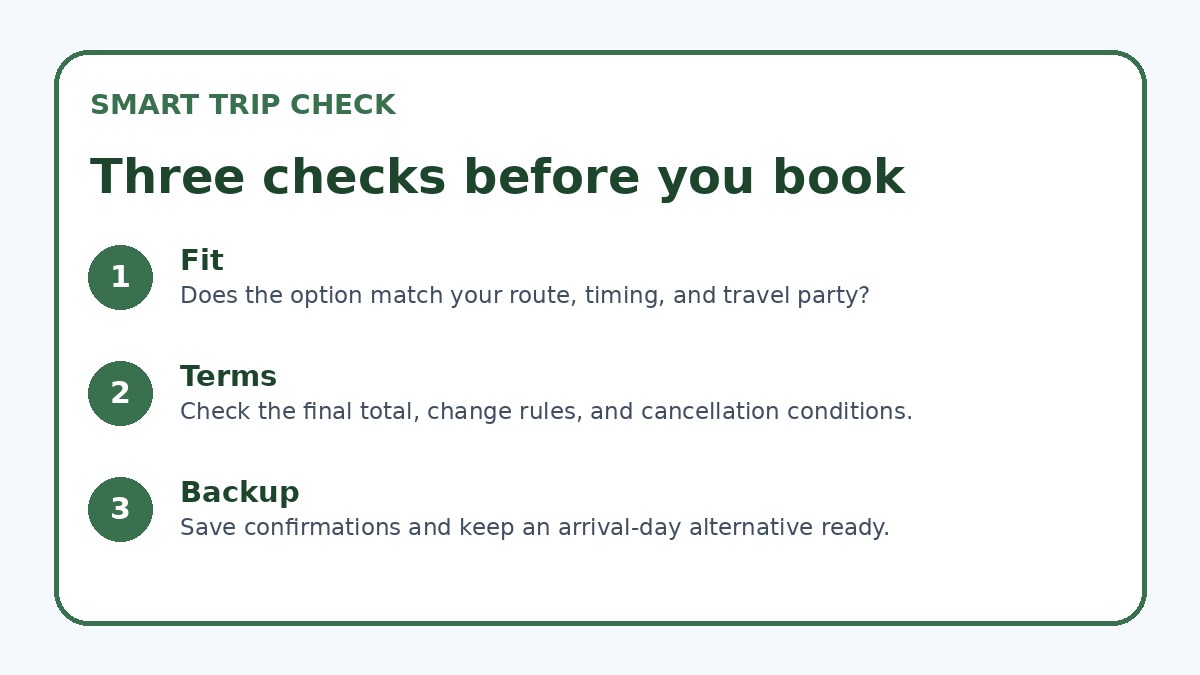
Use the exact driver, dates, pickup point, and return plan to compare current conditions.
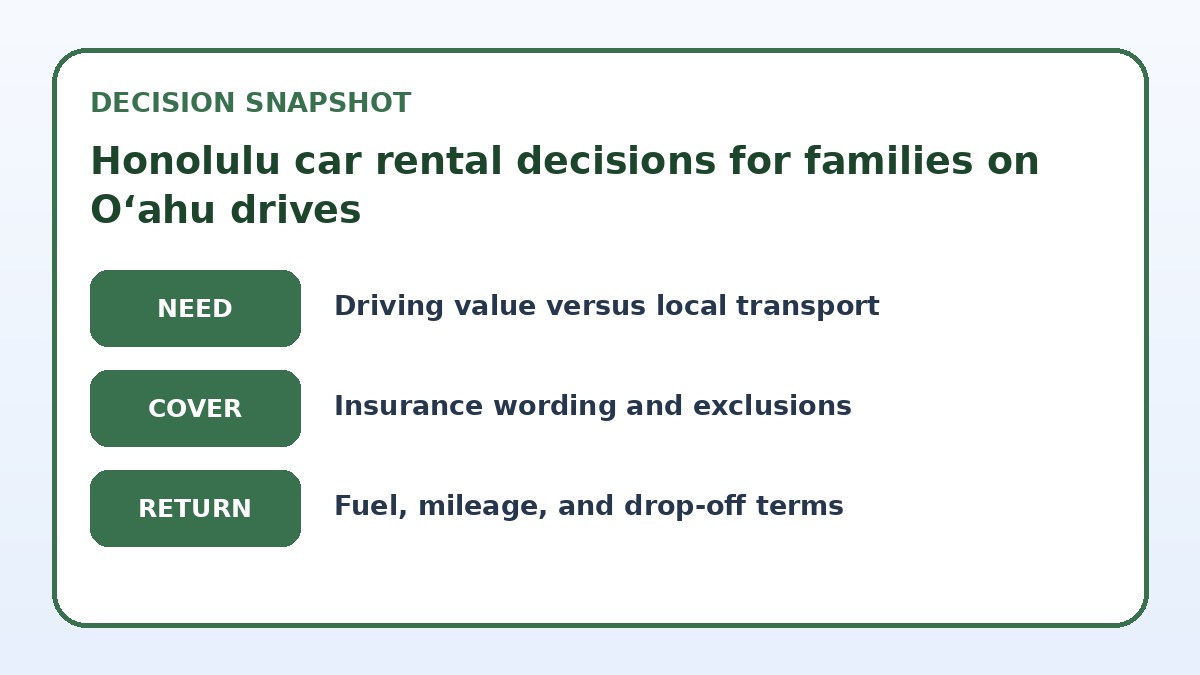
Insurance wording and what to verify before booking
Insurance descriptions on booking pages can be terse. Look specifically for the terms "liability" and "collision damage waiver (CDW)" and read the exclusions. Confirm whether CDW covers windscreen, tire, and undercarriage damage, and whether beach driving or crossing riverbeds is excluded. For families, also verify whether additional drivers are allowed without extra penalties and how child seats are handled: some companies provide them, others require you to bring or rent separately.
If the supplier’s page links to a full rental agreement or PDF, open it and search for words like "deductible," "loss of use," and "fuel policy." Those lines determine out-of-pocket exposure after an incident and whether fuel charges are pro-rated. When a third-party insurance or credit-card coverage is mentioned, check final confirmation pages and contact the card issuer to confirm applicability in Hawaii. If anything is unclear, call the rental provider or your insurer and get a reference number or email confirmation.
Compare the full rental conditions
Confirm insurance wording, exclusions, deposit, fuel, mileage, and return terms on the final page.
Pickup and return friction: airport versus neighborhood counters
Pickup logistics can add time and stress for families. Airport counters are convenient but often busier and may require long queues, shuttle rides to offsite lots, or luggage-transfer hassles. Off-airport locations sometimes offer simpler parking and faster processing but can add a short shuttle or taxi ride to reach the desk. Check operating hours carefully if you arrive late; some desks close after certain evening hours and require after-hours pickup fees or pre-arranged instructions.
Returning a car with tired kids is different from picking one up fresh—verify one-way fees, drop-off counters, and whether a fuel station is available at the return site. Look for explicit instructions about after-hours returns and final inspection processes: some providers require you to leave keys in a dropbox and email photos while others perform a quick walkaround. Confirm these operational details on the provider’s final booking page so there are no surprises at the end of a long travel day.
Car rental terms to verify
- List the exact places you plan to visit and mark which require personal vehicle access versus well-served transit.
- Open the rental agreement PDF and search for deductible, CDW exclusions, additional driver rules, and child-seat policies.
- Check pickup and drop-off instructions, hours, and shuttle requirements on the provider’s final booking page before confirming.
- Confirm parking options and estimated daily parking costs where you’ll stay and near major attractions on your itinerary.
- Compare the combined cost of rental days, parking, and fuel with the projected rideshare/tour costs for the same days.
- Plan a non-driving backup by mapping bus lines, noting rideshare pickup spots, and booking at least one guided excursion as a fallback.
Non-driving fallback and family-friendly mobility strategies
If you decide not to drive, plan a realistic fallback. Honolulu’s bus network covers many tourist corridors; identify which routes connect your hotel to beaches and museums and note schedule frequency. Rideshare services and taxis are widely available in populated areas, though they can be costly for long cross-island trips. For some itineraries, booking a few guided day trips—especially to the North Shore or Hanauma Bay—can replace the need for a full rental while giving families door-to-door service and local commentary.
Also consider splitting transportation: rent a car for only the days when you need it, and rely on public transit or walking otherwise. If you use Trip.com or other aggregators to compare current availability and options, remember those sites are helpful for checking what’s listed now but always verify the final terms on the rental provider’s own booking page for insurance, fuel, and return policies.
Car Rental & Road Trip questions travelers ask
Can I use my mainland U.S. driver’s license to rent a car in Honolulu?
Yes, visitors with U.S. state driver’s licenses typically can rent on Oʻahu. However, rental companies require the license to be valid and generally held for a minimum period (often one year). International visitors should verify whether an international driving permit is recommended. Always confirm acceptable ID documents and any age restrictions on the rental provider’s final booking page, because requirements for under-25 drivers or additional fees can vary by company.
Are there special rules about driving to beaches or off-road areas in Oʻahu?
Many beaches and coastal areas have protected dunes and fragile ecosystems, and most rental agreements explicitly prohibit off-road driving or crossing unpaved streams. Driving on beaches is generally restricted and can lead to fines or voided insurance coverage. Before you go, check the rental agreement for off-road exclusions and verify local beach access rules with park authorities. If your plans include remote natural areas, ask the provider whether coverage remains valid and consider guided tours for sensitive locations.
How can I keep a family car rental affordable and low-stress in Honolulu?
To balance cost and convenience, consider renting for just the days you need a car, book compact vehicles to save on parking and fuel, and reserve child seats ahead through the provider to avoid last-minute fees. Time your pickups to avoid peak traffic and choose a hotel with on-site parking or a known, affordable lot. Finally, read the booking page for fuel and return policies—knowing whether you must refill before return or face refueling charges can prevent unexpected fees and stress at trip end.
Final decision note
Choosing a Honolulu car rental for a family road trip comes down to route value and operational details. If your plans include cross-island drives, multiple beaches, or carrying extra gear, a car usually makes the vacation smoother. If most activities sit within Honolulu’s core, weigh parking costs and traffic stress against the comfort of not driving. Whatever you decide, verify insurance wording, pickup and return procedures, and child-seat policies on the final booking page. Use the checklist to confirm specifics before you commit, and keep a non-driving fallback ready so your family trip stays flexible and fun.
Continue planning
Check current options and final conditions
Use the provider page to confirm live availability, the final total, cancellation terms, and every condition that matters to your trip.
This evergreen planning guide was created with AI-assisted drafting and a structured quality review. It does not display live prices, schedules, availability, visa guidance, or provider rankings. Verify current details before booking. Some links are affiliate links; we may earn a commission at no additional cost to you.