If you’re travelling from Brisbane to Sydney with children, the most practical first decision is whether to prioritise flexible change/refund rules or the lowest up-front ticket cost. Families often face unpredictable schedules: delays, illness, or a sudden need to swap travel days. Flexible tickets reduce stress by allowing date and passenger changes, though they can carry higher fares or stricter booking windows. Conversely, cheaper non-flexible fares usually limit refunds and add fees for changes, which can quickly erase initial savings. Start by listing your family’s priorities—certainty of seats, budget limits, likelihood of plan changes, and whether you need adjacent seating or baggage allowances—and use those criteria when comparing options from different providers or booking platforms.
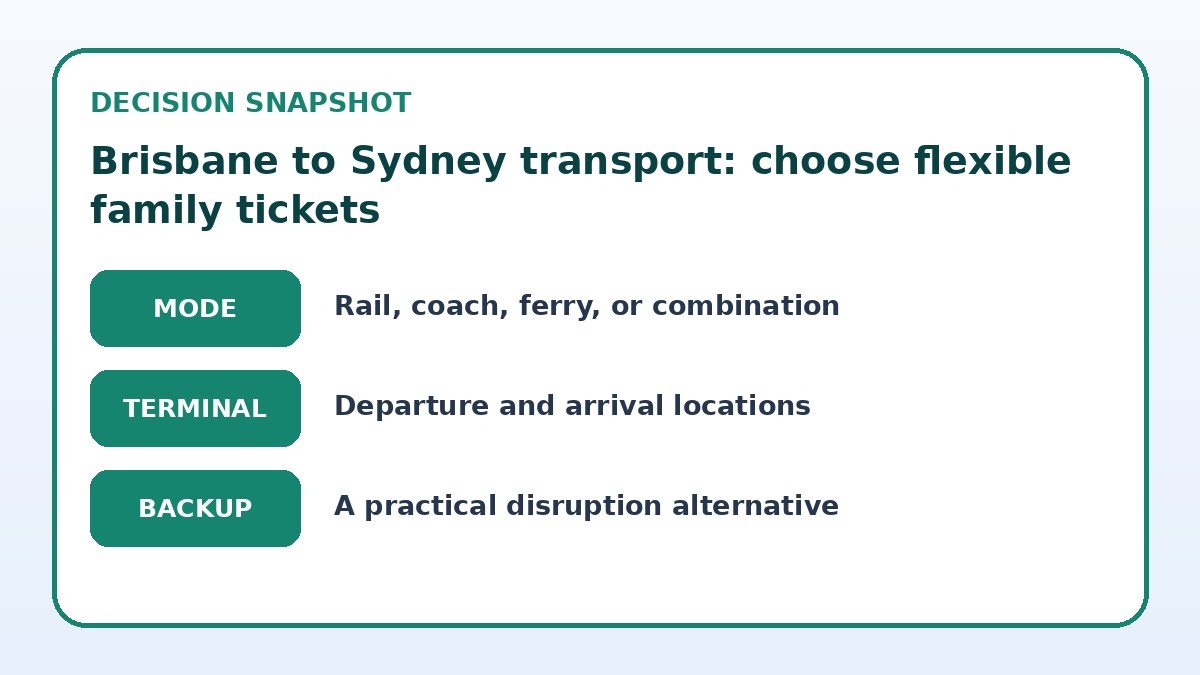
See current options before you compare the details
Availability and final conditions change. Open Trip.com now or keep reading for the practical comparison.
Understanding ticket flexibility basics
Ticket flexibility usually covers the ability to change travel dates, swap named passengers, and request refunds. For family travel, check whether a flexible fare applies per person or per booking: some providers treat each passenger’s ticket separately, which can complicate group changes. Note also that flexibility may have conditions—changes free within a specified window, or credits issued instead of cash refunds. Always read the fare rules on the provider’s booking page before you commit. These pages list permitted amendments, required change fees, and any time limits such as needing to amend at least 24 or 48 hours before departure.
Another important distinction is the difference between refundable tickets and changeable tickets. Refundable fares return funds (sometimes minus an administration fee) while changeable fares may only allow date swaps or travel credits. For families, credits can be useful if you plan future travel with the same provider, but they become frustrating when travel choices change entirely or the credit expires. If your family values cash refunds or has constrained travel prospects, prioritise refundable terms or a clear, short penalty schedule you can tolerate.
Comparing family-focused provisions
Beyond change and refund rules, families should compare seating and baggage provisions bundled with each fare class. Some flexible tickets include seat selection or priority boarding, which matter when travelling with young children who need to sit together. If seat reservations are charged separately on low-cost fares, the combined cost of tickets plus reserved seats for a family of four can outstrip a higher flexible fare that includes seats. Also check baggage allowances: if your family needs prams, car seats, or extra luggage, a fare with inclusive baggage may be more practical than paying incremental fees.
Child discounts, infant rules, and group booking clauses can vary between operators. Confirm how each provider treats children’s fares and whether a family discount applies for combined bookings. If you’re mixing adults and children on one booking, ensure the flexible ticket’s change rules permit partial amendments—changing only one passenger without affecting the rest. When in doubt, take screenshots or save the final fare rules at the point of booking so you have the exact terms to reference in case of disputes.
| Approach | Best for | Tradeoff to check |
|---|---|---|
| Buy fully flexible fares for every family member | Families needing maximum certainty and easy refunds or date changes | Higher upfront cost that may not pay off if plans are fixed |
| Mix flexible and non-flexible fares | Households balancing budget with at least one flexible backup passenger | Can complicate changes and seating if only some tickets are alterable |
| Purchase low-cost fares and add seat/baggage only | Confidently fixed plans where adjacent seating can be purchased | Change fees and refunds are often limited or costly |
| Use refundable fares or travel credits | Families who prefer financial flexibility but may reuse funds later | Credits can expire or be limited to the original supplier |
Ready to check the option that fits your plan?
Use your exact dates and traveler details so the provider page can show the current total and conditions.
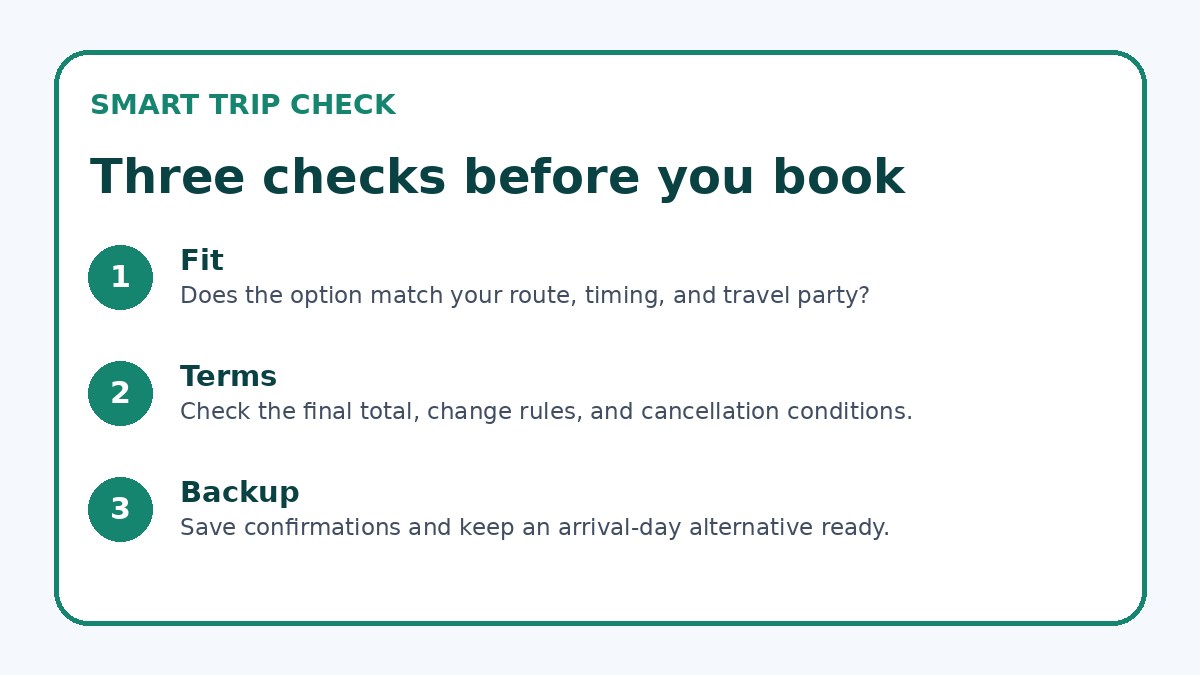
Decision tradeoffs: flexibility versus cost
Choosing flexibility usually means higher upfront cost, but it reduces the risk of expensive last-minute changes. For families with infants, unpredictable school schedules, or medical considerations, paying more for flexible fare conditions can save money and hassle later. Conversely, if your dates are fixed and you’re confident of travel, non-flexible fares with add-on seat reservations might be the most economical approach. Quantify the risk by comparing the change or cancellation fee a cheap fare charges against the premium for a flexible fare—this helps determine which option is cheaper under likely scenarios.
Also weigh convenience factors: refundable tickets often allow easier same-day changes or faster refunds, which can be crucial if you need money back quickly. But flexible fares sometimes restrict changes to specific channels (phone only, or within the provider’s app), so check how easy it will be to make amendments while on the move with children. If you value in-person help, confirm whether the operator or intermediary offers family-friendly customer service options at stations or by phone.
Before you book
- Confirm whether fare rules apply per passenger or per booking before completing payment.
- Verify seat reservation options and whether adjacent seats are guaranteed for family members.
- Compare change and cancellation fees versus the flexible-fare premium to calculate break-even.
- Check baggage, stroller, and car-seat allowances included with the fare.
- Save or screenshot the fare rules and the final provider booking page for future reference.
- Test the amendment process and customer-service channels so you know how to change a booking if needed.
How to compare options before booking
Create a simple comparison: list each provider or fare type across columns for change fee, refund policy, seat reservation rules, baggage, and child-specific terms. Where possible, simulate a change during the booking process to reveal likely fees or restrictions before you pay. Don’t rely solely on marketing language—open the detailed fare rules or terms and conditions and check for cut-off times and whether refunds are cash or credit. If you use third-party sites, confirm the final provider page; aggregator platforms sometimes show preliminary rules that differ from the supplier’s final terms.
If you’re shopping multiple channels, remember to check the provider’s own site last: that is usually the authoritative source for the exact fare conditions you will be charged. Keep an eye out for add-ons—seat selection, extra baggage, or priority boarding—and add those into your total family cost. Trip.com can be used as one place to compare current availability and conditions, but always verify the live fare rules on the carrier’s or ticket seller’s final booking page before you complete payment.
Frequently asked questions
Can I change only one person on a family booking without affecting others?
Some operators allow single-passenger changes on a multi-person booking, while others treat the whole booking as a unit. Whether you can change one name or date independently depends on the fare rules: flexible fares sometimes permit individual amendments, but non-flexible or group fares may require cancelling and rebooking the entire reservation. Before you buy, read the detailed terms on the provider’s booking page. If the online rules are unclear, contact customer service and request the specific policy in writing or save a screenshot of the response.
Are child discounts or infant rules usually compatible with flexible tickets?
Child and infant fares vary by supplier and fare class. Many carriers and operators offer discounted fares for children that can still be sold as flexible or refundable tickets, but the discount does not automatically extend to all change conditions. Check whether the child or infant ticket is separately refundable or changeable and whether any age verification or documentation is required at booking or travel. If travelling with infants who don’t occupy a seat, confirm how changes are handled because policies for lap infants can differ from those for children with seats.
If a flexible ticket offers travel credit instead of cash refund, how should families evaluate it?
Travel credits can be useful if you expect to travel again with the same provider and can use the credit before it expires. Families who travel frequently with the same operator may find credits convenient, but if your future plans are uncertain or you prefer liquidity, a cash refund is preferable. When considering a credit, check the expiry date, any blackout periods, and whether fees apply to rebooking. Confirm the credit’s transferability and whether it can be used by different family members on subsequent bookings.
Final planning note
Families deciding how to travel Brisbane to Sydney should balance the certainty of flexible tickets against the initial savings of low-cost fares. Start by listing how likely your plans are to change, whether you need adjacent seating and extra baggage, and how important a cash refund would be if you cancel. Use a simple comparison of the final fare rules—change fees, refund type, seating, and baggage—before you book, and save those terms. If convenience and peace of mind are priorities, paying a premium for flexibility can avoid costly last-minute hassles; if your travel dates are fixed, a well-planned low-cost fare with reserved seats can keep expenses down.
Continue planning
Check current options and final conditions
Use the provider page to confirm live availability, the final total, cancellation terms, and every condition that matters to your trip.
This evergreen planning guide was created with AI-assisted drafting and a structured quality review. It does not display live prices, schedules, availability, visa guidance, or provider rankings. Verify current details before booking. Some links are affiliate links; we may earn a commission at no additional cost to you.