
If you fly from New York City to Los Angeles for work, the practical choice is to build a pre-booking checklist that reflects your meeting times, luggage needs, loyalty program preferences, and tolerance for connection risk. Start with a clear decision: do you need a direct flight for an early meeting, or can a well-timed connection save money or open better schedule options? From there, layer in seat selection, carry-on versus checked luggage, airport transfer times on both ends, and how flexible your ticket must be. This article gives a concise, step-by-step approach to compare options and make a confident booking decision. It then walks through tradeoffs—what you gain or give up when prioritizing price, speed, or flexibility—so you can arrive ready for work rather than worried about logistics.
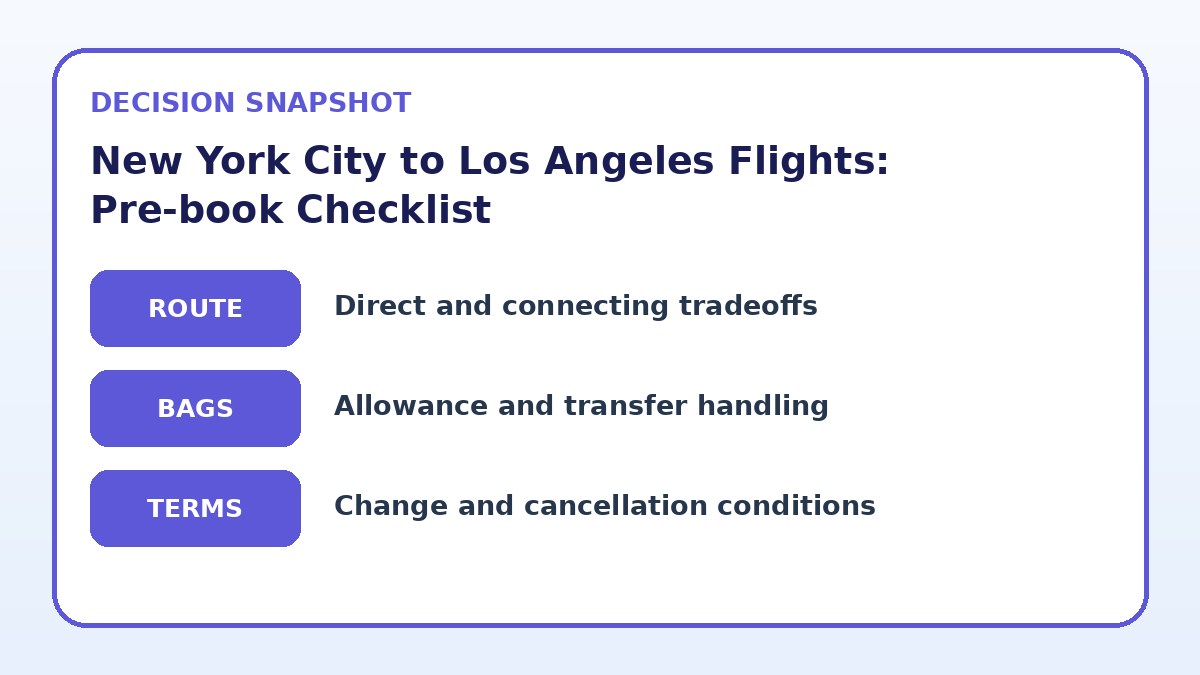
See current options before you compare the details
Availability and final conditions change. Open Trip.com now or keep reading for the practical comparison.
Define your trip priorities before you search
Begin by writing down the non-negotiable elements of this trip: meeting start times, required arrival window, whether same-day return is needed, and how many people or materials you’re transporting. For many business travelers, arrival window is the single biggest constraint—if you must be in downtown Los Angeles by 9 a.m., work backward from local transfer time, security, and potential delays to set an absolute latest landing time. Make sure your company’s approval process, expense rules, and any preferred carriers are noted before you start comparing itineraries.
Also list flexible preferences that influence tradeoffs: willingness to take a red-eye, accept a connection, or travel from a specific NYC airport. These preferences shape which fares and flight times you'll actually consider. If loyalty status matters for upgrades or lounge access, note that too—sometimes a slightly longer itinerary with a preferred carrier is worth the extra time because of faster rebooking and better disruption handling. Keep these priorities visible while you shop so you can quickly eliminate options that don’t meet your minimums.
Compare direct versus connecting options
Direct flights reduce complexity and often minimize overall travel time, but they can offer fewer schedule alternatives and sometimes higher fares. Connecting itineraries can open earlier or later travel windows, let you fly on preferred carriers for part of the journey, or increase seat availability when direct flights are sold out. When comparing, calculate door-to-door time: add transfer times at origin and destination plus the scheduled flight time and a buffer for delays. For many business trips, a connection that saves an hour on price is not worthwhile if it adds risk to arriving on time.
Always examine connection layovers carefully. Look for reasonable minimum connection times at the connecting airport, and check whether the connection is within one carrier alliance or requires switching terminals. If you must recheck luggage or change airports, the risk and time cost increase substantially. If a connection is attractive because of cost or schedule, ensure the layover provides a realistic cushion for likely delays and that rebooking options are acceptable under your company policy.
| Approach | Best for | Tradeoff to check |
|---|---|---|
| Direct flights only | Travelers with tight arrival windows and low tolerance for disruption | Fewer schedule choices and possibly higher fares |
| Connecting flights with short layovers | Business travelers seeking earlier or later windows while minimizing total travel time | Higher risk of missed connections and stress if delays occur |
| Connecting flights with long layovers | Those prioritizing schedule flexibility or lower fares with a buffer | Longer door-to-door time and potential downtime at the hub airport |
| Flexible refundable or changeable fares | Frequent travelers with unpredictable schedules or high-value meetings | Higher upfront cost but reduced disruption risk |
Ready to check the option that fits your plan?
Use your exact dates and traveler details so the provider page can show the current total and conditions.
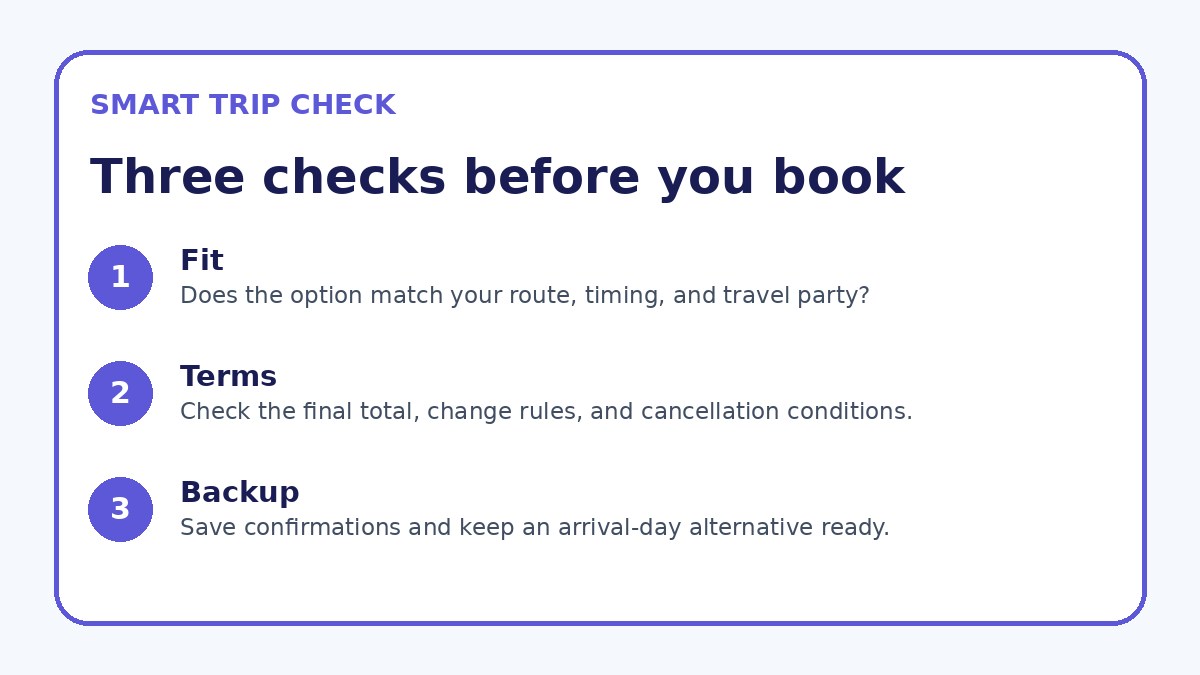
Match fare rules, flexibility, and loyalty benefits
Fare rules determine how easily you can change or cancel a booking, whether upgrades are permitted, and what fees you might face. For business travelers, flexibility often trumps the cheapest fare—confirm change and refund conditions before purchase and keep a clear record of the fare class or ticket code. If you rely on frequent-flyer status for upgrades, check whether the fare you select is eligible for accrual and upgrades. Also verify baggage allowances and seat-selection policies tied to that fare so there are no surprises at check-in.
When a policy or benefit appears critical—free same-day changes, guaranteed seat assignment, lounge access—read the airline’s final booking page to verify those claims. Don’t assume lounge access or priority services; these can vary by fare and route. If you use a corporate travel platform or travel manager, confirm whether the itinerary meets company limits on spend and preferred suppliers. For independent bookings, keep screenshots of the fare rules and any special conditions in case you need to argue a change or refund later.
Before you book
- Confirm the meeting times and required arrival window in Los Angeles, then calculate the latest acceptable local landing time including transfer and buffer minutes.
- Decide whether a direct flight is necessary; if considering connections, set a minimum layover buffer based on whether you will change terminals or recheck luggage.
- Review fare rules on the airline’s final booking page for change, cancellation, and refund terms; save screenshots or confirmations for your records.
- Check carry-on and checked-bag allowances for the selected fare class and plan luggage to avoid checked-bag delays on tight schedules.
- Compare door-to-door travel times including rideshare or shuttle estimates at your NYC departure and LAX arrival times of day; adjust flight choices accordingly.
- Verify loyalty accrual and upgrade eligibility for the chosen fare class, and confirm whether lounge access or priority services apply before completing the booking.
Practical logistics: airports, ground transfers, and seat choices
New York City has multiple major airports; Los Angeles has more than one airport option as well. Factor in the time and cost to travel between your office or hotel and each airport when choosing flights. During heavy traffic periods or peak hours, a ‘faster’ flight with a longer drive can be slower door-to-door. For airport transfers in both cities, research typical travel times for your departure and arrival time of day, and pick flights that leave an adequate buffer for local traffic, security lines, and ride-share wait times.
Seat selection and carry-on choices affect your on-the-ground speed. If you prefer to work inflight, pick a seat with power and workspace; if you need to dash straight to a meeting, sit near the forward exit and avoid checked luggage. Verify the airline’s carry-on allowance and consider bringing a compact garment bag or wrinkle-resistant clothing to minimize time at the hotel. Finally, decide whether lounge access or fast-track security is worth the expense for this trip, and confirm eligibility before booking.
Frequently asked questions
Should I always book a direct New York City to Los Angeles flight for business?
Not always. Direct flights reduce complexity and can be faster door-to-door, but they might limit schedule options or be more expensive. If your meeting time is strict and you cannot tolerate arrival risk, choose direct. If you need flexibility in departure or arrival times, or if direct options conflict with company policy or budget, a well-planned connection with an appropriate layover can work. Evaluate door-to-door travel time, transfer logistics, and whether the fare rules give you acceptable change or rebooking options.
How much buffer time should I build for travel between Manhattan and NYC airports or between LAX and downtown?
Buffer time depends on time of day, airport, and local traffic patterns. For morning peak hours, allow extra margin—often 60–90 minutes more than off-peak estimates. For late-night or midday travel, a smaller buffer may suffice. Also factor in time for security lines, check-in, and potential ride-share waits. If arriving for an important meeting, err on the side of more buffer and plan a transport option that has reliable timing. Consult traffic apps on travel day for a live estimate.
How do I decide whether to buy a refundable or changeable fare for a business trip?
Compare the cost difference with the value of flexibility to your employer and the meeting outcomes. If schedules are likely to change or the meeting would be costly to miss, a flexible fare can be a worthwhile insurance policy. Check the airline’s exact change and refund rules on the booking page: some fares offer free changes but limited refunds, others allow refunds with a fee. Consider corporate policy, the likelihood of changes, and whether you have status or credit options that mitigate penalties before opting for a higher-fare flexible ticket.
Final planning note
A clear pre-booking checklist turns an abstract flight search into a manageable decision tailored to business needs. Start with arrival windows and company policy, then compare direct and connecting options using door-to-door time as your primary metric. Verify fare rules, baggage allowances, and loyalty eligibility on the airline’s booking page before paying, and plan ground transfers with realistic traffic buffers. If you want a quick comparison of current availability, you can check an aggregator such as Trip.com, but always confirm rules and final fares on the carrier’s official page. With a concise checklist, you’ll book an itinerary that supports the work ahead rather than complicating it.
Continue planning
Check current options and final conditions
Use the provider page to confirm live availability, the final total, cancellation terms, and every condition that matters to your trip.
This evergreen planning guide was created with AI-assisted drafting and a structured quality review. It does not display live prices, schedules, availability, visa guidance, or provider rankings. Verify current details before booking. Some links are affiliate links; we may earn a commission at no additional cost to you.