Practical answer first: most solo travelers visiting central Bangkok will find public transport—BTS, MRT, buses, riverboats—and ride-hailing far more convenient and less stressful than renting a car. Choose a rental only if your itinerary focuses on wide-ranging day trips, early-morning or late-night movements outside transit corridors, or if you have a specific need for mobility and are comfortable driving in heavy Asian urban traffic. Below you’ll find direct comparisons, tradeoffs, and decision criteria to evaluate time, cost, safety, flexibility, and comfort. Use this to match transport to your travel style, then verify rental conditions, driving requirements, and exact transit routes and schedules on official provider pages before booking. For a quick availability check, you can compare current rental and transit options on Trip.com, but always confirm details with the provider you choose.
See current options before you compare the details
Availability and final conditions change. Open Trip.com now or keep reading for the practical comparison.
Getting around central Bangkok: why public transport often wins
Bangkok’s elevated BTS and underground MRT form a compact spine through major tourist and business areas. For solo travelers focusing on temples, markets, malls, and central neighborhoods, the rail network plus frequent buses and river boats typically covers most destinations while avoiding the stress of urban driving and searching for parking. Trains are useful during peak hours because they bypass queueing traffic and reduce the time you spend navigating unfamiliar junctions. Combining rail with short taxis, tuk-tuks, or ride-hailing apps gives flexibility without the responsibilities that come with a rental car.
Another advantage for solos is safety and predictability: following fixed routes and official stations makes it easier to plan single-day itineraries or meet other travelers. Public systems reduce the need to read local road signs, learn narrow streets, or negotiate parking fees and potential fines. For travelers prioritizing low-stress movement, especially those new to the city or preferring to drink, relax, or carry smaller luggage, public transport is usually the simplest, most efficient choice for central Bangkok.
When a Bangkok car rental makes sense for solo travelers
Renting a car becomes practical when your trip includes multiple destinations beyond central Bangkok—national parks, coastal towns, or dispersed attractions that have infrequent or slow public services. A car lets you control departure times, stay later at spots without late-night transit, and carry equipment or larger luggage without repeated transfers. If you value on-your-schedule freedom and are comfortable with local traffic patterns, tolls, and navigating city outskirts, a rental can reduce transit friction for an itinerary that public transport would serve poorly or require long waits to complete.
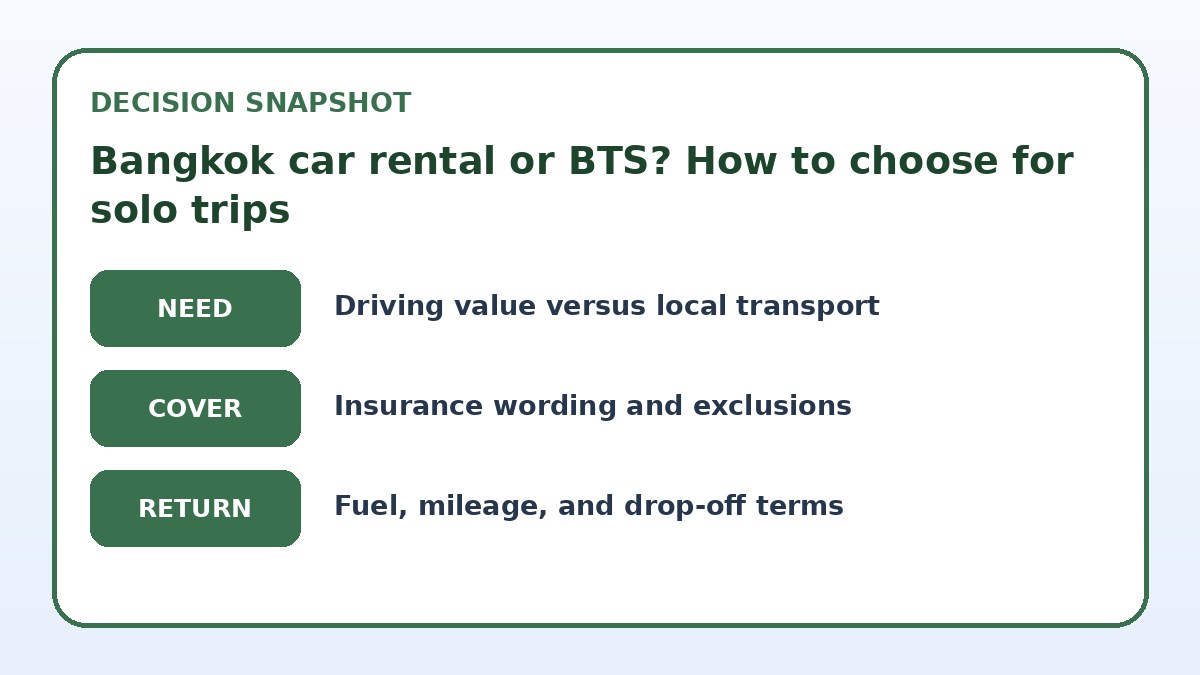
However, driving in and near Bangkok demands attention: congested highways, complex interchanges, and limited parking in dense neighborhoods add planning overhead. Budget time for parking searches and verify where you'll be allowed to stop, especially near tourist sites. If you choose to rent, read the rental agreement carefully for mileage limits, fuel policy, cross-border rules, insurance inclusions and exclusions, and the exact requirements for using foreign driver’s licenses or an International Driving Permit.
| Approach | Best for | Tradeoff to check |
|---|---|---|
| Public transport (BTS/MRT/buses/boats) | Solo travelers staying in central Bangkok or following fixed itineraries within the city. | Less flexibility for rural day trips; some late-night routes may be limited. |
| Bangkok car rental (self-drive) | Solos planning multi-stop day trips outside the city or needing full schedule control. | Adds navigation, parking, tolls, and insurance complexity in heavy traffic. |
| Ride-hailing + transit hybrid | Travelers wanting convenience in the city without full-time car responsibilities. | Can be more expensive than transit for many transfers; surge pricing may apply. |
| Guided day tours (coach or private) | Solos who want to visit remote sites without driving or planning logistics. | Less independence on timing and less opportunity to linger where you choose. |
Ready to check the option that fits your plan?
Use your exact dates and traveler details so the provider page can show the current total and conditions.
Comparing costs, time, and convenience realistically
Don’t assume driving is cheaper once you factor in fuel, tolls, parking, and rental insurance. Public transport often gives lower per-trip costs inside the city and predictable travel times on rail lines during rush hours. When calculating the value of a car, include the mental cost of navigating unfamiliar traffic and the time you’ll spend finding parking or waiting at toll booths. Also consider peak-hour congestion: a short distance by car may take much longer than an equivalent train journey during rush hour.
Time flexibility is where a rental car shines for certain itineraries—if your day includes multiple rural stops or places poorly connected by transit, driving can save hours compared with waiting for infrequent buses or arranging multiple transfers. For safety and convenience in the evening, ride-hailing can bridge gaps without committing to a car full-time. Build a simple spreadsheet comparing estimated ride-hailing fares, rail fares, rental daily rates, likely parking fees, and expected travel times to see which option better matches your priorities.
Before you book
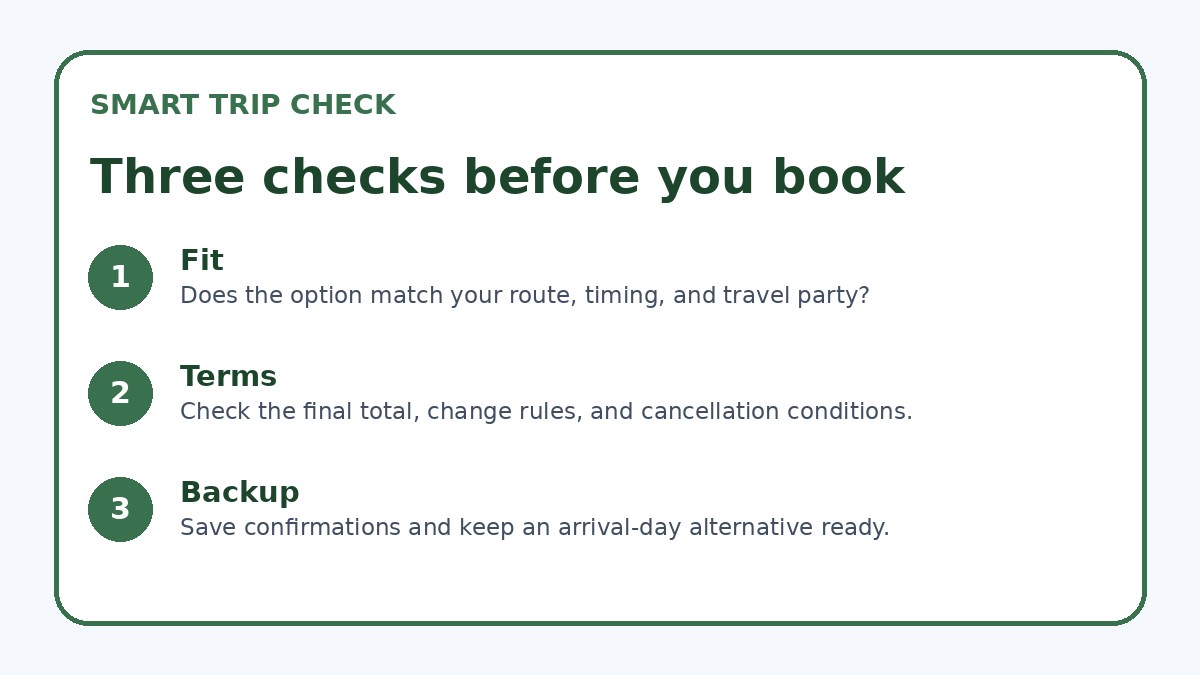
- List your must-see sites and mark which are inside central transit corridors versus outside city limits.
- Check whether your driver’s license is accepted and whether you need an International Driving Permit for car rental.
- Ask the rental company about insurance coverage, liability limits, and specific exclusion clauses before booking.
- Compare total trip costs: rental rate plus likely fuel, tolls, parking, and estimated ride-hailing fares for alternative plans.
- Verify public transit station locations and last-train or last-boat times for your planned evening movements.
- Download local transit and ride-hailing apps and store emergency contacts, including embassy and local roadside assistance.
Safety, local laws, and practicalities to check before booking
Before selecting a Bangkok car rental, verify which driver documents the rental company requires and whether your license needs an International Driving Permit. Confirm what the insurance covers—third-party, collision damage waiver, and theft protection—and read exclusions carefully, such as coverage voided by off-road use or traffic violations. Also check the provider’s fuel policy, mileage limits, and protocols for cross-border travel if you plan to drive outside Thailand. These contract details change often and should be confirmed on the final booking page.
For public transport, confirm station closures, special-route suspensions, and any service advisories on official transit websites or apps before you travel. When using ride-hailing or taxis, understand payment options and expect to estimate fares for longer rides in heavy traffic. Whether you drive or ride, plan for the last mile: know where you can safely be dropped off at night and how to access walking routes or elevators at major stations. These small checks make a big difference to convenience and safety for solo travelers.
Frequently asked questions
Is a Bangkok car rental safe for a solo traveler unfamiliar with Thai roads?
Driving in Thailand is common, but safety depends on your experience and comfort with heavy urban traffic, roundabouts, and local driving behaviors. If you are confident driving abroad, comfortable with left-side traffic rules, and willing to accept the stress of congestion and parking searches, a rental can be safe. If you’re less experienced or prefer lower-stress travel, public transport and ride-hailing reduce exposure to road risk and let you rely on established routes and local drivers. Always confirm insurance and roadside assistance details with the rental company before you drive.
How do I decide between renting a car and taking guided day tours from Bangkok?
Compare what you want to see, how flexible you need to be, and whether you want the logistics handled. Guided tours are convenient for single-day trips to specific attractions with fixed itineraries and transport included, which removes planning and navigation duties. Renting a car gives total independence and the ability to customize stops and schedules. Consider cost, driving comfort, and whether you prefer to have a local guide’s context versus driving and exploring on your own.
What paperwork and practical checks should I make before booking a Bangkok car rental?
Confirm acceptable driver documentation (foreign license rules or International Driving Permit), the exact insurance coverages and deductibles, and any geographical restrictions on the rental (for example, cross-border driving). Ask about fuel policy, mileage limits, procedures for accidents or breakdowns, and what ID and credit card holds the company imposes. Ensure the vehicle condition is documented at pickup, and take photos of any pre-existing damage. Check the provider’s cancellation and modification terms on the booking page before finalizing.
Final planning note
For most solo travelers staying in central Bangkok, public transport combined with occasional ride-hailing offers the best balance of convenience, predictability, and lower hassle. Rent a car if your itinerary requires flexibility for remote day trips, infrequent transit links, or carrying bulky gear; be ready to handle navigation, parking, and contractual details. Use the decision checklist above to compare total costs and risks against your priorities, and verify driving requirements, insurance, and rental terms directly on the provider’s booking page. If you want a quick cross-check of current rental listings and transit options, Trip.com can show availability, but always confirm specifics with the supplier before you commit.
Continue planning
Check current options and final conditions
Use the provider page to confirm live availability, the final total, cancellation terms, and every condition that matters to your trip.
This evergreen planning guide was created with AI-assisted drafting and a structured quality review. It does not display live prices, schedules, availability, visa guidance, or provider rankings. Verify current details before booking. Some links are affiliate links; we may earn a commission at no additional cost to you.