
If your priority is a reliable, time-efficient journey between Bangkok and Chiang Mai for business, decide first whether minimizing travel time or maximizing predictability matters more. For most corporate travelers who need the shortest door-to-door transit with reasonable flexibility, a flight will usually be the practical default—provided you compare total transfer times, airport check-in requirements, and the final arrival location in Chiang Mai. Trains and overnight options can win when you need a working environment on board or want to avoid morning commute stress, while private cars or shared transfers offer the most control for tight itineraries and multi-stop ground meetings. Read on to compare tradeoffs, the decision criteria that matter for business travel, and a checklist of what to verify before you book.
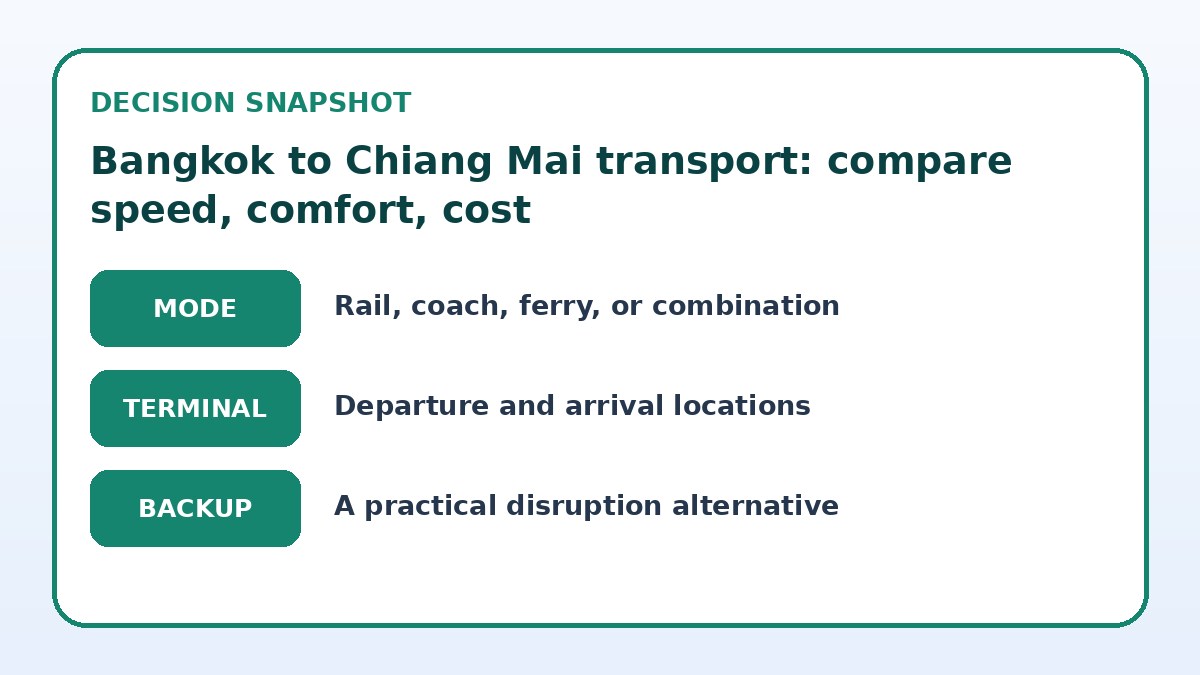
See current options before you compare the details
Availability and final conditions change. Open Trip.com now or keep reading for the practical comparison.
Core decision factors for business travelers
Start by mapping your full door-to-door timeline, not just transit duration. Include the time to reach Bangkok departure points, recommended arrival lead times for flights or trains, the transfer from the arrival point to your Chiang Mai meeting location, and contingency time for delays. Business trips often hinge on punctuality: a marginally faster connection that adds uncertainty might be worse than a slightly slower but more predictable option. Also factor in how you plan to work during transit—whether you need stable Wi‑Fi, a flat surface to use a laptop, quiet for calls, or privacy for confidential materials.
Budget and company travel policy matter but don’t override practical needs. If expense approvals permit, prioritize the option that reduces risk to your itinerary. Consider luggage and equipment: laptops and presentation materials can be easier to manage on a car transfer, while flights usually have strict cabin and hold rules. Finally, factor in your personal productivity style—some people use travel time to rest and arrive refreshed, while others prefer to work en route. Your ideal choice balances schedule reliability, on-board workability, and total door-to-door time.
When to favor flights for Bangkok–Chiang Mai travel
Flights typically win when you must minimize time away from the office. But don’t evaluate a flight purely by airborne minutes: add the time to get to the departure airport, recommended pre-departure check-in or security windows, and the onward transfer from the Chiang Mai airport to your meeting. For short business trips with morning or late-afternoon meetings, flying can compress travel into a few hours and preserve evenings for work or networking. Also check whether flights operate direct or require connections; connecting itineraries introduce complexities that erode the flight’s time advantage.
For business use, examine seat comfort, inflight Wi‑Fi availability, and whether a flight class upgrade or priority boarding will materially affect your productivity. If you need to join calls immediately after landing, ensure you can reach your meeting location quickly and that local transportation options align with your schedule. Before booking, verify baggage allowances, rebooking policies, and any restrictions that could disrupt a tight itinerary. Always check the provider’s final booking page for current schedules, exact terminal information, and any conditions that might affect your travel day.
| Approach | Best for | Tradeoff to check |
|---|---|---|
| Air (direct flight) | Minimizing total door-to-door time for single-stop business trips | Includes airport transfers and security time; subject to schedule change or delays |
| Overnight train | Preserving daytime hours by traveling while sleeping or avoiding airport processes | Slower in elapsed time than flying; requires suitable arrival and departure times |
| Private car/transfer | Tight multi-stop itineraries, equipment-heavy travel, or maximum schedule control | Can be slower and affected by road conditions; often higher cost than shared options |
| Shared coach or ride | Lower-cost ground transfer with reasonable predictability for non-urgent meetings | Less flexibility on departure and pick‑up times; variable comfort and workspace |
Ready to check the option that fits your plan?
Use your exact dates and traveler details so the provider page can show the current total and conditions.
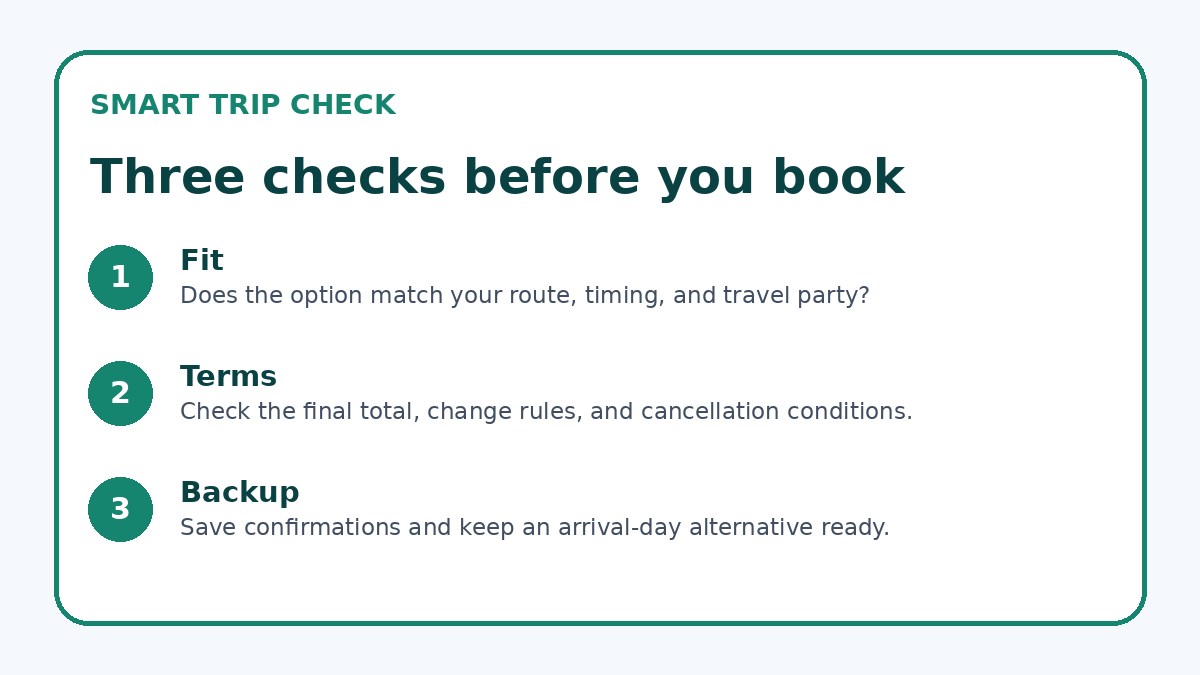
When the train or overnight service makes sense
An overnight train can be an efficient choice if you prefer to travel during non-working hours and save daytime for meetings. Trains that operate at night let you convert transit time into sleep, lowering jet‑lag‑style fatigue and delivering you to Chiang Mai in the morning ready for appointments. Trains also often offer more space to move around, which can help with stretching between long meetings, and a stable environment for focused work if you can secure a quiet compartment. However, trains vary widely in comfort and services, so evaluate cabin configuration and whether sleeping berths or private compartments match your needs for rest and confidentiality.
Choose rail when your timetable aligns with reliable overnight services and when you value minimizing transfers and the hassle of airports. For longer daytime journeys, sleeper options can be preferable to a daytime flight if you want to avoid transit stress and reduce carbon footprint, though flights still win on pure speed. Confirm connectivity options for calls, charger access, and baggage handling rules on the train provider’s booking page before buying. Also check arrival timing against your first meeting; trains that arrive too early or late may introduce waiting time or tight connections with other ground transport.
Before you book
- Calculate full door-to-door time including transfers, expected check-in, and local travel at each end.
- Verify on the provider booking page whether the option is direct or requires a connection and how long each layover is.
- Confirm onboard amenities you need for work: Wi‑Fi, power outlets, table space, and quiet compartments or seat classes.
- Check baggage rules and whether any special equipment or presentation cases require advance notification.
- Review change, cancellation, and rebooking terms for business flexibility and possible last-minute schedule slips.
- Plan a time buffer for unexpected delays and identify backup options (next flight, alternative train, or private transfer).
Ground transfers: control, comfort, and contingency
A private car or professional transfer gives you the most control over departure times and door-to-door routing, especially useful when you have meetings outside central hubs, multiple stops, or bulky equipment. Ground travel removes the need for airport procedures and can be scheduled to sync precisely with your appointments, reducing the need to factor in strict check-in windows. That said, road travel may be slower and subject to traffic unpredictability; weigh the predictability of your route at the time of day you’ll travel and consider alternate routes if possible.
Shared rides or chauffeur services can be cost-effective but come with varying levels of reliability and comfort—verify vehicle class, cancellation policies, and driver credentials on the booking page. When selecting ground transport, ask about onboard Wi‑Fi, power outlets, and whether the vehicle offers a quiet environment for calls. For contingency planning, build buffer time into your schedule and know the options for last-minute changes or reroutes, since road incidents or unexpected congestion can erode even carefully planned itineraries.
Frequently asked questions
How should I compare total travel time between flight and train options?
Compare door-to-door time, not just airborne or on-rail hours. Add time to reach departure points, recommended pre-departure windows, and transfer time at your destination. For flights, include time for security, baggage, and airport transit to central Chiang Mai. For trains, factor in time to the station, boarding windows, and the station-to-meeting transfer. Also consider typical variability—flights can be delayed by weather and air traffic, while trains and road transfers are affected by rail schedules and traffic respectively. Sum the typical and worst-case scenarios to see which choice meets your meeting constraints.
Can I be productive while traveling between Bangkok and Chiang Mai?
Yes, but productivity depends on the mode. Trains and private cars can offer more stable workspaces and fewer interruptions, especially if you can reserve a private compartment or a quiet vehicle. Flights provide concentrated time for focused tasks but may lack stable Wi‑Fi and can limit continuous laptop use during takeoff and landing. Wherever you travel, check for power outlets and connectivity on the provider’s booking page, download materials for offline use, and schedule calls around likely noisy or restricted periods. Choose the option that matches whether you need uninterrupted time, a place to rest, or reliable connectivity.
What must I verify on the booking page before finalizing a corporate trip?
Always confirm the exact departure and arrival locations, whether the service is direct or involves connections, the allowed check-in or boarding times, and any restrictions on changes or refunds. Check seat/compartment type, accessibility of power and connectivity, and baggage allowances if you carry equipment. For ground transfers, verify vehicle class, driver meeting point, and cancellation policy. If you need invoices or corporate documentation, ensure those are provided. Lastly, confirm pickup and drop-off addresses to calculate accurate door-to-door time before you commit.
Final planning note
For most business travelers, the practical choice between Bangkok and Chiang Mai comes down to whether you need the shortest possible door-to-door time or the most predictable, work-friendly environment. Flights often shorten travel days, while overnight trains and private ground transfers can protect working hours or provide greater schedule control. Use the decision criteria outlined here—full door-to-door timing, work needs, luggage, and contingency flexibility—to match the option to your meeting schedule. Before you book, verify directness, exact departure and arrival points, onboard amenities, and change policies on the provider’s final booking page. If you want a quick cross-check of current availability, you can also compare options on Trip.com as one reference point.
Continue planning
Check current options and final conditions
Use the provider page to confirm live availability, the final total, cancellation terms, and every condition that matters to your trip.
This evergreen planning guide was created with AI-assisted drafting and a structured quality review. It does not display live prices, schedules, availability, visa guidance, or provider rankings. Verify current details before booking. Some links are affiliate links; we may earn a commission at no additional cost to you.