
If you’re traveling to Seoul with extra luggage—oversized suitcases, sports gear, or multiple bags—your top priority at booking should be proximity to transport that minimizes walking, stairs, and tight transfers. Look for hotels within a short walk of major subway stations with multiple exits, near airport rail (AREX) stops, or on bus routes that allow curbside loading. Ground-floor lobbies, dedicated luggage storage, and hotels with accessible elevators all reduce the friction of moving luggage. Choose a neighbourhood with straightforward onward options (few transfers, wide station elevators, and taxis that can queue outside). This guide explains the practical tradeoffs—cost vs convenience, neighbourhood vibe vs transport access—and gives clear check points to use before you book so you can make the smoothest arrival and daily travel decisions.
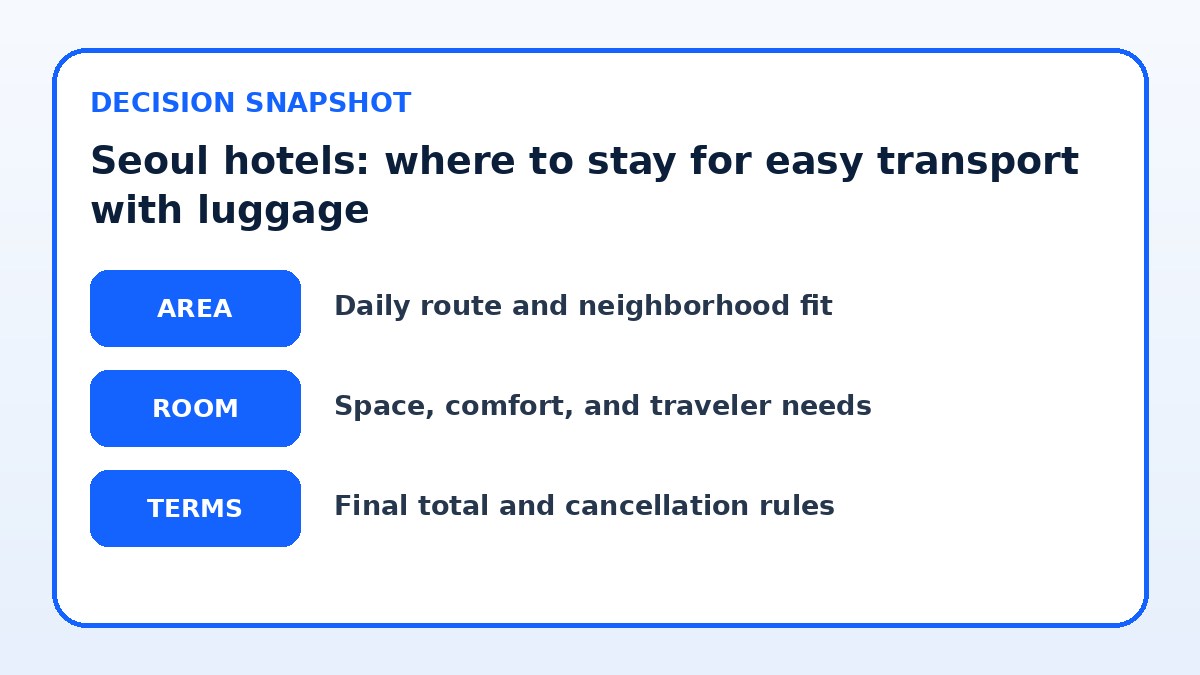
See current options before you compare the details
Availability and final conditions change. Open Trip.com now or keep reading for the practical comparison.
Which transport links matter most for luggage-heavy travelers
For people carrying extra luggage, not all transport links are equal. Direct connections to the airport (airport rail or express buses), subway lines with clear, step-free exits, and surface-level taxi stands are the most useful. Airport rail stations with a single-level transfer to the platform remove the need to navigate stairs or long pedestrian tunnels. Similarly, subway stations with well-marked elevators and multiple exits clustered close to hotel districts cut walking distances and avoid repeated escalator transfers. Prioritise modes that let you board near curbside rather than down narrow staircases or long passageways.
Don’t ignore practical details: some popular subway stations have exits clustered on different streets or connected by underpasses long enough to be a challenge with large cases. A hotel may advertise a ‘nearby station’ but that could mean a 10–15 minute walk or a route through stairs and ramps. Compare the hotel’s map with the station exit numbers and check whether elevators are present on the route. If you plan to use taxis, look for hotels with a dedicated drop-off lane or a recognized hotel entrance that drivers can access quickly.
Tradeoffs: location, price, and luggage convenience
Choosing a hotel purely for luggage convenience sometimes means trading off price or neighbourhood character. Hotels immediately adjacent to major stations or airport-rail stops are often in commercial areas with fewer quiet streets and smaller rooms; they can also carry a premium for the convenience. Conversely, quieter residential neighbourhoods may offer larger rooms for the money but require longer walks or an extra transfer to reach the nearest station with elevators. Decide whether shorter transit walks and fewer transfers are worth paying a bit more or having a smaller room.
Another common tradeoff is between direct access and surface-level amenities. A hotel near a subway hub might put you within easy reach of attractions and trains, but street access could be crowded and noisy. A slightly farther property on a main bus route or with a hotel shuttle can reduce stair handling and give a calmer stay. Balance your tolerance for carrying luggage up short flights of stairs against the benefits of quieter streets or cheaper nightly rates; your personal mobility and the total number of transfers in your itinerary should guide the choice.
| Approach | Best for | Tradeoff to check |
|---|---|---|
| Stay by a major subway hub | Quick transfers to many city lines and short walks to attractions | Noise, smaller rooms, and possible stairs between street and platform |
| Book near an airport-rail stop | Lowest transfer friction for airport arrivals and departures | May be in a commercial zone with fewer local amenities and higher rates |
| Choose a hotel with dedicated taxi/drop-off access | Door-to-door convenience when keeping luggage handling minimal | Taxi costs add up and peak traffic can lengthen travel times |
| Pick a quieter residential hotel with shuttle or bus access | Larger rooms and calmer stay with manageable transfers | Often requires a short shuttle or bus ride, adding time and coordination |
Ready to check the option that fits your plan?
Use your exact dates and traveler details so the provider page can show the current total and conditions.
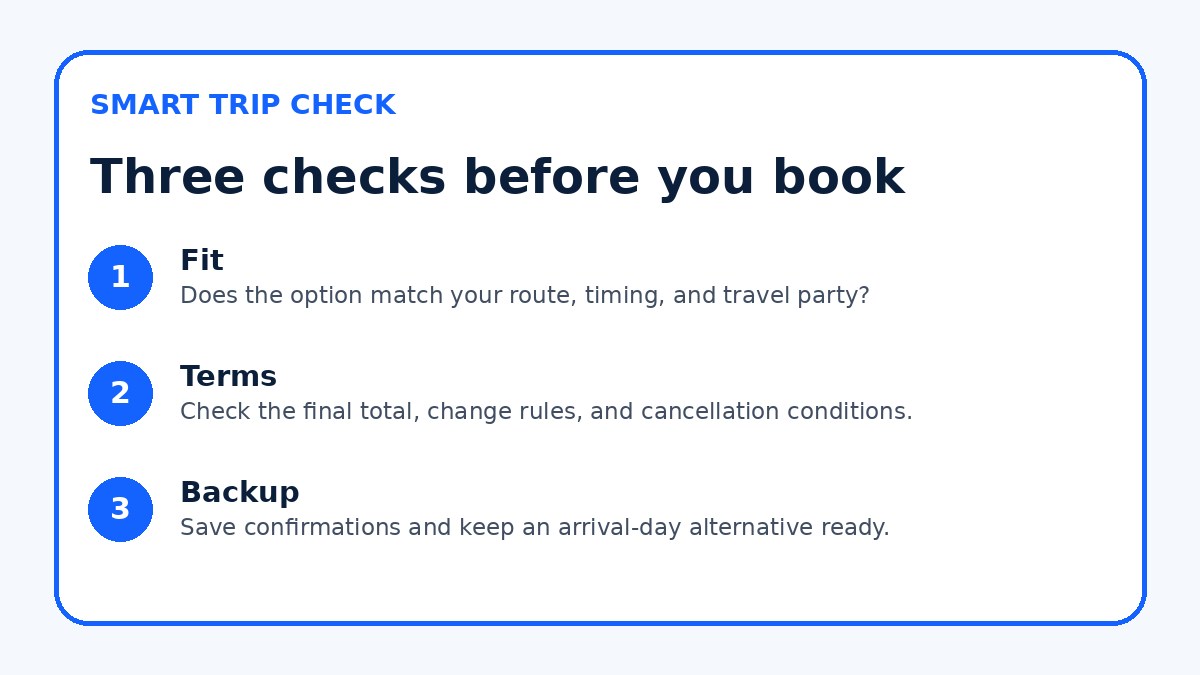
How to verify luggage-friendly features before booking
When you’ve shortlisted hotels, verify specific facts on the hotel or booking page: presence of ground-floor or covered drop-off, availability of bell service or porters, elevator access from street to lobby, and whether the property stores luggage before check-in or after checkout. Don’t assume an ‘accessible’ elevator exists just because a hotel says it’s near a station—cross-check with station maps and the hotel’s directions. If the hotel lists an address, open a map and measure the walking route from the nearest station exit; note whether the path includes stairs, underpasses, or long sidewalks.
If provider-specific details could change, specifically ask the hotel (email or phone) about elevator locations and whether porters are available for heavy items, and verify rooftop or courtyard access for bringing luggage to rooms. For airport connections, confirm whether the hotel is within the airport-rail operator’s preferred transfer zone or whether an extra short taxi is commonly used. You can use Trip.com as one place to compare availability, but always confirm loading zones, bell-service hours, and elevator access directly on the property’s booking page or with hotel staff.
Before you book
- Open a map and measure the walking route from hotel address to the nearest station exit; note any stairs or long underpasses.
- Confirm on the hotel page whether a street-level drop-off or covered entrance exists and ask staff if unsure.
- Check station exit maps for elevators and record the exit number that puts you closest to the hotel entrance.
- Ask the hotel about bell service, luggage storage before check-in, and whether staff can meet you at a specific exit.
- Plan arrival options: identify the nearest airport-rail stop, suitable taxi stands, and any shuttle services the hotel offers.
- Pack a compact wheeled bag for city movement and keep fragile or high-value items in a carry-on you can shoulder easily.
Practical arrival and daily travel tips with heavy luggage
On arrival, aim to use transport that minimises transfers: pick the airport-rail option that drops you nearest your hotel’s station or a taxi if you have a lot of luggage and your budget allows. If you must use the subway, identify the station exit number that’s closest to your hotel and note elevator access ahead of time. Leave non-essential items at the hotel luggage storage if you have early arrival and a late check-in. For daily outings, plan routes that avoid multiple line changes and factor in elevator locations at intermediate stations.
Pack a lightweight trolley or wheeled backpack for short trips inside the city rather than dragging suitcases onto short rides. When booking day trips or intercity trains, check platform access and station layouts to see if staff assistance or elevators are available. Keep a small travel kit with straps and luggage locks handy and have the hotel’s phone number in your contacts so you can call for help or ask staff to meet you at a particular exit when arriving with bulky items.
Frequently asked questions
Is it better to stay near Seoul Station or a neighborhood subway hub when I have a lot of luggage?
Seoul Station is a major transport node with airport-rail connections and long-distance trains, so it’s convenient for arrivals or departures with large luggage. However, a neighbourhood subway hub closer to your planned activities can reduce daily handling. Compare the exact walking distance, elevator availability, and whether your hotel has a nearby drop-off. If your schedule includes early airport travel, the proximity to airport-rail at Seoul Station can outweigh quieter neighbourhood benefits; for multi-day city exploration, a central hub near attractions might save repeated long carries.
Are taxis usually better than public transit in Seoul when traveling with extra bags?
Taxis remove the need to navigate stairs and elevators and can be worth the cost for heavy or bulky luggage, door-to-door convenience, and travel at odd hours. However, traffic congestion can increase travel time and fare. If you want to avoid uncertain traffic delays, choose hotels near direct airport-rail or subway lines with elevator access. When relying on taxis, confirm your hotel has a clear drop-off point and consider ride-hailing apps or calling the hotel to request a taxi that can load luggage at the entrance.
How can I check if a Seoul subway station has elevators or easy luggage routes?
Look up the station on the subway operator’s official map or the station’s page and find the exit map; elevator symbols and accessibility icons indicate step-free routes. Cross-check the hotel’s directions for the recommended exit number and then inspect the walking path on a mapping app for stairs, long underpasses, or narrow sidewalks. If the online information is unclear, email the hotel and ask which exit they recommend for guests with luggage and whether staff will meet you there. For reliability, plan a route that uses confirmed elevator-equipped exits.
Final planning note
When you travel to Seoul with extra luggage, the right hotel can turn a stressful transfer into a straightforward arrival. Prioritise proximity to airport rail or subway exits with elevators, a clear street-level drop-off, and hotel services like porters or luggage storage. Expect tradeoffs between convenience, cost, and neighbourhood atmosphere, and verify elevator locations, drop-off details, and bell-service availability on the hotel’s booking page or by contacting staff directly. Measure walking routes from specific station exits and plan arrivals to use the least number of transfers. With those checks done, you’ll spend less time hauling bags and more time enjoying the city.
Continue planning
Check current options and final conditions
Use the provider page to confirm live availability, the final total, cancellation terms, and every condition that matters to your trip.
This evergreen planning guide was created with AI-assisted drafting and a structured quality review. It does not display live prices, schedules, availability, visa guidance, or provider rankings. Verify current details before booking. Some links are affiliate links; we may earn a commission at no additional cost to you.