If you're planning to rent a car in London with your family, the single most practical step is to read the rental agreement’s insurance section line by line and get any verbal promises in writing. Focus on four things: what the basic liability and collision protections actually include, the size and type of excess (deductible), whether the insurer limits who can drive the car, and what exclusions apply for things parents commonly do — for example, child-seat-related damage, driving in low-emission zones, or crossing certain bridges or borders. Don’t rely solely on what a website summary or call agent says; insurance wording often uses specific phrases that change the cover you assume you have. Armed with the right questions and a checklist, you’ll be able to compare policies and make a confident decision for your family’s needs.
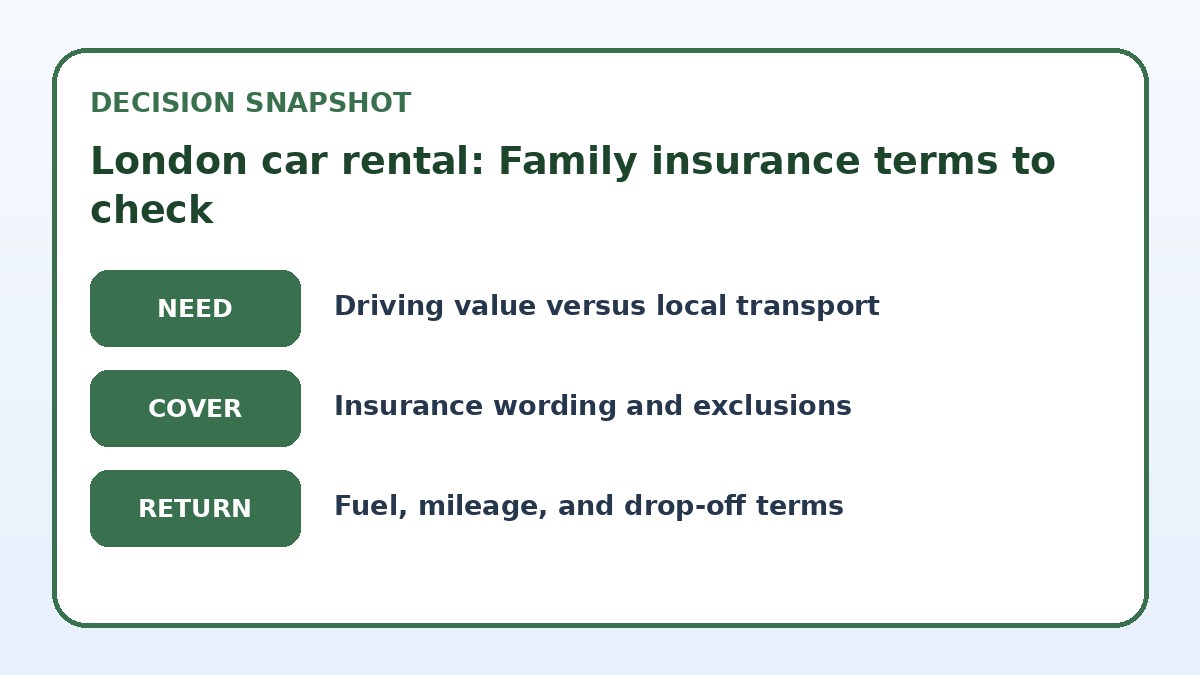
See current options before you compare the details
Availability and final conditions change. Open Trip.com now or keep reading for the practical comparison.
Know the main cover types and what they actually protect
Rental contracts use a few standard terms — liability, collision/comprehensive, CDW (collision damage waiver), theft protection, and third-party cover. For families, liability and third-party cover are important because they pay for damage or injury you cause to other people or their property. Collision or comprehensive covers damage to the rented car itself, but the wording often carries conditions: some CDWs still allow the company to charge for ‘administration fees’, ‘loss of use’, or damage due to negligence. That means a line like “CDW applies subject to terms” should prompt you to ask what those terms are and for examples of previously denied claims.
Also look for language about partial versus total loss and whether depreciation or wear-and-tear is excluded. Family rentals can include small fender-benders or child-related spills that some providers treat differently. If the policy says it excludes ‘cosmetic damage’ or ‘interior staining’ without defining those terms, clarify what counts and whether you’d be charged. Finally, check whether theft protection requires that you lock and secure child seats and belongings — failure to follow specified steps might void cover.
Excess (deductible) and deposit: effective costs, not just headline numbers
The excess is the amount you must pay if a claim is made and is often the clearest risk family renters face. Contracts may list the excess as a flat figure, but the wording can specify circumstances where it increases — for example, if an unauthorized driver was at the wheel or if the policy excludes certain roads. Ask whether the excess is reduced by partial waivers, whether it’s refundable when a claim is closed, and whether it applies per claim or per rental day. Some firms take a security deposit equal to the excess on a card hold; check how long that hold remains and what proof is needed to release it.
Many renters buy an excess-reduction product or third-party insurance to lower their out-of-pocket exposure. When reading the wording for those, confirm if they are reimbursements (you pay the rental company first and claim later) or direct-waiver arrangements (the provider liaises with the rental company). Reimbursement products often specify required documentation and time limits for submitting claims — families should plan where they’ll store accident photos, police reports, and rental paperwork so you can support any claim quickly.
| Approach | Best for | Tradeoff to check |
|---|---|---|
| Rely on just the rental company’s standard insurance | Travelers wanting simplicity and minimal paperwork | May leave gaps or higher excesses and often requires a large deposit; wording may include exclusions families don’t notice. |
| Buy the rental company’s excess-reduction product | Families wanting lower on-the-spot liability | Can be convenient but read terms: some waivers still exclude key scenarios and may not cover all drivers. |
| Purchase an independent third-party policy (reimbursement model) | Cost-conscious families who keep careful records | Typically requires you to pay first and claim later, plus strict documentation and longer reimbursement times. |
| Use a credit card rental insurance benefit where available | Families with suitable card coverage who prefer automatic protection | Card benefits vary widely and often exclude young drivers, additional drivers, or certain vehicle classes — verify wording exactly. |
Ready to check the option that fits your plan?
Use your exact dates and traveler details so the provider page can show the current total and conditions.
Authorized drivers, age rules, and temporary driver clauses
Rental insurance commonly ties cover to named or authorized drivers. For families, this matters when parents swap driving duties or when grandparents are added. The wording may insist additional drivers be registered before driving; otherwise, insurance can be voided. Look for explicit statements about age ranges and surcharges: young drivers or very senior drivers might be allowed but only with additional fees or limits on cover. Some policies also restrict coverage to drivers who have held a valid licence for a minimum number of years — typically one to three years — so confirm that everyone who may drive meets those criteria.
Also read any clause about temporary or emergency drivers — for example, what happens if the primary driver becomes ill and someone else takes over. Some contracts permit this but require immediate notification and documentation. If you expect to have multiple drivers during the trip, get them added in advance and verify whether adding a driver alters your excess, changes exclusions, or triggers additional requirements such as a local driving permit.
Before you book
- Request and save a copy of the rental agreement’s insurance section before you book and again when you pick up the car.
- Verify the excess amount and whether an excess-reduction option reimburses you or directly reduces the rental company’s charge.
- Confirm every intended driver is listed and meets the policy’s age and licence-duration requirements.
- Photograph the vehicle’s interior and exterior at collection and note mileage and fuel level on the rental record.
- Ask the provider to clarify any ambiguous terms in writing, such as “cosmetic damage,” “loss of use,” or geographic exclusions.
- If using third-party or credit-card cover, check claim instructions, required documents, and submission deadlines before renting.
Common exclusions and family-specific pitfalls to watch for
Exclusions are where surprising costs appear. Watch for clauses that exclude cover for driving in restricted zones, on unpaved roads, or when towing child trailers or bikes. If you plan to use roof boxes, trailers, or child-seat adapters, confirm they’re permitted and whether damage or loss related to such equipment is covered. Another frequent exclusion is damage caused by food, drinks, or child-related mess; some providers charge cleaning fees rather than claim under insurance, and those charges may be billed regardless of cover for physical damage.
Also check rules about cross-border travel: some policies exclude travel outside the UK or require a written extension to cover travel into Ireland or mainland Europe. If you plan day trips beyond London or intend to drive to ports or airports for onward travel, verify exactly what geographic limits apply. The contract should state what documentation you need if you intend to cross borders, such as a green card or written permission; confirm those requirements on the provider’s final booking page before you finalize the reservation.
Frequently asked questions
Can I rely on credit card insurance for a family car rental in London?
Many credit cards offer rental insurance benefits, but coverage varies and often comes with key conditions. For family rentals, check whether the card covers additional drivers, child-related damage, and drivers under a certain age. Confirm whether the card’s insurance is primary or secondary (some cards only reimburse after the rental company’s policy), and whether it excludes certain vehicle categories or international travel. Always read the card issuer’s rental-vehicle insurance terms and get written confirmation of applicable conditions before declining other cover.
If my child damages the car interior, will insurance cover cleaning or replacement?
Interior damage and cleaning charges are treated inconsistently across providers and may be excluded or limited in standard policies. Some contracts specifically exclude ‘stains, odours or interior contamination’ and treat them as cleaning fees billed separately. Others may include interior damage under comprehensive cover if it’s accidental and reported promptly. The only safe approach is to ask the rental company to define what counts as chargeable interior damage and to have them document the condition at pickup and return; if possible, negotiate an explicit answer in writing.
What should I do immediately after a minor accident or damage in London?
First, ensure everyone is safe and move to a safe place. Then follow the rental company’s required steps: document the scene with photos, exchange details with other parties, obtain a police or incident report if recommended or required, and notify the rental company within their specified timeframe. Keep all paperwork and receipts and note the time and names of anyone you spoke to. If you’ve bought independent reimbursement cover, start its claims process promptly and preserve the rental agreement and damage report; late submissions can invalidate reimbursement claims.
Final planning note
For families renting a car in London, the difference between a smooth trip and an unexpected bill often comes down to understanding precise insurance wording. Read the insurance section of the rental contract carefully, confirm who is covered to drive, and check the exact nature and amount of the excess. Verify exclusions that are especially relevant to families — interior damage, child seats, roof boxes, and crossing borders — and get clarifications in writing. Compare options: the rental firm’s waivers for convenience, third-party policies for cost control, and credit card benefits for supplemental coverage. Before you finalize booking, review the provider’s final booking page for any recently updated policy language or country-specific limitations; sites like Trip.com can be useful to compare current availability, but always confirm the insurer’s wording yourself. A little attention at booking time prevents most surprises.
Continue planning
Check current options and final conditions
Use the provider page to confirm live availability, the final total, cancellation terms, and every condition that matters to your trip.
This evergreen planning guide was created with AI-assisted drafting and a structured quality review. It does not display live prices, schedules, availability, visa guidance, or provider rankings. Verify current details before booking. Some links are affiliate links; we may earn a commission at no additional cost to you.