If you need a practical answer up front: compare a direct high-speed or intercity train (if available), a scheduled long-distance bus, and a self-drive plan, then pick the option that matches your priorities—comfort, budget, or flexibility. For multi-city itineraries, string together regional trains or buses to visit intermediate cities (for example, a stop in Hannover or Utrecht) and check transfer times carefully to avoid tight connections. When comparing options, verify total door-to-door door times, luggage rules, change penalties, and where each service terminates in the city. Use provider booking pages to confirm schedules and seat availability, and consider Trip.com as one place to view current options but confirm details with the operator before booking.
See current options before you compare the details
Availability and final conditions change. Open Trip.com now or keep reading for the practical comparison.
Choosing the right transport mode for your priorities
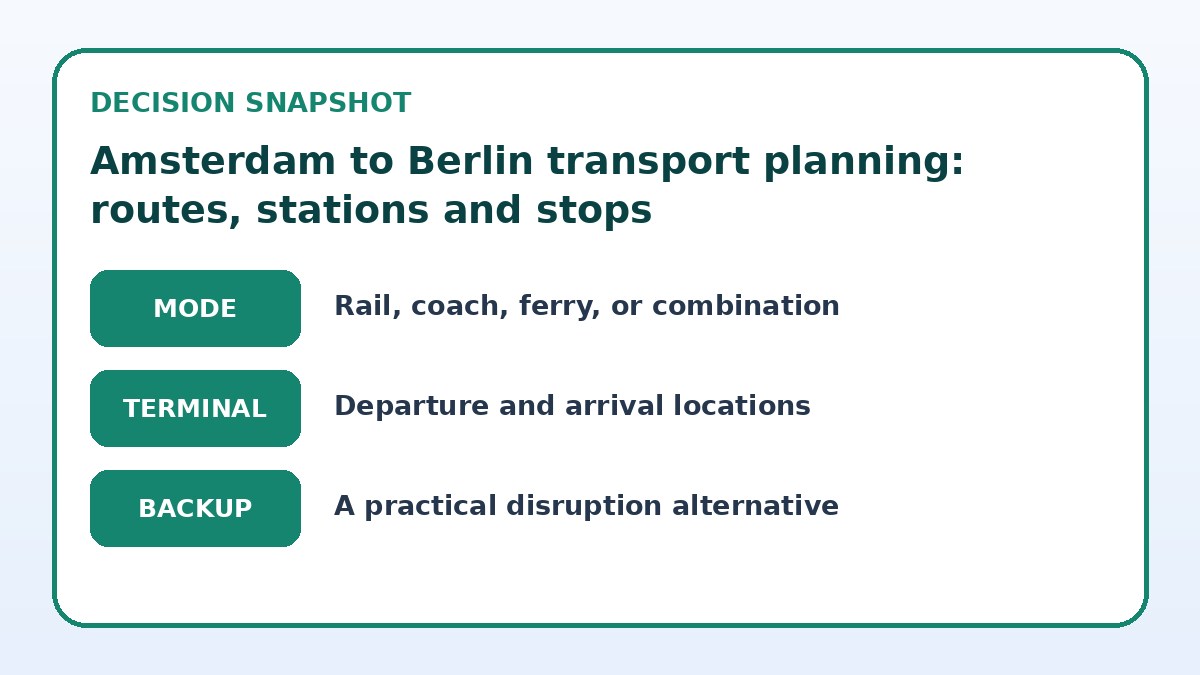
Start by listing what matters most: fastest travel time, lowest outlay, most scenic route, or the freedom to deviate en route. Trains usually win on comfort and simpler city-center-to-city-center transfers; buses often win on headline cost and overnight travel options; driving wins on flexibility and access to rural stops. For first-time visitors, prioritize fewer transfers and clear station-to-station logistics because unfamiliar transfers raise stress and risk missed connections.
Decide too how much of the journey is part of your experience versus a transit window. If you want to see other towns, plan specific stopovers and book intercity segments separately so you control layover length. Conversely, if the journey is a necessary move between bases, lean toward direct services and shorter door-to-door times. Always confirm final-drop-off locations and whether your arrival station has easy onward public transit or taxi access.
Practical steps to build a multi-city itinerary
Map your desired stops and estimate realistic travel times between them, including transfer buffers of at least 45–90 minutes for first-time travelers. Use a rail planner and a bus aggregator to view suggested connections; flag any overnight segments that replace a hotel night. When adding stops, prioritize one or two intermediate cities rather than many short hops, which increase the chance of delay and leave less time for sightseeing.
Make slotting straightforward by picking clear anchor nights in two cities and planning day excursions around them. Book major intercity legs early enough to secure reserved seats if the operator requires them, and keep flexibility by choosing tickets with tolerable change or cancellation conditions. For each segment, note the station or terminal name and the recommended method to get from station to your accommodation.
| Approach | Best for | Tradeoff to check |
|---|---|---|
| Direct intercity or high-speed train | Travelers prioritizing comfort, short transfers, and predictable station-to-station service | May be more expensive and require earlier seat reservations; verify terminal station and seat policy before booking. |
| Scheduled long-distance bus (including overnight) | Budget-focused travelers willing to trade time for lower ticket costs | Longer travel times and less onboard space and facilities; plan for less sleep on overnight segments. |
| Self-drive or rental car | Visitors who want flexibility to stop in rural towns and control timing | Parking, tolls, low-emission zones, and cross-border rental rules add complexity and hidden costs. |
| Hybrid plan (mix trains, buses, regional rail) | Travelers who want cost savings while keeping some comfort and flexible stopovers | Requires careful planning of connection windows and more advance checking of combined ticket rules. |
Ready to check the option that fits your plan?
Use your exact dates and traveler details so the provider page can show the current total and conditions.
Comparing costs, comfort, and reliability
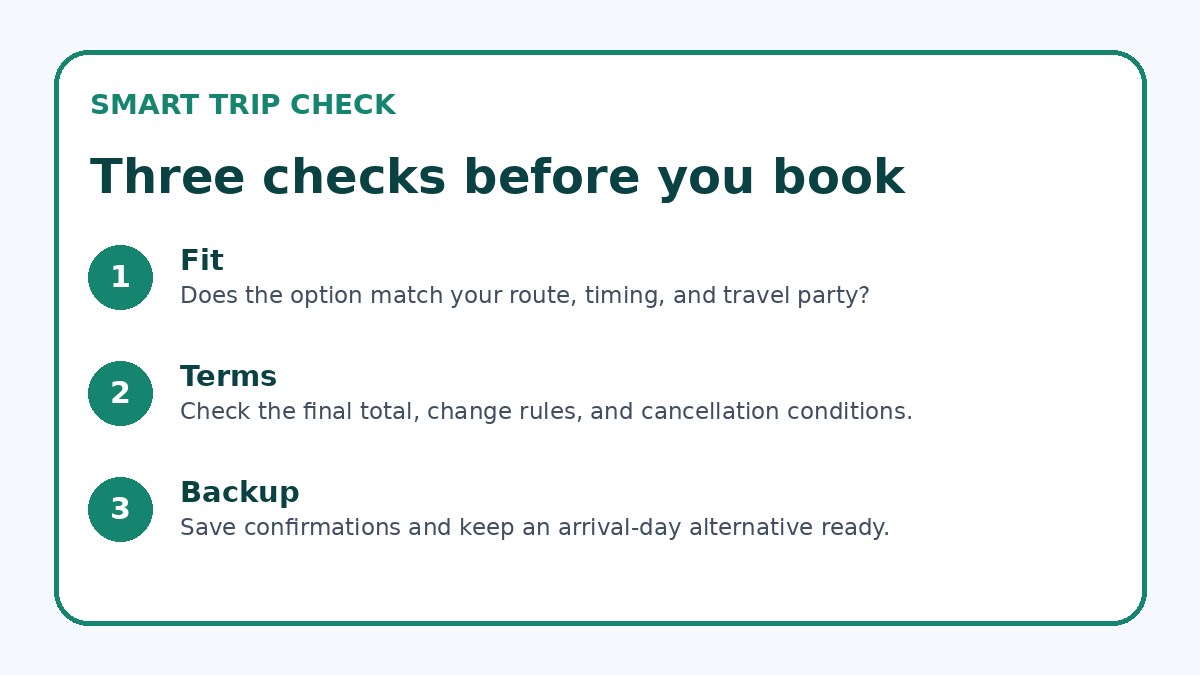
Cost is important but compare apples to apples: a cheaper bus ticket might exclude baggage or a seat reservation that trains include. Evaluate journey time against expected comfort—overnight buses save lodging but reduce sleep quality; daytime trains cost more but give you usable daylight hours. Consider the impact of delays and the relative frequency of services: more frequent options provide natural fallbacks if you miss a connection.
If budget is the constraint, blend travel modes: take a bargain bus for a long overnight haul and reserve a mid-distance train for the day that requires punctual arrival. For reliability, trains often have better on-time records on major corridors, but verify current service announcements on the operator’s booking page. When in doubt, choose a slightly longer journey with fewer transfers to avoid the stress of tight schedules.
Before you book
- Identify your top two priorities (speed, cost, or flexibility) to guide which transport mode you choose.
- List desired intermediate stops and map realistic minimum connection times between stations.
- Check the exact departure and arrival station names and terminal locations on the operator’s booking page.
- Confirm baggage rules and seat reservation requirements for each booked segment before finalizing.
- Save a master itinerary with booking references, station addresses, and backup connection options.
- If renting a car, verify cross-border permissions, low-emission zone rules, and one-way drop-off options on the rental confirmation.
What to check before you book and on travel day
Verify crucial details on the operator’s final booking page: exact departure and arrival stations, whether the trip is direct or requires transfers, seat reservation requirements, baggage allowances, and the operator’s change/cancellation terms. If you plan to collect tickets at a machine or station, check identification and card rules for collection. Don’t assume train and bus stations use the same name—confirm station codes or neighborhood names so taxis and public transit pick-ups are straightforward.
On travel day, arrive early at major hubs and keep printed or offline copies of confirmations, especially if you have tight connections. For multi-city plans, keep a simple master itinerary with transfer windows, platform details when available, and contact numbers for accommodation and operator support. If driving, check local traffic patterns, the location of low-emission zones, and how to return rental vehicles at your final city; verify these conditions on the rental company’s booking page.
Frequently asked questions
Is taking the train from Amsterdam to Berlin the most convenient option for first-time visitors?
Trains are often convenient because they run between city centers and reduce the need for extra transfers to airports. For first-time visitors, fewer transfers equals less stress: you arrive at a central station with clear onward public transport or taxi options. Convenience depends on which service is available on your dates and whether you prefer reserved seats and more onboard space. Always check the exact arrival station and whether the service is direct or requires a timed change on the operator’s booking page before committing.
Can I combine buses and trains to visit more cities on the way to Berlin?
Yes. Combining buses and regional trains lets you build a multi-city route with flexible stopovers, often at lower total cost than direct high-speed segments. Plan sensible layover times—long enough to reach the next departure easily—and book key legs that require reservations. Keep a clear master schedule and include buffer time for delays. Verify booking policies for each segment so you understand transfer protections or change fees in case plans shift.
What should I check if I plan to drive from Amsterdam to Berlin instead?
If you drive, confirm cross-border rental permissions, insurance coverage, any one-way drop-off rules, and whether the rental company allows travel into Germany. Research low-emission or congestion zones in cities where you’ll park and find confirmed parking at your Berlin destination. Plan realistic driving hours and rest stops to avoid fatigue, and note that driving can add parking and city access costs compared with rail or bus options. Always verify rental and insurance terms directly on the provider’s booking page.
Final planning note
Building a practical Amsterdam to Berlin ground-transport plan starts with clear priorities: speed, comfort, or flexibility. For first-time visitors, favor options that minimize transfers and specify exact station names to avoid confusion on arrival. Combine modes thoughtfully when you want extra stopovers—limit intermediate cities to preserve sightseeing time and allow generous transfer buffers. Verify every operator’s details on their booking pages, and keep a simple master itinerary with fallback options if a connection fails. With that approach you’ll reduce day-of-travel stress and turn the transfer between Amsterdam and Berlin into a smooth part of your trip, not an ordeal.
Continue planning
Check current options and final conditions
Use the provider page to confirm live availability, the final total, cancellation terms, and every condition that matters to your trip.
This evergreen planning guide was created with AI-assisted drafting and a structured quality review. It does not display live prices, schedules, availability, visa guidance, or provider rankings. Verify current details before booking. Some links are affiliate links; we may earn a commission at no additional cost to you.