If you’re traveling from Singapore to Penang with oversized or many bags, plan station and terminal transfers first — the move between departure point, immigration checkpoints, and arrival terminal often determines how easy the whole trip will feel. Decide early whether you’ll prioritize fewer handoffs (fewer lifts and vehicle changes) or lower cost, then choose transport options that match that preference. This article helps you map the transfer points you’re likely to encounter, evaluate luggage-handling practicalities, and identify the key questions to ask when booking. It focuses on realistic decision tradeoffs: convenience versus price, door-to-door options versus staged transfers, and luggage storage or forwarding choices. Use this to make a transfer plan you can verify with operators before you travel.
Map the transfer points on the Singapore–Penang route
Start by listing every place your luggage will pass through: your lodging, the local terminal or station in Singapore, any cross-border control points, intermediate transfer stops, and the Penang arrival terminal. Each handoff is an opportunity for delay, damage, or extra cost. Visualize the route on a map and note elevation changes, stairs, long corridors, and whether lifts or ramps are likely available. That simple exercise helps you estimate how many times you’ll have to lift heavy bags and whether you’ll need porters or a vehicle able to accept oversized items.
Next, identify the loading and unloading zones at each transfer point: does the station allow curbside drop-off? Are there designated luggage trolleys or porter services? Many terminals and stations have different rules for large items or for vehicles stopping briefly for drop-offs. If you’ll pass through immigration-controlled areas, factor in the distance between the immigration counters and vehicle parking. Mapping these details before booking reduces surprises and helps you choose the most practical departure and arrival points for your luggage situation.
Choose transfer modes based on luggage needs
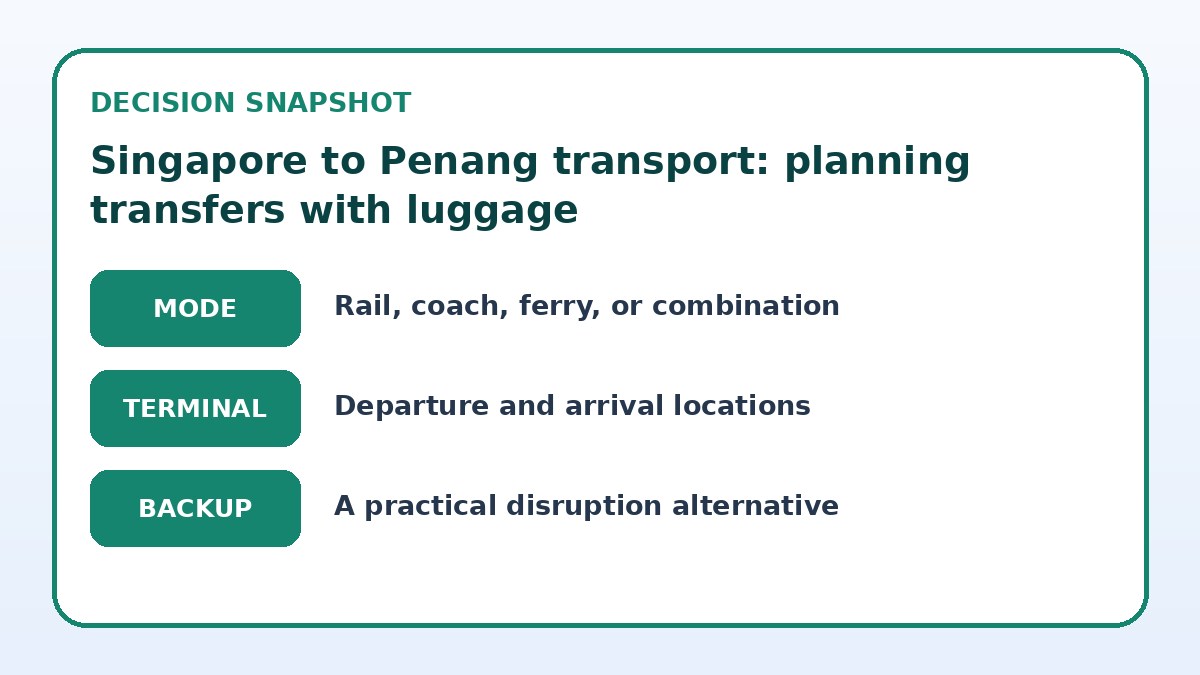
Three common transfer approaches work for travelers with extra bags: private car or van transfers, shared shuttle services, and staged public transport. Private vehicles minimize handling and offer trunk space and door-to-door convenience, which is helpful if you have multiple suitcases, cases with wheels that don’t roll well, or fragile items. Vans or minicabs can usually carry bulky sets but must be booked in advance with clear notes about luggage dimensions to ensure availability on the day.
Shuttle and public options may require multiple moves between buses, trains, and walking sections, increasing the number of lifts and the time you spend shepherding bags. These options might be cost-effective, but verify whether shuttles accept large suitcases or sports equipment and whether train stations provide elevators and luggage trolleys. If you must use public transport, pack to make transfers easier: consolidate items into wheeled cases, use padded covers, and keep a small, readily accessible bag with essentials.
| Approach | Best for | Tradeoff to check |
|---|---|---|
| Private door-to-door transfer (car or van) | Travelers who value minimised handling and stress with many or heavy bags | Typically higher cost and needs advance booking and exact vehicle size confirmation |
| Shared shuttle or coach with designated luggage area | Those wanting a balance between cost and convenience for standard-size luggage | May require handling at stops and limited space for oversized items |
| Public train and bus segments with self-handling | Budget-conscious travelers prepared to carry luggage across platforms and between terminals | Multiple transfers, stairs or long walks, and potential lack of trolley or elevator access |
| Staged approach: luggage storage or forwarding | Trips where you want lighter transfers between critical checkpoints or time between legs | Extra cost and coordination; risk of delays or limited opening hours for storage services |
Cross-border considerations and checkpoints
Crossing from Singapore toward Penang involves immigration and possibly customs steps at different points depending on your route. Understand where passport control happens relative to vehicle parking and luggage drop zones. If you choose a route with a land border crossing, plan for the time and physical distance between the vehicle pick-up point and the immigration counters, since heavy bags and long walks through checkpoints can be tiring. Ask providers whether they assist with luggage through the checkpoint or whether you will need to handle everything yourself.
If your journey combines air and ground legs, check where checked baggage is accepted and whether airlines or ground operators will accept liabilities for items moving across providers. For multi-leg bookings, confirm who is responsible for rechecking bags if you have a connecting flight or train in Penang. When uncertainty exists, plan an extra buffer and choose transfer options that let you stay with your luggage during immigration rather than relying on multiple handoffs.
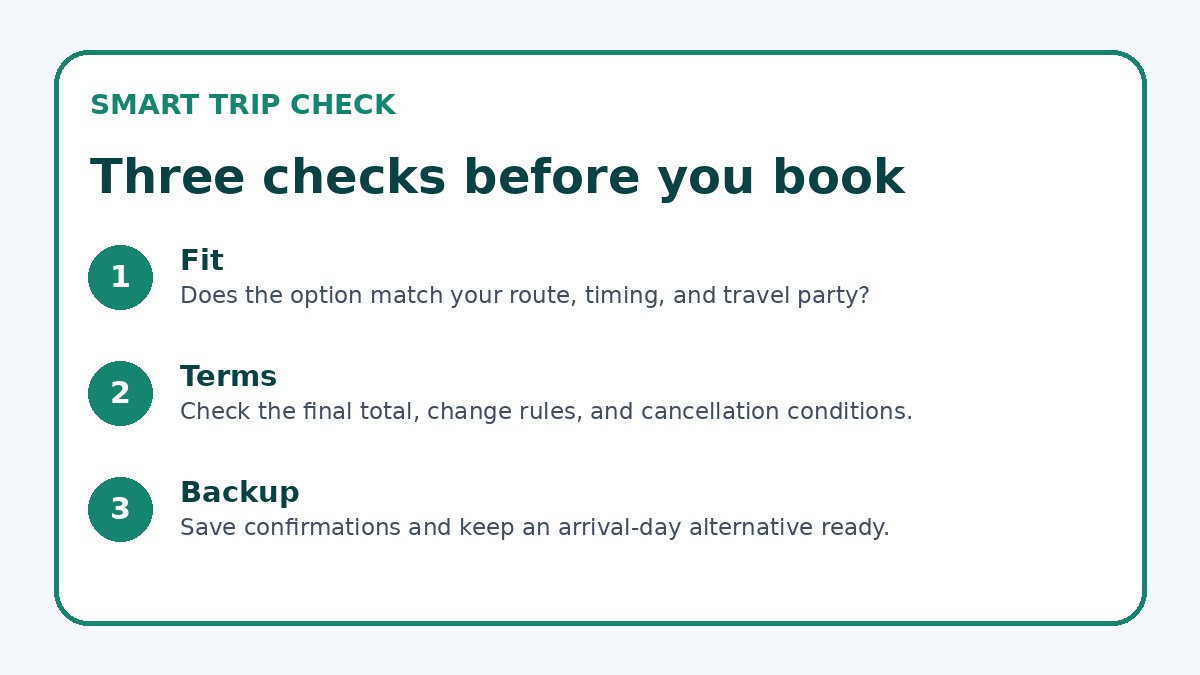
Before you book
- Measure and weigh every bag; note the largest dimension and whether it fits into a vehicle trunk or shuttle luggage bay before booking.
- Ask the transfer provider to confirm vehicle type, trunk space, and any extra charges for bulky or additional items on their booking page.
- Map exact pick-up and drop-off curbside points and verify whether short-term parking or drop zones exist at each terminal.
- Confirm whether porter services, luggage trolleys, or elevators are available at departure and arrival stations and ask for specifics if critical.
- Pack a carry-on with essentials—documents, medications, chargers, and a spare outfit—in case checked luggage is delayed or handled separately.
- Allow generous time buffers between legs and keep transfer provider and accommodation contact numbers handy for last-minute adjustments.
Practical packing, equipment and contingency planning
Adapt your packing to the transfer plan: use robust wheeled luggage, protective covers, and luggage straps to keep things compact and easier to lift. Distribute weight so no single bag exceeds what you or a porter can safely lift; consider soft duffels that compress better into vehicle trunks. Label all items with contact details and your accommodation address in Penang in case a bag is separated during a transfer. Keep a small carry-on with essentials — medication, documents, and a change of clothes — so a delayed main bag is less disruptive.
Prepare contingencies: identify where to rent trolleys, which stations offer porter services, and the nearest luggage storage options in both cities if you need to stage items for a few hours. Note emergency contacts for your ground transfer provider and the phone for your accommodation in Penang. Finally, build a time buffer into each transfer to account for lifts, security searches, or longer-than-expected walks between platforms and terminals—this reduces stress and keeps your schedule realistic.
Frequently asked questions
Can I send luggage separately between Singapore and Penang instead of carrying it on transfers?
Yes, luggage forwarding and courier services operate in Southeast Asia, but availability and procedures vary. If you consider forwarding, compare door-to-door courier options and local luggage storage services. Verify pickup and delivery windows, insurance coverage for loss or damage, and whether the provider requires customs paperwork for cross-border shipments. On the provider’s booking page check transit times, size and weight limits, and claims procedures. Forwarding can reduce physical strain during transfers but introduces dependency on a third party and timing risk.
What should I check about a private transfer when I have oversized baggage?
When booking a private car or van, explicitly state the number of bags and their dimensions, and request a vehicle recommendation that fits them. Ask whether the quoted price includes extra handling fees, waiting time at checkpoints, and any cross-border charges. Request confirmation that the driver will meet you at a specific curbside location — not inside a terminal — and verify whether the vehicle will be allowed to park or must stop for only a few minutes. Always reconfirm pickup details and vehicle information on the operator’s final booking page before travel.
How do I decide between saving time versus saving money on transfers with heavy luggage?
Decide which cost you value more: your time and physical effort, or the money saved by using public transport and multiple transfers. If avoiding lifts, stairs, and long walks is the priority, invest in direct transfers, larger vehicles, or luggage forwarding. If budget matters more, plan routes that minimize awkward transfers — for example, choose stations with elevators and trolleys — and pack to make self-handling easier. Estimate the number of handoffs and total walking distances for each option, then weigh that against price differences and the stress of managing heavy items yourself.
Final planning note
Traveling from Singapore to Penang with extra luggage is manageable with a clear transfer plan that balances convenience, cost, and the physical realities of moving bulky bags. Start by mapping every handoff on your route and identifying the stations, checkpoints, and curbside access points that matter to you. Choose the transfer mode that matches your priority — fewer handoffs via private transfer, a middle-ground shuttle, or economy public routes — and confirm vehicle capacity and luggage policies on the provider’s booking page. Pack and label strategically, budget time for each transfer, and prepare contingency options like local storage or forwarding. With these steps, you’ll make luggage handling predictable and keep the trip on schedule.
Continue planning
Check current options and final conditions
Use the provider page to confirm live availability, the final total, cancellation terms, and every condition that matters to your trip.
This evergreen planning guide was created with AI-assisted drafting and a structured quality review. It does not display live prices, schedules, availability, visa guidance, or provider rankings. Verify current details before booking. Some links are affiliate links; we may earn a commission at no additional cost to you.