Practical choice first: for a short family visit to San Francisco, pick a central neighborhood with easy public transit, nearby groceries and kid-friendly dining, and a hotel offering family rooms or suites plus flexible check-in. Prioritize minimizing daily transfers and keeping at least one quiet afternoon space in your room. That reduces wasted time and frayed nerves when you’re juggling attractions like Fisherman’s Wharf, Golden Gate viewpoints and a museum or two. Once you have that core requirement decided, you can weigh tradeoffs—whether you prefer staying closer to tourist sites, choosing calmer residential streets, or saving time by being near a major transit hub. This article walks through those tradeoffs, the key hotel features to look for, how to compare options, and a practical checklist to use when you book.
Which neighborhoods make the most sense for families?
San Francisco’s compact footprint means several neighborhoods can work for a short family stay, but they each bring different tradeoffs. Fisherman’s Wharf and North Beach put you near iconic attractions, waterfront walks and tourist-friendly dining; staying there saves travel time to the bay and family-oriented sights. Union Square offers straight shot transit links and a wide hotel choice, useful if you want short cab or Muni rides to multiple sights. The Embarcadero is convenient for boat departures and calmer walks along the water but can be pricier or quieter after dinner hours.
Residential neighborhoods—like Russian Hill, Pacific Heights, or the Marina—tend to be quieter and offer parks and safer street feel for little ones, but you’ll trade immediate proximity to tourist hubs for calmer evenings and better chances of finding grocery stores and playgrounds within a short stroll. Mission Bay and Dogpatch can be unexpectedly practical for families too: modern apartment-style hotels, nearby parks, and easy access to a few transit lines make getting around straightforward without the constant tourist crowds.
Hotel features that matter for short family stays
Room layout and bedding flexibility are top priorities. Choose a room or suite with a separate sleeping area, sofa bed, or rollaway availability so parents and kids can keep different schedules. A small kitchenette or even a hot plate, microwave and mini-fridge makes meal management easier—important for picky eaters or late arrivals. Also confirm crib availability and whether the hotel supplies high chairs or bedding for children; if these details are subject to availability or fees, verify them on the hotel’s booking page before you finalize.
Practical on-site services save time: morning breakfast options (buffet, boxed, or room service), onsite or nearby laundry, and luggage storage for early arrival or late departures are particularly helpful on short trips. Reliable Wi‑Fi, plug access, and a quiet corner in the lobby for stroller parking or brief downtime make daily logistics simpler. Finally, check accessibility: elevators, ground-floor rooms or ramps reduce the effort of moving a stroller and child gear around the hotel.
| Approach | Best for | Tradeoff to check |
|---|---|---|
| Stay near Fisherman’s Wharf or Embarcadero | Maximizing sightseeing time and easy boat access | Higher crowds and potentially noisier evenings; fewer local grocery options within immediate walking distance |
| Choose Union Square or Civic Center | Central transit links and broad hotel choices | More commercial bustle and shopping crowds; some streets are noisy late into the evening |
| Pick a quieter residential area (Marina, Pacific Heights) | Calmer nights, park access and family-friendly restaurants | Longer transit time to some tourist hotspots and attractions |
| Opt for a modern neighborhood (Mission Bay, Dogpatch) | Modern rooms, family-focused amenities and easier parking | Fewer traditional tourist sights within footsteps; limited evening dining options on some streets |

How to weigh location versus convenience
If you have only a few days and want to maximize sightseeing, staying closer to major attractions reduces transit time and makes it easier to return midday for naps. For example, a base near Fisherman’s Wharf cuts boat or pier access time and keeps children close to kid-friendly museums and the sea lions. However, tourist-heavy areas can be crowded and noisier, and late evenings may feel less family-friendly depending on the block. Decide whether saving 15–30 minutes per trip is worth the sensory load and higher foot traffic.
Choosing a quieter residential base gives you calmer evenings and better chances of finding parks and family-friendly restaurants within walking distance, which is valuable when naps or early bedtimes shape your itinerary. The tradeoff is additional transit time to some major sights. To strike a balance, look for hotels one transit stop away from main attractions or along fast streetcar/metro lines; this gives easy access without putting you in the most crowded streets.
Before you book
- Confirm room configuration (separate beds, sofa bed or rollaway) and crib availability directly on the hotel booking page.
- Verify early check-in, late check-out and luggage storage policies to match your family’s arrival and departure times.
- Check on-site laundry options or nearby laundromats to handle spills and quick clothing refreshes.
- Look for a kitchenette or microwave/mini-fridge in the room to prepare simple child-friendly meals.
- Map nearby grocery, pharmacy and playground locations so you can plan quick errands between activities.
- Confirm parking type and costs if renting a car, and whether the hotel can accommodate a stroller or car seat storage.
Booking details to verify before you finalize
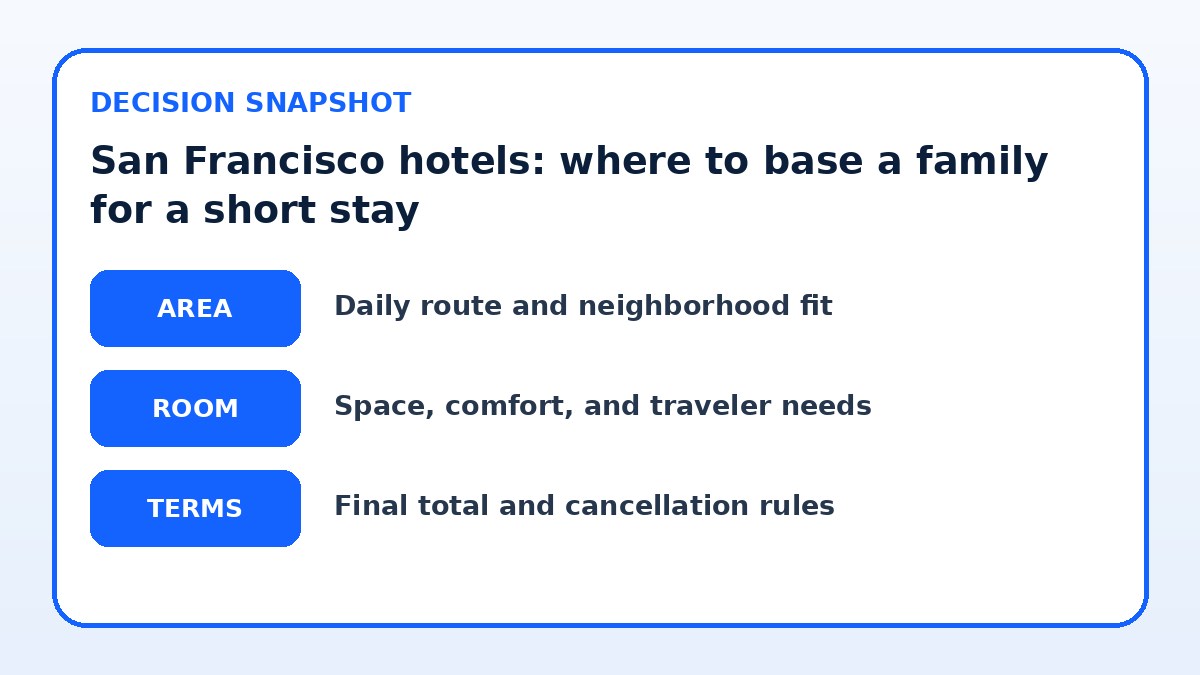
Don’t assume policies: verify the hotel’s exact family-room configuration, crib or rollaway availability, and whether an extra-child charge applies. Confirm the property’s policy and hours for early check-in, late check-out, and luggage storage—short stays benefit from flexible timing. Also check the hotel’s cancellation terms so you can adapt plans if travel timing or group size changes.
When transport logistics matter, compare the property’s stated transit connections and parking details with live mapping and transit pages. If you plan to rent a car, confirm parking type (valet vs. self), costs and whether the lot fits a child seat or bulky stroller. For any shuttle, airport transfer, or third-party activity bookings, check the provider’s final page for pickup points, schedules and any age-specific rules; Trip.com can be a quick place to compare availability, but always verify with the hotel or activity operator on their official booking page.
Frequently asked questions
What neighborhood should families choose for a two- or three-day San Francisco visit?
For a short visit, choose a neighborhood that minimizes daily transfers and offers quick access to essentials. Fisherman’s Wharf or the Embarcadero are convenient if you want to be steps from tourist attractions and boat departures. Union Square is a strong all-rounder for transit connections and dining choices. If you value restful evenings and park access, a quieter residential area like the Marina or Pacific Heights works well; just plan for a few extra minutes on transit to reach some major sites.
Which hotel amenities are most worth paying for with kids?
Prioritize a room layout that supports nap schedules—separate sleeping areas or sofa beds—and options for a kitchenette or in-room microwave to handle simple meals. On-site laundry and a flexible breakfast offering save hours across a short trip. Luggage storage, reliable Wi‑Fi and elevator access are practical, often overlooked features that ease logistics. Always confirm these amenities on the hotel’s official booking page so you know whether they are included, available on request or come with extra fees.
How should I balance cost and convenience when booking San Francisco hotels for a family?
Decide whether saving transit time is worth a higher room rate: locations near major attractions cut travel minutes but can cost more or be noisier. If your family values calm evenings and easy grocery access for simple meals, a mid-range hotel in a residential area may be a better buy even if it adds a short commute. Compare total trip time and convenience—factoring in luggage handling, naps and mealtimes—rather than looking at price per night in isolation. Use the hotel’s booking page to confirm any additional fees that change the effective cost.
Final planning note
Short family stays in San Francisco become more enjoyable when you choose a base that minimizes daily friction: quick transit links, nearby groceries, and a room layout suited to kids’ routines are the essentials. Decide whether you want to save sightseeing time by staying amid attractions or prefer quieter residential streets for calmer evenings; both approaches are valid depending on your children’s needs and how much walking or transit you’re willing to do. Use the checklist to confirm practical details before you book, and always re-check the hotel’s official booking page for crib availability, extra-child charges, parking arrangements and specific arrival or departure policies. With those basics secured, you’ll spend your short time exploring San Francisco instead of managing logistics.
Continue planning
Check current options and final conditions
Use the provider page to confirm live availability, the final total, cancellation terms, and every condition that matters to your trip.
This evergreen planning guide was created with AI-assisted drafting and a structured quality review. It does not display live prices, schedules, availability, visa guidance, or provider rankings. Verify current details before booking. Some links are affiliate links; we may earn a commission at no additional cost to you.