
If your family wants fewer crowds, lower stress and more flexible days in Paris, aim for the shoulder seasons: late spring before summer peaks and autumn after summer ends. Practically, that means planning travel windows and search habits that prioritize mid-week flights, flexible-stay accommodations, and neighborhoods that reduce daily transit time. Focus your searches on flight+hotel bundles, family rooms or two-room apartments, and refundable or change-friendly rates to keep options open if weather or school needs shift. Use the opening week or two of May and September–October in planning, but always check current conditions, local school calendars and provider rules before you book. The guidance below explains the tradeoffs families face, how to compare options, and exactly what to verify on booking pages so you can pick the mix of convenience, cost and comfort that fits your household.
When to pick your shoulder-season window
For family travel, a shoulder-season window balances milder weather and reduced crowds with still-good operating hours for attractions. Late spring (after Easter-related travel and before the full heat of July) and early autumn (September into October) tend to offer that balance. When choosing exact dates, check your family’s school calendar and any long weekends at home that could affect prices. Also consider local French school holidays; Paris sees intra-country holiday surges during those weeks, which can shift crowd patterns even in shoulder months.
Decide how much flexibility you need: if any traveler in the family requires specific conditions (quiet mornings, access to elevators, stroller-friendly routes), target weekdays and smaller neighborhoods to avoid peak tourist flows. If your travel dates are fixed, prioritize refundable fares and accommodation with flexible modification policies. When searching, compare mid-week versus weekend arrival and departure dates—sometimes moving your trip by a day or two reduces crowd exposure and opens more family-room availability without changing the overall itinerary.
Where to stay: neighborhoods and practical choices
Families should weigh proximity against space. Central arrondissements (1–7) put you within walking distance of many sights, shortening daily transit with children and offering quick returns for naps or rest. However, central districts can be busier and pricier. Consider adjacent areas that still offer fast transit links—look for accommodations near RER or metro lines that require minimal changes, or that are within a manageable walk to parks and grocery options. Apartments with two rooms or hotels offering family suites reduce stress compared with folding beds in single rooms.
When evaluating properties, check for family-specific amenities: elevator access, laundry facilities, kitchen or kitchenette, and day-of-arrival luggage storage. Verify exact bed configurations and whether children’s cots are included or incur fees. For longer stays, a short-stay apartment or residence can reduce expenses by allowing light meal preparation; for shorter stays, a centrally-located hotel with breakfast and flexible check-in may save time. Always confirm on the booking page whether quoted room types are guaranteed or subject to upgrade fees.
| Approach | Best for | Tradeoff to check |
|---|---|---|
| Book a flight+hotel package with flexible terms | Families wanting one-stop booking and simplified support | Packages may limit provider choice and require careful policy checks to ensure true flexibility |
| Book flights and accommodation separately | Families seeking maximum control and the best fit for room layouts | More time-consuming to compare each provider’s cancellation and seat/room rules |
| Choose a central hotel with shorter transit | Families who prioritize quick returns for naps and easy sightseeing | Higher nightly rates and less living space can increase total trip cost |
| Choose a larger apartment farther out | Families wanting living space, kitchen access, and lower nightly rates | Longer daily commutes and added transit complexity with children and luggage |
How to compare travel deals and what to verify
When searching for Paris travel deals, compare package bundles, standalone flights, and alternative airports. Packages can simplify logistics but look closely at change and cancellation policies: family plans benefit from the most flexible terms available. Don’t assume a cheaper headline rate includes seat selection, baggage, or infant amenities—verify each component before paying. If you’re comparing trains (for nearby European connections) with flights, compare total door-to-door time, expected transfers with children, and how luggage and strollers are handled.
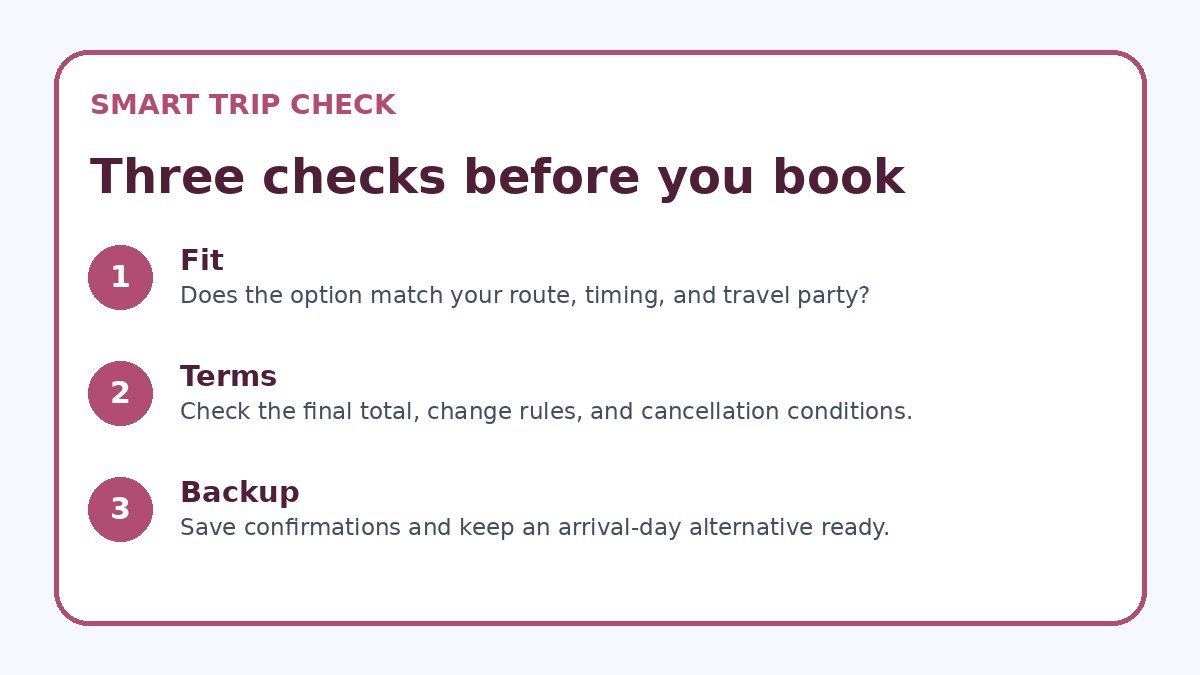
On every provider page, verify the refundable/change policy, what exactly is included (baggage, meals, transfers), and how seat/room assignments are handled. For accommodations, check whether the listed rate is per room or per person, and whether taxes or city levies are added at checkout. If an attraction or tour is part of the deal, confirm the cancellation terms and whether tickets are timed-entry—families often need flexible time slots. Trip.com can be used as one place to compare availability and policies, but always confirm the final provider terms on the booking confirmation.
Before you book
- Confirm school holiday dates at home and in France that could affect Paris crowds during your intended shoulder-season window.
- Compare change and cancellation policies for flights and accommodations; note exact deadlines and any fees on the provider’s booking page.
- Verify bed configuration, availability of cots, and whether family rooms are guaranteed or assigned at check-in for your chosen property.
- Check timed-entry or reservation requirements for major attractions and make flexible bookings when possible to allow for child nap schedules.
- Map daily transit times from your lodging to key sights and prioritize properties that minimize transfers with strollers or small children.
- Pack a flexible clothing plan for variable shoulder-season weather and include lightweight rain gear and comfortable walking shoes for the family.
Tradeoffs: crowd levels, weather, and budget
Shoulder seasons lower crowd density at major attractions and can offer more pleasant walking weather, but they also bring variability: spring can have late cold snaps or rain, and autumn can see shorter daylight hours. Families must decide whether they value steadier warmth (summer) or improved logistics and quieter mornings (shoulder months). If your family tolerates cooler mornings and occasional showers, shoulder-season travel often yields a calmer daily rhythm and quicker access to popular sites, which is valuable when pacing days around young children.
Budget considerations are intertwined: some accommodation and flight rates ease in shoulder seasons, but savings vary by specific date and local events. Opting for slightly outlying neighborhoods or combining self-catering with a few restaurant meals reduces daily costs. Remember that tradeoffs include transit time—saving money on lodging farther out may cost more in daily commuting hassles with children. Weigh predicted daily convenience against headline savings and factor in the value of time, naps, and stress-free returns to your room when making booking decisions.
Frequently asked questions
Are Paris shoulder seasons actually cheaper for families?
Shoulder seasons often reduce average crowding and can produce lower rates, but savings are not uniform. Costs vary by neighborhood, local events and the exact travel dates. For families, the real savings frequently come from lower opportunity costs—shorter queues and faster entry to attractions that reduce the need for paid skip-the-line options or timed-entry rescheduling. To assess whether a specific date is cheaper, compare fares and nightly rates across a range of nearby dates and verify final fees, taxes and included services on the booking pages before confirming.
How much time should families allow for daily sightseeing in Paris during shoulder seasons?
Allow for shorter, flexible days with children: plan two or three main activities and leave time for spontaneous breaks, meals and transit. Shoulder seasons often permit earlier access to attractions when crowds are lower, so schedule morning museum or landmark visits and reserve afternoons for parks, markets or neighborhood exploration. Factor in transit time between sites and potential stroller or mobility needs, and consider returning to your lodging midday for rest if your accommodation is close. Adjust expectations—prioritize experiences that match your children’s rhythms rather than trying to cover too many sights.
What should I verify about accommodation policies when booking for a family?
On the final booking page, confirm the exact room type, bed layout, and whether extra beds or cots are complimentary or charged. Check arrival and departure times, luggage storage options, elevator availability, and any age-based occupancy limits. Review the property’s cancellation and modification terms, especially how refunds or date changes are handled. If the listing mentions amenities—kitchen, washing machine, or breakfast—verify which are included in the quoted rate and whether additional charges apply. Clear these details with the provider before you complete payment.
Final planning note
Planning Paris travel deals around shoulder seasons gives families a strong blend of calmer mornings, easier logistics and more breathing room for kids. The practical decisions are about timing, lodging proximity versus space, and the flexibility of bookings. Prioritize refundable or change-friendly options for the components that matter most—flights, accommodation and highly timed attractions—so you can adapt to weather and family needs. Map daily transit times and confirm bed and amenity details on provider pages. With careful comparison and a focus on convenience, a shoulder-season Paris visit can feel relaxed and manageable for the whole family.
Continue planning
Check current options and final conditions
Use the provider page to confirm live availability, the final total, cancellation terms, and every condition that matters to your trip.
This evergreen planning guide was created with AI-assisted drafting and a structured quality review. It does not display live prices, schedules, availability, visa guidance, or provider rankings. Verify current details before booking. Some links are affiliate links; we may earn a commission at no additional cost to you.