Take a pragmatic approach: choose an airport transfer that balances space, convenience, and safety. Families arriving in Honolulu usually choose between private shuttles, taxis/ride-hails with car-seats, large shared shuttles, or rental cars. Match the vehicle size to luggage volume and the ages of your children—folded strollers and large suitcases need space and easy access. Decide whether you want door-to-door service to avoid public transfers or a flexible plan that tolerates a few minutes of walking. Check what each provider allows for child restraints, how they handle bulky items, and whether they load luggage for you. Finally, verify pick-up points at Daniel K. Inouye International Airport, confirm any family-specific amenities, and be ready with simple backups like a soft bag and a stroller harness.
Choosing the right vehicle for kids and suitcases
Start by counting people and luggage the way a driver will: include car seats, strollers (folded vs. travel system), coolers, and beach gear. For most families of three to five with two suitcases and a stroller, an SUV or minivan gives the best mix of seat belts, cargo space, and ease of loading. Larger families or those with oversized equipment often prefer a full-size van or private shuttle with a lift or a high roof. Remember that vehicles can have different trunk shapes; a seemingly roomy car may have awkward space if suitcases are large or if a stroller must lie flat.
When deciding, weigh loading convenience against cost and parking accessibility. Minivans and private transfers usually load at curbside with drivers who assist; ride-hail services may require walking from the curb to the vehicle or carrying bags down a ramp. If mobility is a concern—double strollers, toddlers who tire easily, or grandparents traveling together—prioritize vehicles and services that advertise curbside assistance. Finally, if you rent a car, compare how many people can travel comfortably once luggage is in the boot; test-fit your main bags at pickup if the rental lot allows.
Child restraints, strollers, and safety considerations
Check child restraint rules and what each transfer provider supplies. Some private shuttles and taxis offer convertible car seats or booster seats on request, but practices vary and you should verify availability on the provider’s final booking page. Bringing your own car seat is often the safest option; consider a lightweight, airline-approved convertible or travel car seat that’s easier to move through the airport. If you bring a car seat, pack fabric covers or a travel bag to protect it during handling and store it upright when possible to avoid damage.
Strollers are a major space and workflow factor: choose whether to gate-check a full-size stroller or carry a compact umbrella stroller through the airport. When planning transfers, ask whether the driver will help collapse and lift strollers into the cargo area; some providers charge for extra handling or require you to fold and carry the stroller. For sleeping infants, think about harness-compatible infant inserts or wearable baby carriers that let you keep hands free while moving bags. Lastly, ensure every child has a visible ID tag and parents keep a small essentials bag for snacks, wipes, and a change of clothes within arm’s reach.
| Approach | Best for | Tradeoff to check |
|---|---|---|
| Private door-to-door transfer | Families wanting minimal walking and guaranteed space | Higher cost and usually requires advance booking to lock vehicle type |
| Shared shuttle | Budget-conscious families with flexible timing | Longer door-to-door time and potential limits on large items |
| Ride-hail or taxi | Short parties needing speed without prebooking | Variable car-seat availability and uncertain luggage space |
| Rental car | Families planning to explore beyond Honolulu with full control | You handle loading, car-seat installation, and parking logistics |
Tradeoffs: door-to-door vs. shared or self-drive options
Door-to-door private transfers minimize walking and transfers—valuable when children are jet-lagged or weather is poor—and often include baggage assistance. The tradeoff is typically a higher fare and the need to book in advance to guarantee a specific vehicle type or car-seat arrangement. Private options shine for late-night arrivals or families with special needs who can’t manage multiple handoffs. If you value predictability and time savings at the end of a long flight, a private pick-up at the terminal curb is worth considering.
Shared shuttles and pooled ride-hails save money but can involve additional stops and longer door-to-door times, which may be tiring for young children. They may also have stricter limits on oversized luggage and fewer guarantees about car-seat availability. Self-driving gives you maximum freedom once you’re mobile—great for island exploration—but factor in the mental load of reorganizing luggage to fit rental trunks, securing car seats properly, and finding parking at your accommodation. Compare these approaches by estimating total door-to-door time, number of transfers, and how easily you’ll manage luggage and children between modes.
Before you book
- Count people and all luggage (suitcases, strollers, diaper bags) and note whether strollers fold and how they fit in trunks.
- Decide if you will bring your own car seat; if so, pack it in an airline-approved travel bag for protection.
- Contact the transfer provider to confirm child restraint options and request any needed car seats in writing.
- Take a photo of your booking confirmation and the listed airport meeting point; save provider contact details offline.
- Pack a small essentials bag with snacks, wipes, change of clothes, a lightweight blanket, and a few toys within reach.
- Plan a backup: know the local taxi dispatcher number or have a ride-hail app ready if your booked option fails.
Practical booking and arrival checks for peace of mind
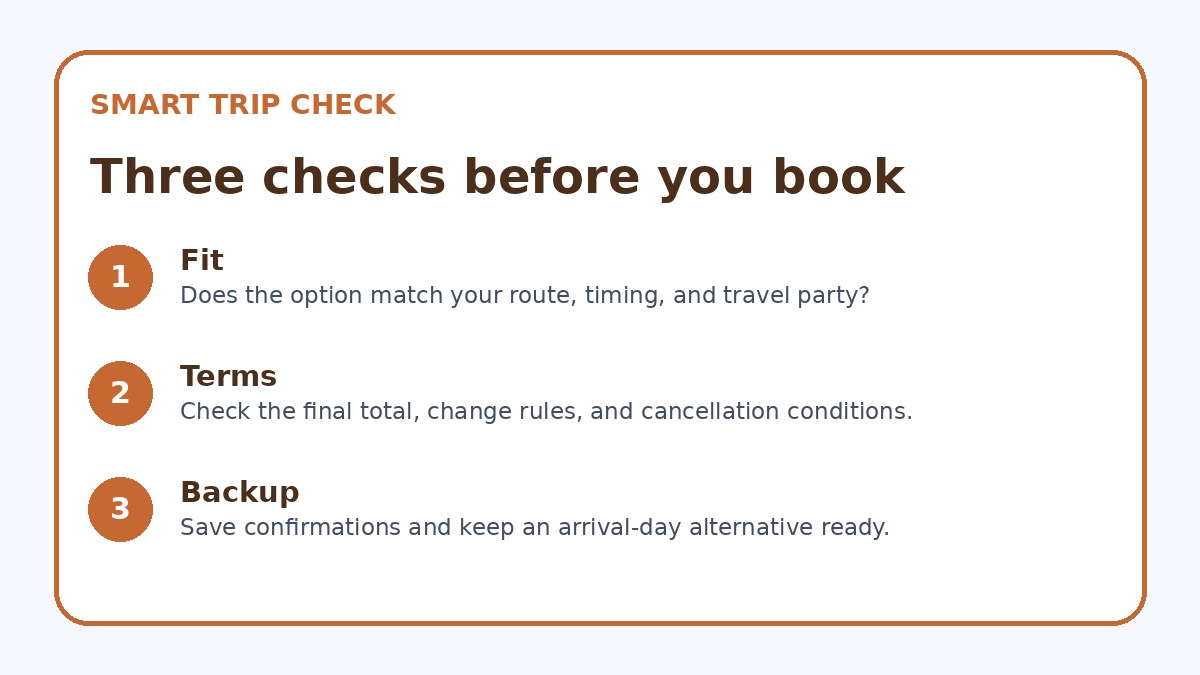
Before you book, have the exact number of passengers, ages of children, and a realistic luggage inventory ready. On the provider’s booking page verify the pick-up point (terminals can have multiple curbside zones), the driver or meeting instructions, and the policy on stroller and car-seat carriage. If a provider allows special requests, add concise notes about the stroller type and car-seat requirements and keep a screenshot or confirmation number. If you use a comparison site like Trip.com to view options, treat those listings as a starting point and confirm details on the supplier’s own page.
On arrival at Daniel K. Inouye International Airport, prioritize visibility: keep confirmations and a mobile phone ready, choose a nearby seating spot if children need a break, and set a short checklist for the driver handoff—verify the vehicle type, confirm child restraints before loading, and agree who will handle luggage. If a delay occurs, call the transfer provider rather than leaving the meeting point. Lastly, have a small backup plan such as a taxi number or the ability to split into two vehicles if luggage volume or last-minute additions exceed the prearranged capacity.
Frequently asked questions
Can I rely on ride-hail apps for car seats and large luggage in Honolulu?
Ride-hail availability varies by vehicle and driver; some drivers may have boosters or basic seats, but you should not assume a suitable car seat is guaranteed. For large luggage, vehicle types on the app should be checked and confirmed before you request the trip—select an SUV or larger option if available. If a car seat is essential, bring and use your own approved seat or reserve a private service that confirms car-seat provision. Always verify specifics on the provider’s final booking page.
Should I gate-check strollers or bring them to the arrival curb in Honolulu?
Decide based on stroller size and your child’s needs: gate-checking protects full-size strollers from curb handling but means you’ll collect the stroller after baggage claim. Bringing a compact stroller to the curb is faster for transfers and helpful if a child needs immediate rest, but you may need to fold and lift it into the vehicle. Confirm with your transfer provider whether they can store or assist with strollers at the curb, and label the stroller with your contact details.
What documentation and confirmations should I keep handy for an airport transfer?
Keep the booking confirmation, provider phone number, and terminal/meeting-point details easy to access—preferably both on your phone and as a printed backup. Note passenger names and ages for child-seat verification, and have photos of your car-seat or stroller model if you requested a specific fit. If you used a comparison site like Trip.com, follow through by checking the supplier’s page for up-to-date pick-up rules and any special handling terms before you travel.
Final planning note
Families traveling to Honolulu can make the first leg of their trip far easier by planning vehicle choice, luggage strategy, and child-safety arrangements in advance. Prioritize a transfer that matches your luggage volume and the ages of your children—private transfers offer the most convenience, shared options save money, and rentals give freedom after arrival. Whatever you pick, confirm child restraint availability, exact pick-up points, and baggage handling policies on the provider’s booking page. With a compact backup bag, a practical stroller plan, and clear communication, you’ll reduce stress and arrive ready to enjoy Honolulu.
Continue planning
Check current options and final conditions
Use the provider page to confirm live availability, the final total, cancellation terms, and every condition that matters to your trip.
This evergreen planning guide was created with AI-assisted drafting and a structured quality review. It does not display live prices, schedules, availability, visa guidance, or provider rankings. Verify current details before booking. Some links are affiliate links; we may earn a commission at no additional cost to you.