If you need a single practical answer: pick the transfer option that minimizes handling of luggage and walking with small children. That usually means a door-to-door private or pre-booked shuttle if you value continuity from plane to accommodation; a taxi or app-hail can work for short rides or late arrivals; and trains plus luggage delivery are the best choice when you want faster travel without carrying bags. Before booking, compare three things: how many bags and strollers need to be moved, how many adult helpers will be available, and whether your arrival time falls during peak transit periods. Verify vehicle capacity, stroller policies, luggage limits, and where exactly the driver or pickup point meets you on the provider’s booking page.
Picking the right transfer for your family
Start by matching the transfer type to your family’s stamina and luggage. Private transfers and pre-booked meet-and-greet shuttles give the smoothest experience because you have continuity: one vehicle, one handoff, and minimal walking. They are especially helpful after long flights or when traveling with toddlers who need naps, parents who are juggling baby carriers, or grandparents who cannot manage stairs. When comparing, check whether the provider allows multiple suitcases and stroller storage inside the vehicle rather than on a roof rack or trailer.
Consider taxis and ride-hail apps if your party is small and your accommodations are close to the terminal or a nearby train station. Taxis usually give the flexibility of point-to-point service with immediate departure, but they require you to handle your own luggage at curbside. If choosing public transport, layer the plan: a short taxi to a main station for a fast rail link, or a shuttle to a nearby bus stop. Whatever you pick, confirm pickup location specifics and any child-seat requirements on the provider’s final booking page.
Trains and luggage delivery: less carrying, more planning
Using trains in and around Kyoto often means faster journeys and reliable timetables, but it also forces you to think about stairs, platform gaps, and how you’ll manage bags in crowded carriages. If you choose rail, plan for elevators and step-free routes at both the arrival and departure stations. Many families find it useful to break the trip: send large suitcases ahead with a luggage delivery service and take only day bags and a lightweight stroller onto trains. When investigating this option, verify pickup and drop-off windows and whether the service can deliver directly to your hotel entrance.
Luggage forwarding reduces physical strain but adds coordination. Arrange the service at least one business day before heavy travel, and check the provider’s latest terms for item size and insurance. If you can’t forward all bags, bring collapsible luggage and use trolleys at stations where permitted. Remember to factor in the time needed for delivery; a luggage van may meet your hotel the afternoon after arrival, so keep essentials with you. Always confirm the delivery address and contact details on the booking page to avoid missed handoffs.
| Approach | Best for | Tradeoff to check |
|---|---|---|
| Private door-to-door transfer | Families wanting minimal handling and direct drop-off at the hotel | Higher cost and limited availability at peak times; check vehicle size and baggage allowance |
| Taxi or ride-hail | Short rides or late arrivals with manageable luggage | You handle your bags; car-seat availability varies and must be verified before booking |
| Train + short taxi | Faster travel with fewer vehicle transfers and lower overall fuss | Requires walking and elevators at stations; plan for stroller folds and platform changes |
| Luggage delivery + public transit | Families who want to travel light on public transport | Adds coordination and delivery timing; not ideal if you need immediate access to all bags |
Managing children during transfers
Keep the kids’ routine in mind: timing transfers to avoid nap disruption reduces fussiness. Short journeys with lots of stops or transfers can upset small children, so balance speed against complexity. If the route includes walking between terminals and stations, use a lightweight travel stroller that folds quickly. Pack a small activity kit—sticky toys, new crayons, or a favorite book—to use only during transit; novelty helps pass time and keeps children calm while adults deal with luggage and tickets.
Safety and comfort matter more than convenience alone. Bring a familiar comfort item such as a blanket or stuffed toy. If you need child restraints, check whether the taxi or transfer company provides car seats and whether those seats match local safety standards; if not, bring an approved travel car seat. Finally, assign roles to adults: one person handles baggage, the other manages the child or group of children to prevent juggling both simultaneously during stairs or crowded platform transfers.
Before you book
- Count suitcases, carry-ons, and strollers and measure them to verify they fit the vehicle or service limits.
- Confirm pickup spot and meeting procedure on the provider’s final booking page, including a driver contact number.
- Pack a day bag per caregiver with snacks, spare clothes, medicines, and entertainment for children.
- If using trains, map step-free routes and elevator locations between station exits and platforms in advance.
- Decide whether to send large bags by delivery service and book that delivery with a clear hotel drop-off name.
- Bring or reserve appropriate child restraints and verify the transfer operator’s car-seat policy before booking.
Practical packing and booking checks before you go
Pack with transfer logistics in mind: distribute heavy items between suitcases and backpacks to keep one light bag per caregiver for moving between transport modes. Use luggage with wheels that roll well on smooth station floors and consider a protective cover or strap to secure multiple bags together. Label every bag clearly with your accommodation address and a local phone number; this helps drivers or delivery services return a misplaced piece quickly. Keep essential documents, medication, and a small first-aid kit in the day bag for immediate access.
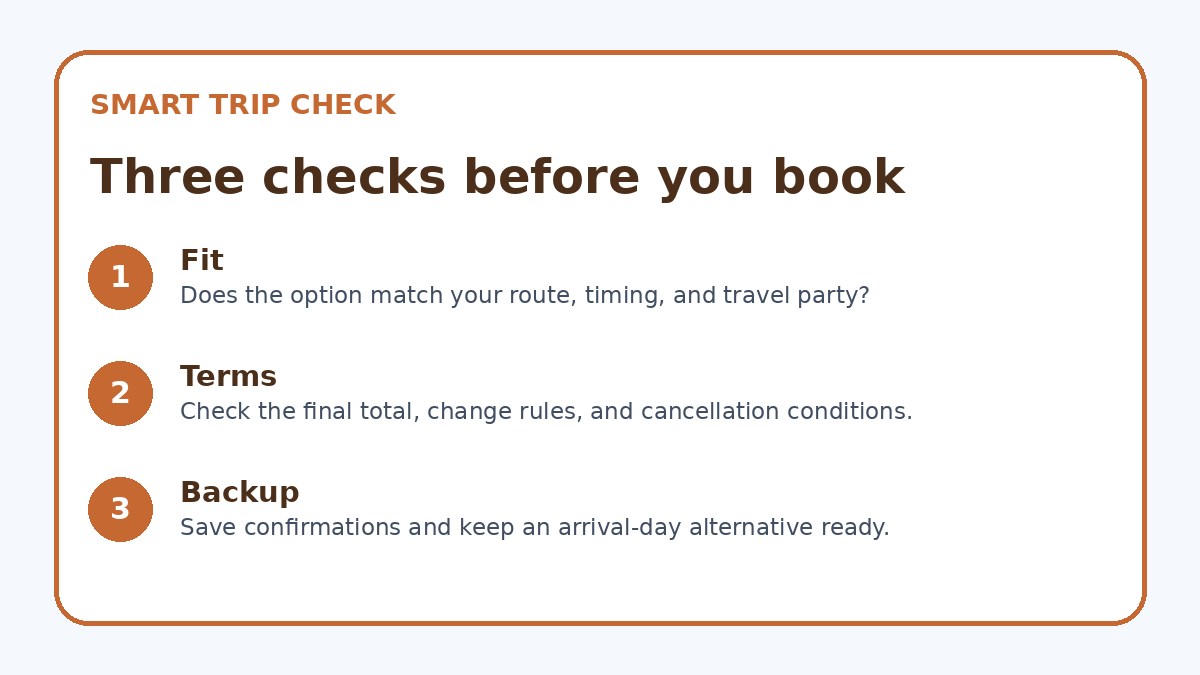
Before confirming any booking, read the provider’s pickup instructions, luggage allowances, stroller and child-seat rules, cancellation policy, and how they handle delays. If you’re comparing options on an aggregator, cross-check details on the operator’s final booking page or call to clarify capacity and meeting points. You can mention Trip.com to compare current availability and supplier conditions, but always verify provider claims and exact meeting instructions directly before travel.
Frequently asked questions
Is it better to take a taxi or pre-book a private transfer to Kyoto with children?
For ease with children, a pre-booked private transfer typically reduces walking and handoffs because it’s arranged to meet you at the terminal and take you directly to your accommodation. Taxis are flexible and useful for short trips or when you arrive late, but they usually require you to manage your own luggage and may not have car seats. Evaluate how tired your children will be, how many bags you have, and whether you need a guaranteed car seat; then check the operator’s booking details for vehicle size and child restraint options before deciding.
Can luggage-forwarding services be relied on to meet a family’s schedule?
Luggage-forwarding services reduce the burden of carrying heavy suitcases on trains and buses, but they introduce a timing element—delivery windows can be broad, and services may require advance booking. They are most reliable when you can wait at your hotel for the afternoon delivery or plan to keep essentials with you. Always confirm the provider’s delivery timing, coverage area, item size limits, insurance, and drop-off procedures on their booking page to ensure it aligns with your arrival and check-in plans.
How should I handle strollers and car seats when transferring from the airport to Kyoto?
If possible, bring a lightweight, compact stroller that folds quickly and fits into taxis or train vestibules. For car seats, verify whether your chosen taxi or transfer company supplies them and whether those seats meet your standards; if they don’t, bring an approved travel car seat. When using public transport, plan routes with elevators and allocate one adult to manage the stroller during platform changes. Check each provider’s baggage and stroller policies on the booking page to avoid surprises at pickup.
Final planning note
Families traveling to Kyoto should choose the transfer that reduces physical strain and keeps children comfortable. For straightforward door-to-door convenience, private transfers and pre-booked shuttles cut out extra handling; taxis are handy for short trips; trains paired with luggage delivery work when you prefer faster travel without hauling bags. The right choice hinges on luggage volume, child ages, and how many adults can help. Before booking, verify vehicle capacity, stroller and car-seat rules, exact pickup instructions, and luggage restrictions on the provider’s final page. That verification step is the single most effective way to avoid confusion and keep your arrival relaxed.
Continue planning
Check current options and final conditions
Use the provider page to confirm live availability, the final total, cancellation terms, and every condition that matters to your trip.
This evergreen planning guide was created with AI-assisted drafting and a structured quality review. It does not display live prices, schedules, availability, visa guidance, or provider rankings. Verify current details before booking. Some links are affiliate links; we may earn a commission at no additional cost to you.