
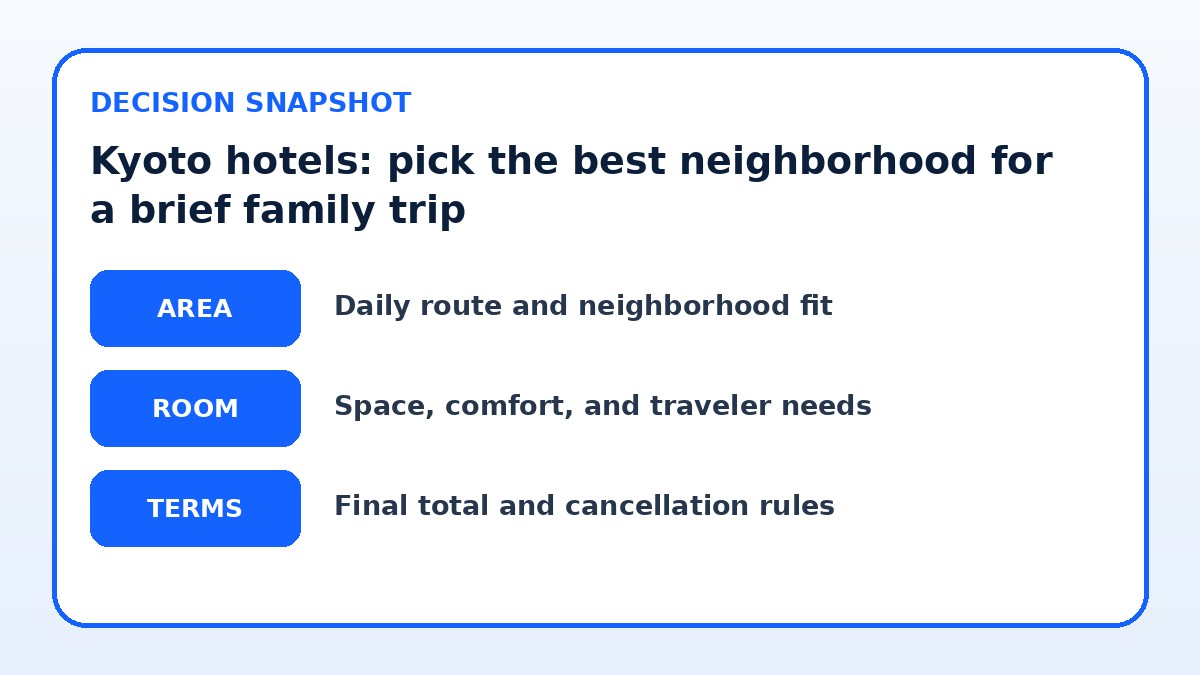
If you have only a few days in Kyoto with kids, pick a base that cuts travel time and keeps mornings simple. Prioritize a hotel near a major station or on a frequent bus/tram route, rooms with flexible sleeping options, and easy food choices within a short walk. That combination reduces daily transitions and gives you the energy to enjoy temples, gardens, and a relaxed stroll in the evening without lugging luggage. This article gives the quick practical answer first, then walks through the neighborhood tradeoffs, room and transport criteria, and how to verify details on booking pages so you make a comfortable, realistic choice for a short family stay.
Practical short-stay neighborhoods and why they matter
For a short family stay you want a neighborhood that makes mornings efficient and evenings flexible. Kyoto Station area is the practical default: it concentrates long-distance train and bus links, has many hotels with easy luggage drop-off, and gives quick access to buses and subway lines. Staying near a central subway line — for example, anywhere along the Karasuma or Tozai corridors — shortens transfers and cuts time spent navigating narrow streets with children. If you prefer a quieter, more historic vibe, central neighborhoods such as Gion or Higashiyama are walkable to key sights but often require a bus or taxi connection to reach long-distance rail links.
Choosing where to stay also affects daily rhythm. Neighborhoods with convenience stores, family-friendly restaurants and small parks help you improvise meals, naps, or short play breaks. If your family arrives or departs late, proximity to Kyoto Station or a major transit hub reduces stress. Conversely, if you prioritize evening walks and atmospheric streets after the crowds thin, a base in a traditional district will reward you — but accept the tradeoff of potentially longer transfers when you head out early for distant attractions.
Room types and on-site features families should prioritize
Room layout matters more than glossy pictures. Look for hotels that explicitly list room configurations: twin beds that combine into doubles, rollaway availability, or communicating rooms. Confirm the number and size of beds and whether an extra mattress is a cot, futon, or sofa bed. Also check whether rooms have a small kitchenette or fridge for snacks, which can be a big convenience with young children. When the property description is vague, use the booking page to ask the hotel directly or look for family-specific room categories.
Beyond the room itself, check for family-friendly features such as luggage storage before check-in and after check-out, elevators wide enough for strollers, laundries or coin machines, and a simple breakfast option that suits picky eaters. On-site dining with a daytime menu can be helpful for quick returns from a full day of sightseeing. If booking a smaller ryokan-style property, verify bathroom arrangements and whether private family baths are available; those details often change and should be confirmed on the hotel’s final booking page.
| Approach | Best for | Tradeoff to check |
|---|---|---|
| Station-area hotel (Kyoto Station) | Families prioritizing fast arrivals/departures and easy day trips | Less historical atmosphere and potentially more commercial surroundings |
| Central subway-line hotel | Families wanting short transfers to multiple parts of the city | May require a short walk or bus to reach specific historic neighborhoods |
| Historic district base (Gion/Higashiyama) | Families who value evening ambiance and walkable temple access | Longer transfers to some transport hubs and limited large-room options |
| Apartment or suite outside central core | Families needing space, kitchen facilities, or a quieter residential feel | Possibly fewer immediate dining options and extra time to reach sights |

Transport and logistics: minimizing wasted time
With limited days, every hour counts. Compare hotels by transit connectivity rather than distance alone: a hotel two blocks from a frequent bus stop or subway entrance can save more time than one a short transfer away from the main rail station. For families, prioritize places with straightforward routes to the attractions you plan to visit — Fushimi Inari, Arashiyama, the Golden Pavilion — and check how many transfers each route requires. When train and bus options exist, weigh transfer frequency, not only total travel time; fewer transfers are easier with children and luggage.
Also consider arrival and departure logistics. If you’re coming from Kansai International Airport, a base with good luggage-forwarding options or an easy connection via JR lines can streamline the journey. For very short stays, staying near Kyoto Station reduces unknowns: it simplifies transfers, makes day trips possible, and gives you clear options for last-day departures. Always verify transit connections and luggage services on the hotel’s booking page and the relevant operator’s site before finalizing arrangements.
Before you book
- Confirm exact bed types, number of beds and whether connecting rooms or rollaways are available before you finalize the booking.
- Verify elevator/stroller access and luggage storage policies, noting any times when storage is unavailable.
- Check the hotel’s breakfast and on-site dining options and whether nearby restaurants open early or late for flexible schedules.
- Look up the hotel’s public-transit connections on a map: number of transfers, typical frequency, and walking distance to the nearest stop.
- Ask the property about family-specific amenities (cribs, bottle warmers, laundry) and get written confirmation on the booking page.
- Compare cancellation and modification terms and note how to contact the hotel directly if plans change or you need to adjust arrival times.
Balancing budget, comfort and family experience
Budget matters, but a small extra spend on convenience can significantly improve a short family trip. A slightly pricier room near a station or with flexible bedding often pays back in saved taxi fares and reduced transit time. Consider whether splitting nights between a central, transit-friendly hotel and a more atmospheric neighborhood makes sense for your itinerary. For example, one or two nights near Kyoto Station followed by a night in Gion gives both connectivity and a taste of Kyoto’s evening charm without committing your entire stay to one compromise.
Remember non-monetary costs: stress, transit complexity, and time lost moving between hotels. If you plan many day trips or have young children, prioritize a single, well-located base. If your family enjoys slower exploration and evening walks, a quieter neighborhood with good daytime links may be more rewarding. Before booking, compare the amenities and location tradeoffs side-by-side and check cancellation and modification rules on the provider’s final booking page so you can adapt if plans change.
Frequently asked questions
Is Kyoto Station the best place to stay with kids for a short visit?
Staying near Kyoto Station is a practical choice for short family visits because it bundles long-distance train and bus links, luggage services, and many hotels in one area. That convenience reduces transfers and makes arrival and departure days smoother. However, if your family chiefly plans to spend evenings wandering historic streets, a base in Gion or Higashiyama can be more atmospheric—just be prepared for slightly longer journeys to some transport connections. Decide based on whether you prefer minimizing transit time or maximizing neighborhood ambiance.
How do I choose between a family suite and two separate rooms?
Choose a family suite if your priority is keeping children nearby and simplifying evening routines; suites often have living space where kids can nap without disturbing adults. Two separate rooms may offer more privacy but increase complexity when coordinating bedtimes and getting everyone out in the morning. Always check exact bedding layouts, door locks, noise concerns, and whether rooms are truly adjacent or merely on the same floor. If the property description isn’t explicit, request a confirmation on the booking page before paying.
What transport details should I verify on the hotel’s booking page?
On the booking page confirm the hotel’s nearest station names and walking distances, whether the property offers shuttle or luggage services, and any notes about elevator/stroller access. Check posted check-in and check-out times plus luggage hold policies to plan arrival and departure days. For public transit, verify the frequency of nearby buses or subways at times you’ll travel, keeping in mind early-morning or late-evening service can differ. If needed, consult the relevant rail or bus operator sites for current schedules.
Final planning note
For a short family stay in Kyoto, prioritize location and room flexibility over fringe extras. A hotel close to Kyoto Station or on a major subway line reduces transfers and gives you time back for sightseeing; a base in a historic neighborhood offers atmosphere at the cost of longer connections. Confirm exact bedding arrangements, elevator and stroller access, luggage storage and dining options on the hotel’s final booking page before you commit. If you want to compare availability and current conditions, Trip.com is one place to check listings and policies, but always verify details with the hotel itself so your short stay runs smoothly.
Continue planning
Check current options and final conditions
Use the provider page to confirm live availability, the final total, cancellation terms, and every condition that matters to your trip.
This evergreen planning guide was created with AI-assisted drafting and a structured quality review. It does not display live prices, schedules, availability, visa guidance, or provider rankings. Verify current details before booking. Some links are affiliate links; we may earn a commission at no additional cost to you.